For thousands of years, the Moon has inspired wonder. It has guided travelers, shaped calendars, influenced cultures, and fueled countless myths and stories. People once looked at its bright surface with nothing but curiosity and imagination. Today, however, humanity sees something entirely different. The Moon is no longer just a distant object in the night sky—it is becoming the next destination for long-term human exploration.
Scientists and engineers around the world are working toward a future in which astronauts do more than briefly visit the Moon. Instead, they hope to build permanent or semi-permanent lunar bases where people can live, work, conduct scientific research, and prepare for even more ambitious missions deeper into the Solar System.
Building a Moon base is one of the greatest engineering challenges humanity has ever attempted. It requires solving problems involving transportation, construction, life support, energy, medicine, and survival in one of the harshest environments known. Although significant obstacles remain, advances in space technology are bringing this vision closer to reality.
The future of Moon bases is not simply about building structures on another world. It is about opening an entirely new chapter in human history.
What Is a Moon Base?
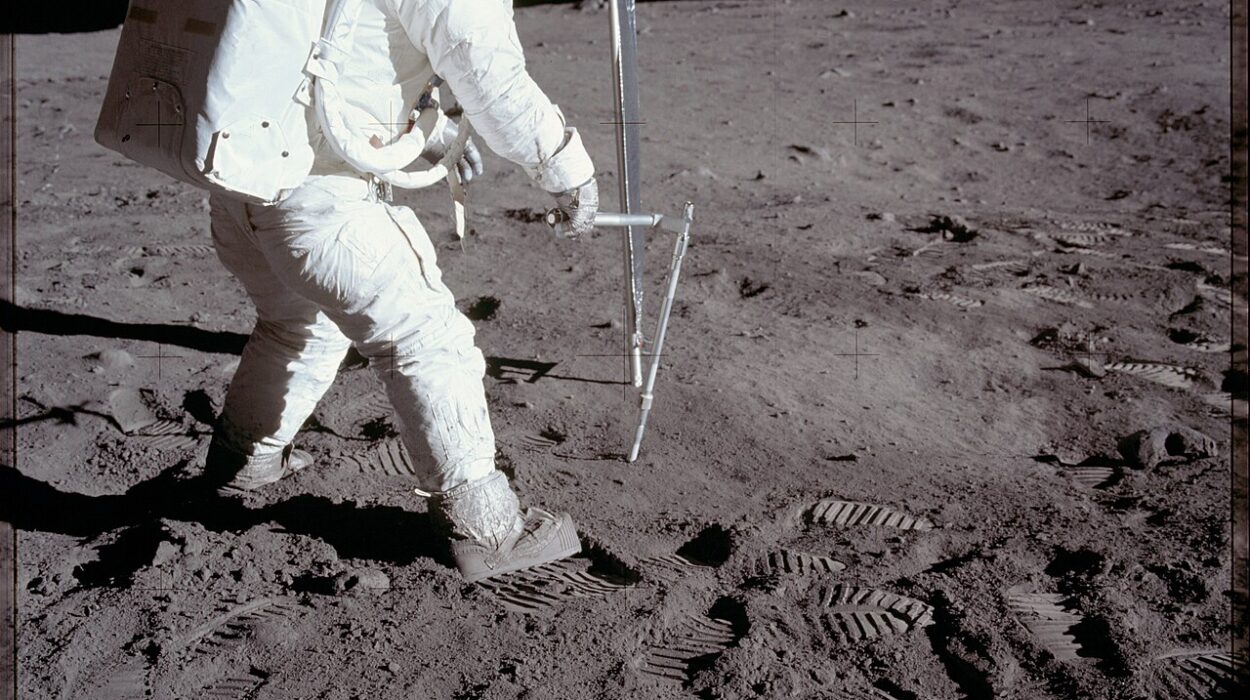
A Moon base is a permanent or long-duration human settlement built on the lunar surface. Unlike the short Apollo missions of the late 1960s and early 1970s, a Moon base would allow astronauts to stay for weeks, months, or even longer while carrying out scientific research, testing new technologies, and supporting future exploration.
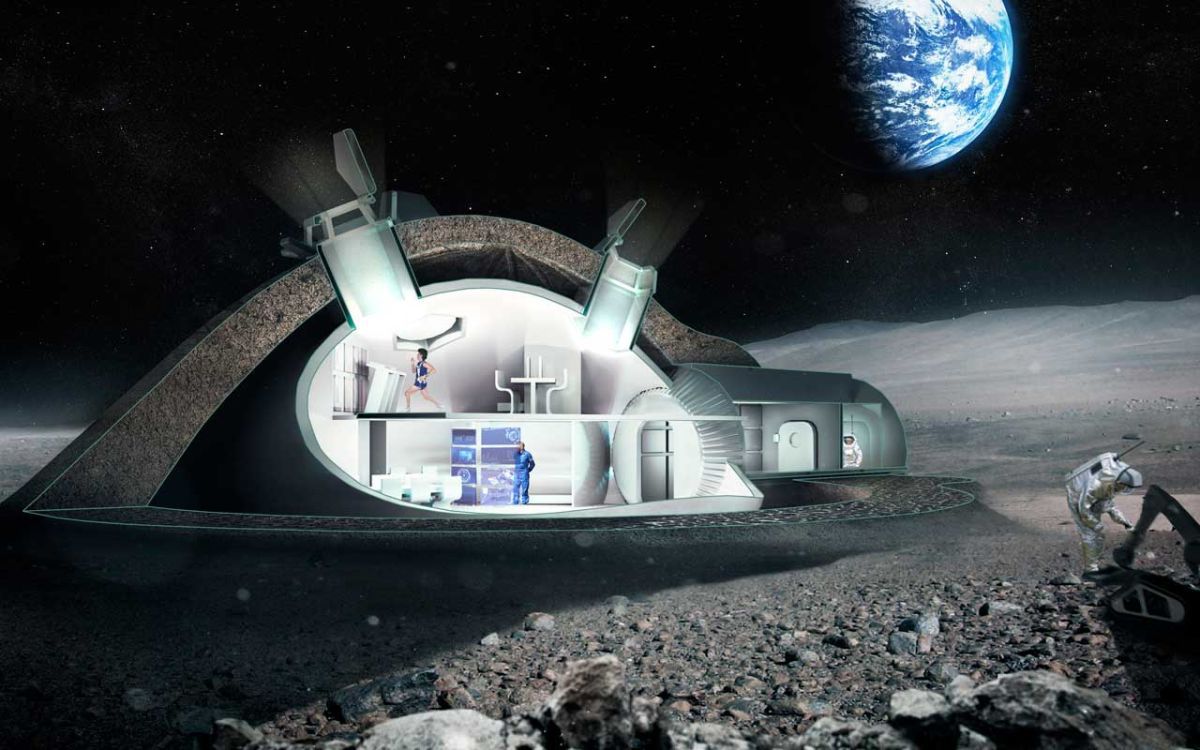
A lunar base would function much like a small research station in Antarctica. Astronauts would live inside protected habitats equipped with sleeping quarters, laboratories, communication systems, food supplies, medical equipment, and life-support systems.
Eventually, future Moon bases could become larger communities capable of supporting many people at the same time.
Why Build a Base on the Moon?
At first glance, building a settlement on an airless, dusty world nearly 384,400 kilometers (about 238,900 miles) from Earth may seem unnecessary. However, scientists see enormous scientific and practical value in establishing a human presence there.
The Moon offers a unique environment for studying planetary geology because its surface has remained relatively unchanged for billions of years. Rocks preserved on the Moon contain clues about the early history of the Solar System and even Earth’s own formation.
A lunar base would also allow scientists to conduct experiments that are impossible on Earth because of differences in gravity, atmosphere, and radiation.
Perhaps most importantly, the Moon could serve as a stepping stone for future missions to Mars and beyond. Learning how to live and work on another world is an essential step before attempting much longer journeys through space.
Choosing the Best Location
Not every place on the Moon is equally suitable for building a base.
Scientists are particularly interested in the Moon’s south polar region. This area contains craters that remain permanently shadowed because sunlight never reaches their deepest interiors.
These extremely cold regions are believed to contain significant amounts of water ice preserved for billions of years.
Nearby mountain ridges receive sunlight for much longer periods than most other lunar locations, making them attractive sites for solar power generation.
Having access to both sunlight and water resources makes the lunar south pole one of the leading candidates for future Moon bases.
Water: The Most Valuable Resource
Water is one of the most important resources for any long-term human settlement.
Astronauts need water for drinking, preparing food, maintaining hygiene, and supporting plant growth.
Water can also be separated into hydrogen and oxygen through a process called electrolysis.
The oxygen can support breathing, while hydrogen and oxygen together can be used as rocket fuel.
Instead of transporting enormous amounts of water from Earth, future Moon bases may extract water ice directly from the lunar soil in permanently shadowed craters.
This concept, known as in-situ resource utilization, aims to use local materials whenever possible, reducing the cost and complexity of space missions.
Building Homes on the Moon
Constructing buildings on the Moon presents unique challenges.
The Moon has no atmosphere, experiences extreme temperature changes, and is constantly exposed to radiation and tiny meteorites.
Traditional construction methods used on Earth cannot simply be copied.
Scientists are investigating several possible approaches.
Some habitats may be transported from Earth as inflatable modules that expand after landing.
Others may use rigid metal structures assembled by astronauts or robotic systems.
Researchers are also studying the possibility of using lunar soil, known as regolith, as a building material. Advanced robotic systems or future three-dimensional printing technologies could potentially use processed regolith to create protective walls, landing pads, and other infrastructure.
Using local materials would greatly reduce the amount of equipment that must be launched from Earth.
Protecting Against Radiation
One of the greatest dangers on the Moon is radiation.
Earth is protected by both a thick atmosphere and a powerful magnetic field that shield us from much of the harmful radiation coming from space.
The Moon has neither.
Astronauts living on the lunar surface would be exposed to radiation from the Sun and energetic particles originating beyond our Solar System.
Over long periods, excessive radiation increases health risks.
Scientists are exploring several protective strategies.
Habitats may be covered with thick layers of lunar soil to block much of the incoming radiation.
Some researchers are investigating underground lava tubes—large tunnels formed long ago by flowing volcanic lava—as naturally shielded locations for future settlements.
These underground spaces could offer protection from radiation, temperature extremes, and micrometeorite impacts.
Living in One-Sixth of Earth’s Gravity
The Moon’s gravity is only about one-sixth as strong as Earth’s.
Walking, lifting objects, and moving equipment would feel very different.
Astronauts could jump much higher and carry heavier loads than on Earth, but reduced gravity also presents medical challenges.
Extended exposure to low gravity can contribute to muscle weakening and loss of bone density if not managed properly.
Future Moon bases will likely include exercise facilities where astronauts perform regular physical activity to help maintain their health.
Scientists are continuing to study how the human body adapts to reduced gravity during long-duration missions.
Breathing on an Airless World
The Moon has no breathable atmosphere.
Every astronaut must rely on carefully controlled life-support systems.
Future lunar habitats will continuously recycle air, remove carbon dioxide, regulate oxygen levels, and control humidity.
Highly efficient environmental control systems will be essential because transporting replacement supplies from Earth is expensive.
The goal is to recycle as much air and water as possible while minimizing waste.
Producing Food on the Moon
Food is another major challenge.
Initially, astronauts will likely eat packaged food transported from Earth.
However, long-term settlements will benefit from producing at least some of their own fresh food.
Scientists are studying how plants grow in reduced gravity and controlled environments.
Future Moon bases may include greenhouses equipped with artificial lighting, temperature control, and carefully managed water systems.
Plants would provide fresh vegetables while also helping recycle carbon dioxide into oxygen through photosynthesis.
Growing food locally would improve both sustainability and astronaut well-being.
Generating Power
Every Moon base will require reliable energy.
Solar panels are expected to become one of the primary power sources because sunlight can generate electricity without consuming fuel.
The lunar south pole offers relatively long periods of sunlight compared with many other regions.
However, solar energy alone may not always be sufficient.
Some future missions may also use compact nuclear power systems capable of providing continuous electricity during long periods without sunlight.
Reliable energy will power life-support systems, scientific equipment, communication networks, robots, and construction machinery.
Robots Will Build Before Humans Arrive
Before astronauts move into permanent lunar habitats, robots are expected to perform much of the initial construction work.
Autonomous machines could prepare landing areas, transport materials, excavate soil, build protective barriers, and assemble habitat components.
Robots can work continuously without needing food, oxygen, or rest.
They can also perform dangerous tasks in environments that may initially be too hazardous for humans.
Human workers and robotic systems are likely to cooperate closely in building future Moon bases.
Transportation Between Earth and the Moon
Regular transportation will be essential for maintaining lunar settlements.
Spacecraft will deliver astronauts, scientific instruments, construction equipment, replacement parts, and emergency supplies.
As launch technology continues to improve, reusable spacecraft may reduce transportation costs.
Future lunar landing vehicles may eventually operate repeatedly between orbit and the Moon’s surface, making regular travel more practical.
Over time, transportation systems may become more efficient than those available today.
Scientific Research on the Moon
A permanent Moon base would dramatically expand scientific opportunities.
Geologists could study ancient lunar rocks that preserve information about the early Solar System.
Astronomers could place telescopes on the Moon’s far side, where the absence of Earth’s radio interference creates an exceptionally quiet environment for certain types of astronomical observations.
Biologists could investigate how living organisms adapt to reduced gravity.
Engineers could test technologies designed for future missions to Mars.
Each experiment would deepen our understanding of both the Moon and life beyond Earth.
Mining Lunar Resources
The Moon contains valuable natural resources.
Besides water ice, lunar soil contains oxygen bound within minerals, along with metals such as aluminum, titanium, and iron.
Scientists are exploring methods for extracting these materials to support construction and manufacturing.
Producing building materials, oxygen, and other essential resources directly on the Moon could make future settlements far more self-sufficient.
However, developing practical mining systems remains an active area of research.
Communication With Earth
Although the Moon is relatively close compared with other planets, communication still takes time.
Radio signals traveling at the speed of light require about 1.3 seconds to travel one way between Earth and the Moon.
This short delay allows nearly real-time conversations, although communication systems must remain reliable.
Future lunar bases may use satellites orbiting the Moon to maintain continuous contact with Earth, even when habitats are located in regions where direct communication is difficult.
Medical Care on the Moon
Healthcare will be essential for any long-term settlement.
Astronauts will require medical equipment capable of diagnosing illnesses, treating injuries, and monitoring health over extended missions.
Telemedicine will allow doctors on Earth to assist crews remotely.
However, astronauts will also need medical training because immediate evacuation to Earth may not always be possible.
Scientists continue studying how reduced gravity, radiation, and isolation affect human health during long missions.
International Cooperation
Building a Moon base is too large and expensive for any single organization to accomplish easily.
Many future lunar projects are expected to involve cooperation among multiple countries, universities, research institutions, and commercial companies.
International collaboration allows partners to share scientific knowledge, engineering expertise, financial resources, and technological innovations.
Working together may accelerate humanity’s return to the Moon while promoting peaceful exploration of space.
The Moon as a Gateway to Mars
Many scientists consider the Moon an ideal testing ground for future missions to Mars.
A mission to Mars would take many months each way and require astronauts to live independently for extended periods.
The Moon allows researchers to test habitats, life-support systems, resource extraction technologies, and operational procedures much closer to Earth.
If problems arise, astronauts can return home in a matter of days rather than months.
Lessons learned on the Moon will help improve the safety and success of future deep-space exploration.
Challenges That Still Remain
Despite impressive progress, many challenges remain before permanent Moon bases become reality.
Engineers must improve life-support systems, increase spacecraft reliability, reduce launch costs, develop durable construction techniques, and protect astronauts from radiation and lunar dust.
Lunar dust itself presents unusual difficulties. Its tiny, sharp particles can cling to equipment, damage machinery, and potentially affect human health if brought into habitats.
Long-term psychological well-being is another important consideration. Living in isolated environments far from Earth requires careful planning to support both physical and mental health.
Each challenge is complex, but none appears beyond the reach of continued scientific and technological progress.
How Moon Bases Could Change Humanity
A successful Moon base would represent far more than another scientific achievement.
It would mark humanity’s transition from living on a single world to becoming a spacefaring civilization.
Children born decades from now may grow up thinking of the Moon not simply as a bright object in the sky but as a place where scientists, engineers, doctors, and explorers live and work.
The technologies developed for lunar exploration may also improve life on Earth by advancing renewable energy, robotics, recycling systems, medicine, communication, and sustainable engineering.
History has shown that ambitious exploration often produces unexpected innovations that benefit society in countless ways.
Looking Toward Tomorrow
The dream of living on the Moon has fascinated people for generations. Today, that dream is steadily moving from imagination toward reality through careful scientific research, engineering innovation, and international collaboration. Although permanent lunar settlements have not yet been established, every successful spacecraft, robotic mission, and technological breakthrough brings humanity one step closer to building a lasting presence beyond Earth.
The future of Moon bases represents much more than constructing buildings on a distant world. It symbolizes humanity’s enduring curiosity, determination, and desire to explore the unknown. As scientists continue to solve the challenges of survival in space, the Moon may become the first permanent home for humans beyond Earth—a place where discovery never ends and where the next great era of exploration begins.