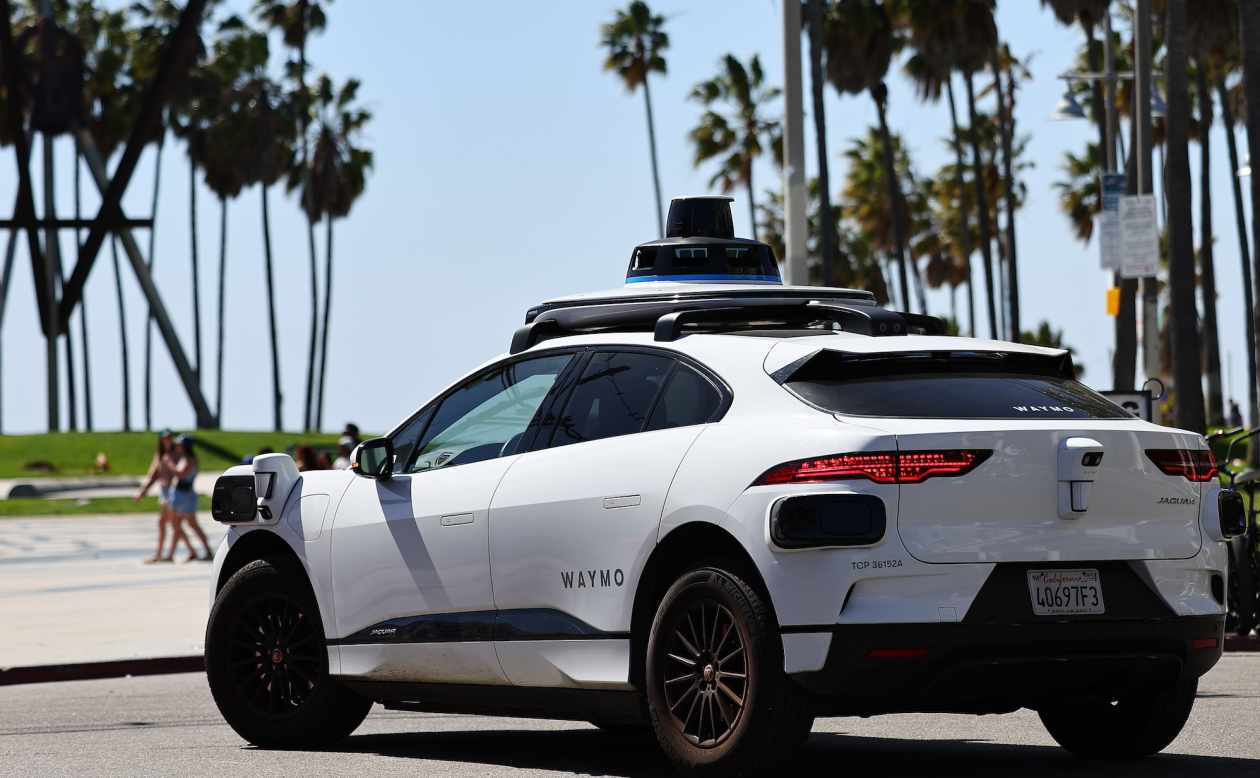
Imagine stepping into a car, entering your destination, and then simply relaxing while the vehicle takes care of the driving. No steering wheel movements, no pressing pedals, no worrying about traffic lights or busy intersections. For decades, this idea belonged mostly to science fiction. Today, however, self-driving cars are becoming a real technological possibility.
Around the world, engineers, computer scientists, and automotive companies are developing vehicles capable of navigating roads with little or no human intervention. These cars use sophisticated sensors, artificial intelligence, powerful computers, and advanced software to understand their surroundings and make driving decisions.
Yet one question continues to dominate public discussions: Are self-driving cars safe?
It is a simple question with a complex answer. Self-driving technology has the potential to reduce accidents, save lives, and transform transportation. At the same time, significant challenges remain, and researchers continue working to ensure that autonomous vehicles can safely handle the countless situations encountered on real roads.
Understanding the safety of self-driving cars requires exploring how they work, what causes accidents today, what technology can achieve, and where its limitations still exist.
What Is a Self-Driving Car?
A self-driving car, also known as an autonomous vehicle, is a vehicle capable of sensing its environment and navigating without continuous human control.
Unlike traditional cars, which rely entirely on human drivers to observe traffic and make decisions, autonomous vehicles use computers to perform many driving tasks.
Different self-driving systems offer different levels of automation. Some assist drivers with steering, braking, or maintaining speed, while more advanced systems are designed to handle most driving responsibilities under certain conditions.
The ultimate goal is a vehicle that can safely transport passengers from one location to another without requiring human intervention.
Why Road Safety Matters
Every year, road accidents cause enormous human suffering around the world.
Many crashes result in injuries, disabilities, and loss of life. Beyond the human cost, traffic accidents create significant economic burdens through medical expenses, vehicle damage, and lost productivity.
Research consistently shows that human error contributes to a large proportion of traffic accidents. Drivers may become distracted, fatigued, impaired, stressed, or simply make mistakes.
Humans sometimes miss traffic signs, misjudge distances, overlook pedestrians, or react too slowly during emergencies.
Because self-driving cars do not become tired, distracted by smartphones, or emotionally stressed, many experts believe autonomous technology could eventually reduce certain types of crashes.
How Self-Driving Cars See the World
A self-driving car cannot drive safely unless it understands its surroundings.
To achieve this, autonomous vehicles use a combination of sensors that continuously collect information about the environment.
Cameras capture visual information similar to human eyesight. They recognize road markings, traffic lights, signs, vehicles, cyclists, and pedestrians.
Radar systems use radio waves to detect objects and measure their distance and speed.
Some vehicles also use LiDAR technology, which sends pulses of laser light to create detailed three-dimensional maps of the surroundings.
Ultrasonic sensors help detect nearby objects during low-speed maneuvers such as parking.
Together, these systems provide the vehicle with an extraordinary amount of information about the road environment.
The Role of Artificial Intelligence
Collecting information is only the first step.
The vehicle must also understand what that information means.
This is where artificial intelligence plays a crucial role.
AI systems analyze sensor data and identify objects such as cars, bicycles, pedestrians, animals, and road barriers.
The software predicts how these objects may move in the coming seconds.
For example, if a child is standing near the edge of a road, the system may anticipate the possibility that the child could suddenly cross the street.
The vehicle then uses this information to determine appropriate actions, such as slowing down, changing lanes, or stopping.
These decisions often occur in fractions of a second.
Computers React Faster Than Humans
One potential safety advantage of self-driving cars is reaction speed.
Human drivers require time to notice hazards, interpret situations, decide on a response, and physically move their hands or feet.
Even attentive drivers need fractions of a second to react.
Computers can process information much more rapidly.
Sensors continuously monitor the environment, and software can initiate braking or steering corrections almost instantly when hazards are detected.
In some situations, this faster response capability may help prevent collisions that human drivers might not avoid.
Self-Driving Cars Never Get Tired
Fatigue is a major contributor to road accidents.
Long drives, insufficient sleep, and extended work hours can significantly reduce driver performance.
A tired driver may struggle to maintain attention, react slowly, or even fall asleep.
Autonomous systems do not experience fatigue.
They can operate continuously without becoming sleepy or losing concentration.
This characteristic represents one of the most promising safety advantages of automated driving technology.
Eliminating Distractions
Modern driving involves many potential distractions.
People may look at smartphones, adjust navigation systems, eat food, converse with passengers, or become distracted by roadside events.
Even a brief lapse in attention can have serious consequences.
Self-driving systems do not become distracted in the human sense.
Their sensors remain focused on monitoring the driving environment at all times.
As a result, autonomous vehicles may reduce accidents caused by inattention.
The Promise of Reducing Human Error
Because human mistakes contribute to many road crashes, reducing those mistakes could potentially save many lives.
Self-driving systems consistently obey programmed rules.
They do not intentionally speed, drive aggressively, or become impatient in traffic.
They do not consume alcohol or become impaired by drugs.
They maintain awareness of multiple surrounding vehicles simultaneously.
These characteristics create the possibility of safer roads in the future.
However, technology introduces its own challenges.
Can Self-Driving Cars Make Mistakes?
Yes.
Despite remarkable advances, self-driving systems are not perfect.
Autonomous vehicles rely on sensors, software, maps, and machine-learning models, all of which can occasionally encounter difficulties.
A camera may have trouble seeing clearly during heavy rain or dense fog.
Bright sunlight can sometimes create visual challenges.
Snow may cover lane markings.
Unexpected road construction may differ from mapped information.
Complex situations involving unusual human behavior can also be difficult to interpret.
Just as humans can make mistakes, technology can also make errors.
The difference is that the nature of those errors may be very different.
The Challenge of Unpredictable Situations
Roads are full of surprises.
A pedestrian may suddenly step into traffic.
A dog may run across the street.
A cyclist may make an unexpected turn.
An object may fall from a truck.
Emergency vehicles may approach from unusual directions.
Human drivers often rely on experience, intuition, and context when responding to unexpected situations.
Teaching computers to handle every possible scenario remains one of the greatest challenges in autonomous vehicle development.
Engineers refer to many of these rare situations as edge cases because they occur infrequently but can be difficult to manage safely.
Weather Can Affect Performance
Humans and machines both face challenges during bad weather.
Heavy rain can reduce visibility.
Snow may obscure lane markings.
Fog can limit sensor effectiveness.
Ice affects vehicle traction.
Although modern autonomous systems use multiple sensor types to improve reliability, severe weather remains a significant technical challenge.
Researchers continue developing sensors and algorithms that can perform safely under a wider range of environmental conditions.
Understanding Levels of Automation
Not all self-driving cars are equally autonomous.
Some vehicles marketed today include advanced driver-assistance features rather than full autonomy.
These systems may help with lane keeping, adaptive cruise control, traffic jam assistance, or automatic braking.
However, many still require continuous human supervision.
A common misunderstanding occurs when people assume that partial automation means the vehicle can safely handle every situation on its own.
In reality, the capabilities and limitations of each system vary considerably.
Understanding these differences is essential for safety.
The Importance of Human Oversight
For many current autonomous systems, human drivers remain an important part of the safety process.
Drivers may need to take control when conditions exceed the system’s capabilities.
This transition can be challenging because people may become less attentive when automation handles most driving tasks.
Researchers study how to keep drivers engaged and ready to respond when necessary.
Designing effective cooperation between humans and machines remains an important area of transportation safety research.
Learning From Millions of Miles
One advantage of autonomous vehicle development is the ability to collect enormous amounts of driving data.
Test vehicles operate on public roads and in simulated environments.
Every mile driven generates information about road conditions, traffic patterns, and unusual events.
Engineers use this data to improve software performance and identify weaknesses.
Machine-learning systems can learn from vast numbers of examples, allowing them to recognize situations more effectively over time.
This continuous improvement process is one reason autonomous technology has advanced rapidly in recent years.
Comparing Human Drivers and Autonomous Systems
Comparing human drivers with self-driving systems is not always straightforward.
Humans possess remarkable adaptability and common-sense reasoning. They can understand subtle social cues, anticipate certain behaviors, and improvise in unfamiliar situations.
Computers excel at processing large amounts of information rapidly, maintaining constant attention, and following rules consistently.
The question is not whether machines or humans are perfect. Neither is.
The real question is whether autonomous systems can eventually achieve a level of safety that exceeds the average performance of human drivers.
Many researchers believe this is possible, but demonstrating it conclusively requires extensive testing and evidence.
Ethical Questions and Public Trust
Safety involves more than engineering.
Public trust is equally important.
People must feel confident that autonomous vehicles can protect passengers, pedestrians, cyclists, and other road users.
The introduction of self-driving technology also raises ethical questions about decision-making during emergencies.
Engineers, policymakers, legal experts, and ethicists continue debating how autonomous systems should respond in complex situations.
Addressing these questions transparently is essential for public acceptance.
Cybersecurity and Vehicle Safety
Modern autonomous vehicles depend heavily on software and digital communication.
As a result, cybersecurity becomes a critical safety concern.
Manufacturers must protect vehicles from unauthorized access, software vulnerabilities, and potential cyberattacks.
Security systems are designed to safeguard communication networks, onboard computers, and critical vehicle functions.
As self-driving technology evolves, cybersecurity will remain a major priority.
Regulation and Safety Standards
Before self-driving cars become widespread, governments and transportation authorities must establish rigorous safety standards.
Testing requirements, certification procedures, software validation, and operational regulations help ensure that vehicles meet acceptable safety levels.
Regulatory frameworks also determine where and how autonomous vehicles may operate.
Careful oversight helps balance innovation with public safety.
What Scientists and Engineers Are Still Working On
Researchers continue improving nearly every aspect of autonomous driving technology.
They are developing better sensors, more accurate mapping systems, more powerful artificial intelligence models, and safer control algorithms.
Engineers are also working to improve performance during challenging weather conditions and unusual traffic scenarios.
Advances in computing power, machine learning, and vehicle communication systems may further enhance safety in the coming years.
The technology is evolving rapidly, but development remains ongoing.
Could Self-Driving Cars Make Roads Safer?
Many experts believe that autonomous vehicles have the potential to significantly improve road safety.
If systems can consistently avoid common human errors such as distraction, fatigue, impairment, and reckless driving, accident rates could decrease.
However, achieving this goal requires overcoming substantial technical, regulatory, and social challenges.
Safety improvements will likely occur gradually as technology matures and real-world experience accumulates.
Rather than transforming transportation overnight, autonomous driving is expected to evolve through continuous refinement and careful deployment.
The Future of Autonomous Transportation
The future may include roads shared by traditional vehicles and autonomous ones.
Over time, increasing levels of automation could become common in personal vehicles, taxis, delivery services, and public transportation.
Vehicles may communicate with one another and with transportation infrastructure to improve efficiency and safety.
Artificial intelligence may become increasingly capable of handling complex traffic environments.
Although the timeline remains uncertain, autonomous transportation is likely to play an increasingly important role in future mobility systems.
Conclusion
Are self-driving cars safe? The most accurate answer is that they have the potential to become extremely safe, but the technology is still evolving. Autonomous vehicles offer important advantages over human drivers, including constant attention, rapid reaction times, resistance to fatigue, and freedom from many common human errors. These strengths could eventually reduce accidents and save lives.
At the same time, self-driving cars face significant challenges. Complex road environments, unpredictable human behavior, severe weather, software reliability, cybersecurity, and public trust all remain important areas of ongoing research and development. No technology is perfect, and autonomous systems must prove their safety through extensive testing and real-world performance.
The story of self-driving cars is ultimately a story about humanity’s effort to make transportation safer. Whether fully autonomous vehicles become common in the coming decades or evolve more gradually, the science behind them continues to advance. With careful engineering, rigorous safety standards, and responsible implementation, self-driving cars may one day help create roads that are safer than ever before.