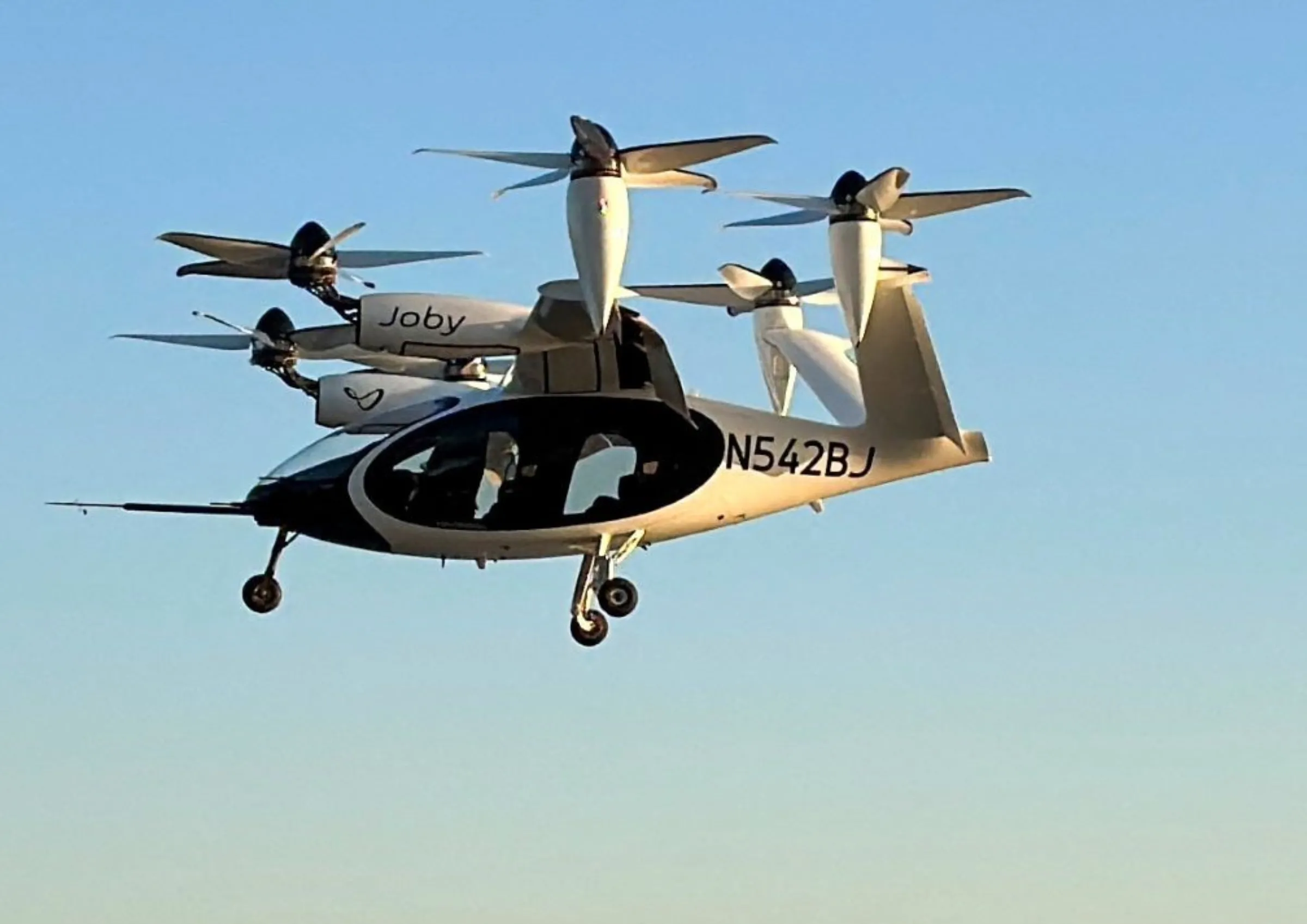
Imagine booking a ride with your phone, walking to a nearby rooftop landing pad, stepping into a quiet aircraft, and reaching the other side of the city in just a few minutes. There are no traffic jams, no long waits at intersections, and no crowded highways—just a smooth journey through the sky.
For decades, this idea belonged to science fiction. Today, it is becoming a serious goal for engineers, aviation experts, and transportation planners around the world. Air taxis are no longer just futuristic concepts. Several companies have already flown prototype aircraft, while governments and aviation authorities are developing the rules needed to make these services safe and practical.
Although air taxis are not yet common in everyday life, rapid advances in electric aircraft, batteries, computer systems, and autonomous technologies are bringing them closer to reality.
But what exactly is an air taxi? How does it work? How is it different from a helicopter? And could it become a normal way to travel in the future?
Let’s explore the science, technology, and possibilities behind one of the most exciting transportation innovations of the twenty-first century.
What Is an Air Taxi?
An air taxi is a small aircraft designed to carry passengers on short trips, usually within or between cities. Like a ground taxi, it transports people directly from one location to another, but instead of traveling on roads, it flies through the air.
Most modern air taxis are designed as electric vertical takeoff and landing (eVTOL) aircraft. This means they can rise straight upward from the ground like a helicopter, fly forward like an airplane, and then land vertically at their destination.
Unlike traditional airplanes, most air taxis do not require long runways. They are intended to operate from specially designed landing areas called vertiports, which may be located on rooftops, parking structures, airports, or other carefully selected locations.
The goal is to provide fast, efficient, and environmentally friendlier transportation for short-distance travel.
Why Are Air Taxis Being Developed?
Cities around the world are becoming more crowded every year. As populations grow, roads become busier, travel times increase, and traffic congestion affects millions of people every day.
Building more roads is not always possible, especially in densely populated urban areas.
Engineers began asking an important question: instead of expanding roads, why not use the open space above them?
The sky represents an enormous transportation corridor that is currently used mainly by airplanes and helicopters. Air taxis aim to make low-altitude air travel available for ordinary urban transportation.
They could dramatically reduce travel times, improve access to airports, support emergency services, and offer faster transportation between nearby cities.
The Difference Between Air Taxis and Helicopters
At first glance, an air taxi may look similar to a helicopter, but there are several important differences.
Most helicopters rely on one large main rotor and a smaller tail rotor for stability. Air taxis usually use multiple smaller electric propellers positioned around the aircraft.
Electric motors are generally quieter than traditional helicopter engines.
Many air taxis are designed to produce lower operating costs because electric motors have fewer moving parts than conventional turbine engines.
Air taxis also rely heavily on advanced computers to control dozens of flight adjustments every second, making flight smoother and more efficient.
Although helicopters will continue to play an important role in aviation, air taxis are being designed specifically for frequent, short-distance passenger transportation.
How Do Air Taxis Fly?
Every aircraft must overcome gravity before it can leave the ground.
Air taxis generate an upward force called lift.
In most modern designs, several electric propellers spin at high speed. As the propellers push air downward, they create an equal and opposite upward force that lifts the aircraft into the air.
Once the aircraft reaches a safe altitude, some designs continue flying using the same vertical propellers, while others tilt their propellers forward to generate forward motion more efficiently.
Throughout the flight, onboard computers constantly adjust motor speeds to keep the aircraft balanced and stable.
This process happens continuously, often hundreds of times every second.
The Science Behind Vertical Takeoff
One of the greatest advantages of modern air taxis is their ability to take off vertically.
Instead of accelerating along a runway like an airplane, they rise almost straight upward.
This is possible because several powerful electric motors work together to create enough lift to support the aircraft’s weight.
Computer systems coordinate each motor with remarkable precision.
If one side of the aircraft experiences a slight change in wind, the computer instantly adjusts individual motors to maintain balance.
This continuous control allows the aircraft to hover, climb, descend, and land safely.
Why Electric Power Is So Important
Most next-generation air taxis use electricity instead of aviation fuel.
Electric motors offer several important advantages.
They operate more quietly than conventional aircraft engines.
They produce no direct exhaust emissions during flight.
They require less routine mechanical maintenance because they contain fewer moving parts.
Electric motors also respond very quickly when power changes are needed, allowing highly accurate control during takeoff and landing.
These advantages make electric propulsion especially attractive for transportation in urban environments.
Batteries: The Biggest Challenge
Although electric propulsion offers many benefits, batteries remain one of the greatest engineering challenges.
Flying requires large amounts of energy.
Modern rechargeable batteries can store significant energy, but they are still much heavier than liquid aviation fuel for the same amount of usable energy.
This limits how far many electric air taxis can currently travel.
Scientists around the world are developing improved battery technologies with higher energy density, faster charging, longer lifetimes, and greater safety.
As battery technology continues to improve, air taxis are expected to fly farther while carrying more passengers.
Lightweight Materials Make Flight Possible
Every kilogram matters in aviation.
The heavier an aircraft becomes, the more energy it needs to fly.
To reduce weight while maintaining strength, engineers use advanced materials such as carbon-fiber composites, aluminum alloys, and other lightweight structural materials.
These materials provide excellent strength while helping improve efficiency and flight performance.
Careful engineering allows air taxis to remain both lightweight and durable.
Intelligent Flight Control Systems
Flying an aircraft is much more complicated than driving a car.
Modern air taxis rely on sophisticated flight computers.
These computers receive information from hundreds of sensors throughout the aircraft.
They monitor speed, altitude, battery condition, motor performance, wind direction, aircraft orientation, and many other factors.
Using this information, the computer continuously adjusts the aircraft to keep it flying safely and smoothly.
Without these advanced control systems, many modern air taxi designs would be extremely difficult to operate.
Navigation in the Sky
Unlike roads, the sky has no painted lanes.
Air taxis depend on advanced navigation technologies.
Satellite positioning systems help determine location.
Digital maps provide planned flight routes.
Communication systems allow aircraft to exchange information with traffic management networks.
Some aircraft also use radar, cameras, and laser-based sensors to detect nearby obstacles and other aircraft.
Together, these technologies help ensure safe navigation throughout each journey.
Artificial Intelligence and Automation
Artificial intelligence is becoming increasingly important in modern aviation.
AI can assist with route planning, weather analysis, obstacle detection, battery management, and flight monitoring.
Some future air taxis may become highly automated, allowing computers to perform many routine flight tasks under human supervision.
However, safety remains the highest priority.
Current aviation systems continue to emphasize careful human oversight, extensive testing, and regulatory approval before introducing new technologies into passenger transportation.
Where Do Air Taxis Land?
Since air taxis do not usually require long runways, they need specially designed landing areas.
These facilities are known as vertiports.
A vertiport may include landing pads, passenger waiting areas, charging equipment, maintenance facilities, weather monitoring systems, and communication infrastructure.
Some future cities may build networks of vertiports on rooftops, transportation hubs, airports, and business districts.
These locations would allow passengers to transfer easily between ground transportation and air taxi services.
How Safe Are Air Taxis?
Safety is the foundation of every aviation system.
Before carrying passengers commercially, air taxis must pass extensive testing and certification.
Engineers evaluate aircraft structures, propulsion systems, batteries, software, navigation equipment, and emergency procedures.
Many air taxi designs include multiple electric motors.
If one motor stops working, the remaining motors may continue operating, depending on the specific aircraft design and flight conditions.
Advanced monitoring systems continuously check the health of important components during every flight.
These layers of protection are intended to make air travel as safe as possible.
Weather Still Matters
Even the most advanced aircraft cannot ignore weather.
Heavy rain, thunderstorms, strong winds, lightning, dense fog, and icy conditions can make flying unsafe.
Air taxis will rely on detailed weather forecasts, onboard sensors, and air traffic management systems before every flight.
Just like commercial airplanes, some flights may be delayed or canceled if weather conditions become hazardous.
Air Traffic in Future Cities
If thousands of air taxis begin operating above major cities, careful organization will be essential.
Future urban air traffic systems will coordinate aircraft movements, assign flight routes, maintain safe separation between vehicles, and manage takeoffs and landings.
These systems will likely combine satellite navigation, digital communication, weather monitoring, and artificial intelligence.
Their goal will be to ensure that many aircraft can operate safely within shared urban airspace.
Environmental Benefits
Air taxis are often promoted as a cleaner transportation option because many use electric propulsion.
During flight, electric aircraft produce no direct exhaust emissions.
They are also generally quieter than conventional helicopters, reducing noise pollution in urban areas.
However, the overall environmental impact depends on several factors, including how electricity is generated, how batteries are manufactured, and the full life cycle of the aircraft.
As renewable energy sources become more common, the environmental advantages of electric air taxis may increase further.
Challenges That Still Need to Be Solved
Although impressive progress has been made, several challenges remain.
Battery technology must continue improving to extend flight range.
Vertiport infrastructure must be built in suitable locations.
Air traffic systems must safely coordinate many aircraft.
Governments must establish comprehensive regulations for commercial operations.
Manufacturers must also reduce costs so that air taxi services become affordable for more people.
Public confidence will be another important factor.
People must trust that these aircraft are safe, reliable, and convenient before they become a routine part of daily transportation.
How Air Taxis Could Transform Cities
If air taxis become widely available, they could significantly change urban transportation.
Daily commuting times could become much shorter.
Travel between airports and city centers could become faster.
Emergency medical teams could reach patients more quickly.
Business travelers could save valuable time.
Remote communities located near cities could gain better transportation access.
Instead of replacing buses, trains, or automobiles, air taxis are expected to complement existing transportation systems by providing a fast option for specific types of journeys.
Air Taxis Around the World
Many countries are investing in urban air mobility.
Aircraft manufacturers, technology companies, universities, and aviation authorities are working together to develop aircraft, improve battery technology, establish safety standards, and build the infrastructure needed for commercial services.
Several prototype air taxis have already completed successful test flights.
Some companies hope to begin limited passenger operations in selected cities once certification requirements are fully satisfied.
Although widespread commercial use is still developing, progress continues rapidly.
The Future of Air Taxis
The future of air taxis depends on advances in engineering, computer science, aviation, and energy technology.
Better batteries will allow longer flights.
Smarter software will improve navigation and safety.
Lighter materials will increase efficiency.
More advanced communication systems will coordinate growing numbers of aircraft.
As these technologies mature, air taxis may gradually become a familiar part of urban transportation.
What seems extraordinary today could eventually become as common as ride-sharing services or commuter trains.
Conclusion
Air taxis represent one of the most exciting developments in modern transportation. Combining advances in electric propulsion, vertical flight, intelligent computer systems, lightweight materials, and aviation engineering, they offer a new way to move people quickly through crowded cities. By taking advantage of the open space above urban streets, air taxis have the potential to reduce travel times, improve connectivity, and support more efficient transportation networks.
Although important challenges remain—including battery technology, infrastructure, regulation, weather limitations, and public acceptance—the progress made so far demonstrates that air taxis are no longer just futuristic ideas. They are becoming a realistic possibility. As science and engineering continue to advance, the dream of booking a ride that lifts quietly into the sky may one day become an ordinary part of everyday life.