History is often presented as a complete story. Textbooks describe the rise and fall of civilizations, explain who built famous monuments, and introduce the remarkable people who shaped our world. Yet archaeology reminds us of an important truth: history is never completely finished. Every excavation has the potential to uncover something unexpected, forcing researchers to ask new questions and reconsider old assumptions.
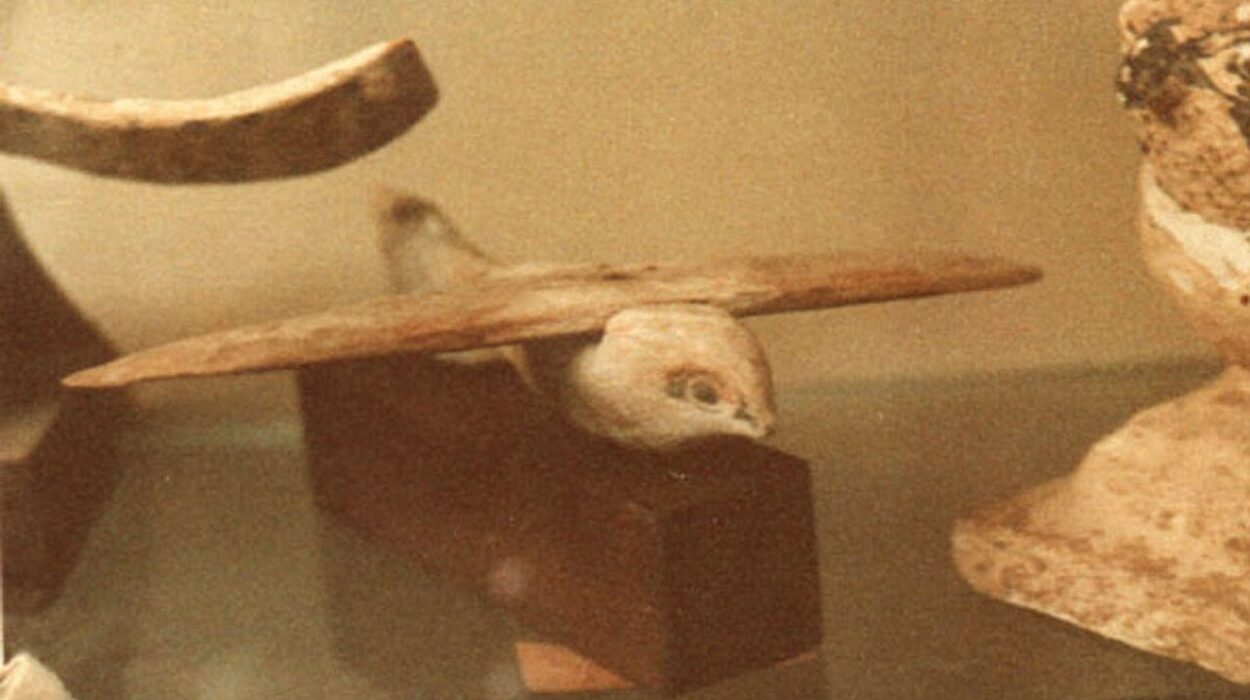
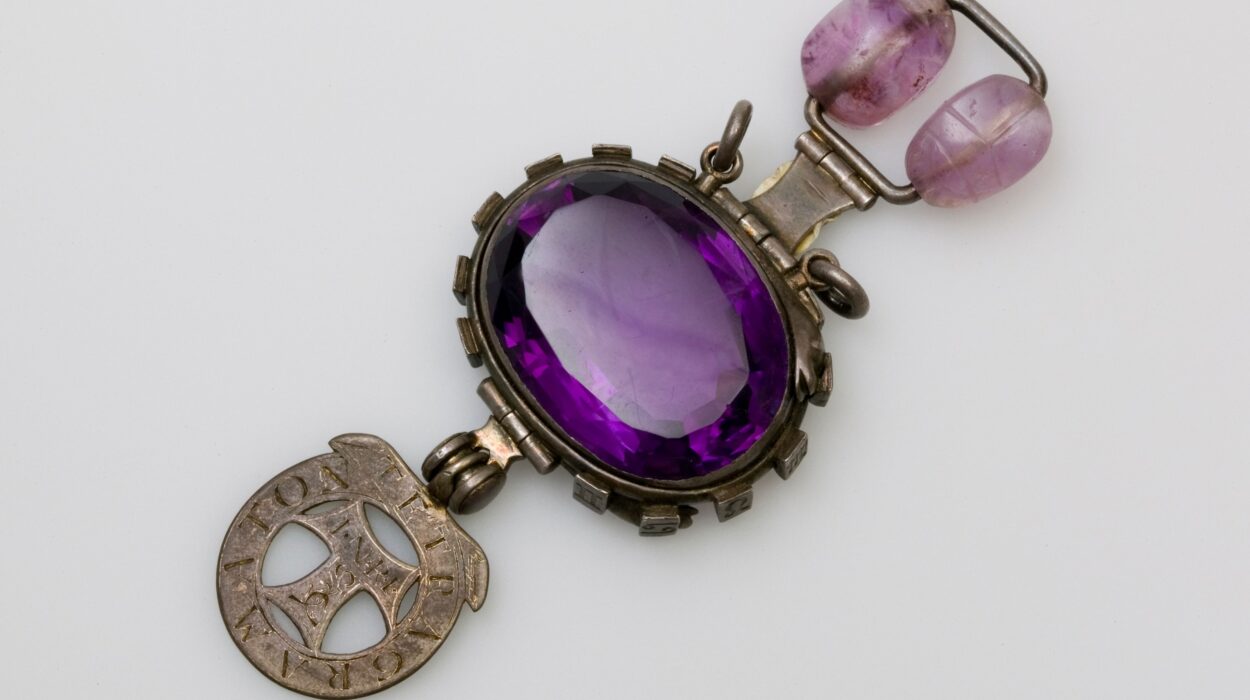
Among the most fascinating discoveries are ancient artifacts whose origins remain uncertain or whose purpose is still debated. These mysterious objects often inspire headlines claiming they “rewrite history” or “prove everything we know is wrong.” Television programs, documentaries, and social media posts frequently suggest that such artifacts were created by lost civilizations, extraterrestrials, or technologies far beyond what ancient people supposedly possessed.
The reality is both more careful and, in many ways, even more interesting.
Most mysterious artifacts do not overturn mainstream history. Instead, they reveal how much we still have to learn about ancient cultures. Some discoveries challenge earlier archaeological interpretations because new evidence emerges. Others remain genuine mysteries because important pieces of the puzzle are missing. Archaeologists constantly revise their understanding as fresh discoveries are made, but these revisions are based on evidence rather than speculation.
The true excitement of archaeology lies not in sensational claims but in the process of discovery itself. Every carved stone, metal object, clay tablet, sculpture, or ancient tool represents a message sent across centuries by people who can no longer explain their creations.
Who made these remarkable objects?
Why were they created?
What did they mean to the people who used them?
While some answers have gradually emerged, others remain wonderfully mysterious.
In this article, we explore some of history’s most intriguing artifacts—objects that continue to spark debate, inspire research, and remind us that humanity’s past is richer and more complex than anyone once imagined.
Why Ancient Artifacts Matter
Artifacts are much more than old objects buried underground.
They are physical evidence of human lives.
Unlike legends or written stories, artifacts often survive even when languages disappear and civilizations collapse.
A broken pottery bowl can reveal eating habits.
A bronze sword may show advances in metalworking.
A clay tablet can preserve laws, literature, or business records.
A simple bead necklace may reveal ancient trade networks stretching across continents.
Every artifact adds another piece to humanity’s story.
Sometimes discoveries confirm what historians already believed.
Other times they introduce surprising questions.
The most valuable artifacts are often those that encourage scientists to investigate further rather than jump to dramatic conclusions.
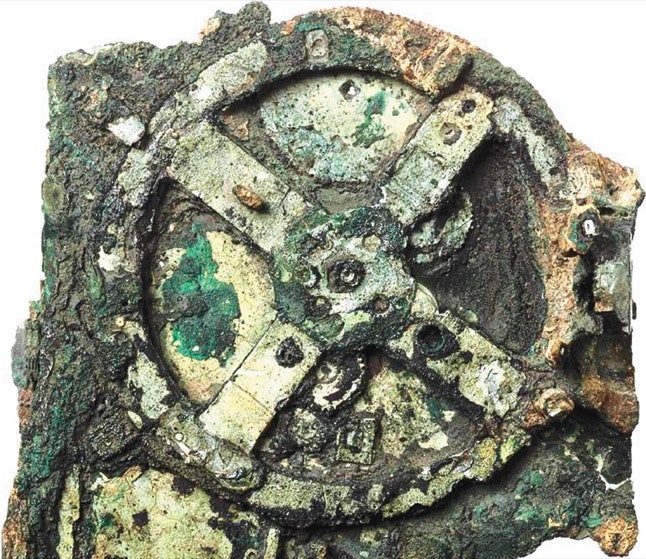
The Antikythera Mechanism
In 1901, sponge divers exploring a Roman shipwreck near the Greek island of Antikythera made an astonishing discovery.
Hidden among statues and cargo lay a heavily corroded lump of bronze.
At first glance, it appeared unremarkable.
Closer examination revealed tiny gears unlike anything previously known from the ancient world.
Today, the object is called the Antikythera Mechanism.
Modern imaging has shown that it contained dozens of precisely crafted bronze gears capable of predicting astronomical events, including planetary movements, eclipses, and the cycles of the Moon.
Dating to around the second century BCE, it is often described as the world’s oldest known analog computer.
When first discovered, many researchers doubted such sophisticated technology could exist in ancient Greece.
Further study demonstrated that Greek engineers possessed far more advanced mechanical knowledge than historians had once realized.
Rather than overturning history, the mechanism expanded our appreciation of ancient scientific achievement.
It reminds us that remarkable technology can sometimes disappear for centuries before being rediscovered.
The Baghdad Battery
One of archaeology’s most controversial artifacts is the so-called Baghdad Battery.
Discovered near Baghdad in the 1930s, the object consists of a clay jar containing a copper cylinder and an iron rod.
Some researchers proposed that it may have functioned as a simple electrical battery when filled with acidic liquid.
This intriguing idea inspired enormous public interest.
Could ancient people have discovered electricity?
Most archaeologists remain cautious.
Although experiments have shown similar jars can generate small electrical currents, there is no convincing evidence that ancient Mesopotamians actually used them as batteries.
Alternative explanations suggest the object may have served religious, ceremonial, or storage purposes.
Without supporting evidence such as electrical devices or written descriptions, the battery hypothesis remains speculative.
The artifact illustrates an important lesson.
Not every unusual object requires an extraordinary explanation.
The Phaistos Disc
Discovered in 1908 on the Greek island of Crete, the Phaistos Disc remains one of archaeology’s greatest unsolved puzzles.
The circular clay disc contains symbols carefully stamped into its surface in a spiral pattern.
More than 240 symbols appear, representing around 45 distinct signs.
Despite decades of research, no one has successfully deciphered its meaning.
Some scholars believe it contains a religious hymn.
Others suggest it records historical information, poetry, or administrative records.
Because only one such disc has ever been found, there are no comparable texts to assist translation.
Without additional examples, decipherment remains extraordinarily difficult.
The Phaistos Disc reminds us that entire ancient writing systems may still await understanding.
The Vinča Symbols
Long before writing systems such as cuneiform and Egyptian hieroglyphs appeared, people living in southeastern Europe carved mysterious symbols onto pottery and figurines.
These markings belong to what archaeologists call the Vinča culture.
Dating back more than 7,000 years, the symbols have inspired considerable debate.
Some researchers suggest they represent one of humanity’s earliest attempts at symbolic communication.
Others believe they functioned as ownership marks, religious symbols, or decorative designs rather than true writing.
Current evidence does not support the claim that the Vinča symbols formed a fully developed writing system.
Nevertheless, they reveal that prehistoric societies experimented with symbolic communication much earlier than once believed.
The Nazca Lines
Stretching across Peru’s coastal desert are enormous designs visible primarily from above.
These geoglyphs include animals, geometric shapes, plants, and long straight lines extending across the landscape.
Created between approximately 500 BCE and 500 CE, the Nazca Lines remain one of archaeology’s most visually impressive mysteries.
How did people create such massive figures without viewing them from the air?
Experiments demonstrate that careful planning using ropes, wooden stakes, and ground measurements made their construction entirely possible.
Their purpose remains debated.
Some researchers associate them with ceremonial processions.
Others link them to water rituals, astronomy, or sacred landscapes.
Although their meaning remains uncertain, there is no evidence requiring lost civilizations or extraterrestrial builders.
The Rongorongo Script
On Easter Island, known to its Indigenous inhabitants as Rapa Nui, archaeologists have discovered wooden tablets covered with mysterious symbols.
This writing system, called Rongorongo, has never been fully deciphered.
Unfortunately, European contact devastated the island’s population during the nineteenth century.
Many knowledgeable elders died before the symbols could be explained.
Without bilingual texts similar to the Rosetta Stone, decipherment remains extremely difficult.
If Rongorongo proves to be a true writing system, it would represent one of the world’s very few independently invented scripts.
The Roman Dodecahedrons
Throughout parts of the former Roman Empire, archaeologists have uncovered small hollow bronze objects with twelve pentagonal faces.
Known as Roman dodecahedrons, these artifacts feature circular holes of different sizes and small knobs at each corner.
More than one hundred examples have been found.
Yet no ancient Roman text explains their purpose.
Suggested uses include measuring devices, candlestick holders, knitting tools, surveying instruments, religious objects, and gaming equipment.
None of these explanations has achieved universal acceptance.
The Roman dodecahedrons remain genuine archaeological mysteries.
The Sacsayhuamán Stonework
High above Cusco in Peru stands the remarkable fortress of Sacsayhuamán.
Its enormous stone walls consist of massive blocks fitted together with astonishing precision.
Some stones weigh more than one hundred tons.
The joints between neighboring stones are so precise that inserting a knife blade is often impossible.
For many years, people questioned whether the Inca possessed the engineering ability to create such structures.
Modern archaeology has shown that they did.
Skilled stoneworkers shaped rocks using stone tools, abrasion, repeated testing, and extraordinary craftsmanship.
Although many construction details remain under study, no evidence suggests impossible technology.
Instead, Sacsayhuamán demonstrates what human patience and skill can achieve.
The Crystal Skulls
Few artifacts have generated more myths than the crystal skulls.
Beautifully carved from quartz, these objects became famous through books, films, and television.
Legends claimed they possessed supernatural powers or originated from lost civilizations.
Scientific analysis tells a different story.
Microscopic examination reveals machining marks consistent with modern tools.
Most famous crystal skulls appear to have been created during the nineteenth century rather than in ancient Mesoamerica.
This example illustrates why careful scientific testing is essential before accepting extraordinary claims.
The London Hammer
One frequently cited “out-of-place artifact” is the so-called London Hammer.
According to popular stories, it represents a modern hammer trapped inside ancient rock millions of years old.
This claim is misleading.
Geologists explain that mineral concretions can form relatively quickly around modern objects under certain conditions.
The surrounding rock is not evidence that the hammer itself is millions of years old.
This case highlights how misunderstanding geological processes can produce sensational but inaccurate conclusions.
The Lycurgus Cup
The Lycurgus Cup, created during the Roman Empire, appears green under reflected light but red when illuminated from behind.
For centuries, people admired its beauty without understanding the remarkable science behind it.
Modern analysis revealed that tiny particles of gold and silver dispersed throughout the glass create this unusual optical effect.
Although Roman artisans almost certainly did not understand nanotechnology in the modern scientific sense, they developed highly sophisticated glassmaking techniques through experimentation and craftsmanship.
The cup demonstrates that ancient artisans often achieved extraordinary results without modern theoretical knowledge.
The Nebra Sky Disc
Discovered in Germany, the Nebra Sky Disc dates to around 1600 BCE.
Its bronze surface contains gold symbols representing the Sun, Moon, stars, and possibly the Milky Way.
The artifact appears to encode astronomical knowledge important to Bronze Age societies.
Some researchers believe it helped synchronize lunar and solar calendars.
Its discovery significantly expanded understanding of prehistoric European astronomy.
Rather than rewriting history, it revealed greater scientific sophistication among Bronze Age communities than previously appreciated.
Göbekli Tepe
Although not a single artifact, Göbekli Tepe deserves mention because its carved stone pillars transformed archaeological thinking.
Dating to around 9600 BCE, this monumental site predates Stonehenge by thousands of years.
Before its discovery, many archaeologists believed large ceremonial monuments appeared only after farming societies became well established.
Göbekli Tepe suggested a more complicated story.
Hunter-gatherer communities proved capable of organizing remarkably ambitious construction projects.
This discovery genuinely changed archaeological understanding—not by overturning science, but by adding new evidence.
Why Some Artifacts Challenge Earlier Ideas
Science constantly evolves.
When archaeologists say an artifact “changes history,” they rarely mean everything previously known was incorrect.
Instead, new discoveries refine existing knowledge.
For example, finding evidence that ancient people navigated oceans earlier than expected does not erase previous history.
It simply extends humanity’s timeline of exploration.
Likewise, discovering unexpectedly advanced engineering demonstrates that ancient civilizations possessed greater technical skill than researchers once recognized.
History becomes richer rather than replaced.
The Danger of Sensational Claims
Mysterious artifacts naturally attract attention.
Unfortunately, dramatic headlines often exaggerate scientific uncertainty.
Claims about aliens, lost continents, advanced prehistoric civilizations, or impossible technologies spread rapidly online.
Most lack credible evidence.
Archaeologists prefer explanations supported by excavation records, dating methods, laboratory analysis, historical context, and comparisons with similar discoveries.
Extraordinary claims require extraordinary evidence.
Curiosity should always be accompanied by careful investigation.
How Modern Science Solves Ancient Mysteries
Today’s archaeologists possess remarkable investigative tools.
Radiocarbon dating estimates the age of organic materials.
DNA analysis reveals ancient family relationships and migration patterns.
Microscopic examination identifies manufacturing techniques.
Chemical analysis traces where raw materials originated.
Satellite imagery uncovers hidden structures beneath forests and deserts.
Ground-penetrating radar detects buried buildings without excavation.
Artificial intelligence assists in reconstructing damaged inscriptions.
These technologies continue transforming archaeology.
Many mysteries once considered impossible to solve now yield valuable answers.
What We Still Don’t Know
Despite extraordinary progress, countless archaeological questions remain unanswered.
Entire ancient languages remain undeciphered.
Many civilizations left no written records.
Organic materials have decayed.
Natural disasters destroyed cities.
Wars erased libraries.
Time itself has hidden enormous amounts of evidence.
Every year brings new discoveries.
Some confirm long-held theories.
Others challenge earlier assumptions.
The unknown continues inspiring exploration.
Why These Artifacts Fascinate Us
People are naturally drawn to mystery.
Ancient artifacts connect us with individuals who lived thousands of years ago.
Holding a clay tablet, bronze tool, carved figurine, or ancient coin creates a remarkable sense of continuity across time.
These objects remind us that the people of the past were intelligent, creative, curious, and innovative.
They faced challenges, solved problems, created beauty, and sought meaning in their world.
Although separated by centuries, their humanity remains recognizable.
That connection makes archaeology endlessly compelling.
The Difference Between Mystery and Myth
One of the most important lessons archaeology teaches is the distinction between genuine mystery and unsupported speculation.
A genuine mystery exists when evidence remains incomplete.
Researchers acknowledge uncertainty while continuing to investigate.
A myth, in contrast, often fills gaps with imaginative stories unsupported by evidence.
Science welcomes unanswered questions.
In fact, unanswered questions drive discovery.
The willingness to say “we do not yet know” is one of archaeology’s greatest strengths.
Conclusion
The world’s most mysterious artifacts remind us that history is far from complete. From the astonishing gears of the Antikythera Mechanism and the undeciphered symbols of the Phaistos Disc to the precision of Inca stonework and the vast Nazca Lines, these discoveries continue to inspire wonder because they reveal both the brilliance of ancient civilizations and the limits of our current knowledge. Each artifact offers a glimpse into human creativity, engineering, belief, and curiosity across thousands of years.
While sensational theories often claim that such objects overturn mainstream history, the evidence tells a more balanced and fascinating story. Most of these artifacts do not prove the existence of lost super-civilizations or extraterrestrial visitors. Instead, they demonstrate that ancient people were often far more skilled, innovative, and resourceful than earlier generations of historians realized. As new discoveries emerge and scientific techniques improve, archaeology continues to refine our understanding of the past—not by discarding established knowledge, but by expanding it.
Perhaps the greatest mystery is not whether ancient people possessed impossible technology, but how much remarkable knowledge has been lost through time. Every buried city, every undeciphered inscription, every broken artifact waiting beneath the earth reminds us that countless stories remain untold. Future excavations will undoubtedly reveal new surprises, challenge old assumptions, and deepen our appreciation for the extraordinary civilizations that came before us.
History is not a finished book. It is a living investigation, constantly enriched by new evidence and fresh discoveries. The artifacts that challenge our understanding do not diminish what we know—they encourage us to keep asking questions. And it is that spirit of curiosity, guided by careful science and an open mind, that continues to uncover the remarkable story of humanity.