Throughout history, humanity has created incredible monuments, sophisticated tools, and breathtaking works of art. Archaeologists have uncovered millions of artifacts that reveal how ancient civilizations lived, traded, worshipped, and built their societies. Every discovery adds another piece to the enormous puzzle of human history.
Yet not every artifact fits neatly into that puzzle.
Some ancient objects continue to challenge historians, archaeologists, engineers, and linguists despite decades—or even centuries—of research. Scientists may know where they were found and roughly when they were created, but their true purpose, meaning, or method of construction remains uncertain.
These mysteries have inspired countless books, documentaries, and sensational theories involving lost civilizations, extraterrestrials, and supernatural powers. While such ideas capture the imagination, there is currently no credible scientific evidence supporting those extraordinary claims.
The real mystery is fascinating enough.
These artifacts remind us that the past still holds secrets. Even with satellite imaging, DNA analysis, artificial intelligence, and advanced laboratory techniques, there are moments when science simply says, “We don’t know yet.”
Here are ten of the world’s most mysterious artifacts that continue to defy complete explanation.
1. The Antikythera Mechanism
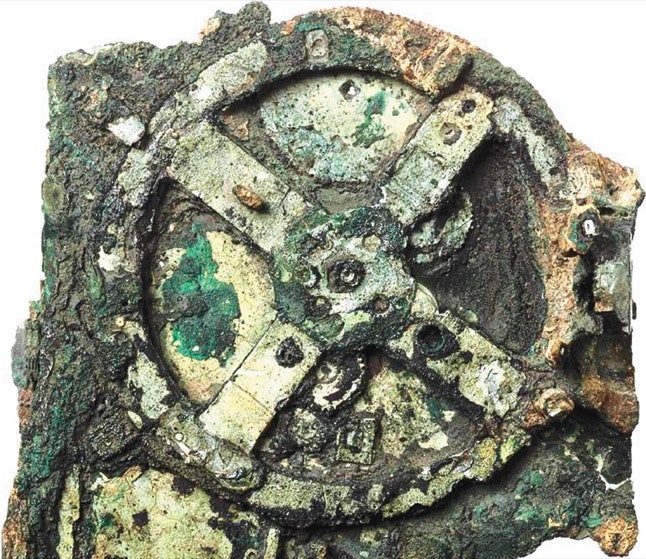
In 1901, Greek sponge divers exploring a shipwreck near the island of Antikythera made an astonishing discovery.
Among statues, pottery, and ancient treasures lay what appeared to be a heavily corroded lump of bronze. At first, no one paid much attention to it. Years later, researchers noticed tiny gears hidden inside the object.
That discovery completely changed its importance.
Dating to approximately the second century BCE, the Antikythera Mechanism is now recognized as the oldest known analog computer ever discovered.
The device contains more than thirty bronze gears arranged with extraordinary precision. Modern imaging techniques have revealed that it could calculate the positions of the Sun and Moon, predict eclipses, and track complex astronomical cycles.
Scientists understand much of what the mechanism accomplished.
The real mystery is how ancient Greek engineers developed technology this sophisticated.
Nothing comparable appears again in surviving history for more than a thousand years. Were there workshops producing similar machines? Were many lost over time? Or was this an extraordinary one-of-a-kind masterpiece?
No one knows.
The Antikythera Mechanism remains one of the greatest technological surprises ever uncovered from the ancient world.
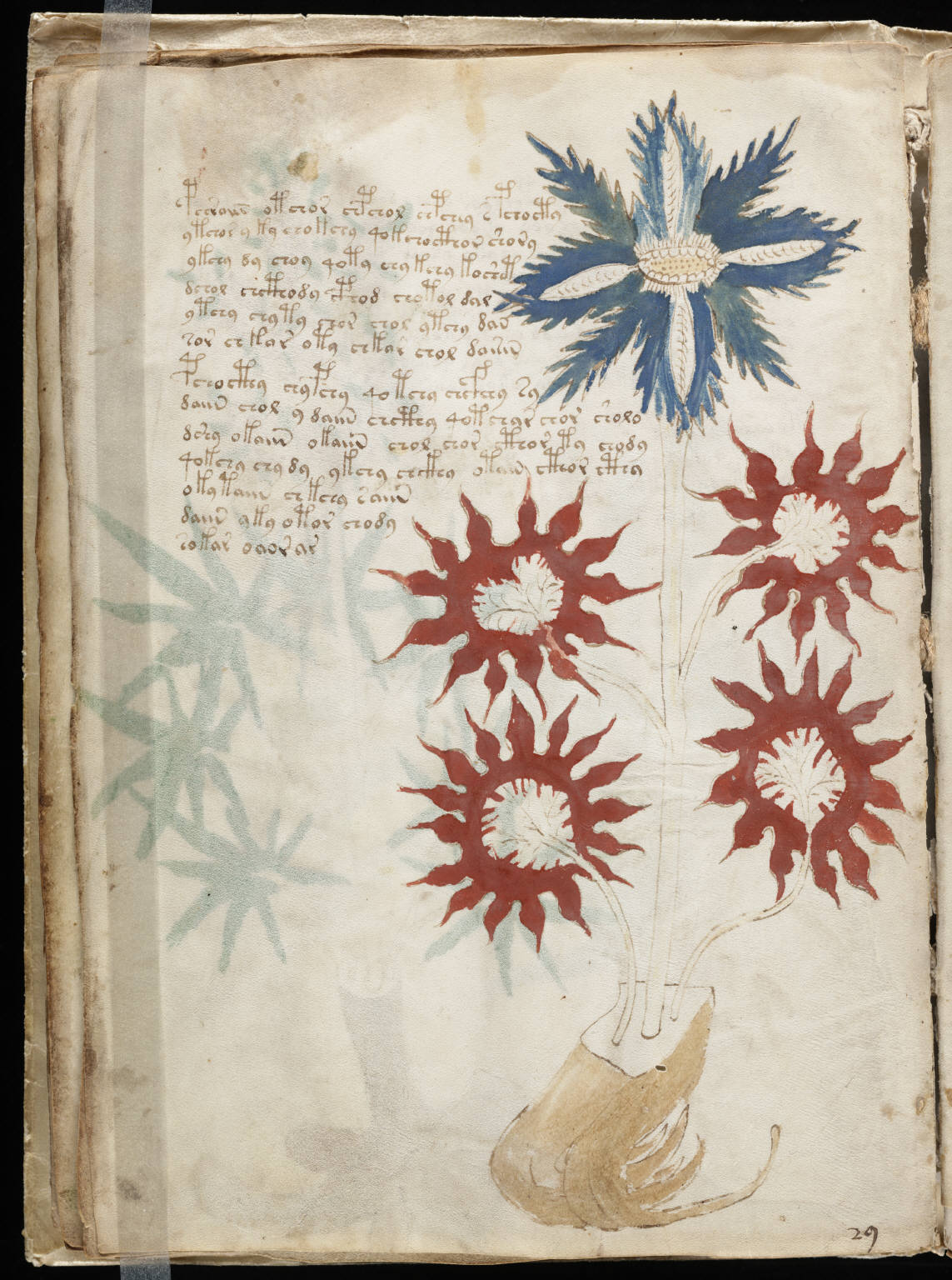
2. The Voynich Manuscript
Imagine opening a beautifully illustrated medieval book only to realize that nobody on Earth can read it.
That is the mystery of the Voynich Manuscript.
Created sometime in the early fifteenth century, the manuscript contains hundreds of pages filled with unknown writing, mysterious diagrams, unusual plants, astronomical charts, and strange illustrations of people.
The script resembles a real language.
Words repeat in predictable patterns. Sentences appear organized according to grammatical rules. Statistical analysis suggests the text follows linguistic structures rather than random gibberish.
Yet no one has successfully deciphered it.
For over a century, historians, cryptographers, linguists, computer scientists, and even artificial intelligence systems have attempted to decode its contents.
Every proposed solution has failed to convince experts.
Some believe it represents a forgotten language.
Others think it is an elaborate cipher.
A few researchers argue it could be an exceptionally sophisticated medieval hoax.
Until the text can be read with confidence, the Voynich Manuscript remains one of history’s most captivating puzzles.
3. The Roman Dodecahedrons
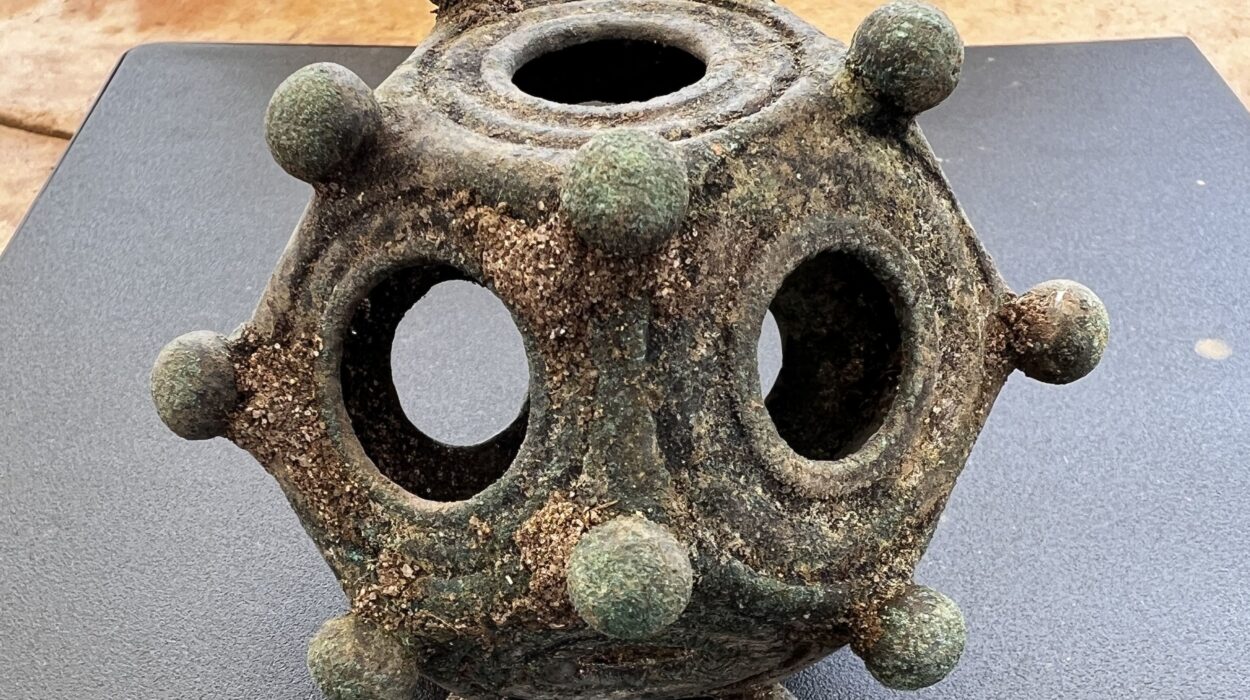
More than one hundred Roman dodecahedrons have been discovered across Europe.
Each object shares a remarkably similar design.
They are hollow bronze artifacts shaped with twelve pentagonal faces. Every face contains a circular hole, and each corner features a small rounded knob.
They date primarily between the second and fourth centuries CE.
The astonishing part is this:
Nobody knows what they were for.
Roman civilization documented nearly everything. Military equipment, engineering techniques, farming practices, religious rituals, and government records have survived in remarkable detail.
Yet no known Roman text clearly explains these peculiar objects.
Researchers have proposed dozens of theories.
Some believe they measured distances.
Others think they served religious ceremonies.
Still others suggest they functioned as candle holders, surveying instruments, knitting tools, range finders, or astronomical devices.
Each theory explains certain features while leaving other questions unanswered.
After centuries of study, the Roman dodecahedron continues to resist a definitive explanation.
4. The Phaistos Disc
Discovered in 1908 within the ruins of the Minoan palace of Phaistos on Crete, the Phaistos Disc immediately puzzled archaeologists.
Made from fired clay, the circular object contains symbols arranged in a beautiful spiral.
Unlike handwritten inscriptions, these symbols were stamped into the clay before firing, making the disc one of the earliest known examples of movable-type printing.
Its forty-five unique symbols depict people, animals, tools, plants, and geometric designs.
The challenge is simple.
Nobody knows what they say.
Only one example has ever been found.
Without additional texts for comparison, deciphering the symbols becomes extraordinarily difficult.
Researchers have suggested the disc may contain a prayer, military record, religious hymn, calendar, legal document, or ceremonial text.
Every proposal remains speculative.
The Phaistos Disc continues to guard the voice of a civilization that disappeared thousands of years ago.
5. The Baghdad Battery
Could people have discovered electricity nearly two thousand years ago?
That question emerged after archaeologists uncovered unusual clay jars near Baghdad during the twentieth century.
Each jar contains a copper cylinder surrounding an iron rod.
When modern researchers recreated the design and filled the containers with acidic liquids such as vinegar or grape juice, they successfully generated small electrical currents.
This experiment inspired the famous “Baghdad Battery” hypothesis.
Could these jars have powered electroplating or served some unknown electrical purpose?
Perhaps.
But the evidence remains incomplete.
No wires, switches, electrical tools, or powered devices have been discovered alongside the jars.
Alternative explanations suggest they may have served religious rituals, medicine, or simple storage.
Scientists continue debating their true function.
The possibility of ancient electricity remains intriguing but unproven.
6. The Crystal Skulls
Few archaeological objects have generated as much fascination as crystal skulls.
These life-sized skulls carved from clear quartz became famous during the nineteenth and twentieth centuries.
Legends claimed they originated from ancient Mesoamerican civilizations and possessed mysterious powers.
Some stories even suggested they could heal illnesses or reveal hidden knowledge.
Scientific investigation tells a different story.
Microscopic analysis of several famous crystal skulls revealed machining marks consistent with modern rotary tools unavailable to ancient civilizations.
Most experts now believe the best-known examples were manufactured in the nineteenth century, likely in Europe.
Yet some smaller crystal skulls discovered through legitimate archaeological excavations remain less well understood.
The broader mystery today is not supernatural power but understanding the origins, craftsmanship, and cultural significance of authentic quartz carvings from ancient societies.
The story of crystal skulls also serves as an important reminder that archaeology must carefully distinguish genuine discoveries from later creations.
7. The Sacsayhuamán Megaliths
Overlooking the Peruvian city of Cusco stands one of the greatest engineering achievements of the ancient Americas.
The walls of Sacsayhuamán consist of enormous stone blocks weighing dozens or even hundreds of tons.
Many possess irregular polygonal shapes.
Yet they fit together so perfectly that even a thin knife blade cannot pass between them.
No mortar holds the walls together.
Instead, every stone was carefully shaped to interlock with its neighbors.
Researchers understand that Inca builders likely used stone hammers, abrasion techniques, and enormous human labor forces.
Even so, important questions remain.
Exactly how did they achieve such extraordinary precision without iron tools?
How were the largest stones transported across difficult terrain?
The walls have survived centuries of powerful earthquakes that destroyed many later Spanish buildings.
Their resilience continues to impress engineers today.
8. The Cochno Stone
Hidden beneath layers of history in Scotland lies a prehistoric masterpiece.
The Cochno Stone is covered with hundreds of mysterious carvings dating back approximately five thousand years.
Its surface displays concentric circles, spirals, grooves, cup marks, and complex geometric patterns.
The artwork clearly required careful planning.
But what does it represent?
Researchers have proposed numerous explanations.
Perhaps it records astronomical observations.
Perhaps it marks sacred territory.
Perhaps it served religious ceremonies.
Perhaps it maps rivers, stars, or ancient landscapes.
Without written records, certainty remains impossible.
The Cochno Stone demonstrates how meaning itself can disappear over thousands of years, leaving only beautiful symbols whose original message has been lost.
9. The Lycurgus Cup
The Lycurgus Cup appears ordinary until light passes through it.
Viewed under reflected light, it looks green.
When illuminated from behind, it suddenly glows brilliant red.
For centuries, no one understood how Roman artisans achieved this astonishing effect.
Modern scientific analysis eventually revealed tiny particles of gold and silver suspended within the glass.
These nanoparticles interact with light in remarkably sophisticated ways.
Scientists now understand the physics responsible for the color change.
The lingering mystery concerns the craftsmen themselves.
Did Roman glassmakers intentionally engineer this nanostructure?
Or did they accidentally discover a manufacturing process that produced extraordinary optical properties?
Without written descriptions of their methods, the answer remains uncertain.
The Lycurgus Cup beautifully illustrates how ancient artisans sometimes achieved technological sophistication that modern observers never expected.
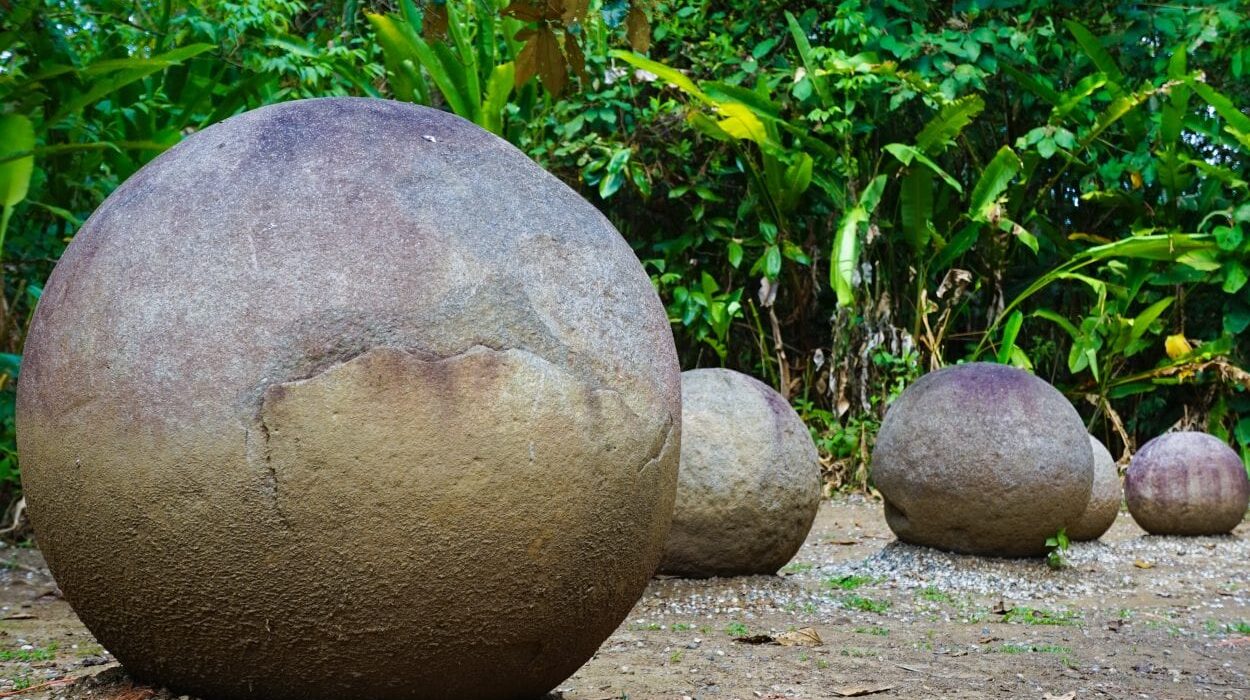
10. The Stone Spheres of Costa Rica
Across Costa Rica, archaeologists have discovered hundreds of nearly perfect stone spheres.
Some measure only a few centimeters.
Others exceed two meters in diameter and weigh more than fifteen tons.
Created between roughly 300 and 1500 CE, they represent one of the most remarkable examples of prehistoric stone craftsmanship.
Researchers believe artisans shaped them using stone tools, repeated grinding, and careful polishing.
The mystery is not how they were made.
It is why.
Some spheres appear near ancient settlements.
Others were arranged in geometric patterns.
A few may have marked important ceremonial locations or symbolized political authority.
Unfortunately, the cultures responsible left no written explanation.
Popular myths attribute the spheres to Atlantis, extraterrestrials, or advanced lost civilizations.
There is no scientific evidence supporting these ideas.
The genuine mystery remains far more compelling.
The people who invested enormous effort creating these almost perfectly round monuments clearly considered them meaningful.
Exactly what they represented has disappeared with time.
Why These Mysteries Continue to Fascinate Us
The greatest archaeological mysteries are not fascinating because they promise impossible answers.
They fascinate us because they remind us how incomplete human knowledge still is.
Every generation believes it understands the past better than the generation before.
Then an unexpected discovery changes everything.
The Antikythera Mechanism revealed ancient engineering far beyond previous expectations.
The Roman dodecahedrons exposed gaps in our understanding of everyday Roman life.
The Voynich Manuscript continues to challenge even modern computing power.
Each artifact teaches the same lesson.
History is still being written.
Archaeologists continue excavating ancient cities hidden beneath deserts, forests, glaciers, and oceans. Every excavation has the potential to uncover another object that reshapes what we know about human civilization.
Science Does Not Fear Mystery
One of the greatest misconceptions about science is that it claims to have every answer.
In reality, science thrives on unanswered questions.
When evidence is incomplete, researchers admit uncertainty.
When new discoveries emerge, old ideas are tested again.
When better evidence appears, conclusions change.
This willingness to revise knowledge is one of science’s greatest strengths.
History offers many examples.
Ancient Egyptian hieroglyphs remained unread until the Rosetta Stone made their decipherment possible.
The Maya script puzzled scholars for generations before gradual breakthroughs unlocked much of its meaning.
Entire civilizations, once believed mythical, have been rediscovered through archaeology.
Today’s mysteries may become tomorrow’s textbook knowledge.
Or they may remain unsolved for centuries.
The Past Still Has Secrets
Standing before one of these artifacts can be a surprisingly emotional experience.
A bronze object touched by Roman hands nearly two thousand years ago.
A clay disc stamped by a Bronze Age artisan.
A medieval manuscript written in an unknown language.
A massive stone carved by people whose names have been forgotten.
Each object reminds us that history is filled not only with answers but also with silence.
These artifacts have survived earthquakes, floods, wars, fires, looting, and the collapse of entire civilizations. They have outlived kingdoms, religions, and empires. Yet despite all the technology available today, some continue to guard their secrets.
Perhaps somewhere beneath an undiscovered ruin lies the missing inscription that explains the Roman dodecahedrons. Perhaps another Phaistos Disc waits beneath layers of earth. Perhaps an overlooked document hidden in an archive will finally unlock the Voynich Manuscript.
Until those discoveries are made, these mysterious artifacts continue to inspire curiosity, debate, and wonder.
They remind us that the greatest adventure in archaeology is not proving extraordinary claims—it is patiently searching for extraordinary evidence.
And somewhere beneath the soil of our planet, history is almost certainly still waiting to surprise us once again.