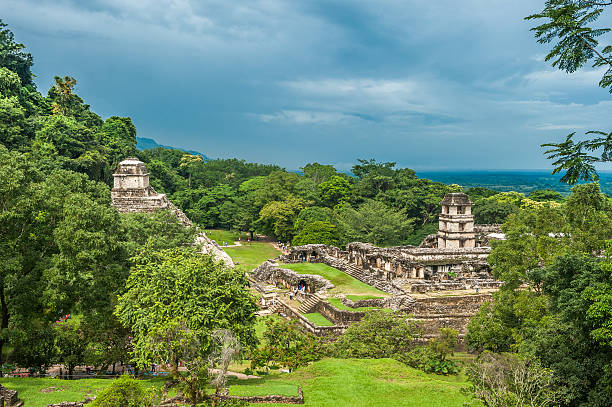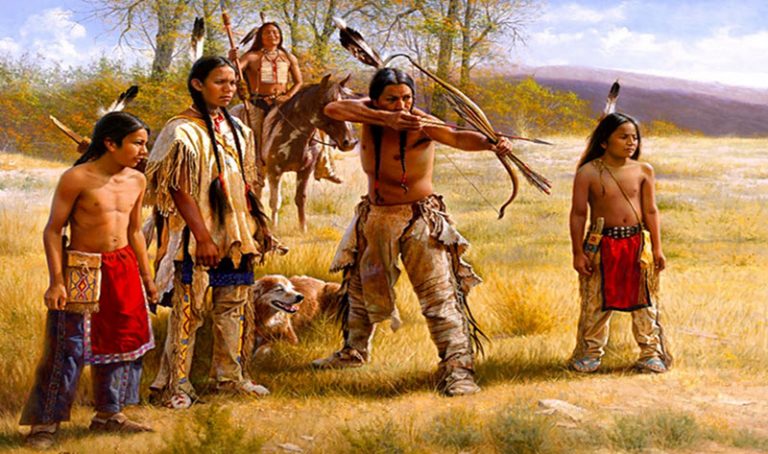
Long before European ships appeared on the horizon, the Americas were home to countless Indigenous societies. These peoples built cities, cultivated crops, created trade networks stretching across vast distances, and developed rich spiritual traditions that shaped their worlds for thousands of years. Yet many of these ancient communities seem to have vanished from history.
Their cities were abandoned. Their languages disappeared. Their names survived only in fragments of oral traditions or archaeological records. In some cases, entire cultures appeared to fade away, leaving behind mysterious earthworks, stone structures, pottery fragments, and unanswered questions.
The phrase “vanished tribes” can be misleading. Most ancient American peoples did not simply disappear into thin air. Many were absorbed into other communities, transformed by environmental changes, displaced by warfare, devastated by disease, or evolved into descendant cultures that still exist today. Nevertheless, the stories of these ancient societies remain among the most fascinating chapters in the history of the Americas.
Their ruins remind us that civilizations can rise, flourish, and change dramatically over time. Their stories challenge old stereotypes that once portrayed pre-Columbian America as sparsely populated or culturally simple. Modern archaeology has revealed a very different picture—one of innovation, complexity, resilience, and extraordinary human achievement.
The vanished tribes of ancient America are not merely relics of the distant past. Their legacy continues to shape the cultures, landscapes, and histories of the modern world.
A Continent Filled With Ancient Peoples
When many people think about ancient civilizations, they often imagine Egypt, Mesopotamia, Greece, or Rome. Yet long before Europeans arrived, the Americas contained an astonishing diversity of societies.
From the Arctic tundra to the tropical forests of South America, Indigenous peoples adapted to nearly every environment imaginable. Some were hunter-gatherers. Others practiced sophisticated agriculture. Some lived in small villages, while others built large urban centers that rivaled cities elsewhere in the world.
Archaeologists estimate that millions of people lived throughout the Americas before European contact. Thousands of distinct cultures and languages existed.
This vast diversity means there was never a single “Native American civilization.” Instead, there were countless nations, tribes, chiefdoms, and kingdoms, each with its own history.
Some survived into the modern era. Others underwent profound transformations. A few seem to have vanished entirely, leaving only traces behind.
The Mystery of Lost Cultures
The idea of a vanished tribe often begins with a mystery.
Explorers discover abandoned settlements deep within forests. Archaeologists uncover ceremonial mounds in remote landscapes. Ancient roads appear where no modern communities remain.
Questions naturally follow.
Who built these structures?
Why were they abandoned?
What happened to the people who once lived there?
For centuries, many answers remained elusive.
Early European settlers frequently underestimated Indigenous societies and often assumed that impressive ruins must have been built by some mysterious lost race.
Modern archaeology has shown that these assumptions were incorrect.
The builders were Indigenous peoples themselves—creative, organized, and capable of remarkable achievements.
The real mystery is not who built these places but how their societies changed over time.
The Ancient Mound Builders
One of the most famous examples of a seemingly vanished culture involves the mound-building societies of North America.
Across large areas of what is now the United States, ancient peoples constructed enormous earthen mounds.
Some were shaped like animals. Others served as burial sites, ceremonial centers, or platforms for important structures.
When European settlers encountered these earthworks, many found it difficult to believe that Native American ancestors had built them.
As a result, myths emerged about a lost race of builders.
Archaeological evidence eventually revealed the truth.
The mounds were created by Indigenous cultures over many centuries.
Several distinct mound-building traditions existed, each representing different peoples and historical periods.
Although many of these societies changed dramatically or disappeared as separate cultural entities, their descendants contributed to later Indigenous nations.
The mounds remain powerful reminders of their achievements.
The Adena People
Among the earliest major mound-building cultures were the Adena people.
They lived primarily in the Ohio River Valley between roughly 1000 BCE and 200 BCE.
The Adena constructed burial mounds and ceremonial earthworks that required enormous amounts of labor.
Their society appears to have been organized around regional communities connected by shared religious traditions.
Beautifully crafted artifacts have been discovered within Adena burial sites, including copper ornaments, stone pipes, and finely worked tools.
These objects suggest long-distance trade networks extending across large regions.
Yet the Adena culture eventually transformed.
Rather than disappearing suddenly, it gradually evolved into other cultural traditions.
Its influence can be seen in later societies that inherited and expanded many of its practices.
The Hopewell Tradition
After the Adena period came the remarkable Hopewell tradition.
The Hopewell peoples flourished between approximately 100 BCE and 500 CE.
Their influence spread across much of eastern North America.
Hopewell communities created some of the most impressive earthworks ever built on the continent.
Massive geometric enclosures, ceremonial complexes, and elaborate burial sites reflected a sophisticated social and spiritual world.
Trade connected distant regions.
Materials from the Rocky Mountains, the Gulf Coast, the Great Lakes, and beyond found their way into Hopewell sites.
The scale of these networks astonishes modern researchers.
Yet around 500 CE, many major Hopewell centers were abandoned.
The reasons remain debated.
Climate changes, shifts in trade patterns, social transformations, and political developments may all have played roles.
The people themselves did not simply vanish. Rather, their culture evolved into new forms that archaeologists continue to study.
The Mississippian World
Centuries after the Hopewell tradition declined, another powerful culture emerged.
The Mississippian peoples created some of the largest urban centers in pre-Columbian North America.
Their most famous city was Cahokia.
Located near present-day St. Louis, Cahokia became one of the largest cities north of Mexico before European contact.
At its peak around 1100 CE, tens of thousands of people may have lived there.
Massive earthen pyramids dominated the landscape.
Complex political systems coordinated labor and resources.
Trade networks connected distant communities.
Yet by around 1350 CE, Cahokia had largely been abandoned.
Why?
Researchers continue to investigate.
Environmental stress, political instability, resource depletion, disease, and social unrest may all have contributed.
The disappearance of Cahokia remains one of North America’s greatest archaeological mysteries.
The Ancestral Puebloans
In the American Southwest, another remarkable culture flourished.
The people once called the Anasazi are now more commonly known as the Ancestral Puebloans.
Their descendants include modern Pueblo communities.
The Ancestral Puebloans built extraordinary settlements across present-day New Mexico, Arizona, Colorado, and Utah.
Perhaps the most famous are the cliff dwellings of Mesa Verde National Park.
These stone structures seem almost impossible, perched high within sandstone alcoves.
Entire communities lived in these cliffside settlements.
They farmed crops, created pottery, and developed complex social networks.
For centuries, their culture flourished.
Then, during the late thirteenth century, many major settlements were abandoned.
Drought appears to have played an important role.
Environmental pressures likely combined with social and political factors.
The people did not vanish completely.
Instead, they migrated and became part of communities whose descendants remain active today.
Their story is one of adaptation rather than extinction.
The Mystery of Chaco Canyon
One of the most fascinating sites in North America is Chaco Culture National Historical Park.
Between approximately 850 and 1150 CE, Chaco Canyon became a major center of culture, trade, and ceremony.
Massive stone buildings known as great houses dominated the landscape.
Some contained hundreds of rooms.
Roads connected Chaco to distant regions.
The engineering achievements were extraordinary.
Yet after centuries of prominence, Chaco’s importance declined.
Its great buildings were gradually abandoned.
Today, archaeologists continue to debate why.
Changing climate conditions likely played a role, but the full story remains complex.
The ruins stand as silent testimony to a society that once shaped much of the Southwest.
The Hohokam and Their Desert Kingdom
In the deserts of present-day Arizona, the Hohokam created one of North America’s most impressive irrigation systems.
For centuries, they constructed extensive canals that transformed dry landscapes into productive agricultural regions.
Their engineering skills supported large populations.
Villages flourished across the region.
Trade connected them to distant communities in Mexico and beyond.
Then, around the fifteenth century, many Hohokam settlements were abandoned.
Environmental changes, flooding, drought, social upheaval, and other factors may have contributed.
Archaeologists continue investigating the reasons.
The disappearance of the Hohokam as a distinct archaeological culture remains one of the Southwest’s enduring mysteries.
The Forgotten Cities of the Mississippi Valley
For generations, people imagined pre-Columbian North America as largely wilderness.
Modern research has overturned that image.
The Mississippi Valley once contained numerous towns, ceremonial centers, and urban settlements.
Many were connected through trade and cultural exchange.
These communities built mounds, plazas, temples, and public spaces.
Their political systems coordinated large populations.
Yet many centers declined before sustained European contact.
Climate fluctuations may have stressed agricultural systems.
Political fragmentation may have weakened regional networks.
Whatever the causes, many settlements were abandoned, leaving future generations to wonder about their fate.
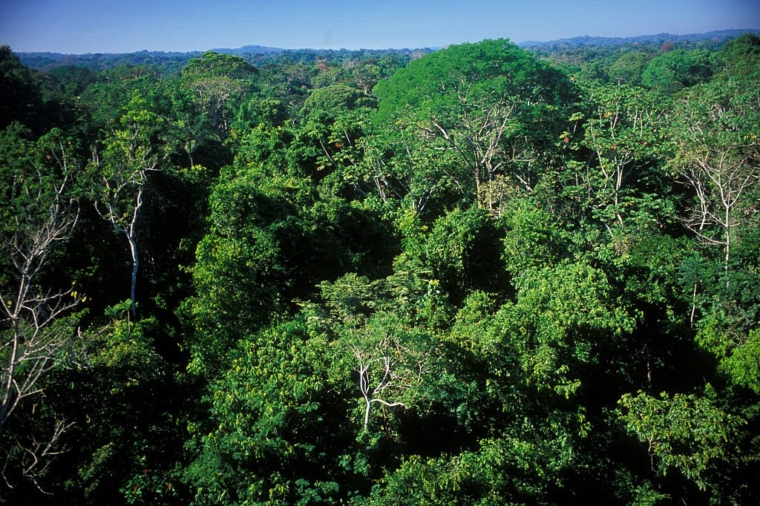
The Ancient Peoples of the Amazon
For much of modern history, scholars believed that the Amazon rainforest could support only small, scattered populations.
Recent discoveries have dramatically changed that understanding.
Archaeologists have uncovered evidence of extensive settlements, engineered landscapes, and sophisticated societies throughout parts of the Amazon.
Ancient peoples built roads, canals, reservoirs, and earthworks.
Some regions may have supported surprisingly large populations.
The rainforest itself often concealed these achievements.
Dense vegetation hid structures from view for centuries.
New technologies such as lidar have revealed entire landscapes shaped by human activity.
Many of these societies had already changed or disappeared before Europeans documented them.
Their stories are only beginning to emerge.
Disease and the Collapse of Communities
One of the most devastating forces in Indigenous American history arrived after European contact.
Diseases such as smallpox, measles, and influenza spread rapidly among populations with no prior exposure.
The consequences were catastrophic.
Entire communities suffered enormous losses.
In some regions, populations declined dramatically within a few generations.
The scale of the devastation remains difficult to comprehend.
Many societies weakened or fragmented under these pressures.
Traditional leadership structures collapsed.
Knowledge was lost.
Communities merged, relocated, or disappeared.
When later Europeans encountered certain regions, they often failed to realize how much had already changed.
The apparent absence of earlier populations sometimes reflected recent demographic disasters rather than ancient mysteries.
The Role of Climate Change
Climate has played a powerful role throughout human history.
Ancient American societies were no exception.
Droughts, floods, temperature shifts, and changing rainfall patterns affected agriculture and settlement patterns.
The abandonment of several major centers appears linked, at least in part, to environmental stress.
The famous droughts of the American Southwest likely contributed to migrations among Ancestral Puebloan communities.
Changes in river systems may have affected other cultures.
Climate alone rarely explains societal collapse.
Human communities often adapt creatively to environmental challenges.
However, environmental pressures can combine with political, economic, and social factors to produce significant transformations.
Warfare and Political Change
Not every vanished culture disappeared because of environmental factors.
Conflict also shaped history.
Archaeological evidence indicates that warfare occurred among many ancient American societies.
Competition over resources, territory, trade routes, and political influence sometimes led to violence.
Fortified settlements, defensive structures, and skeletal injuries reveal periods of conflict.
Political systems could rise and fall.
Alliances shifted.
Power centers changed.
Sometimes entire populations relocated.
These processes contributed to cultural transformations that archaeologists now observe as disappearances.
Cultures That Never Truly Vanished
One of the most important lessons of modern archaeology is that many supposedly vanished tribes did not actually vanish.
Instead, they changed.
Descendant communities often survived, adapted, and continued their traditions in new forms.
The descendants of the Ancestral Puebloans still live in the Southwest.
Many Indigenous nations preserve oral histories connecting them to ancient places.
Languages evolved.
Political systems transformed.
Communities migrated.
Yet cultural continuity persisted.
The notion of complete disappearance often reflects the limitations of historical records rather than reality.
Many ancient peoples remain present through their descendants.
The Problem With the Word “Vanished”
The word “vanished” carries a certain drama.
It evokes images of empty cities and lost civilizations.
Yet historians and archaeologists increasingly use the term cautiously.
Cultures are rarely static.
Human societies constantly evolve.
People move, adapt, intermarry, and reorganize.
A culture that appears to disappear in the archaeological record may actually continue under a different identity.
The story is often one of transformation rather than extinction.
Recognizing this reality helps create a more accurate understanding of Indigenous history.
The Search for Lost Histories
Archaeologists continue uncovering new evidence every year.
Ancient villages emerge from beneath forests.
Hidden earthworks appear through lidar surveys.
Artifacts reveal forgotten trade networks.
DNA analysis sheds light on population movements.
Oral traditions provide valuable perspectives that complement archaeological findings.
The picture of ancient America grows more detailed with each discovery.
Far from being a land of isolated tribes, pre-Columbian America contained dynamic societies connected through trade, diplomacy, migration, and shared ideas.
The so-called vanished tribes are becoming less mysterious as researchers piece together their histories.
Yet many questions remain unanswered.
What Their Stories Teach Us
The histories of these ancient peoples reveal both the fragility and resilience of human societies.
Cities can rise and fall.
Political systems can collapse.
Environmental challenges can reshape entire regions.
Yet people adapt.
Communities survive.
Cultures transform.
The stories of ancient America remind us that history is rarely simple.
Civilizations do not always end in dramatic catastrophes.
More often, they change gradually through countless decisions made by ordinary people responding to extraordinary circumstances.
This perspective makes the past feel deeply human.
The Legacy of Ancient America
Today, the landscapes of North and South America remain filled with traces of ancient peoples.
Earthworks stretch across river valleys.
Cliff dwellings overlook desert canyons.
Mounds rise from forests and fields.
Hidden roads lie beneath dense vegetation.
These places are more than archaeological sites.
They are reminders of human creativity, ambition, spirituality, and resilience.
The peoples who built them were not mysterious strangers from some forgotten race.
They were Indigenous Americans whose descendants continue to shape the continent today.
Their achievements deserve recognition and respect.
Conclusion
The vanished tribes of ancient America are among history’s most compelling stories, not because they disappeared without explanation, but because their histories reveal the complexity of human civilization. From the mound builders of the Ohio Valley to the great urban centers of the Mississippi region, from the cliff dwellers of the Southwest to the hidden societies of the Amazon, these cultures transformed landscapes and left enduring legacies.
Modern archaeology has shown that many ancient American societies were far more sophisticated and interconnected than earlier generations realized. Their cities, engineering projects, trade networks, and spiritual traditions testify to remarkable achievements. While some communities were abandoned and certain cultural identities faded, the people themselves often survived through migration, adaptation, and integration into descendant societies.
The mystery of the vanished tribes is therefore not simply a story of disappearance. It is a story of transformation. It is a reminder that civilizations are living things, constantly changing in response to environmental pressures, political shifts, conflict, opportunity, and human choice.
Their ruins still stand across the Americas, silent but powerful. They invite us to look beyond myths and stereotypes and to recognize the extraordinary depth of Indigenous history. Every mound, cliff dwelling, earthwork, and forgotten settlement carries a message from the past—a reminder that countless generations lived, dreamed, built, loved, struggled, and shaped the world long before modern nations existed.
The tribes may seem vanished, but their legacy remains woven into the land itself, waiting to be understood by those willing to listen to the stories hidden beneath the soil.