When most people think about ancient history, their minds often travel to Egypt, Greece, Rome, or Mesopotamia. School textbooks frequently focus on these civilizations, leaving many with the mistaken impression that the rest of the world played only a minor role in shaping human history. Few regions have been overlooked more than Africa.
Yet Africa is not only the birthplace of humanity—it is also home to some of the world’s oldest, richest, and most remarkable civilizations. Across its vast deserts, dense forests, fertile river valleys, towering mountains, and tropical coastlines, countless kingdoms rose and fell over thousands of years. They built magnificent cities, controlled lucrative trade routes, developed sophisticated political systems, produced extraordinary art, and connected continents through commerce and culture.
Many of these kingdoms rivaled or even surpassed their contemporaries in wealth and influence. Some controlled international trade stretching from Europe to India. Others became centers of scholarship where students traveled from distant lands to study mathematics, astronomy, medicine, law, and religion. Powerful rulers commanded large armies, built impressive palaces, and governed diverse populations across enormous territories.
Despite these achievements, many African kingdoms remain largely unknown outside academic circles. Colonial-era narratives often minimized Africa’s historical complexity, while archaeological research in some regions began much later than in Europe or the Middle East. As a result, generations grew up without learning about civilizations that played vital roles in world history.
Today, historians, archaeologists, linguists, and genetic researchers continue uncovering remarkable evidence about Africa’s forgotten past. Their discoveries reveal societies that were innovative, resilient, and deeply connected to the wider world.
The story of Africa is not one of isolation. It is a story of trade, exploration, cultural exchange, technological innovation, political ambition, artistic brilliance, and human creativity. These forgotten kingdoms remind us that history is far richer and more diverse than many of us were taught.
Africa Before Colonial Borders
Modern political maps often make it difficult to imagine Africa as it existed centuries ago.
Today’s countries did not exist in the distant past.
Instead, the continent contained hundreds of kingdoms, empires, city-states, and chiefdoms, each with its own language, traditions, government, and economy.
Some states remained relatively small.
Others expanded into vast empires controlling millions of people.
Rivers, deserts, forests, mountains, and coastlines shaped where civilizations developed.
The Nile Valley supported powerful kingdoms.
The Sahara Desert became crossed by long-distance trade routes.
The Niger River nurtured prosperous cities.
The East African coast connected Africa with Arabia, Persia, India, and later China through maritime trade.
Far from being isolated, Africa participated actively in regional and global exchange networks for thousands of years.
The Kingdom of Kush
One of Africa’s greatest forgotten civilizations was the Kingdom of Kush.
Located south of ancient Egypt in what is now Sudan, Kush emerged around the second millennium BCE and flourished for more than a thousand years.
Because of its close relationship with Egypt, Kush is sometimes overshadowed by its famous northern neighbor.
Yet Kush developed its own distinctive culture, language, religion, architecture, and political traditions.
Its rulers built impressive pyramids—more than survive in Egypt today, though generally smaller in size.
At one point during the eighth century BCE, Kush became so powerful that its kings conquered Egypt and ruled as the Twenty-Fifth Dynasty.
These rulers promoted monumental construction, restored temples, and maintained control over one of the ancient world’s greatest civilizations.
Kush also became an important center of iron production and long-distance trade.
Gold, ivory, ebony, incense, livestock, and exotic animals moved through its markets.
Even after losing Egypt, Kush remained an influential regional power for centuries.
Its capital eventually shifted to Meroë, where remarkable archaeological remains continue revealing new insights into this sophisticated civilization.
The Land of Punt
Few ancient places inspire as much curiosity as the Land of Punt.
Egyptian records describe Punt as a prosperous trading partner famous for gold, incense, ebony, exotic animals, and rare plants.
Although scholars still debate its precise location, most believe Punt existed somewhere along the Horn of Africa, likely encompassing parts of modern Eritrea, Djibouti, Somalia, or eastern Sudan.
Ancient Egyptian reliefs depict expeditions returning with incense trees, monkeys, giraffes, leopard skins, and valuable goods.
These scenes demonstrate that African societies beyond Egypt maintained organized governments capable of international diplomacy and commerce.
While Punt’s political structure remains mysterious, it clearly represented far more than a remote trading outpost.
It was an important regional civilization participating in complex economic relationships thousands of years ago.
Axum: A Forgotten Superpower
Among Africa’s most remarkable ancient civilizations was the Kingdom of Axum.
Located in present-day Ethiopia and Eritrea, Axum flourished between the first and seventh centuries CE.
Historians often rank Axum alongside Rome, Persia, China, and India as one of the great powers of its era.
Its strategic location allowed merchants to control trade between Africa, Arabia, India, and the Mediterranean.
Ivory, gold, spices, textiles, glassware, and precious stones passed through Axumite ports.
The kingdom even minted its own coins, demonstrating remarkable economic sophistication.
Axum also became one of the earliest states to officially adopt Christianity during the fourth century.
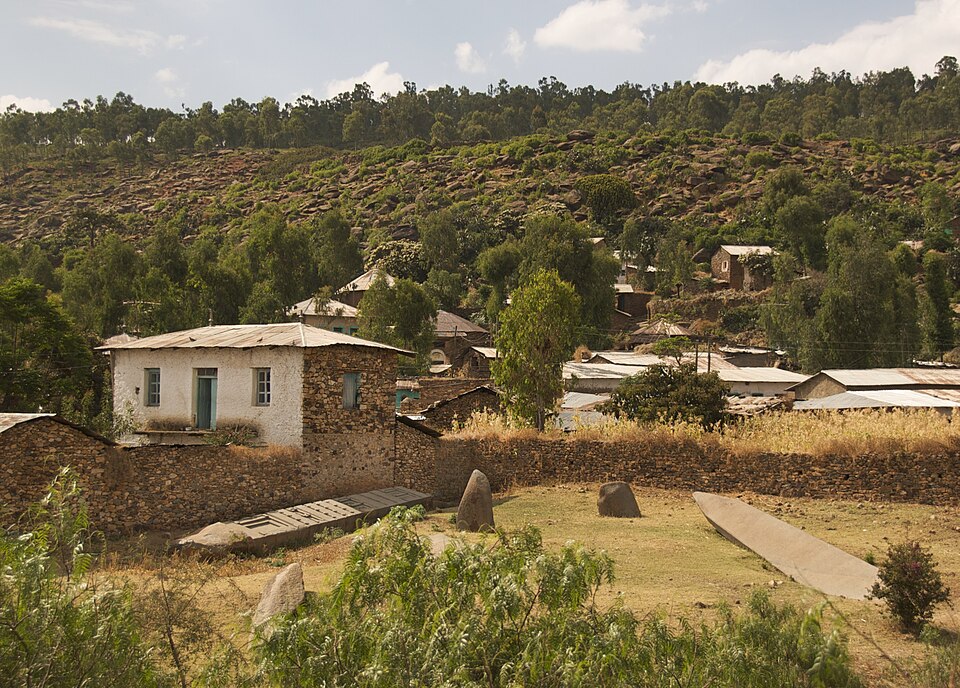
Its towering stone monuments, known as stelae, remain among Africa’s greatest architectural achievements.
Some rise more than twenty meters into the sky.
Although Axum eventually declined as trade routes shifted, its cultural legacy continues influencing Ethiopia today.
The Garamantes of the Sahara
When most people imagine the Sahara Desert, they picture endless dunes impossible for civilization.
Yet ancient history tells a different story.
The Garamantes established a flourishing kingdom in what is now southwestern Libya.
They accomplished something extraordinary.
Using underground irrigation systems called foggaras, they transported groundwater across long distances to support agriculture in one of Earth’s harshest environments.
This engineering allowed towns, farms, and trade centers to thrive deep within the desert.
The Garamantes connected Mediterranean civilizations with sub-Saharan Africa through caravan trade.
They exchanged gold, salt, livestock, textiles, and other valuable goods.
Recent archaeological discoveries continue transforming our understanding of this remarkable desert civilization.
Ghana: The First Great West African Empire
Despite its name, the ancient Ghana Empire occupied territory primarily within present-day southeastern Mauritania and western Mali rather than the modern nation of Ghana.
Beginning around the eighth century, Ghana became one of West Africa’s wealthiest empires.
Its prosperity depended largely upon controlling trans-Saharan trade.
Gold from southern forests traveled north.
Salt from the Sahara moved south.
Both commodities were enormously valuable.
Ghana taxed merchants crossing its territory, generating tremendous wealth.
Arab travelers described impressive cities where merchants from many cultures conducted business.
The empire’s rulers maintained powerful armies that protected trade routes and ensured political stability.
Although Ghana eventually declined, it established economic and political traditions that later empires inherited.
The Mali Empire
Following Ghana’s decline, the Mali Empire emerged as one of history’s greatest African civilizations.
Founded during the thirteenth century, Mali expanded rapidly under capable rulers.
Its most famous emperor, Mansa Musa, became legendary for his extraordinary wealth.
During his pilgrimage to Mecca in 1324, he distributed so much gold that contemporary accounts suggest local gold prices temporarily declined in parts of Egypt.
While some stories about his immense riches may have grown through retelling, there is no doubt that Mali controlled some of the world’s richest gold-producing regions.
Cities such as Timbuktu became international centers of learning.
Scholars studied theology, mathematics, astronomy, medicine, law, grammar, and literature.
Libraries preserved thousands of manuscripts.
Far from being isolated, Mali participated actively in global intellectual and commercial networks.
Songhai: The Largest Empire in West Africa
As Mali weakened, the Songhai Empire rose to prominence.
Centered on the city of Gao, Songhai eventually became the largest empire in West African history.
Its rulers developed efficient administration across enormous territories.
Trade flourished.
Agriculture expanded.
Education continued thriving in Timbuktu and other cities.
Scholars from across the Islamic world visited Songhai’s learning centers.
The empire’s success depended upon effective government, military organization, and control of major trade routes.
Although Moroccan forces conquered Songhai in 1591 using firearms, its cultural achievements continued influencing the region for generations.
Kanem-Bornu
East of Lake Chad, another remarkable civilization flourished for more than a thousand years.
The Kanem-Bornu Empire emerged around the ninth century and remained influential into the nineteenth century.
Its strategic location allowed control over important caravan routes crossing the central Sahara.
Trade included horses, textiles, salt, copper, and enslaved people.
Islam spread gradually throughout the kingdom while local traditions also remained important.
Strong rulers developed sophisticated administrative systems capable of governing vast territories.
Kanem-Bornu’s extraordinary longevity demonstrates remarkable political resilience.
Great Zimbabwe
Among Africa’s greatest archaeological wonders stands Great Zimbabwe.
Built between approximately the eleventh and fifteenth centuries in present-day Zimbabwe, this impressive stone city once served as the center of a prosperous kingdom.
Its massive dry-stone walls were constructed without mortar.
Some walls rise over eleven meters high.
The engineering remains astonishing.
For many years, colonial writers refused to believe Africans had built Great Zimbabwe.
Instead, they proposed unsupported theories involving Phoenicians, Arabs, or other foreign civilizations.
Modern archaeology has completely rejected these ideas.
The evidence overwhelmingly demonstrates that ancestors of the Shona people built Great Zimbabwe.
The kingdom prospered through cattle herding, agriculture, and international trade.
Gold and ivory traveled to ports on the Indian Ocean before reaching Arabia, India, and China.
The Kingdom of Mapungubwe
Before Great Zimbabwe reached its peak, southern Africa witnessed another remarkable civilization.
Mapungubwe flourished between the eleventh and thirteenth centuries near the borders of modern South Africa, Botswana, and Zimbabwe.
It became one of southern Africa’s earliest complex states.
Archaeological excavations uncovered gold ornaments, imported glass beads, Chinese ceramics, and evidence of long-distance trade.
The famous golden rhinoceros discovered at Mapungubwe symbolizes the kingdom’s artistic sophistication.
Its rulers controlled regional trade networks and developed increasingly complex political organization.
Mapungubwe laid important foundations for later southern African kingdoms.
The Swahili City-States
Along Africa’s eastern coastline, prosperous city-states flourished for centuries.
Cities such as Kilwa, Mombasa, Malindi, Pate, and Lamu became thriving commercial centers.
These settlements formed the Swahili civilization.
Rather than existing as one kingdom, each city governed itself while sharing language, religion, architecture, and commercial traditions.
Merchants sailed across the Indian Ocean using seasonal monsoon winds.
Trade connected East Africa with Arabia, Persia, India, Southeast Asia, and China.
Ivory, gold, timber, spices, and enslaved people left African ports.
Silk, porcelain, glassware, and textiles arrived from overseas.
Swahili architecture blended African traditions with influences from the wider Indian Ocean world.
Stone houses, coral-built mosques, and bustling ports reflected centuries of prosperity.
The Kingdom of Kongo
Central Africa also produced powerful states.
The Kingdom of Kongo emerged during the late fourteenth century in territories now divided among Angola, the Democratic Republic of the Congo, and the Republic of the Congo.
Its rulers governed through organized provincial administration.
Agriculture supported growing populations.
Trade flourished.
When Portuguese explorers arrived during the late fifteenth century, they encountered a well-organized kingdom rather than isolated villages.
Diplomatic relations developed.
Christianity spread among parts of the ruling elite.
However, increasing involvement in the Atlantic slave trade eventually destabilized the kingdom.
Despite later decline, Kongo remained one of Central Africa’s most influential historical states.
Benin: Masters of Art and Government
The Kingdom of Benin, located in present-day southern Nigeria, became renowned for artistic excellence and sophisticated administration.
Its capital astonished European visitors.
Wide streets, organized neighborhoods, defensive earthworks, and royal palaces reflected careful urban planning.
Benin’s bronze sculptures remain among Africa’s greatest artistic achievements.
Using advanced metal-casting techniques, artists created lifelike plaques, royal portraits, ceremonial objects, and intricate decorations.
These masterpieces preserve valuable historical information about Benin’s rulers, ceremonies, clothing, and political life.
Many were taken during the British military expedition of 1897, and museums worldwide continue working toward their return.
Why These Kingdoms Became Forgotten
Given their remarkable achievements, why do so many people know so little about these civilizations?
Several factors contributed.
Many African societies relied heavily on oral traditions alongside written records.
While oral history preserved knowledge effectively for generations, colonial scholars often underestimated its value.
Environmental conditions also affected preservation.
Wood, mud brick, and other organic building materials deteriorate more rapidly than stone monuments.
Colonial-era education frequently emphasized European history while giving limited attention to African civilizations.
Political instability sometimes restricted archaeological research.
Only in recent decades has large-scale archaeological investigation expanded across many regions.
As discoveries accumulate, historians continue rewriting outdated narratives.
Archaeology Is Transforming Our Understanding
Modern technology is revolutionizing African archaeology.
Satellite imagery identifies buried settlements hidden beneath forests and deserts.
Ground-penetrating radar reveals structures without excavation.
Radiocarbon dating establishes more accurate chronologies.
Ancient DNA provides insights into population movements.
Chemical analysis traces trade networks across continents.
Each new discovery reinforces the complexity and diversity of Africa’s past.
Rather than isolated societies, these kingdoms participated in dynamic networks connecting much of the ancient world.
Africa’s Global Connections
One of the greatest misconceptions about ancient Africa is isolation.
In reality, African kingdoms traded extensively with neighboring regions.
Caravans crossed the Sahara.
Ships sailed the Red Sea.
Merchant fleets navigated the Indian Ocean.
Goods reached Europe, Arabia, Persia, India, Southeast Asia, and China.
Ideas traveled alongside commerce.
Religions spread.
Technologies diffused.
Languages influenced one another.
African civilizations helped shape global history through continuous interaction with distant cultures.
The Legacy of Forgotten Kingdoms
The influence of these kingdoms extends far beyond archaeology.
Modern African languages, artistic traditions, political institutions, architecture, religious practices, music, literature, and cultural identities often trace their roots to these earlier civilizations.
Historic manuscripts preserved in Timbuktu continue informing scholars.
Great Zimbabwe remains a national symbol.
Axum’s legacy survives in Ethiopia’s cultural heritage.
Benin’s bronzes inspire artists worldwide.
These civilizations remind us that innovation has always emerged from many different parts of the world.
Why Their Stories Matter Today
Learning about Africa’s forgotten kingdoms is not simply about correcting historical omissions.
It changes how we understand humanity itself.
Civilization did not develop in only one place.
Human creativity flourished across many regions simultaneously.
African societies built cities, developed governments, created remarkable art, conducted international trade, advanced scholarship, and shaped world history in ways that deserve recognition.
Understanding this broader picture enriches everyone’s appreciation of the past.
History becomes more complete, more accurate, and far more fascinating.
Conclusion
Africa’s forgotten kingdoms reveal a continent whose history is every bit as rich, complex, and inspiring as that of any other region in the world. From the pyramids of Kush and the towering stelae of Axum to the stone walls of Great Zimbabwe, the universities of Timbuktu, the bustling ports of the Swahili Coast, and the magnificent bronzes of Benin, these civilizations transformed landscapes, connected continents, and left enduring legacies that continue to shape the modern world.
Although many of these kingdoms disappeared through changing trade routes, environmental challenges, warfare, or colonial conquest, their achievements were never truly lost. Archaeologists continue uncovering cities buried beneath desert sands, forests, and ancient ruins, while historians and local communities preserve traditions that have survived for centuries. Every new discovery deepens our understanding of Africa’s remarkable past and challenges outdated assumptions about the continent’s role in world history.
The story of these kingdoms is ultimately a story of human ingenuity, resilience, and ambition. Their rulers governed powerful states, their merchants built global trade networks, their scholars expanded knowledge, and their artists created masterpieces that still inspire admiration today. They remind us that civilization has many origins and that greatness has emerged from every corner of the world.
By learning about these forgotten kingdoms, we do more than fill gaps in history books—we honor the countless generations whose creativity, determination, and achievements helped build the world we share today. Africa’s past is not a forgotten chapter of history. It is one of humanity’s greatest stories, still waiting to be fully told.