Few stories from the ancient world have captured human imagination as powerfully as the Tower of Babel. It is a tale of ambition, unity, pride, language, and divine intervention. For thousands of years, the story has been told in homes, temples, churches, mosques, classrooms, and scholarly debates. It has inspired artists, writers, historians, archaeologists, and theologians. Even today, the phrase “Tower of Babel” remains a familiar symbol of confusion and failed communication.
At first glance, the story appears simple. Humanity, speaking a single language, decides to build a magnificent tower reaching toward heaven. God intervenes, confuses their language, and scatters people across the Earth. The tower remains unfinished, and the city becomes known as Babel.
Yet beneath this brief narrative lies a fascinating world of history, archaeology, ancient religion, political power, and cultural memory. Modern research has revealed that the story did not emerge in isolation. It was shaped by the realities of ancient Mesopotamia, one of the world’s earliest centers of civilization.
The real story behind the Tower of Babel is not merely about a building. It is about the rise of cities, the ambitions of kings, the creation of empires, and humanity’s endless desire to leave a mark upon the world. Understanding this story requires a journey back thousands of years to the fertile lands between the Tigris and Euphrates rivers, where some of humanity’s greatest civilizations first emerged.
The Biblical Account of the Tower of Babel
The Tower of Babel story appears in the Book of Genesis, specifically in Genesis 11:1–9.
According to the narrative, after the Great Flood, humanity shared a single language and common speech. As people migrated eastward, they settled in a plain in the land of Shinar.
There, they decided to build a city and a tower with its top reaching into the heavens. They made bricks and used bitumen as mortar. Their goal was not only to construct an impressive structure but also to make a name for themselves and prevent their people from being scattered across the Earth.
The story then describes God observing the project. Seeing that humanity was united in purpose and language, God confused their speech so they could no longer understand one another. Communication broke down, construction stopped, and people dispersed across different regions.
The city became known as Babel because it was there that languages were confused and humanity was scattered.
The story occupies only a few verses, yet it has generated centuries of interpretation and debate.
Why the Story Endures
The Tower of Babel remains powerful because it addresses questions that still matter today.
Why do people speak different languages?
Why do civilizations rise and fall?
What happens when ambition exceeds wisdom?
Can unity become dangerous?
What are the limits of human achievement?
The narrative offers a dramatic explanation for linguistic diversity while also exploring deeper themes about human nature.
Throughout history, different readers have emphasized different aspects of the story. Some view it primarily as a lesson about pride. Others see it as a warning against excessive centralized power. Some interpret it as an explanation for cultural diversity. Still others examine it as a reflection of ancient historical realities.
Its lasting influence comes from the fact that it operates on multiple levels at once.
The Meaning of Babel
The name Babel carries fascinating linguistic significance.
In the biblical story, the name is linked to the Hebrew word associated with confusion. The narrative explains that Babel became known by this name because languages were confused there.
However, historians have long noted another possible origin.
The name appears related to Babylon, one of the most famous cities of the ancient world. In Akkadian, the language spoken in ancient Mesopotamia, Babylon was known as Bab-ilu, often translated as “Gate of God” or “Gate of the Gods.”
This connection is crucial because it suggests that the biblical story may have been influenced by the historical city of Babylon and its impressive monuments.
The difference between “Gate of God” and “confusion” reflects how cultures can reinterpret names and symbols according to their own perspectives.
The Ancient World of Mesopotamia
To understand the Tower of Babel, one must first understand Mesopotamia.
Mesopotamia, whose name means “land between rivers,” occupied much of present-day Iraq and parts of neighboring regions. It was situated between the Tigris and Euphrates rivers.
This region witnessed some of humanity’s earliest urban civilizations.
Thousands of years before the Roman Empire, before classical Greece, and before many later civilizations, Mesopotamia was home to cities, writing systems, monumental architecture, organized governments, and extensive trade networks.
The ancient Sumerians, Akkadians, Babylonians, and Assyrians transformed the region into a center of innovation and cultural achievement.
Massive cities rose from the plains. Temples dominated skylines. Kings built monuments celebrating their power and accomplishments.
It was within this world that structures resembling the Tower of Babel were actually constructed.
The Rise of Monumental Architecture
Ancient Mesopotamian cities were defined by their monumental buildings.
Unlike regions rich in stone, Mesopotamia lacked abundant natural building materials. As a result, builders relied heavily on mud bricks.
At first glance, mud bricks may seem unimpressive. Yet skilled architects used them to create enormous structures that dominated the landscape.
Temples, palaces, walls, and administrative buildings rose above the surrounding plains.
These constructions were more than practical buildings. They represented religious devotion, political authority, and civic pride.
The larger the structure, the greater the prestige associated with it.
Kings and rulers competed to build monuments that would endure for generations.
In this environment, towering temple complexes became symbols of both earthly power and divine connection.
The Ziggurats of Mesopotamia
The most important clue to the Tower of Babel mystery comes from structures known as ziggurats.
A ziggurat was a massive stepped temple tower built in ancient Mesopotamian cities.
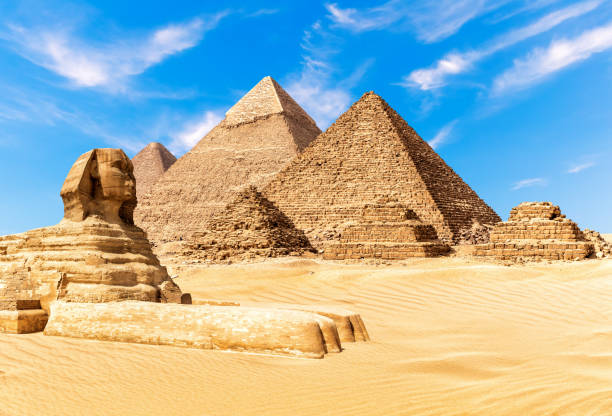
Unlike pyramids, which were typically tombs, ziggurats served religious purposes.
These enormous buildings featured multiple terraces stacked upon one another. Stairways and ramps connected different levels, leading toward a shrine or temple at the summit.
From a distance, a ziggurat appeared to rise toward the heavens.
To ancient observers, these structures must have seemed extraordinary.
Many scholars believe the biblical description of the Tower of Babel was inspired by one or more ziggurats, especially those found in Babylon.
The similarities are difficult to ignore.
Both involved baked bricks.
Both were located in Mesopotamia.
Both represented monumental construction projects.
Both appeared to connect Earth and heaven.
Babylon and Its Greatness
No city is more closely associated with the Tower of Babel than Babylon.
Babylon became one of the most powerful and influential cities in the ancient Near East.
Situated along the Euphrates River, it grew into a center of trade, culture, religion, and political authority.
Its rulers invested enormous resources into construction projects designed to display imperial power.
Massive walls surrounded the city. Temples and palaces filled its interior. Processional roads guided visitors through impressive architectural spaces.
To travelers arriving from distant regions, Babylon must have seemed overwhelming in its scale and grandeur.
For many ancient peoples, it represented the pinnacle of human achievement.
At the same time, it also became associated with arrogance, conquest, and imperial domination.
These conflicting perceptions played a major role in shaping later stories about the city.
The Etemenanki Ziggurat
Among Babylon’s most famous structures was a massive ziggurat called Etemenanki.
The name Etemenanki is often translated as “House of the Foundation of Heaven and Earth.”
Many historians believe this structure may have been the primary inspiration behind the Tower of Babel story.
Ancient records describe Etemenanki as an enormous stepped tower rising above Babylon.
Although precise dimensions remain debated, it was one of the most impressive religious monuments of its time.
The structure was dedicated to the chief Babylonian deity Marduk.
Its height, religious significance, and prominent location made it a defining feature of the city.
Imagine approaching Babylon from miles away and seeing a giant tower rising from the horizon. For ancient travelers, the sight would have been unforgettable.
It is easy to understand how such a monument could inspire stories and legends.
King Nebuchadnezzar II and Monumental Building
The rebuilding and expansion of Babylon reached remarkable heights under Nebuchadnezzar II.
During the sixth century BCE, Nebuchadnezzar oversaw extensive construction projects that transformed the city.
He restored temples, strengthened defenses, and expanded monumental architecture.
Inscriptions from his reign express pride in these achievements.
The king frequently emphasized his role as a builder chosen by the gods.
Many scholars note that the biblical authors were familiar with Babylon’s power and influence. Some portions of the Hebrew Bible were shaped during periods when Babylon dominated the region.
The memory of Babylon’s immense structures likely influenced how later generations understood and retold stories associated with the city.
The Babylonian Exile and Cultural Memory
The connection between Babel and Babylon becomes even more significant when viewed through the lens of history.
In the sixth century BCE, Babylon conquered the Kingdom of Judah and deported many inhabitants.
This event, known as the Babylonian Exile, profoundly influenced Jewish history and religious thought.
For those living through exile, Babylon represented both overwhelming power and foreign domination.
Its towering monuments would have symbolized imperial authority.
Many scholars believe the Tower of Babel story reflects, at least in part, a critique of Babylonian ambitions and self-glorification.
Viewed from this perspective, the narrative becomes more than an explanation for language differences. It becomes a statement about the limits of human power.
Even the mightiest empire remains subject to forces beyond its control.
Did Humanity Ever Speak One Language?
One of the most intriguing questions raised by the story concerns language itself.
Modern linguistics indicates that thousands of languages have existed throughout human history.
Languages constantly evolve. They split into dialects, diverge over time, and eventually become distinct languages.
English, Spanish, Hindi, Russian, Arabic, and countless other languages all emerged through long processes of linguistic change.
Many linguists believe that today’s languages ultimately descend from earlier ancestral languages.
However, tracing linguistic history deep into prehistory becomes increasingly difficult.
The Tower of Babel story offers a mythological explanation for linguistic diversity rather than a scientific one.
Its purpose was not to provide a linguistic theory in the modern sense but to explain why people around the world speak differently.
The narrative reflects humanity’s ancient curiosity about language and communication.
The Symbolism of Language
Language occupies a central role in the Babel story.
Before the confusion of tongues, humanity speaks with one voice. Communication is effortless. Cooperation is possible on a vast scale.
After the confusion, communication breaks down.
This transformation highlights the extraordinary importance of language in human societies.
Language allows people to share knowledge, coordinate activities, preserve traditions, and build civilizations.
When communication fails, cooperation becomes difficult.
The story recognizes a profound truth: language is one of humanity’s greatest powers.
It enables both unity and diversity.
Pride and Ambition in the Story
Many religious interpretations focus on pride as the central theme of the Tower of Babel.
The builders sought to make a name for themselves and create a monument reaching heaven.
In this interpretation, the problem was not construction itself but the attitude behind it.
Human achievement becomes dangerous when it is driven by arrogance rather than wisdom.
The story suggests that technological capability alone does not guarantee moral insight.
Civilizations may achieve remarkable accomplishments while still losing sight of humility and ethical responsibility.
This message has resonated across centuries because it remains relevant.
Modern societies continue to grapple with questions about power, technology, and human ambition.
Alternative Interpretations
Not all scholars agree on a single interpretation of the Babel narrative.
Some view it as a critique of empire.
Ancient empires often sought political and cultural uniformity. The story may reflect concerns about centralized authority and forced unity.
Others emphasize diversity.
Rather than portraying multiple languages as a punishment, some modern readers see them as part of humanity’s richness and complexity.
Different languages preserve unique ways of understanding the world.
Still others interpret the story as an exploration of human limits.
People can accomplish remarkable things, but certain boundaries remain beyond human control.
The enduring power of Babel lies partly in its openness to multiple interpretations.
Archaeology and the Search for Evidence
Archaeologists have spent generations studying ancient Mesopotamia.
Excavations at Babylon and other sites have revealed extensive evidence of ziggurats, temples, inscriptions, and urban development.
These discoveries confirm that monumental tower-like structures were indeed common features of Mesopotamian civilization.
However, archaeology has not uncovered evidence for a single event in which humanity’s languages suddenly diverged.
Instead, the archaeological record supports gradual cultural and linguistic development over long periods.
This distinction is important.
The historical value of the Babel story may lie less in its literal details and more in its reflection of real places, real monuments, and real historical experiences.
The Tower in Art and Imagination
Few biblical stories have inspired as much artistic creativity as the Tower of Babel.
Painters often depict a colossal spiral structure rising into the clouds.
Writers use Babel as a symbol of confusion, ambition, and cultural complexity.
Architects, filmmakers, and novelists continue to reinterpret the story in new ways.
One reason for this fascination is the visual power of the image itself.
A giant tower reaching toward heaven immediately captures the imagination.
It symbolizes humanity’s desire to transcend limitations and achieve greatness.
At the same time, its unfinished state serves as a reminder that even grand ambitions can encounter unexpected obstacles.
Babel as a Reflection of Human Civilization
The Tower of Babel can also be understood as a metaphor for civilization itself.
Human societies constantly build.
They build cities, institutions, technologies, cultures, and systems of knowledge.
These achievements require cooperation on enormous scales.
Yet civilization also creates challenges.
Differences in language, culture, ideology, and identity can lead to misunderstanding.
The Babel story captures this tension between unity and diversity.
Human beings are connected, yet different.
They share common aspirations while speaking in countless voices.
The narrative reflects this fundamental aspect of the human condition.
What Modern Scholars Believe
Most modern historians and archaeologists do not view the Tower of Babel as a literal historical account of the origin of languages.
Instead, they generally see it as a cultural and religious narrative rooted in the historical realities of ancient Mesopotamia.
The strongest historical connection points toward Babylon and its great ziggurats, particularly Etemenanki.
The story likely emerged within a context shaped by powerful empires, monumental architecture, linguistic diversity, and cultural interaction.
It reflects how ancient peoples interpreted the world around them.
Rather than dismissing the story as mere fiction, scholars often view it as a valuable window into ancient beliefs, fears, hopes, and experiences.
The Enduring Legacy of Babel
More than two thousand years after it was written down, the Tower of Babel remains remarkably relevant.
In today’s interconnected world, people communicate across continents instantly. Yet language barriers, cultural differences, and misunderstandings still exist.
Global cooperation has reached unprecedented levels, but tensions between unity and diversity continue to shape human affairs.
The story’s themes remain surprisingly modern.
Questions about power, technology, ambition, communication, and identity are as important today as they were in the ancient world.
Babel survives because it speaks to enduring aspects of human experience.
Conclusion
The real story behind the Tower of Babel is far richer and more fascinating than a simple tale about a failed building project. Beneath the biblical narrative lies the history of ancient Mesopotamia, the grandeur of Babylon, the towering ziggurats that dominated the landscape, and the cultural memories of one of the world’s earliest civilizations.
Modern archaeology strongly suggests that the story was inspired by real structures, particularly the great ziggurats of Babylon such as Etemenanki. These monumental towers connected heaven and Earth in the imagination of ancient peoples and stood as powerful symbols of religious devotion and imperial authority.
At the same time, the Tower of Babel is more than a reflection of historical architecture. It is a profound meditation on language, power, ambition, identity, and human limits. Whether interpreted as a warning against pride, a critique of empire, an explanation for linguistic diversity, or a celebration of humanity’s many voices, the story continues to resonate because it addresses timeless questions.
The tower itself may have vanished long ago, reduced to ruins by the passage of centuries. Yet the ideas it represents remain alive. The story endures because it captures something essential about humanity’s journey—a species capable of extraordinary cooperation, boundless imagination, and breathtaking achievements, yet always challenged by the complexities of communication and the limits of power.
In that sense, the Tower of Babel is not merely an ancient legend. It is a mirror reflecting humanity’s past, present, and perhaps even its future.