Human evolution is one of the greatest stories ever uncovered by science. It is not the tale of a single species suddenly appearing on Earth, but a remarkable journey that stretches back more than three and a half billion years to the earliest signs of life. Along this journey, countless species emerged, adapted, and disappeared. Among them was a small group of upright-walking apes that eventually gave rise to modern humans.
Every person alive today carries the legacy of this extraordinary history. The bones beneath our skin, the structure of our hands, the size of our brains, and even the way we walk are the result of millions of years of evolution. Fossils buried beneath ancient landscapes, together with discoveries from genetics and archaeology, allow scientists to reconstruct this incredible timeline with increasing detail.
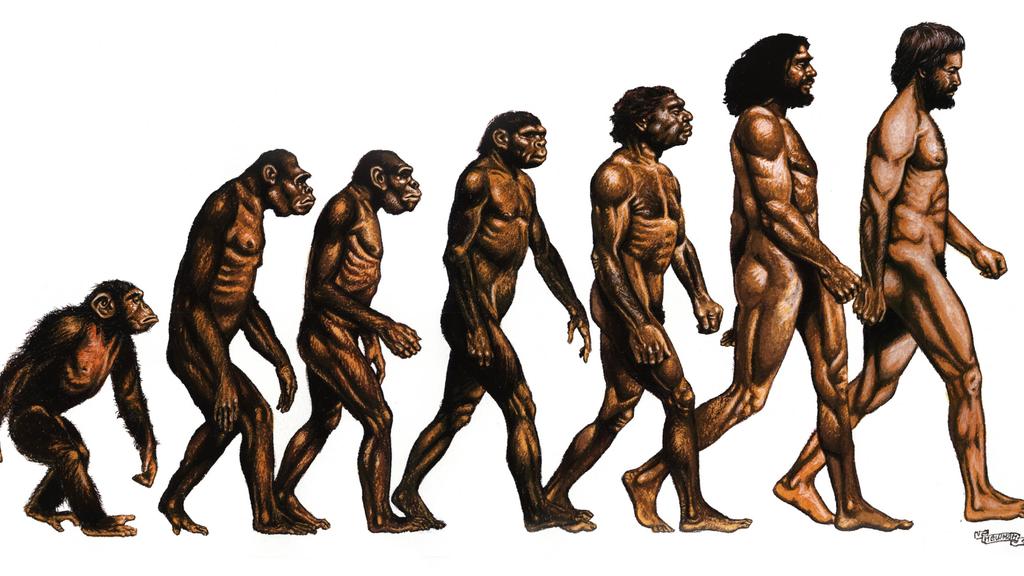
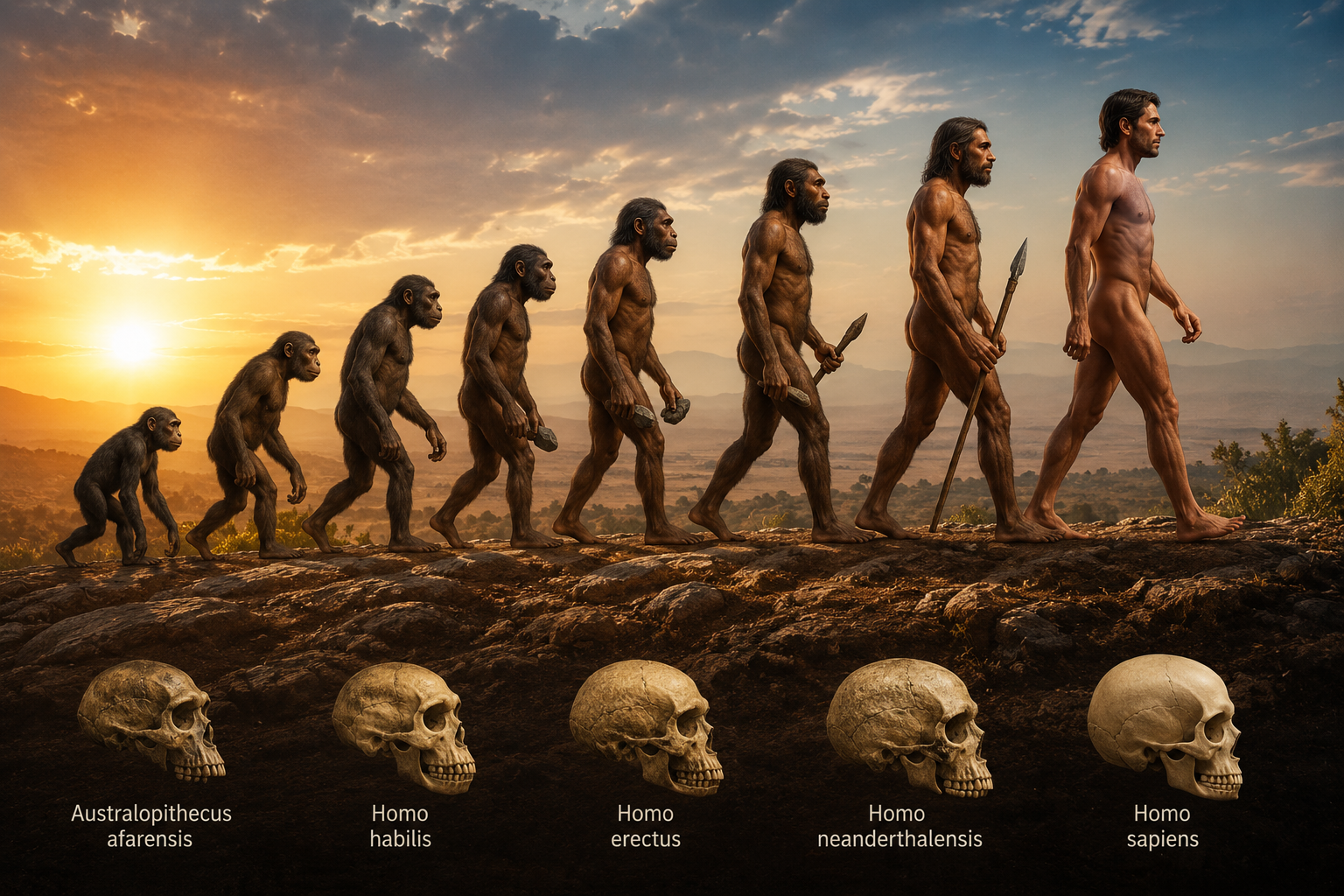
Human evolution was not a straight path from “ape to human.” Instead, it resembled a branching tree with many different human relatives living at different times. Most eventually became extinct, while only one species—Homo sapiens—survived.
The Beginning of Life on Earth
The story begins around 3.7 to 4 billion years ago when the earliest simple life forms appeared on Earth. These microscopic organisms were single-celled and lived in ancient oceans.
For billions of years, life remained relatively simple. Gradually, evolution produced more complex cells, multicellular organisms, plants, fungi, and animals. Around 540 million years ago, during the Cambrian Explosion, Earth’s oceans filled with an astonishing diversity of animal life.
Fish evolved first, followed by amphibians that ventured onto land. Reptiles later diversified, and eventually some evolved into mammals. Long before humans existed, mammals had already begun their own evolutionary journey.
The Rise of Mammals
Although mammals first appeared more than 200 million years ago during the age of dinosaurs, they remained relatively small while dinosaurs dominated the planet.
Everything changed about 66 million years ago when a massive asteroid struck Earth near present-day Mexico. The impact triggered one of the greatest mass extinctions in Earth’s history, eliminating all non-avian dinosaurs and many other species.
With dinosaurs gone, mammals rapidly diversified. They evolved into countless forms, including whales, elephants, bats, rodents, and primates—the group to which humans belong.
The First Primates
Around 55 to 60 million years ago, the earliest true primates appeared.
These small, tree-dwelling mammals developed several important adaptations. Their forward-facing eyes provided excellent depth perception for moving among branches. Flexible hands and feet allowed them to grasp limbs securely. Larger brains improved vision, coordination, and problem-solving.
These early primates were the distant ancestors of monkeys, apes, and eventually humans.
The Evolution of Monkeys and Apes
By about 40 million years ago, monkeys had diversified into many different groups.
Later, around 25 million years ago, the first apes evolved in Africa. Unlike monkeys, apes had no tails, larger brains, more flexible shoulders, and greater intelligence.
Modern apes include chimpanzees, gorillas, orangutans, gibbons, and humans. Humans did not evolve from any living ape species. Instead, humans and chimpanzees share a common ancestor that lived millions of years ago.
The Last Common Ancestor of Humans and Chimpanzees
Genetic evidence indicates that humans and chimpanzees shared a common ancestor approximately 6 to 7 million years ago.
This ancestor is now extinct, but it represents the point where the evolutionary paths leading to humans and chimpanzees separated.
After this split, several early human relatives appeared in Africa.
Sahelanthropus tchadensis
One of the oldest known members of the human lineage is Sahelanthropus tchadensis, which lived about 7 million years ago in what is now Chad.
Its skull shows a mixture of ape-like and human-like characteristics. The position of the opening where the spinal cord enters the skull suggests it may have walked upright at least part of the time.
Although scientists continue to debate its exact place in the human family tree, it remains one of the earliest known candidates for a human ancestor.
Orrorin tugenensis
Around 6 million years ago, Orrorin tugenensis lived in present-day Kenya.
Fossils of its leg bones indicate adaptations for upright walking while retaining climbing abilities. This combination would characterize many early human relatives for millions of years.
Ardipithecus ramidus
About 4.4 million years ago, Ardipithecus ramidus inhabited wooded environments in Ethiopia.
Nicknamed “Ardi,” this species could walk on two legs but also climbed trees efficiently. Unlike chimpanzees, Ardipithecus had reduced canine teeth and a pelvis showing adaptations for bipedal movement.
Its discovery transformed scientists’ understanding of early human evolution by showing that upright walking evolved before many other human characteristics.
Australopithecus
Between about 4.2 and 2 million years ago, several species of Australopithecus flourished across Africa.
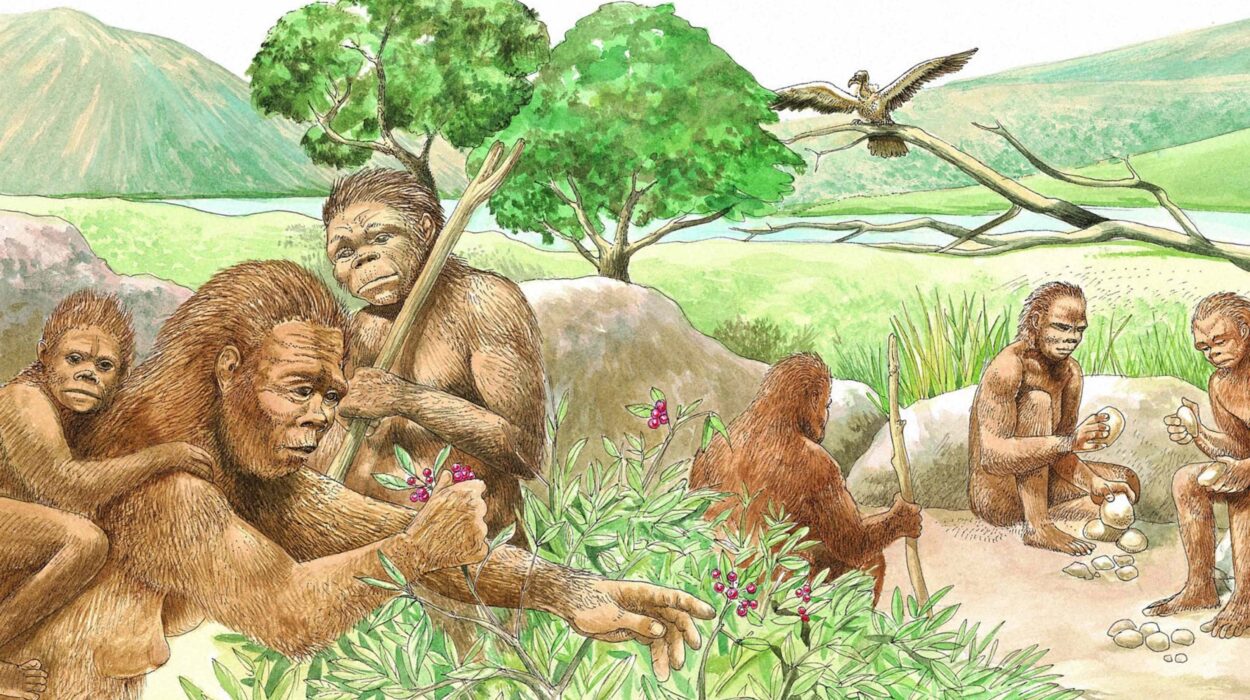
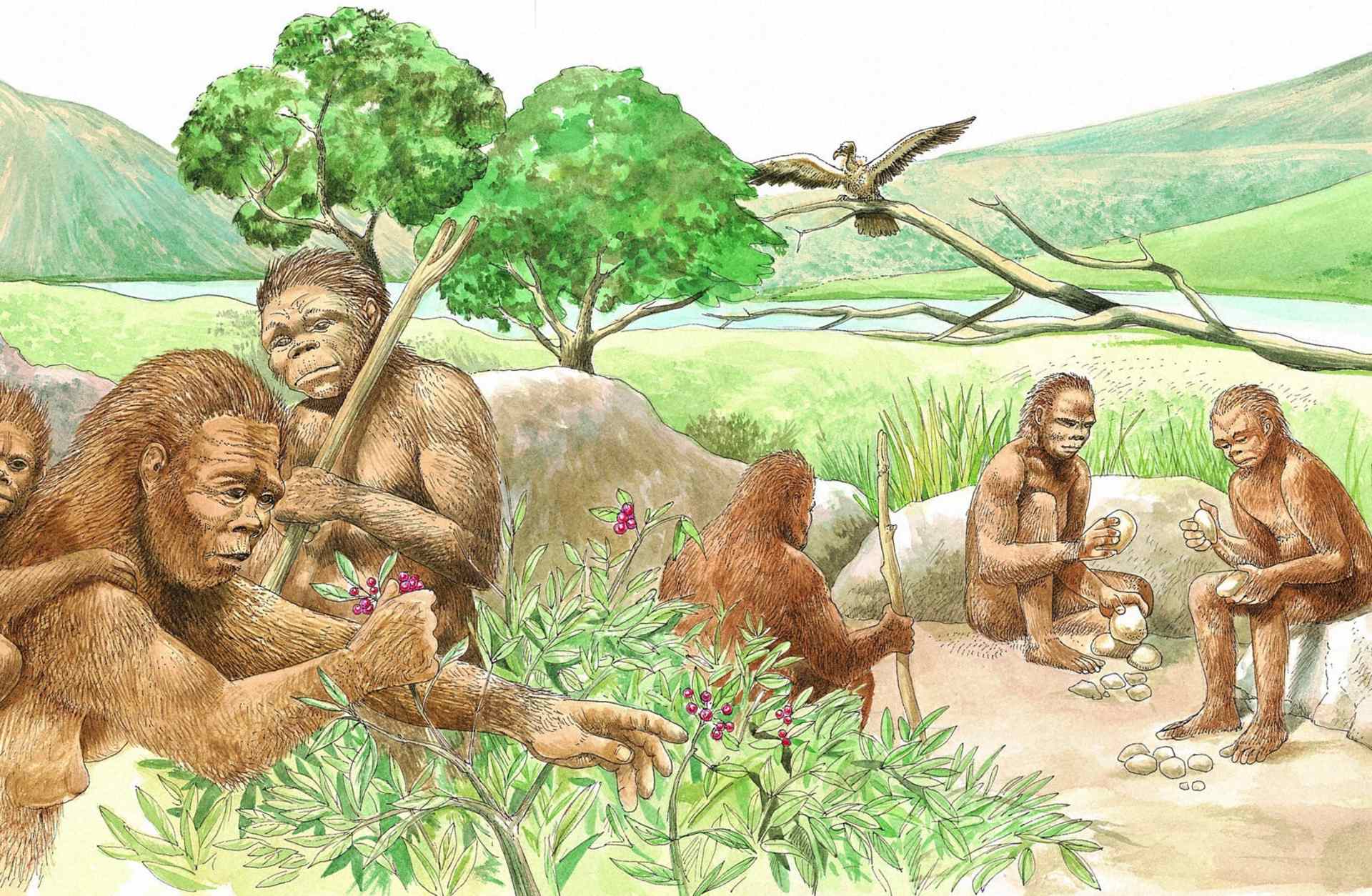
These early hominins were fully bipedal but retained relatively small brains, typically about one-third the size of modern human brains. Their long arms suggest they still spent considerable time climbing trees.
The most famous fossil is “Lucy,” an Australopithecus afarensis skeleton discovered in Ethiopia in 1974. Lucy lived approximately 3.2 million years ago and provided some of the strongest evidence that upright walking evolved long before large brains.
Australopithecus species successfully survived for millions of years, making them one of humanity’s longest-lasting ancestral groups.
The First Stone Tools
Around 3.3 million years ago, some early hominins began producing simple stone tools.
The oldest known tools predate the genus Homo, suggesting that toolmaking may not have originated with humans themselves.
By about 2.6 million years ago, the Oldowan stone tool tradition became widespread. These simple tools allowed early humans to cut meat, crack bones for nutritious marrow, process plants, and perform many daily tasks more efficiently.
Toolmaking marked a major turning point in human evolution because it expanded access to food and encouraged increasingly sophisticated behavior.
Homo habilis
Around 2.4 million years ago, Homo habilis appeared in Africa.
Often called the “handy human,” Homo habilis possessed a larger brain than Australopithecus and is strongly associated with Oldowan stone tools.
Although still relatively small in stature, Homo habilis showed many characteristics that would later become more developed in modern humans.
Its increased brain size likely supported more advanced learning, planning, and social cooperation.
Homo erectus
One of the most successful human species was Homo erectus, which first appeared about 1.9 million years ago.
Homo erectus had body proportions remarkably similar to modern humans. It possessed long legs, shorter arms, and an efficient walking and running style that enabled long-distance travel.
This species became the first known human ancestor to leave Africa, spreading into Europe and Asia.
Homo erectus also made more sophisticated Acheulean stone tools, including hand axes that remained in use for over a million years.
Perhaps even more importantly, evidence suggests Homo erectus learned to control fire at least several hundred thousand years ago, although the exact timing remains debated.
Fire transformed daily life by providing warmth, protection from predators, cooked food, and opportunities for social interaction after sunset.
Homo heidelbergensis
About 700,000 years ago, Homo heidelbergensis emerged in Africa and Europe.
This species possessed a larger brain approaching the size of modern humans and hunted large animals using wooden spears.
Many scientists believe Homo heidelbergensis gave rise to two important branches of human evolution. In Europe it evolved into Neanderthals, while in Africa it eventually led to Homo sapiens.
Neanderthals
Around 400,000 years ago, Homo neanderthalensis, commonly called Neanderthals, appeared in Europe and western Asia.
Neanderthals were exceptionally well adapted to cold climates. Their stocky bodies helped conserve heat, while their large noses warmed cold air before it entered their lungs.
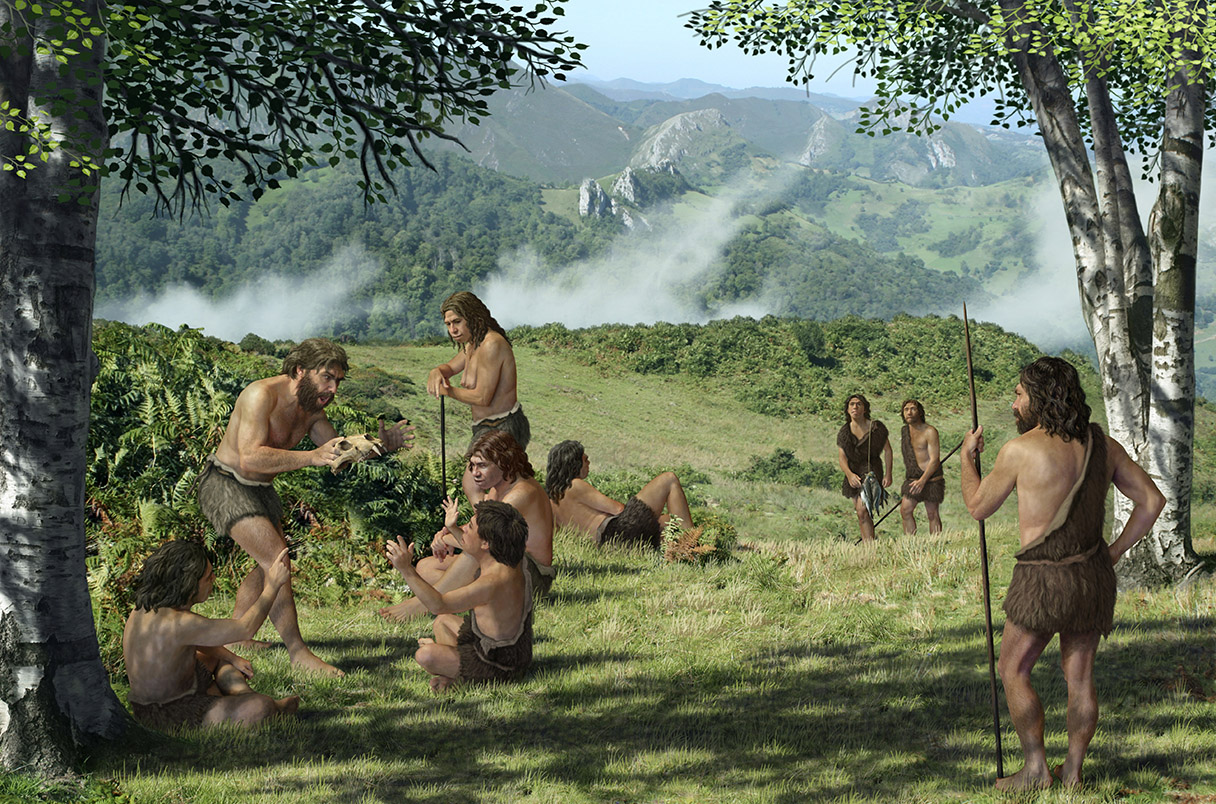
Far from being primitive, Neanderthals crafted sophisticated tools, controlled fire, hunted large animals, cared for injured individuals, and may have created symbolic art and personal ornaments.
Genetic studies reveal that Neanderthals and modern humans interbred after Homo sapiens expanded into Eurasia. Today, most people of European and Asian ancestry carry about 1 to 2 percent Neanderthal DNA.
Denisovans
Another remarkable human group, known as the Denisovans, was discovered through DNA extracted from a tiny finger bone found in Siberia.
Although few fossils have been identified, genetics has shown that Denisovans were widespread across Asia.
Modern populations in Oceania and parts of Southeast Asia inherited Denisovan DNA, demonstrating that they also interbred with Homo sapiens.
These discoveries reveal that ancient human history was far more interconnected than scientists once imagined.
Homo floresiensis
About 100,000 years ago, a small-bodied human species known as Homo floresiensis lived on the Indonesian island of Flores.
Standing only about one meter tall, these individuals became famous as the “Hobbits.”
Despite their small brains, they manufactured stone tools and survived until roughly 50,000 years ago.
Their existence demonstrated that human evolution produced a surprising diversity of forms.
Homo naledi
Discovered in South Africa, Homo naledi combined an unusually small brain with surprisingly modern skeletal features.
Fossils indicate that this species lived between about 335,000 and 236,000 years ago, overlapping with early Homo sapiens.
Its discovery challenged the assumption that increasingly larger brains always accompanied more advanced human characteristics.
The Emergence of Homo sapiens
Modern humans, Homo sapiens, evolved in Africa approximately 300,000 years ago.
Early Homo sapiens possessed a rounded skull, high forehead, smaller face, and brain comparable in size to those of people living today.
Although physically modern humans appeared relatively early, behaviors associated with modern culture developed gradually over tens of thousands of years.
Stone tools became increasingly sophisticated. Bone tools appeared. People decorated objects, wore ornaments, and eventually created art.
The Great Migration Out of Africa
Around 60,000 to 70,000 years ago, groups of Homo sapiens began leaving Africa in significant numbers.
Over thousands of years, they spread across Asia, Europe, Australia, and eventually the Americas.
During these migrations, Homo sapiens encountered Neanderthals and Denisovans, interbreeding with both groups before those species eventually disappeared.
Within a relatively short evolutionary period, humans successfully adapted to deserts, rainforests, mountains, frozen tundra, tropical islands, and nearly every environment on Earth.
The Cognitive Revolution
Between roughly 70,000 and 50,000 years ago, human culture underwent dramatic changes.
People produced increasingly complex tools, organized long-distance trade networks, developed symbolic language, and created cave paintings, carvings, musical instruments, and ceremonial objects.
Although scientists continue debating exactly why this transformation occurred, advances in language, social cooperation, and abstract thinking likely played important roles.
These developments laid the foundations for civilization itself.
The Agricultural Revolution
Around 12,000 years ago, humans began transitioning from hunting and gathering to farming in several regions independently.
Agriculture allowed permanent settlements to develop. Villages grew into towns, and towns eventually became cities.
Farming supported larger populations, encouraged technological innovation, and ultimately led to the rise of civilizations.
Writing, mathematics, governments, architecture, and organized religion all emerged after this profound transformation.
Human Evolution Continues Today
Evolution did not stop with the appearance of Homo sapiens.
Modern humans continue to evolve as populations adapt to changing environments.
For example, some human populations evolved the ability to digest milk throughout adulthood after the domestication of cattle. Others developed genetic adaptations to survive at high altitudes with lower oxygen levels. Certain populations also evolved increased resistance to local infectious diseases.
These changes demonstrate that evolution remains an ongoing biological process.
How Scientists Reconstruct Human Evolution
The timeline of human evolution comes from several complementary fields of research.
Fossils reveal the physical appearance of extinct species.
Archaeology uncovers ancient tools, campsites, artwork, and evidence of behavior.
Geology helps determine the age of fossils through dating methods such as radiometric dating.
Genetics compares DNA from living people and ancient remains, revealing relationships between species and tracing human migrations across the globe.
As new discoveries emerge, the evolutionary timeline becomes increasingly detailed and, in some cases, revised.
Human Evolution Is a Branching Tree, Not a Ladder
One of the most important ideas in modern evolutionary biology is that human evolution did not occur as a simple sequence in which one species directly transformed into the next.
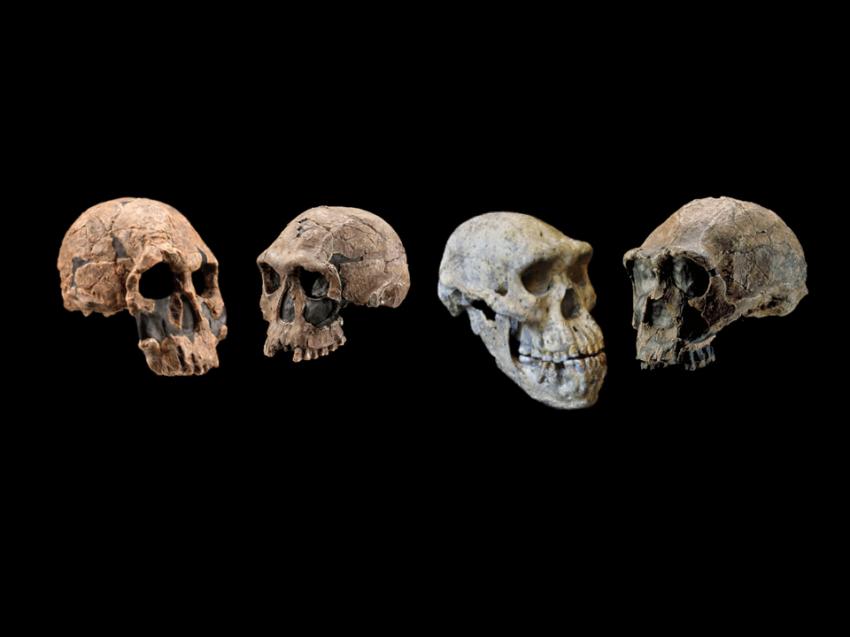
Instead, many different human species coexisted for long periods. Some were close relatives, while others represented separate evolutionary branches. They competed, adapted to different environments, and occasionally interbred.
The human family tree resembles a complex network of branches rather than a straight ladder leading inevitably to modern humans.
The Remarkable Journey That Made Us Human
The story of human evolution is a story of persistence, adaptation, and extraordinary change. Over millions of years, our ancestors learned to walk upright, shape stone into tools, master fire, cooperate in increasingly complex societies, communicate through language, create art, explore new continents, and eventually ask profound questions about their own origins.
Every fossil discovered beneath ancient rocks and every piece of ancient DNA recovered from long-extinct relatives adds another chapter to this remarkable story. Together, they reveal that humanity is deeply connected to all life on Earth and shaped by the same evolutionary processes that produced every living species.
Understanding the complete timeline of human evolution is more than learning about the distant past. It reminds us that every person alive today shares a common ancestry stretching back through countless generations, linking us not only to one another but to the entire history of life on our planet.