Take a moment to look at your hands.
Every fingerprint, every fingernail, every tiny muscle that lets you hold a cup of coffee or type on a keyboard is the result of a journey that began billions of years ago. Your eyes, your brain, your ability to speak, laugh, dream, and wonder about the universe are all products of an extraordinary story written across deep time.
Human evolution is not simply the story of our species. It is the story of life itself adapting, changing, surviving, and becoming more complex over unimaginable stretches of time.
The journey did not begin with the first humans.
It did not even begin with the first mammals.
Instead, it started when Earth itself was still a young planet, long before dinosaurs, forests, flowers, or even oxygen filled the atmosphere.
Trying to imagine this immense timeline can be difficult. Human history covers only a tiny fraction of it. If the entire history of Earth were compressed into a single calendar year, modern humans would appear only during the final minutes of December 31.
Everything we know as civilization would occupy only the last few seconds before midnight.
Yet within those few seconds, humans transformed the planet.
To understand how we became human, we must travel backward through time, following one remarkable chapter after another.
A Planet Ready for Life
About 4.54 billion years ago, Earth formed from dust and rock orbiting the young Sun.
It was an incredibly hostile world.
Molten lava covered much of the surface.
Gigantic asteroids frequently crashed into the planet.
Volcanoes released enormous amounts of gas into the atmosphere.
There were no oceans, no continents as we know them today, and certainly no living creatures.
Slowly, however, Earth began to cool.
Water vapor condensed into rain.
The rain continued for millions of years, gradually filling vast basins to form the first oceans.
These oceans would become the cradle of life.
Scientists still debate exactly how life first appeared.
Some researchers think simple organic molecules formed naturally in Earth’s early environment.
Others suggest hydrothermal vents on the ocean floor provided ideal conditions.
Whatever the mechanism, life emerged surprisingly early.
The earliest known evidence suggests microscopic organisms were already living at least 3.5 billion years ago.
They were tiny.
Simple.
Invisible without a microscope.
Yet every living creature today—including every human—descends from these ancient pioneers.
Life Learns to Grow
For billions of years, Earth belonged almost entirely to single-celled organisms.
That may sound uneventful, but extraordinary innovations occurred during this period.
Some microbes evolved the ability to capture sunlight.
Through photosynthesis, they converted solar energy into food while releasing oxygen.
At first, oxygen was poisonous to many existing organisms.
But over hundreds of millions of years, oxygen accumulated in the atmosphere.
Eventually, it transformed the planet.
The oxygen-rich atmosphere allowed more energetic forms of life to evolve.
Without this ancient environmental revolution, humans could never have existed.
Every breath you take today is possible because microscopic organisms changed Earth’s atmosphere billions of years ago.
The Rise of Complex Cells
Around two billion years ago, another revolutionary event occurred.
Cells became more complex.
Instead of remaining simple microscopic organisms, some cells developed specialized internal structures.
One remarkable partnership shaped all complex life.
Scientists believe an ancient cell absorbed another smaller cell.
Instead of digesting it, the two formed a permanent partnership.
The smaller organism eventually became the mitochondrion—the tiny energy-producing structure found inside nearly every cell of your body today.
Each of your trillions of cells still carries evidence of this ancient alliance.
Evolution often advances not only through competition but also through cooperation.
The First Multicellular Life
For much of Earth’s history, life remained microscopic.
Then, around 600 million years ago, evolution made another enormous leap.
Individual cells began working together.
Groups of cells specialized for different tasks.
Some became skin.
Others became muscle.
Still others became nerve cells.
Instead of living independently, they formed entire organisms.
This innovation opened endless evolutionary possibilities.
Soon, oceans filled with strange creatures unlike anything alive today.
Some resembled soft leaves.
Others looked like flattened disks.
Many possessed body plans that later disappeared forever.
Life was preparing for one of the greatest explosions of diversity in Earth’s history.
The Cambrian Explosion
About 541 million years ago, evolution accelerated dramatically.
During the Cambrian Explosion, nearly every major animal body plan appeared over a relatively short geological period.
Predators evolved.
Eyes became increasingly sophisticated.
Hard shells protected vulnerable animals.
Swimming became more efficient.
Competition intensified.
For the first time, ecosystems began resembling the complex communities seen today.
Among these early animals were distant ancestors of vertebrates.
They possessed primitive spinal cords.
Although tiny and fish-like, these creatures carried the blueprint that would eventually produce amphibians, reptiles, birds, mammals—and humans.
Life Moves Onto Land
For hundreds of millions of years, life remained largely confined to the oceans.
Then plants made an astonishing move.
They colonized land.
Primitive moss-like vegetation gradually spread across damp environments.
As plants expanded, they transformed Earth’s landscapes.
They created soil.
They stabilized riverbanks.
They released more oxygen.
Soon, insects followed.
Then spiders.
Eventually, vertebrates ventured onto land as well.
The first amphibians still depended on water for reproduction, but they marked a turning point.
Life had conquered a new world.
The Age of Reptiles
As evolution continued, reptiles developed adaptations allowing them to thrive far from water.
Their waterproof eggs enabled reproduction on dry land.
Eventually, some reptiles grew into enormous dinosaurs.
For more than 160 million years, dinosaurs dominated Earth.
Towering predators hunted across forests.
Long-necked giants browsed ancient vegetation.
Feathered dinosaurs glided and eventually evolved into birds.
While dinosaurs ruled, tiny mammals remained mostly hidden.
They were generally small, nocturnal creatures living in the shadows of giants.
Yet these modest mammals possessed traits that would later prove extraordinarily successful.
The Mammalian Advantage
Mammals evolved warm blood, fur, and milk production.
These characteristics allowed greater control over body temperature and improved survival.
Their brains gradually became larger relative to body size.
Parental care became increasingly sophisticated.
Instead of producing enormous numbers of offspring with little investment, mammals often cared extensively for fewer young.
This strategy supported greater learning and behavioral flexibility.
Although mammals lived alongside dinosaurs for millions of years, their greatest opportunity had not yet arrived.
The Asteroid That Changed Everything
Around 66 million years ago, an asteroid roughly the size of a mountain struck Earth near present-day Mexico.
The impact unleashed unimaginable devastation.
Massive earthquakes shook the planet.
Wildfires spread across continents.
Dust and debris blocked sunlight.
Global temperatures dropped dramatically.
Food chains collapsed.
Most dinosaurs disappeared.
Approximately 75 percent of all species became extinct.
For mammals, however, catastrophe created opportunity.
With dinosaurs gone, ecological niches opened across the world.
Small mammals diversified rapidly.
Some adapted for climbing.
Others became swimmers.
Still others evolved into fast-running predators.
Eventually, one branch would give rise to primates.
The First Primates
Early primates appeared around 55 million years ago.
They were small tree-dwelling mammals.
Life among branches encouraged remarkable adaptations.
Forward-facing eyes improved depth perception.
Flexible shoulders allowed climbing.
Grasping hands replaced claws.
Sensitive fingertips enhanced touch.
Larger brains supported increasingly complex behavior.
These traits later became essential for human evolution.
Living in trees shaped our ancestors long before they walked upright.
Even today, our hands reveal this ancient heritage.
Monkeys and Apes
As millions of years passed, primates diversified into many different groups.
Some evolved into monkeys.
Others became apes.
Apes developed larger brains, more flexible shoulders, and greater intelligence.
Unlike monkeys, apes lacked tails.
Their social lives became increasingly complex.
Learning from one another became essential.
This ability to observe, imitate, and remember laid important foundations for later human evolution.
Our Split from Chimpanzees
One of the most common misconceptions about evolution is that humans evolved directly from modern chimpanzees.
They did not.
Instead, humans and chimpanzees share a common ancestor that lived approximately six to seven million years ago.
That ancestral population eventually split.
One branch led to modern chimpanzees and bonobos.
Another led toward humans.
Both lineages continued evolving independently.
Chimpanzees are therefore our evolutionary cousins rather than our ancestors.
Standing on Two Legs
Among the most important developments in human evolution was bipedalism.
Our ancestors gradually began walking upright.
This transformation did not happen overnight.
It unfolded over millions of years.
Walking on two legs freed the hands.
Hands could now carry food.
Parents could transport infants more efficiently.
Objects could be manipulated with increasing precision.
Standing upright also improved long-distance travel across open landscapes.
Fossils suggest several early human ancestors already combined upright walking with climbing abilities.
Evolution rarely replaces one lifestyle instantly.
Instead, new adaptations often coexist with older ones for long periods.
The Famous Lucy
One of the world’s most celebrated fossils is Lucy.
Discovered in Ethiopia in 1974, Lucy belonged to the species Australopithecus afarensis.
She lived about 3.2 million years ago.
Lucy stood only about one meter tall.
Her brain remained relatively small.
Yet her skeleton clearly demonstrates habitual upright walking.
She still possessed curved fingers useful for climbing trees.
Lucy illustrates a crucial point.
Walking upright evolved long before large human brains.
Our ancestors became skilled walkers millions of years before becoming exceptionally intelligent.
Stone Tools Change Everything
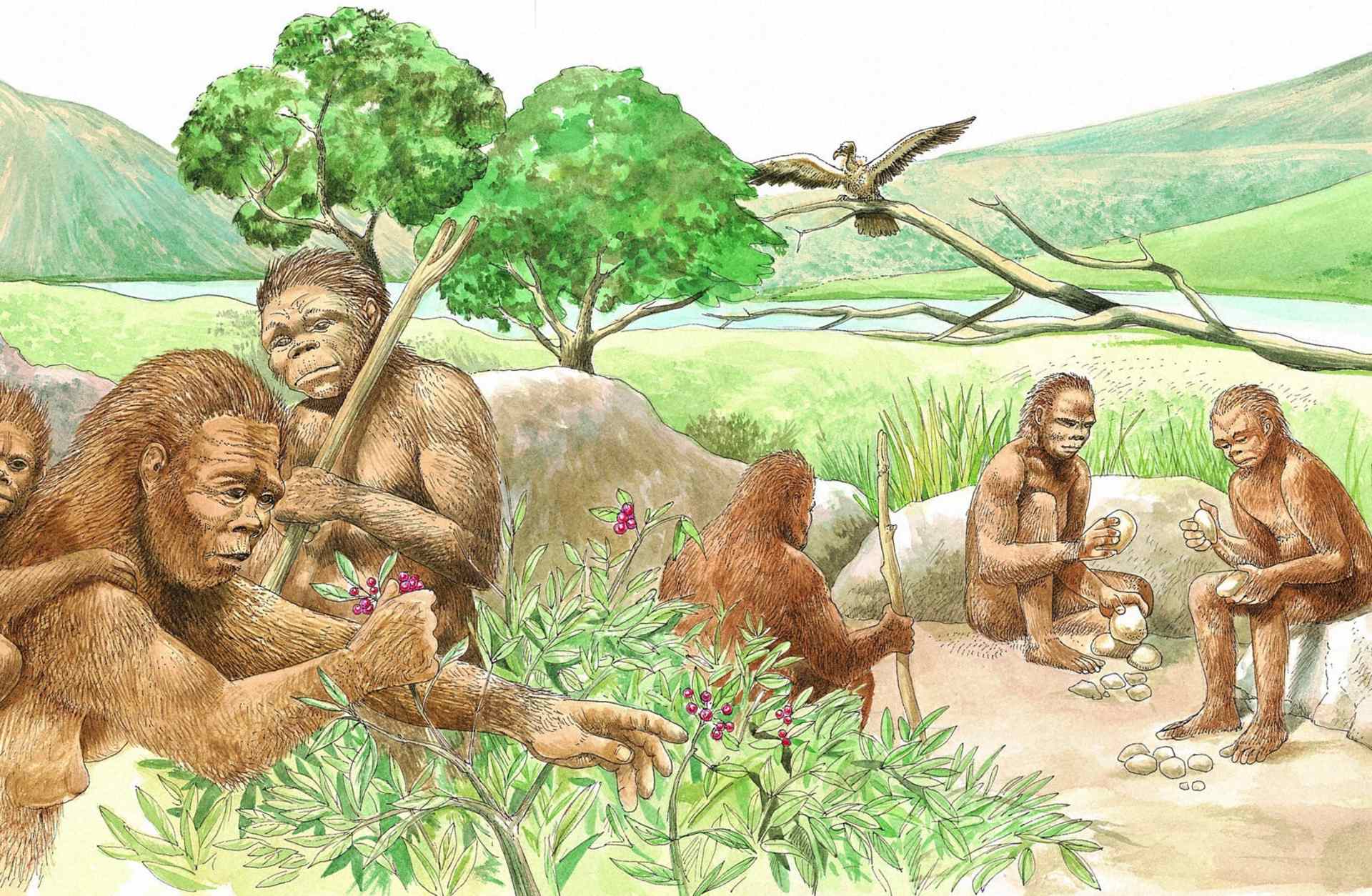
Around 2.6 million years ago, another milestone appeared.
Stone tools.
Simple flakes struck from larger rocks allowed early humans to cut meat, scrape hides, and process plants more efficiently.
Toolmaking transformed survival.
Instead of relying solely on teeth and muscles, our ancestors increasingly relied on technology.
Although these earliest tools appear crude by modern standards, they represented a profound intellectual achievement.
They required planning.
They required understanding that one object could modify another.
Most importantly, knowledge could now be shared across generations.
Culture had begun.
Homo habilis
One of the earliest members of our own genus was Homo habilis.
Often called “handy man,” this species lived around 2.4 to 1.4 million years ago.
Compared with earlier ancestors, Homo habilis possessed a somewhat larger brain.
Its hands show adaptations for increasingly skilled manipulation.
Although researchers continue debating aspects of its classification, Homo habilis represents an important transition toward more human-like behavior.
Brains were growing.
Tools were improving.
Learning became increasingly significant.
Evolution was accelerating in remarkable ways.
Homo erectus Changes the World
Perhaps no early human species transformed history more dramatically than Homo erectus.
Appearing around 1.9 million years ago, Homo erectus survived for well over a million years.
This extraordinary longevity reflects remarkable adaptability.
Homo erectus possessed longer legs and shorter arms than earlier ancestors.
Its body proportions resembled those of modern humans.
These changes supported efficient long-distance walking and running.
Most importantly, Homo erectus became the first human species known to leave Africa.
Populations spread into Asia and Europe.
Human evolution had become a global story.
Mastering Fire
Few discoveries changed human evolution more profoundly than fire.
Evidence suggests Homo erectus eventually learned to control fire, although the exact timing remains debated.
Fire transformed daily life.
It provided warmth during cold nights.
It frightened predators.
It extended daylight through artificial light.
Most importantly, it allowed cooking.
Cooked food supplies more usable energy than raw food.
Cooking softens meat and plants, making digestion easier.
Some scientists believe regular cooking contributed significantly to brain expansion by providing additional calories.
Around ancient campfires, something else happened.
People talked.
Stories emerged.
Knowledge spread.
Human culture deepened.
Bigger Brains
Over millions of years, brain size increased dramatically.
But larger brains alone did not make humans unique.
The organization of the brain changed as well.
Regions involved in language, planning, memory, and social interaction expanded.
Humans became increasingly capable of imagining future events.
They solved complex problems.
They cooperated in larger groups.
They passed knowledge across generations.
Intelligence became one of humanity’s greatest evolutionary advantages.
Many Human Species
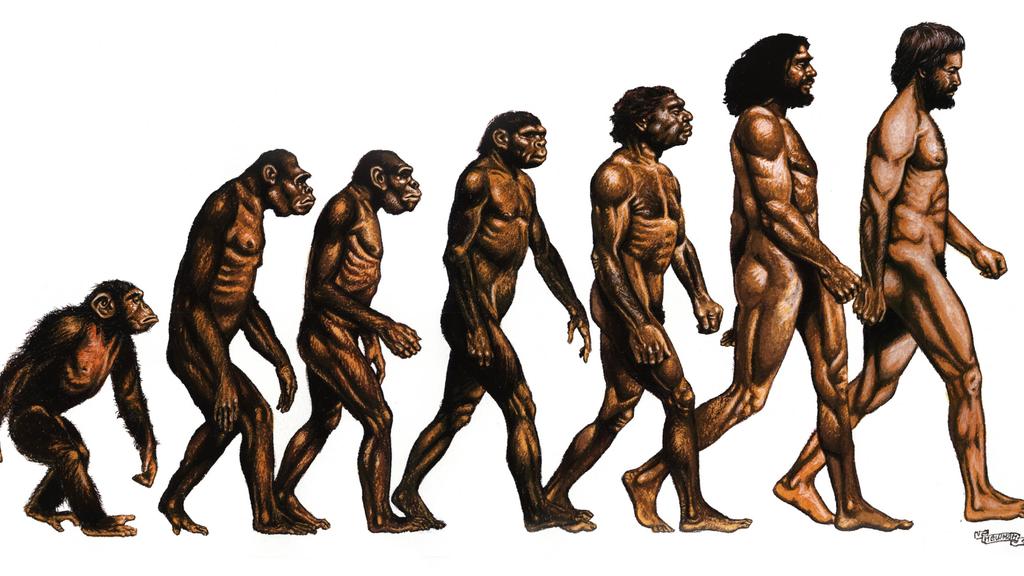
Human evolution was never a straight line.
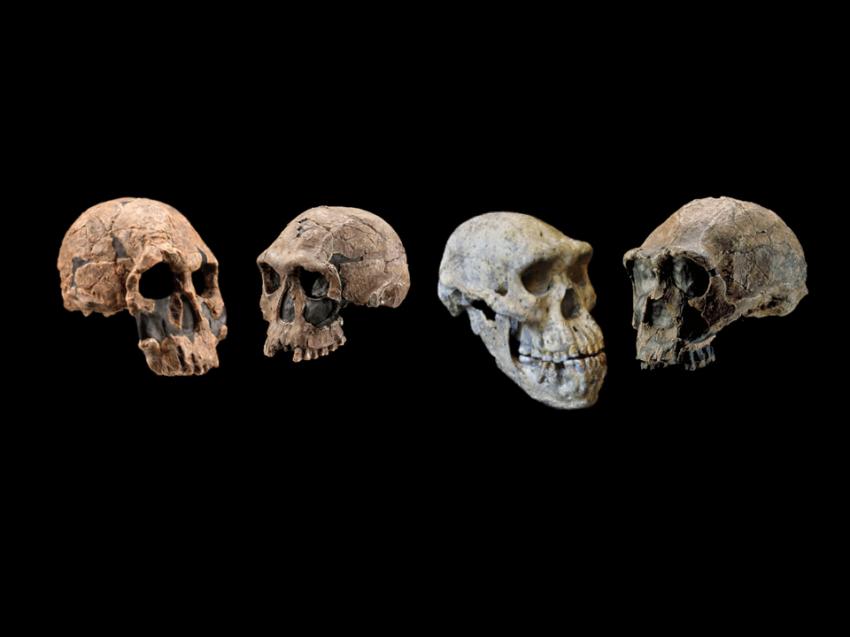
Instead, multiple human species often lived simultaneously.
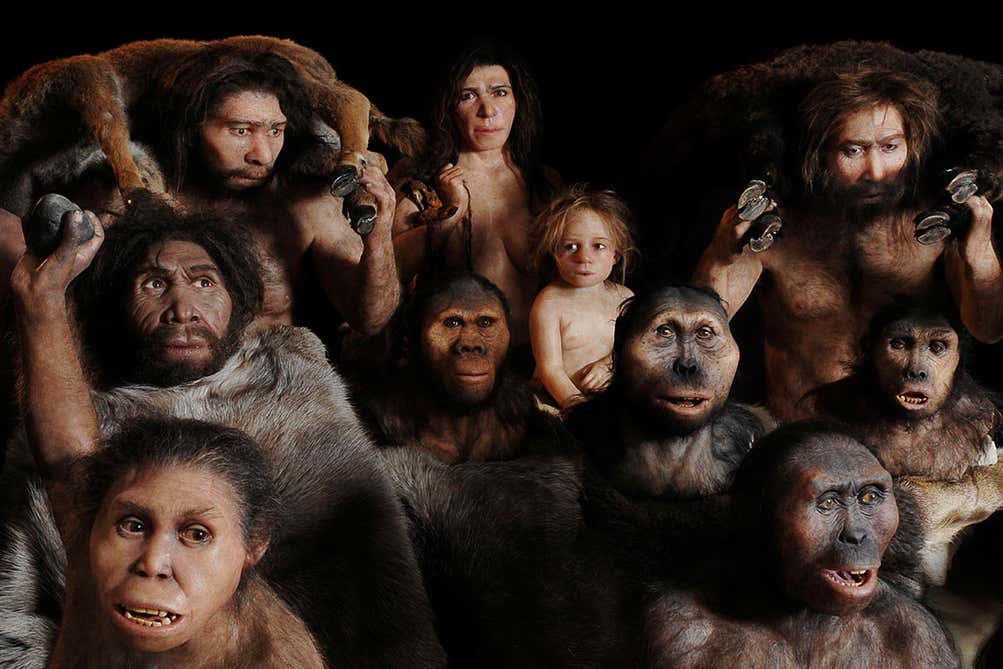
At different times, Earth was home to Homo erectus, Homo heidelbergensis, Homo floresiensis, Homo naledi, Neanderthals, Denisovans, and eventually Homo sapiens.
Some overlapped for thousands of years.
Some likely exchanged knowledge.
Others even interbred.
Human evolution resembles a branching tree rather than a ladder.
Many branches eventually disappeared.
Only one remains today.
The Neanderthals
Neanderthals lived across Europe and western Asia for hundreds of thousands of years.
They were powerful, intelligent humans adapted to cold climates.
Their brains were at least as large as ours on average.
They hunted large animals.
They made sophisticated stone tools.
They controlled fire.
Evidence suggests they cared for injured individuals and may have buried their dead.
Far from being primitive cavemen, Neanderthals were highly capable humans.
Modern DNA studies reveal that many living people outside Africa still carry small percentages of Neanderthal ancestry.
Our histories are intertwined.
Denisovans
One of the greatest archaeological discoveries of recent decades came from a tiny finger bone found in Siberia.
Genetic analysis revealed an entirely unknown human group.
Scientists named them Denisovans.
Very few fossils have been discovered, yet DNA shows Denisovans contributed genes to several modern populations, especially in parts of Asia and Oceania.
Some inherited Denisovan genes even help modern Tibetans survive at high altitudes.
Ancient human relatives continue influencing people alive today.
The Appearance of Homo sapiens
Modern humans evolved in Africa around 300,000 years ago.
These early Homo sapiens already possessed many anatomical features familiar today.
Rounded skulls.
Smaller faces.
Lighter skeletons.
Highly developed brains.
Yet they were not immediately identical to modern societies.
Their culture evolved gradually.
Stone tools became increasingly refined.
Art appeared.
Long-distance trade expanded.
Innovation accelerated.
The human mind was entering a new chapter.
Language and Imagination
Exactly when language evolved remains uncertain.
Words do not fossilize.
Nevertheless, growing archaeological evidence suggests increasingly sophisticated communication developed over time.
Language transformed everything.
Ideas could be shared precisely.
Knowledge accumulated across generations.
Planning became easier.
Communities coordinated hunting, childcare, and migration.
Stories preserved history.
Eventually, language allowed humans to imagine events that had never happened.
This extraordinary ability fueled creativity, religion, science, literature, and civilization itself.
Art Appears
One of the clearest signs of modern human thinking appears in ancient art.
Cave paintings, carved figurines, decorated tools, beads, and musical instruments demonstrate symbolic thought.
People were no longer merely surviving.
They were expressing identity, beliefs, and imagination.
Some cave paintings remain breathtaking today.
Artists captured horses, bison, lions, and other animals with remarkable skill.
These creations remind us that people living tens of thousands of years ago possessed emotional depth remarkably similar to our own.
Leaving Africa
Beginning around 60,000 to 70,000 years ago, groups of Homo sapiens expanded out of Africa.
They gradually spread across Asia.
Then Europe.
Eventually Australia.
Finally, the Americas.
These migrations occurred over thousands of years rather than during a single journey.
People adapted to deserts, rainforests, mountains, frozen tundra, and tropical islands.
Human diversity reflects these long histories of adaptation.
Despite our differences, genetic studies show that all living humans remain remarkably closely related.
Agriculture Changes Humanity
For most of human history, people lived as hunter-gatherers.
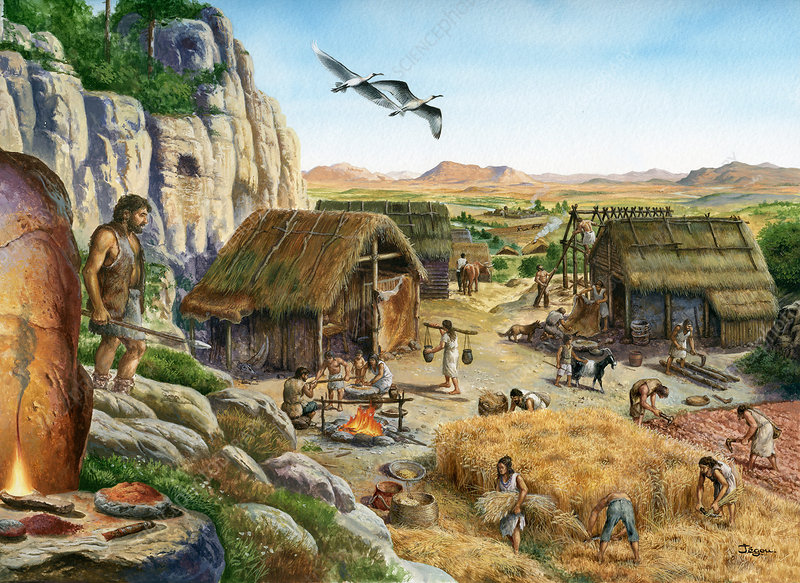
Then, about 12,000 years ago, agriculture emerged independently in several regions.
People began cultivating crops.
They domesticated animals.
Permanent villages developed.
Population increased dramatically.
Food surpluses supported specialists.
Cities appeared.
Writing followed.
Governments formed.
Civilizations emerged.
Compared with evolutionary history, agriculture happened almost yesterday.
Civilization in the Final Seconds
If Earth’s history were compressed into twenty-four hours, modern humans would appear just before midnight.
Agriculture would begin only seconds before the end.
Ancient Egypt, Greece, Rome, China, and the Maya would all occupy fractions of a second.
The Industrial Revolution would last less than a blink.
The internet would appear almost too quickly to notice.
This perspective reminds us how recent civilization truly is.
Biologically, we remain people shaped by hundreds of thousands of years as hunter-gatherers.
Evolution Never Stopped
Many people imagine evolution ended once modern humans appeared.
It did not.
Evolution continues today.
Genes associated with lactose digestion spread among populations that domesticated cattle.
High-altitude adaptations evolved independently in Tibet, Ethiopia, and the Andes.
Disease resistance continues changing human genetics.
Natural selection remains active.
Our species continues evolving in response to changing environments.
Evolution has no final destination.
What Makes Humans Unique?
Many characteristics once thought uniquely human have been found, in simpler forms, among other animals.
Chimpanzees use tools.
Crows solve puzzles.
Elephants mourn their dead.
Whales communicate across great distances.
Yet humans combine many abilities to an extraordinary degree.
We possess complex language.
We cooperate in enormous societies.
We preserve knowledge across generations.
We imagine futures that do not yet exist.
We explore space.
We ask where we came from.
Perhaps our greatest evolutionary achievement is curiosity itself.
The Future of Human Evolution
No one knows exactly what humanity will become.
Medical technology changes survival.
Global travel mixes populations.
Artificial intelligence transforms learning.
Space exploration may someday expose humans to entirely new environments.
Future evolution may involve biology, technology, or combinations of both.
Whatever lies ahead, it will build upon billions of years of evolutionary history.
Every future human will carry within their cells the legacy of ancient oceans, primitive microbes, climbing primates, stone-tool makers, and countless generations of ancestors who survived long enough to pass life forward.
Conclusion
Human evolution is one of the greatest stories science has ever uncovered. It is not a tale of sudden transformation but of countless small changes accumulating across billions of years. From microscopic organisms drifting through ancient seas to modern humans exploring the Moon and studying distant galaxies, every chapter is connected by an unbroken chain of life.
The journey that produced Homo sapiens was never simple or inevitable. It involved extinctions, climate shifts, migrations, innovations, and remarkable adaptations. Many human relatives once walked beside our ancestors, each contributing to the broader story of our family tree. Today, genetics, archaeology, geology, and fossil discoveries continue refining our understanding, revealing that evolution is far more complex and fascinating than once imagined.
Perhaps the most remarkable realization is that every person alive today carries this ancient history within them. Every heartbeat echoes the first animals that evolved circulatory systems. Every breath depends on oxygen produced by ancient microbes billions of years ago. Every step reflects the moment our ancestors first stood upright on two legs. Every thought arises from a brain shaped by millions of years of natural selection.
Understanding human evolution does more than explain our past. It changes how we see ourselves. It reminds us that all humans share a common ancestry, that our differences are recent and superficial, and that every person on Earth belongs to the same extraordinary family. We are the latest chapter in a story still being written—a story that began long before humanity existed and will continue long after our own generation becomes part of history.