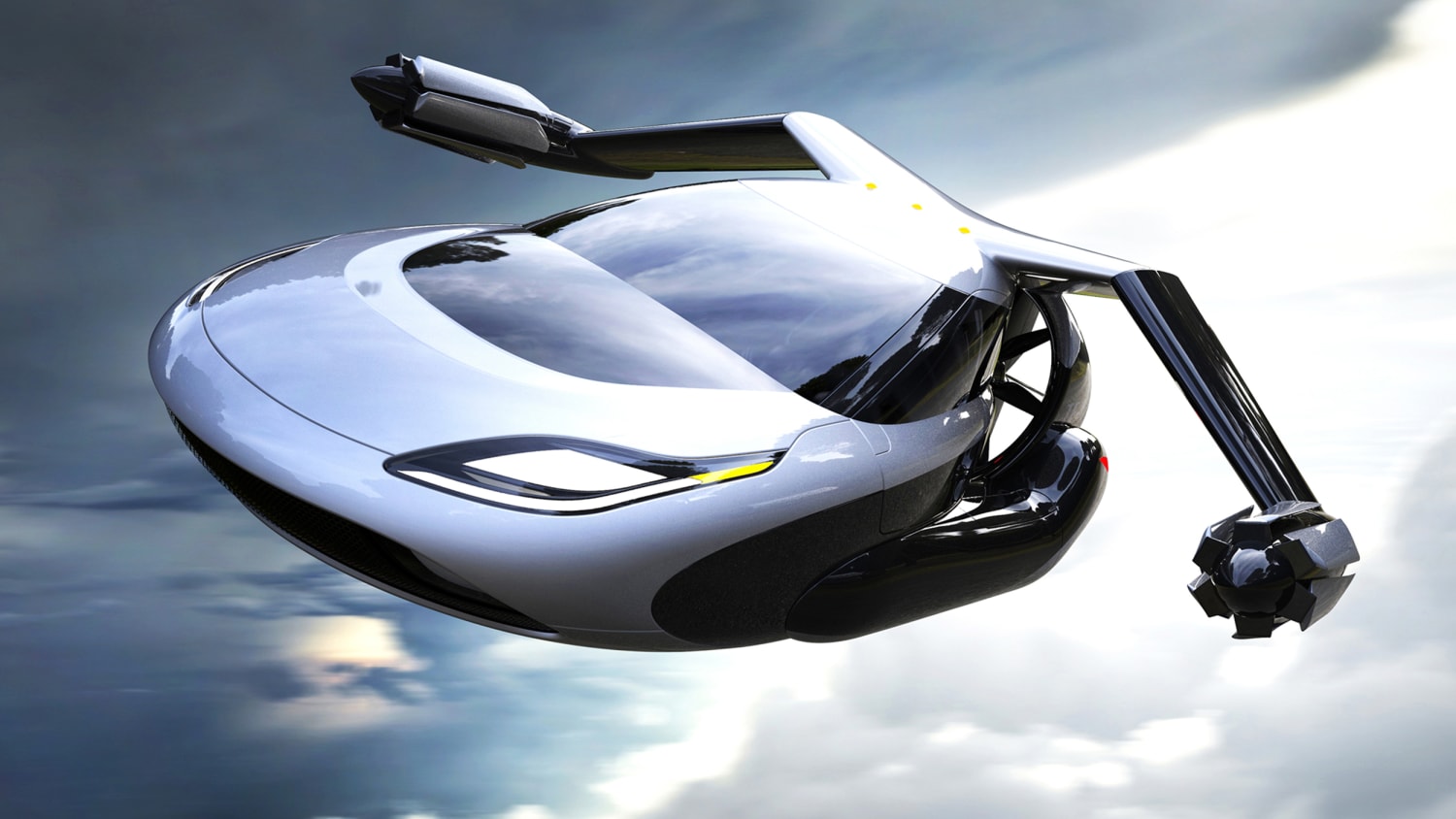
For more than a century, flying cars have captured the human imagination. They have appeared in science fiction novels, comic books, movies, and television shows as symbols of a futuristic world where traffic jams disappear and people soar effortlessly through the sky. What once seemed like pure fantasy is now moving closer to reality. Around the world, engineers and technology companies are building aircraft that can take off vertically, fly across cities, and in some cases even travel on roads.
But as exciting as this future may seem, one question matters more than any other:
Are flying cars actually safe?
The answer is both encouraging and complicated. Flying cars have the potential to become remarkably safe, perhaps even safer than today’s automobiles in some situations. However, achieving that level of safety requires overcoming enormous technological, engineering, regulatory, and human challenges.
Understanding whether flying cars are safe means looking beyond the excitement and examining how they work, what risks they face, and what scientists and engineers are doing to make aerial transportation reliable enough for everyday life.
What Exactly Is a Flying Car?
The term “flying car” can mean different things, but today’s designs are very different from the traditional image of a car with folding wings.
Most modern flying cars are actually electric vertical takeoff and landing aircraft, often called eVTOLs. These vehicles use multiple electric motors and rotors to lift off vertically, much like a drone, before flying forward to their destination.
Some experimental vehicles are capable of both driving on roads and flying through the air, but many are designed primarily for flight.
Unlike helicopters, many eVTOL aircraft use numerous smaller propellers instead of one large rotor. This design can improve stability and provide additional safety if one motor stops working.
Why Are Companies Developing Flying Cars?
Cities around the world are becoming increasingly crowded. Roads are often filled with traffic, making even short journeys take much longer than expected.
Flying cars aim to solve this problem by adding another layer of transportation—the sky.
Instead of sitting in traffic for an hour, a passenger might complete the same journey in fifteen or twenty minutes.
Flying cars could also provide faster emergency medical transportation, improve disaster response, connect remote communities, and reduce travel times between cities.
If powered by electricity, they could also reduce local air pollution compared with gasoline-powered vehicles, although their overall environmental impact depends on how the electricity is generated and how the vehicles are manufactured.
Why Safety Matters Even More in the Sky
A problem with a car on a road is often serious, but many situations allow the driver to pull over safely.
The sky offers far fewer opportunities.
An aircraft cannot simply stop in midair and wait for help.
Every flight depends on carefully functioning systems that must continue operating throughout takeoff, flight, and landing.
This means flying cars must meet much higher safety standards than ordinary automobiles.
Even a small mechanical problem must be anticipated, managed, and, whenever possible, prevented before it becomes dangerous.
How Engineers Build Safety into Flying Cars
One of the biggest goals in flying-car design is redundancy.
Redundancy means having backup systems.
Many eVTOL aircraft use several independent electric motors instead of relying on just one engine.
If one motor fails, the remaining motors may continue producing enough lift to help the aircraft remain stable or make a controlled landing, depending on the specific design and the nature of the failure.
Similarly, important flight-control computers often include multiple backup systems.
If one computer stops working, another can immediately take over.
This approach reduces the chance that a single failure could cause a catastrophic accident.
Electric Motors Are Surprisingly Reliable
Traditional gasoline engines contain hundreds of moving parts.
Electric motors are mechanically much simpler.
Because they have fewer moving components, they generally require less maintenance and may have fewer opportunities for certain types of mechanical failure.
This simplicity is one reason many engineers believe electric propulsion can improve aviation safety.
However, electric systems introduce new challenges, particularly regarding batteries.
The Challenge of Batteries
Every electric flying car depends on batteries to provide energy.
Unlike gasoline, batteries gradually lose their stored energy during flight.
Pilots—or onboard computers—must always ensure enough power remains for safe landing, including reserves for unexpected situations.
Battery performance can also be affected by temperature, aging, charging practices, and manufacturing quality.
Engineers carefully monitor battery health using advanced electronic systems designed to detect problems before they become dangerous.
Modern battery systems also include protections against overheating, although preventing rare events such as thermal runaway remains an important area of ongoing research and engineering.
Can Flying Cars Fly in Bad Weather?
Weather is one of aviation’s greatest challenges.
Heavy rain, strong winds, fog, snow, thunderstorms, and ice can all affect flight safety.
Flying cars are no exception.
Small aircraft are generally more sensitive to weather than larger commercial airplanes.
Strong winds may make takeoff and landing more difficult.
Poor visibility can increase navigation challenges.
Thunderstorms create dangerous turbulence and lightning hazards.
For these reasons, many future flying-car services will likely avoid operating during severe weather.
Advanced weather forecasting, onboard sensors, and automated flight planning can help reduce these risks by selecting safer routes or delaying flights when necessary.
Air Traffic: The Invisible Highway
Imagine thousands of flying cars crossing a city every day.
Without careful organization, the skies could become chaotic.
Future flying cars will likely depend on highly sophisticated air traffic management systems.
These systems would continuously monitor aircraft positions, calculate safe routes, prevent collisions, and coordinate takeoffs and landings.
Artificial intelligence may assist in managing this complex network, but human oversight and rigorous safety procedures will remain essential.
Communication between aircraft and ground systems will play a crucial role in maintaining safe separation.
Collision Avoidance Technology
Modern aviation already uses advanced systems to reduce collision risk.
Flying cars are expected to use similar technologies, adapted for low-altitude urban environments.
Radar, cameras, GPS, laser sensors, and other instruments can help detect nearby aircraft, buildings, birds, and unexpected obstacles.
Computers can respond much faster than humans in many situations, warning pilots or automatically adjusting flight paths when necessary.
As sensor technology continues improving, collision avoidance systems are expected to become even more capable.
Can Flying Cars Fly Themselves?
Many companies hope future flying cars will rely heavily on automation.
Some designs are intended to perform much of the flight automatically, while others may eventually operate without a pilot on board if regulators determine that such operations can meet stringent safety standards.
Automation offers several advantages.
Computers never become tired.
They do not become distracted by phone calls.
They react almost instantly.
They continuously monitor hundreds of aircraft systems at the same time.
However, automation is not perfect.
Computer software must be thoroughly tested because programming errors or unexpected situations could affect performance.
For this reason, aviation engineers apply extremely rigorous standards when developing flight software.
Human Error Remains a Major Concern
In today’s aviation industry, human error contributes to many accidents, often alongside other factors.
Pilots may misjudge weather conditions.
They may misunderstand instrument readings.
Fatigue can reduce attention.
Stress may affect decision-making.
Flying cars designed with high levels of automation aim to reduce these risks by assisting pilots with navigation, monitoring aircraft health, and preventing dangerous maneuvers.
Still, humans remain responsible for supervising systems, responding to emergencies, and making important decisions in many scenarios.
Training will remain essential.
What Happens if Something Goes Wrong?
Engineers spend enormous effort preparing for emergencies.
Some flying cars are being designed with ballistic parachute systems.
If a serious failure occurs at an appropriate altitude, a rocket can deploy a large parachute that helps slow the aircraft’s descent.
Other aircraft rely on multiple independent motors that continue functioning even if one component fails.
Emergency landing procedures are carefully planned during aircraft design.
Manufacturers also analyze thousands of possible failure scenarios before testing aircraft in real-world conditions.
Testing Before Public Use
No responsible manufacturer can simply build a flying car and immediately begin transporting passengers.
Every design undergoes years of testing.
Ground tests verify electrical systems.
Structural tests determine how much force the aircraft can safely withstand.
Wind tunnel experiments examine aerodynamic performance.
Flight tests evaluate handling, stability, emergency procedures, battery performance, and software reliability.
Many flights are conducted without passengers during development.
Only after demonstrating safety through extensive testing can manufacturers seek certification from aviation authorities.
The Role of Aviation Regulators
National aviation authorities establish strict safety standards for aircraft.
Before a flying car can carry passengers commercially, manufacturers must demonstrate that the vehicle meets detailed certification requirements.
These standards cover structural strength, flight controls, software reliability, electrical systems, emergency procedures, maintenance schedules, and many other aspects of operation.
Certification is one of the most demanding processes in engineering because public safety depends on it.
Noise and Community Safety
Flying cars introduce concerns beyond passengers.
People living below flight paths also deserve protection.
Aircraft must be designed to minimize noise while maintaining safe flight.
Urban operations require careful planning to avoid schools, hospitals, crowded public spaces, and sensitive infrastructure whenever possible.
Cities may establish designated flight corridors that reduce risks to people on the ground.
Cybersecurity in the Age of Flying Cars
As flying cars become increasingly connected to navigation networks, communication systems, and software updates, cybersecurity becomes an essential part of safety.
Engineers must protect aircraft against unauthorized access.
Strong encryption, secure software design, and continuous monitoring help reduce cybersecurity risks.
Protecting digital systems is now just as important as protecting mechanical components.
Learning from More Than a Century of Aviation
Flying cars do not begin from scratch.
Modern aviation has accumulated more than a century of engineering knowledge.
Commercial aviation is one of the safest forms of long-distance transportation because of decades of improvements in aircraft design, maintenance, pilot training, weather forecasting, navigation, and accident investigation.
Flying-car developers are building upon this extensive experience.
Lessons learned from airplanes, helicopters, drones, and spacecraft all contribute to safer designs.
Comparing Flying Cars with Ordinary Cars
Road accidents occur every day across the world.
Many result from speeding, distracted driving, alcohol impairment, fatigue, or failure to obey traffic rules.
Flying cars operate in a very different environment.
Instead of traffic lights and road intersections, they depend on navigation systems, flight planning, and controlled airspace.
Although the risks differ, the safety goal remains the same: reducing accidents as much as possible.
Whether flying cars ultimately prove safer than automobiles will depend on engineering quality, operational procedures, regulation, and public adoption over many years.
Public Trust Will Take Time
Even if flying cars become technically safe, people may still hesitate to use them.
Trust develops gradually.
Commercial aviation became widely accepted only after decades of demonstrated reliability.
The same process is likely for flying cars.
Passengers will want evidence that vehicles have completed thousands—eventually millions—of successful flights before they feel completely comfortable.
Transparency about testing, certification, maintenance, and accident investigations will be essential for building public confidence.
The Environmental Question
Safety also includes protecting the environment and public health.
Electric flying cars produce no exhaust emissions during flight, which can improve local air quality compared with gasoline-powered vehicles. However, their overall environmental impact depends on factors such as electricity generation, battery production, and vehicle manufacturing.
Noise, energy use, and the sourcing and recycling of battery materials are additional considerations.
Scientists and engineers continue working to improve battery technology, increase efficiency, and reduce environmental impacts throughout the vehicle’s life cycle.
What the Future May Look Like
In the coming decades, flying cars may become a familiar part of transportation, particularly for short regional trips, emergency medical services, and urban air mobility.
Cities may include rooftop landing areas, dedicated flight corridors, automated traffic management systems, and highly connected transportation networks.
Passengers might book an aerial journey using a smartphone, travel quietly above traffic, and arrive in minutes instead of hours.
Yet this future will only become reality if safety remains the highest priority.
Every new aircraft, software update, battery improvement, and operational procedure will need to earn public confidence through careful scientific testing and engineering excellence.
So, Are Flying Cars Safe?
The honest answer is that flying cars are being designed with safety as their highest priority, but they are still an emerging technology. Many modern concepts incorporate multiple electric motors, backup systems, advanced sensors, automated flight controls, and rigorous engineering practices intended to make them highly reliable. Before they become common, they must undergo extensive testing and satisfy strict certification requirements set by aviation authorities.
No form of transportation is completely free of risk. Cars, trains, ships, bicycles, airplanes, and even walking involve some level of danger. The goal of engineers is not to eliminate every possible risk—something that is impossible—but to reduce risks to an exceptionally low level through thoughtful design, careful operation, regular maintenance, and continuous improvement.
The dream of flying cars is no longer confined to science fiction. It is steadily becoming a scientific and engineering reality. Whether this vision transforms everyday transportation will depend not on how exciting the technology appears, but on whether it can consistently prove itself to be safe, dependable, and worthy of the public’s trust.