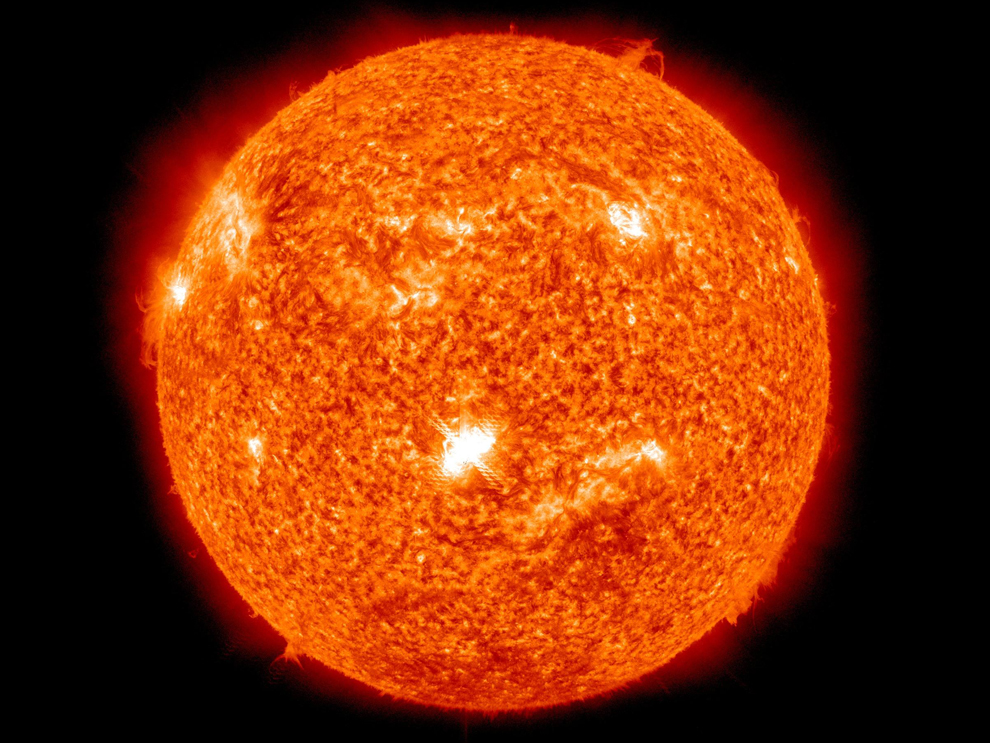
Every morning, the Sun rises and fills the sky with light. It warms our skin, helps plants grow, drives Earth’s weather, and makes life possible. Without it, our planet would become a frozen, lifeless world in a matter of weeks. Yet despite seeing the Sun almost every day, one question continues to fascinate people of all ages:
Why is the Sun so hot?
At first, the answer may seem obvious. The Sun is a giant ball of fire, isn’t it?
Surprisingly, it isn’t.
The Sun does not burn the way wood, coal, or gasoline burns. Instead, it shines because of one of the most powerful processes in the universe—a process called nuclear fusion. Deep inside the Sun, tiny atoms collide under unimaginable pressure, releasing enormous amounts of energy every second. That energy eventually reaches Earth as sunlight and heat.
The story of why the Sun is so hot is also the story of how stars work, how the universe creates energy, and why life exists on our planet.
The Sun Is a Star
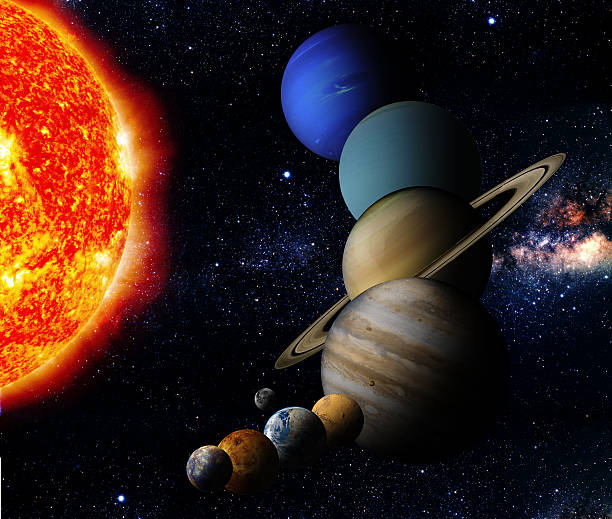
The Sun is not unique. It is one of hundreds of billions of stars in the Milky Way galaxy, and there are hundreds of billions of galaxies across the observable universe.
What makes the Sun special is not that it is unusual, but that it is our nearest star. It is about 149.6 million kilometers (93 million miles) from Earth, a distance astronomers call 1 astronomical unit (AU).
Although it looks small in the sky, the Sun is enormous. It contains about 99.8% of all the mass in our solar system. More than one million Earths could fit inside it by volume.
Its incredible size is one of the reasons it can produce such extraordinary amounts of energy.
The Sun Is Not on Fire
Many people imagine the Sun as a giant fireball.
That idea makes sense because the Sun glows brightly and gives off heat. But ordinary fire needs oxygen and fuel to keep burning.
Space contains almost no oxygen, so a fire like the ones we see on Earth simply could not burn there.
Instead, the Sun generates energy through nuclear fusion, a process that is completely different from chemical burning.
A campfire releases energy by breaking chemical bonds between atoms.
The Sun releases energy by combining the nuclei of atoms.
Nuclear fusion is millions of times more energetic than ordinary fire.
Inside the Sun Is Almost Impossible to Imagine
The Sun is made mostly of hydrogen, the lightest and most abundant element in the universe. It also contains a large amount of helium and small amounts of heavier elements.
Its interior is divided into several layers, each with different temperatures and conditions.
At the very center lies the core, where the temperature reaches about 15 million degrees Celsius (27 million degrees Fahrenheit).
The pressure there is astonishing.
Imagine the weight of billions of mountains pressing down on every tiny region of the core. Under these extreme conditions, hydrogen atoms are forced so close together that they overcome their natural electrical repulsion.
When they collide, something remarkable happens.
They fuse.
Nuclear Fusion Powers the Sun
The Sun’s energy comes from nuclear fusion occurring deep inside its core.
Hydrogen atoms each contain a single proton in their nuclei. Normally, positively charged protons repel one another. But inside the Sun’s core, the immense pressure and temperature force them close enough for the strong nuclear force—one of nature’s fundamental forces—to bind them together.
Through a series of reactions known as the proton-proton chain, hydrogen nuclei gradually combine to form helium.
This process releases enormous amounts of energy.
A tiny amount of mass disappears during each fusion reaction. According to Albert Einstein’s famous equation,
E = mc²
that missing mass is converted into energy.
Even though only a small amount of mass is transformed in each reaction, the Sun performs an unimaginable number of fusion reactions every second.
The result is an almost endless flood of energy.
The Sun Produces More Energy Than We Can Imagine
Every second, the Sun converts about 600 million metric tons of hydrogen into helium.
During this process, roughly 4 million metric tons of mass are transformed directly into energy.
That energy is carried away in the form of light, heat, and other kinds of radiation.
The Sun releases approximately 3.8 × 10²⁶ watts of power every second.
To put this into perspective, this is vastly more energy than humanity has produced throughout all of recorded history.
Yet Earth receives only about one two-billionth of the Sun’s total energy output.
Even that tiny fraction is enough to power nearly every natural process on our planet.
Why Doesn’t the Sun Explode?
Considering how much energy the Sun produces, it might seem surprising that it doesn’t simply explode.
The reason is a delicate balance between two powerful forces.
Gravity constantly pulls the Sun’s enormous mass inward.
At the same time, the energy created by nuclear fusion pushes outward.
These two forces balance one another almost perfectly.
This state is called hydrostatic equilibrium.
As long as gravity and the outward pressure remain balanced, the Sun stays stable.
It neither collapses nor explodes.
This balance has lasted for about 4.6 billion years.
Why Is the Sun’s Surface Cooler Than Its Core?
One surprising fact about the Sun is that its visible surface is much cooler than its center.
The Sun’s core reaches around 15 million degrees Celsius.
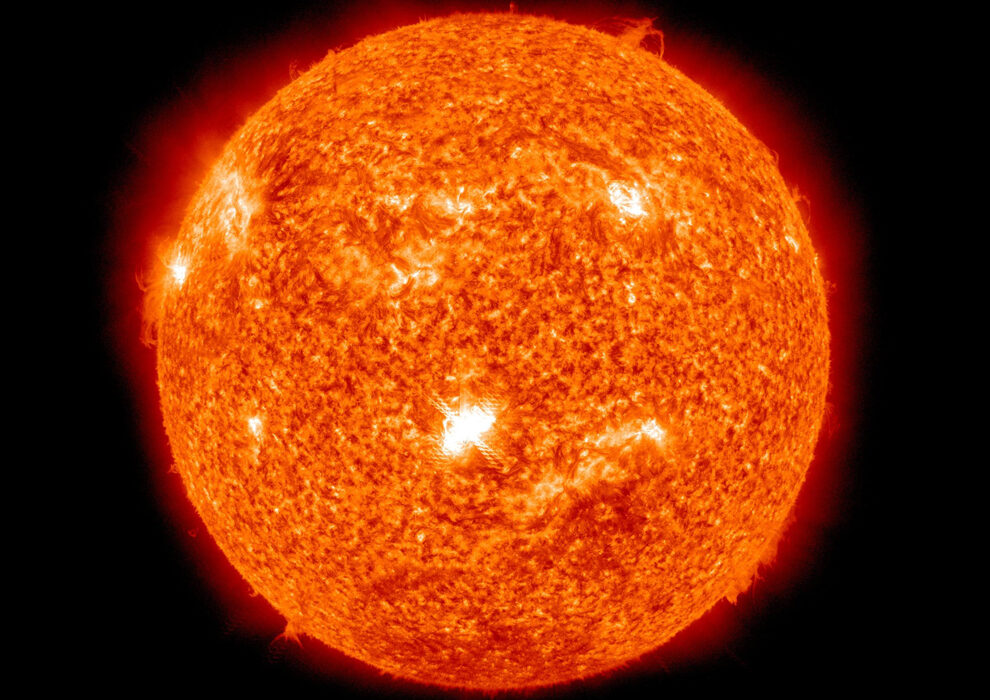
The visible surface, called the photosphere, has a temperature of about 5,500 degrees Celsius (9,900 degrees Fahrenheit).
Although that is cooler than the core, it is still incredibly hot.
Iron would instantly vaporize at such temperatures.
The reason for the difference is simple.
Fusion happens only in the core, where temperatures and pressures are high enough.
As energy moves outward through the Sun’s layers, some of it spreads over an increasingly larger area before finally escaping into space.
By the time it reaches the photosphere, the temperature is much lower than in the core.
The Strange Mystery of the Sun’s Atmosphere
One of the greatest puzzles in solar physics involves the Sun’s outer atmosphere, known as the corona.
You might expect temperatures to decrease farther away from the hot core.
Instead, something astonishing happens.
The corona reaches temperatures of more than one million degrees Celsius.
That is hundreds of times hotter than the visible surface beneath it.
Scientists have spent decades investigating this mystery.
Current research suggests that the Sun’s powerful magnetic fields play a major role. Tiny magnetic explosions and waves traveling through the Sun’s atmosphere appear to transfer energy into the corona, heating it to extraordinary temperatures.
Although researchers have made significant progress, scientists continue studying exactly how this process works.
How Does Heat Reach Earth?
The Sun is nearly 150 million kilometers away.
How can its heat travel across the cold vacuum of space?
Unlike sound, heat from the Sun does not need air to travel.
Instead, the Sun sends energy in the form of electromagnetic radiation.
Visible light is one part of this radiation.
Infrared radiation carries much of the warmth we feel.
Ultraviolet radiation contains more energy and can cause sunburn.
These waves travel through empty space at the speed of light, about 299,792 kilometers per second (186,282 miles per second).
Sunlight takes approximately 8 minutes and 20 seconds to reach Earth.
Every sunrise is actually showing us the Sun as it was a little more than eight minutes ago.
Why Doesn’t Earth Become as Hot as the Sun?
Although the Sun is incredibly hot, Earth remains cool enough for oceans, forests, and life.
The main reason is distance.
As sunlight spreads outward in every direction, it covers an ever-larger area.
By the time it reaches Earth, only a tiny fraction of the Sun’s energy arrives here.
Earth also reflects some sunlight back into space with its clouds, ice, deserts, and atmosphere.
The planet radiates heat back into space as well, helping maintain a balance that supports life.
Without this balance, Earth would either freeze or become unbearably hot.
The Sun Creates the Energy That Powers Life
Almost all life on Earth depends on the Sun.
Plants capture sunlight through photosynthesis, converting light energy into chemical energy.
Animals survive by eating plants or other animals that ultimately depend on plants.
Even fossil fuels such as coal, oil, and natural gas store energy that originally came from sunlight captured by ancient plants hundreds of millions of years ago.
Wind forms because the Sun heats Earth’s surface unevenly.
Ocean currents are driven largely by solar heating.
The water cycle depends on sunlight evaporating water from oceans and lakes.
The Sun powers Earth’s climate in countless ways.
Can the Sun Ever Run Out of Fuel?
Yes.
The Sun will not shine forever.
Fortunately, there is no reason for concern anytime soon.
Scientists estimate that the Sun has enough hydrogen fuel to continue normal fusion for about another 5 billion years.
Eventually, much of the hydrogen in its core will be used up.
The Sun will begin changing dramatically.
It will expand into a red giant, becoming much larger than it is today.
During this stage, it will become cooler on the surface but much larger overall.
Later, it will shed its outer layers, creating a beautiful glowing cloud called a planetary nebula.
The remaining core will become a white dwarf, a small, incredibly dense stellar remnant that slowly cools over billions of years.
Scientists Study the Sun Every Day
Although the Sun has been observed for thousands of years, scientists continue discovering new things about it.
Spacecraft such as NASA’s Parker Solar Probe have traveled closer to the Sun than any previous mission, flying through parts of its outer atmosphere to investigate solar winds, magnetic fields, and the mysterious heating of the corona.
Meanwhile, powerful observatories on Earth and in space monitor sunspots, solar flares, and enormous eruptions called coronal mass ejections.
These events are more than scientific curiosities.
Strong solar activity can affect satellites, GPS systems, radio communications, astronauts, and even electrical power grids on Earth.
Studying the Sun helps protect modern technology while deepening our understanding of stars throughout the universe.
The Sun Connects Us to the Universe
Every atom of hydrogen fusing inside the Sun reminds us that the same physical laws operate throughout the cosmos.
The stars scattered across the night sky shine for the same fundamental reason.
They are enormous natural fusion reactors, converting hydrogen into heavier elements while releasing light and heat.
The carbon in your body, the oxygen you breathe, the calcium in your bones, and the iron in your blood were all forged inside ancient stars through nuclear processes related to those occurring in the Sun today.
In that sense, studying the Sun is also a way of understanding our own origins.
A Star That Makes Life Possible
The Sun is hot because its immense gravity squeezes hydrogen atoms together with extraordinary force, allowing nuclear fusion to occur deep within its core. Every second, countless fusion reactions transform a small amount of matter into vast amounts of energy, filling the solar system with light and warmth.
This remarkable process has continued for billions of years, creating the stable conditions that allowed oceans to form, life to emerge, and civilizations to flourish on Earth.
The next time you feel the warmth of sunlight on your face, remember that the energy reaching you began its journey deep inside the Sun’s core, where atoms fused together under conditions almost impossible to imagine. After traveling through the Sun’s interior for thousands to hundreds of thousands of years and then racing across space for just over eight minutes, that tiny packet of energy became part of the sunlight that brightens your day—a reminder that our lives are connected to the extraordinary power of the nearest star.