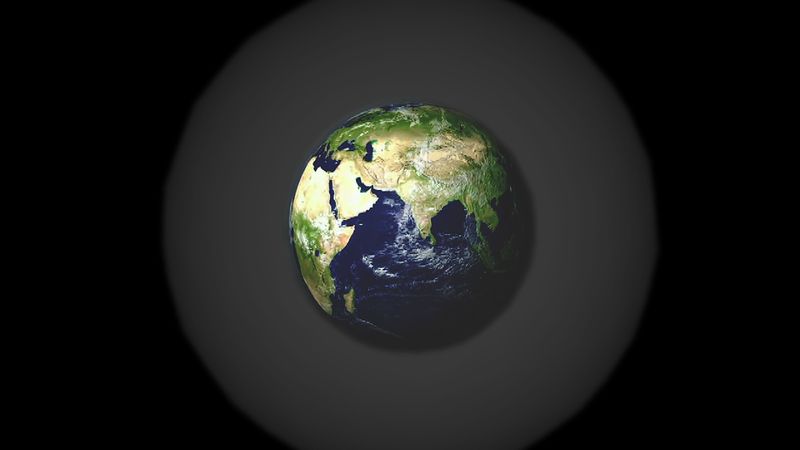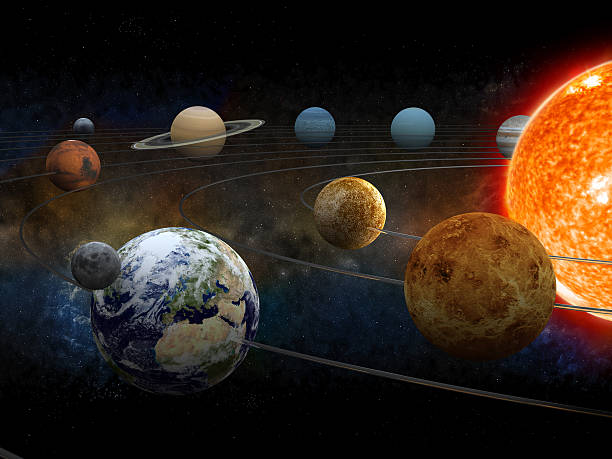
For thousands of years, humanity has looked up at the night sky and wondered a simple but profound question: Could we ever live among the stars? What once belonged only to mythology and science fiction is now becoming a serious scientific discussion. Rockets regularly carry astronauts into orbit, robotic explorers have landed on Mars, spacecraft have visited every major planet, and scientists are actively studying how humans might someday establish permanent settlements beyond Earth.
But could we truly colonize the Solar System?
The answer is both exciting and complicated. While science suggests that living on other worlds is physically possible, it also reveals enormous challenges. The Solar System is vast, hostile, and filled with environments that are far less welcoming than Earth. Colonizing it would require advances in engineering, medicine, biology, energy production, and space travel unlike anything humanity has achieved before.
Even so, many scientists believe that humans could eventually build permanent homes on several worlds within our Solar System. It would not happen overnight, and it would almost certainly take many generations, but the journey has already begun.
What Does Colonizing the Solar System Mean?
Colonization does not simply mean planting a flag on another planet or sending astronauts on short missions.
True colonization means creating permanent, self-sustaining communities where people can live, work, raise families, and eventually survive without constant supplies from Earth.
A successful colony would need reliable sources of food, water, breathable air, energy, medical care, and building materials. It would also require ways to recycle waste, protect people from radiation, and maintain both physical and mental health over many years.
Unlike temporary research stations, a colony must eventually become capable of supporting itself.
That is a much greater challenge than simply reaching another world.
Why Humans Might Want to Leave Earth
Earth is an extraordinary planet. It has breathable air, liquid water, moderate temperatures, and an atmosphere that protects life from harmful radiation. No other known world in our Solar System offers such ideal conditions.
So why consider colonizing elsewhere?
One reason is survival. Throughout Earth’s history, life has faced massive asteroid impacts, volcanic eruptions, climate changes, and other natural disasters. Establishing human populations on multiple worlds could reduce the risk that a single catastrophe might threaten civilization.
Another reason is scientific discovery.
Living on other worlds would allow scientists to study planets, moons, and space environments in ways that robotic missions cannot fully achieve.
There is also the drive to explore. Curiosity has always pushed humanity beyond familiar horizons, from crossing oceans to climbing mountains and exploring Antarctica. Space may simply be the next frontier.
Economic opportunities may also emerge. Asteroids contain enormous quantities of metals, while the Moon and Mars possess valuable resources that could support future industries in space.
The Moon Could Become Humanity’s First Permanent Home
Among all destinations beyond Earth, the Moon is the closest and perhaps the most practical starting point.
Only about 384,400 kilometers (238,900 miles) away, astronauts can reach it in just a few days.
Although the Moon has no breathable atmosphere and experiences extreme temperatures, it offers several important advantages.
Water ice has been discovered inside permanently shadowed craters near its poles. This ice could be melted into drinking water, separated into hydrogen and oxygen for rocket fuel, and used to produce breathable oxygen.
The Moon’s lower gravity makes launching spacecraft much easier than launching from Earth.
Scientists are also studying how lunar soil, called regolith, might be used to manufacture bricks, concrete-like materials, roads, and radiation shields.
Many space agencies envision the Moon as a testing ground where technologies for longer missions to Mars can be developed and refined.
Mars Is the Leading Candidate for Colonization
If people imagine living on another planet, Mars usually comes to mind first.
Mars is cold, dry, and dusty, but compared with other planets, it is surprisingly Earth-like.
A Martian day lasts about 24 hours and 39 minutes, very close to an Earth day. The planet has seasons, polar ice caps, volcanoes, canyons, and evidence that rivers and lakes once flowed across its surface billions of years ago.
Water still exists there today, mostly frozen beneath the surface and in polar ice.
Future colonies could potentially extract this water for drinking, farming, oxygen production, and fuel.
However, Mars presents many dangers.
Its atmosphere is extremely thin and composed mostly of carbon dioxide. Humans cannot breathe it.
Average surface temperatures are around minus 63 degrees Celsius (minus 81 degrees Fahrenheit), though temperatures vary widely.
The planet lacks a strong global magnetic field, leaving its surface exposed to harmful cosmic radiation.
Powerful dust storms can sometimes cover much of the planet for weeks.
Any permanent settlement would almost certainly begin underground or inside heavily shielded habitats.
Living Underground May Be Safer Than Living on the Surface
Science fiction often shows people living beneath transparent glass domes on alien worlds.
In reality, underground habitats may be much safer.
A few meters of soil or rock can significantly reduce exposure to cosmic rays and solar radiation.
Underground environments also provide more stable temperatures and protection from meteorite impacts.
Scientists have identified enormous lava tubes on both the Moon and Mars. These natural tunnels, formed long ago by flowing lava, may someday become ideal locations for human settlements.
Instead of constructing every building from scratch, future colonists might adapt these naturally sheltered spaces into homes, laboratories, farms, and storage facilities.
Growing Food Beyond Earth
Food is one of the greatest challenges for any space colony.
Transporting food from Earth forever would be expensive and impractical.
Instead, colonies would need local agriculture.
Scientists have already grown vegetables aboard the International Space Station, demonstrating that plants can grow in microgravity under carefully controlled conditions.
On Mars or the Moon, crops would likely be cultivated inside sealed greenhouses where temperature, humidity, light, and carbon dioxide levels are carefully managed.
Hydroponics and aeroponics, which grow plants without traditional soil, may become common farming techniques.
Researchers are also studying whether treated Martian or lunar soil could eventually support agriculture.
Plants would provide much more than food.
They would also recycle carbon dioxide, produce oxygen, and help create healthier living environments.
Water Is the Key to Survival
Every successful colony depends on water.
Fortunately, scientists now know that water exists throughout much of the Solar System.
Besides the Moon and Mars, enormous quantities of water ice exist on many moons, asteroids, and even beneath the surfaces of icy worlds.
Future colonies would recycle nearly every drop.
Water recycling technology aboard the International Space Station already recovers much of the water astronauts use each day.
Future systems will likely become even more efficient.
Water would serve many purposes beyond drinking.
It would support agriculture, manufacture oxygen, generate hydrogen fuel, regulate temperature, and even help shield astronauts from radiation.
Energy Would Power Every Aspect of Life
Without reliable energy, no colony could survive.
Near Earth and on the Moon, solar panels could provide abundant electricity.
Mars also receives sunlight, although only about 43 percent as much as Earth.
Dust accumulation and seasonal changes would reduce solar efficiency, making energy storage extremely important.
Nuclear reactors may become another major power source.
Small nuclear systems could generate continuous electricity regardless of weather or daylight.
Scientists are also investigating future technologies such as nuclear fusion, though practical fusion power remains under development.
Reliable energy would support heating, communication, transportation, manufacturing, scientific research, and life-support systems.
Space Radiation Remains One of the Biggest Obstacles
Earth’s atmosphere and magnetic field protect us from most dangerous radiation coming from space.
Outside this protective shield, astronauts receive much higher doses.
Long-term exposure increases the risk of cancer, damage to the nervous system, cardiovascular disease, and other health problems.
Solar storms can temporarily produce especially intense radiation.
Protecting future colonists will require thick shielding made from soil, water, specialized materials, or underground habitats.
Scientists continue studying better ways to reduce radiation risks during long-duration missions.
How Would the Human Body Change?
Life evolved under Earth’s gravity.
Living in reduced gravity for years or generations may affect human health in ways scientists do not yet fully understand.
Astronauts living in microgravity experience muscle loss, weakened bones, vision changes, and shifts in body fluids.
Exercise can reduce many of these effects, but it does not eliminate them entirely.
Mars has only about 38 percent of Earth’s gravity, while the Moon has about 17 percent.
Scientists do not yet know whether these gravity levels are sufficient to maintain healthy human bodies over decades.
This question remains one of the most important areas of space medicine.
Could Children Be Born on Other Worlds?
One of the greatest unanswered questions concerns reproduction beyond Earth.
No human has ever conceived, carried a pregnancy, or given birth in space or on another world.
Scientists understand many aspects of human reproduction on Earth, but much remains unknown about how lower gravity and increased radiation might affect fertility, pregnancy, fetal development, and childhood growth.
Because this research involves significant ethical considerations, scientists proceed cautiously.
Until these questions are answered, true long-term colonization remains incomplete.
Could We Transform Entire Planets?
Some scientists have proposed the idea of terraforming—changing another planet’s environment to make it more Earth-like.
For Mars, this might involve warming the planet, thickening its atmosphere, and creating stable liquid water on the surface.
While fascinating, current scientific evidence suggests that terraforming Mars would be extraordinarily difficult.
The planet appears to lack enough readily accessible carbon dioxide to create a thick atmosphere comparable to Earth’s.
Even if it were technically possible, the process would likely require centuries or even millennia.
For the foreseeable future, human habitats are expected to remain enclosed and carefully controlled rather than transforming the entire planet.
What About the Giant Planets?
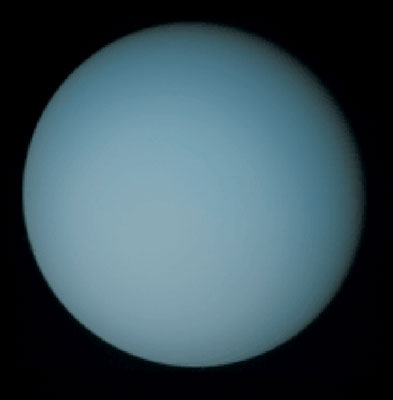
The Solar System’s giant planets—Jupiter, Saturn, Uranus, and Neptune—are unlikely places for human colonies.
These worlds have no solid surfaces where people could build cities.
Their atmospheres become increasingly dense with depth, leading to crushing pressures and extreme temperatures.
Jupiter’s powerful radiation belts would be especially dangerous for humans.
Instead of colonizing the planets themselves, scientists have greater interest in some of their moons.
The Fascinating Moons of the Outer Solar System
Several moons orbiting the giant planets may become important destinations for future exploration.
Europa, one of Jupiter’s largest moons, likely hides a vast liquid ocean beneath its icy shell. This ocean may contain more water than all of Earth’s oceans combined.
Saturn’s moon Enceladus also possesses an underground ocean that ejects water into space through enormous geysers.
Titan, Saturn’s largest moon, has a thick atmosphere and rivers and lakes—not of water, but of liquid methane and ethane.
Although these worlds are incredibly cold and far from the Sun, they may hold clues about whether life exists elsewhere in the Solar System.
Colonizing them would be far more difficult than colonizing Mars, but they remain scientifically fascinating.
Asteroids Could Become Space Cities
Not every future colony must exist on a planet.
Some scientists envision rotating space habitats built from materials mined from asteroids.
Asteroids contain valuable metals, water ice, and minerals.
Large rotating habitats could create artificial gravity through centrifugal force, helping reduce some health problems associated with low gravity.
These space settlements could orbit the Sun independently or travel between planets.
While highly ambitious, such ideas are grounded in established principles of physics and engineering.
Artificial Intelligence Will Play a Major Role
Future colonies will depend heavily on artificial intelligence.
AI systems could monitor life-support equipment, repair machinery, manage energy use, assist with medical care, operate robots, and help explore dangerous environments before humans arrive.
Autonomous robots may perform construction work, mining, and infrastructure development years before the first colonists land.
Rather than replacing humans, intelligent machines will likely become essential partners in building sustainable communities beyond Earth.
The Psychological Challenge of Living Far from Earth
Physical survival is only part of the challenge.
Imagine living millions of kilometers from Earth, separated from friends and family by months of travel.
Communication delays with Mars can range from several minutes to over twenty minutes one way, depending on the planets’ positions.
Colonists would experience isolation unlike anything humans have previously faced.
Maintaining mental health, social relationships, recreation, and a sense of community will be just as important as engineering reliable habitats.
Scientists already study these challenges using isolated research stations in Antarctica and simulated Mars missions.
How Close Are We?
Humanity has not yet established a permanent settlement beyond Earth, but significant progress is already underway.
Robotic spacecraft continue mapping potential landing sites.
The International Space Station has demonstrated that humans can live in space for extended periods.
New rockets are being designed to carry larger crews and heavier equipment.
Space agencies and private companies are planning missions that aim to return humans to the Moon and eventually send astronauts to Mars.
Each mission adds valuable knowledge that brings long-term colonization a little closer.
Will Humans Ever Colonize the Solar System?
Based on current scientific understanding, the answer appears to be yes—but gradually.
The first permanent settlements will likely be small, heavily dependent on Earth, and focused on scientific research.
Over time, advances in technology could allow these outposts to expand into thriving communities capable of producing their own food, water, energy, and construction materials.
Mars is widely considered the most promising long-term destination, while the Moon will likely serve as humanity’s first stepping stone.
Farther in the future, colonies may spread to asteroids and perhaps even the icy moons of the outer Solar System.
The journey will require patience, innovation, and international cooperation.
A New Chapter for Humanity
Throughout history, every generation has expanded the boundaries of the known world. Ancient sailors crossed unknown seas, explorers reached distant continents, and scientists uncovered the invisible laws of nature. Today, humanity stands at the edge of another great frontier.
Colonizing the Solar System will not be easy. It demands technologies we are still developing, answers to scientific questions we have not yet solved, and a commitment that may span centuries. Yet nothing in our current understanding of physics or biology suggests that it is impossible.
If future generations succeed, children born centuries from now may look up at unfamiliar skies from the Moon, Mars, or habitats drifting among the asteroids. They may think of Earth not as the only home humanity has ever known, but as the world where an extraordinary journey first began.