It sounds like the kind of question that belongs in a science fiction movie. Imagine building a gigantic bathtub large enough to hold an entire planet. Then imagine gently placing Saturn—the breathtaking ringed giant—onto the surface of the water. Would it sink like a stone, or would it float like a rubber duck?
Surprisingly, the scientific answer is one of the most fascinating facts in astronomy.
If you could somehow find or create an unimaginably enormous ocean big enough to hold Saturn, the planet would float.
This surprising idea has amazed students, scientists, and space enthusiasts for decades. But the reason has nothing to do with magic or science fiction. It comes down to one of the most basic concepts in physics: density.
Understanding why Saturn could float opens a window into how planets are built, how gravity shapes worlds, and why appearances can be deceiving in the universe.
Why Floating Depends on Density
Many people think heavy objects always sink and light objects always float. In reality, that’s not how nature works.
Whether something floats depends on its average density, not simply its weight.
Density is the amount of mass packed into a given volume. Imagine two boxes that are exactly the same size. One is filled with feathers, while the other is packed with iron. Even though both boxes occupy the same amount of space, the iron-filled box has much more mass and is therefore much denser.
Water has a density of about 1 gram per cubic centimeter (or 1,000 kilograms per cubic meter) under standard conditions.
An object with an average density lower than water will float. An object with a higher density will sink.
Wood floats because its average density is lower than water.
A steel ship floats even though steel is denser than water because the ship’s hollow design lowers its overall average density.
The same principle applies to planets.
Saturn’s Surprising Density
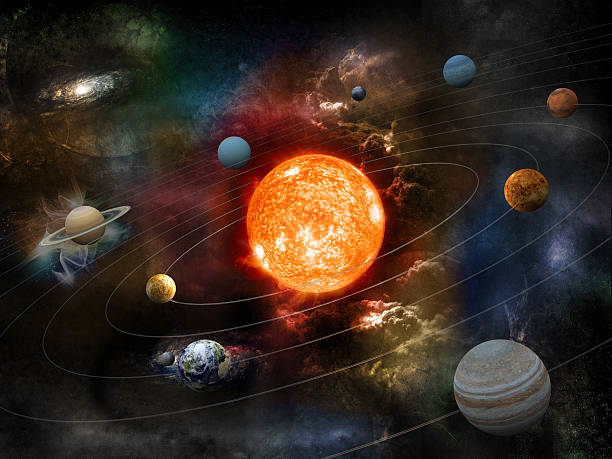
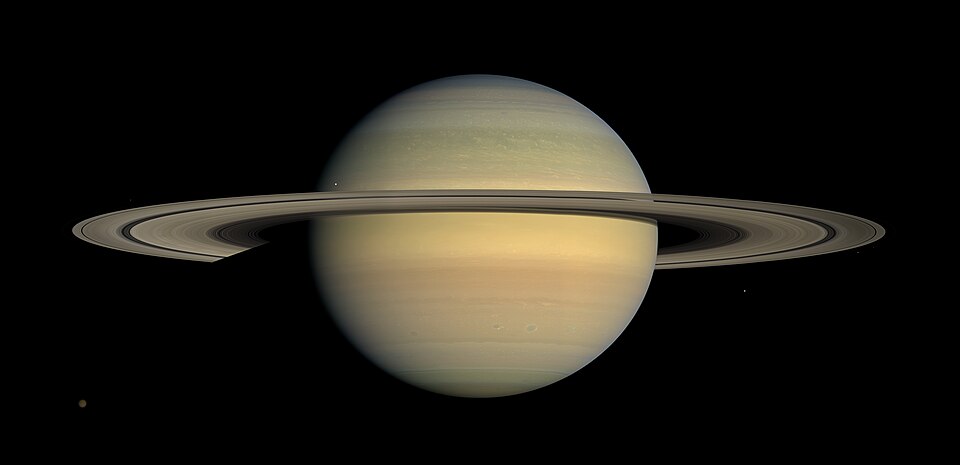
Saturn is the second-largest planet in the Solar System, trailing only Jupiter.
Its diameter is about 120,500 kilometers (74,900 miles), making it nearly ten times wider than Earth.
It contains about 95 times Earth’s mass.
Despite its enormous size and mass, Saturn has an average density of only about 0.69 grams per cubic centimeter.
That is significantly less dense than water.
This makes Saturn the only planet in our Solar System whose average density is lower than water.
If an impossibly large body of water existed, Saturn would displace enough water to support its weight, causing the planet to float.
Why Saturn Is So Light for Its Size
At first glance, it seems impossible.
How can a planet containing more than ninety Earths be less dense than water?
The answer lies in what Saturn is made of.
Unlike Earth, Saturn is not a rocky planet.
Earth consists mainly of dense materials such as iron, nickel, oxygen, silicon, and magnesium.
Saturn is a gas giant, composed mostly of hydrogen and helium, the two lightest elements in the universe.
Hydrogen makes up most of Saturn’s mass, while helium is the second most abundant ingredient.
These elements are extremely light compared with the rocks and metals that dominate Earth.
Although Saturn contains a relatively small rocky core deep inside, the overwhelming majority of its volume consists of hydrogen and helium under different temperatures and pressures.
This gives Saturn a remarkably low average density.
Does Saturn Really Float Like a Beach Ball?
Not exactly.
The famous statement that Saturn could float is scientifically correct in terms of density, but the reality would look nothing like placing a toy on a swimming pool.
Planets are not rigid objects like basketballs.
Saturn has no solid outer surface.
Its visible “surface” is actually the tops of thick cloud layers swirling through its atmosphere.
As Saturn encountered an enormous ocean, its atmosphere would interact with the water in incredibly complex ways.
The lower layers of the atmosphere would experience immense pressure, and the water itself would behave very differently under the planet’s tremendous gravity.
So while the average density predicts floating, the actual interaction would be far more complicated than anything we observe on Earth.
The Impossible Ocean
There is another enormous challenge.
No ocean large enough to float Saturn could actually exist.
Saturn’s diameter is over 120,000 kilometers, meaning the ocean would have to be even larger.
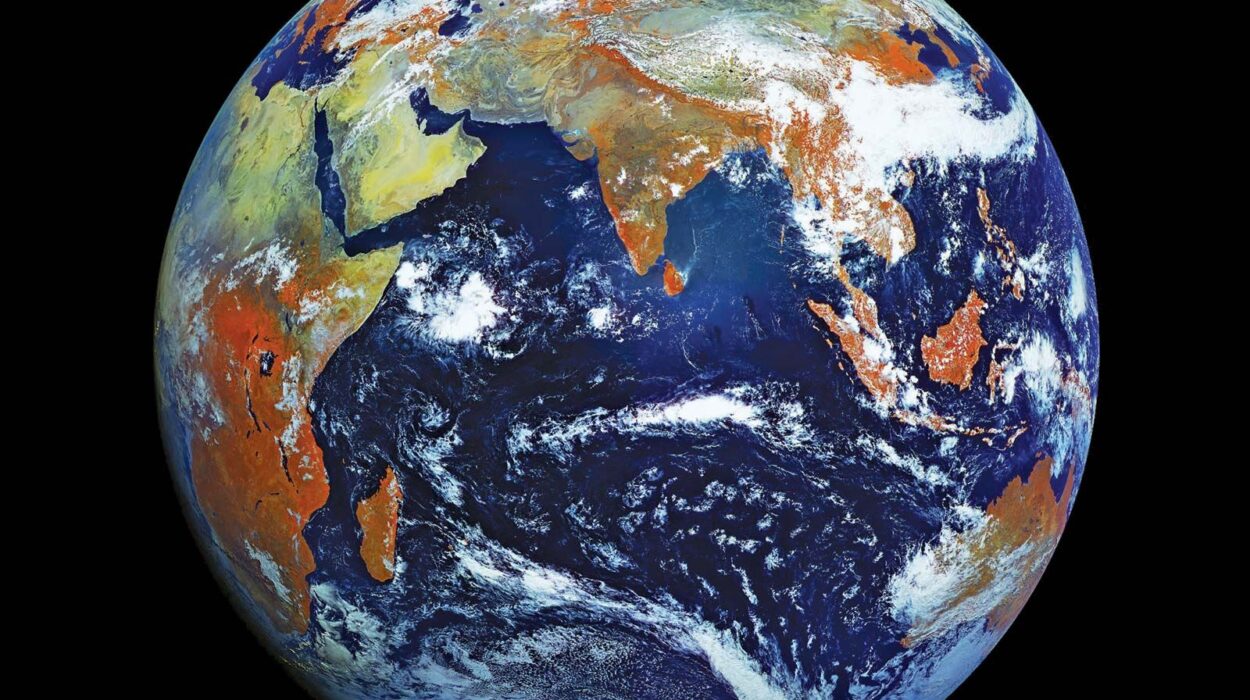
For comparison, Earth’s diameter is only about 12,742 kilometers.
Saturn is so large that more than 760 Earths could fit inside it by volume.
Creating an ocean capable of holding such a world would require an object far larger than any planet in the Solar System.
No known natural body of liquid water anywhere in the universe comes remotely close to that size.
The floating thought experiment is simply a fun way to illustrate Saturn’s unusually low density.
Saturn Is Not Hollow
Some people hear that Saturn is less dense than water and wonder whether the planet might be hollow.
It is not.
Saturn contains an enormous amount of matter.
Its total mass is approximately 5.68 × 10²⁶ kilograms.
That’s an almost unimaginably large amount of material.
The reason for its low density is not empty space inside the planet but the fact that most of its material consists of lightweight hydrogen and helium spread across an enormous volume.
Deep within Saturn, the pressure becomes so extreme that hydrogen behaves in unusual ways.
Far below the cloud tops, hydrogen is compressed into liquid hydrogen and eventually into metallic hydrogen, an exotic state in which hydrogen conducts electricity like a metal.
These deep layers are incredibly dense compared with the upper atmosphere.
Even so, when averaged across the entire planet, Saturn’s overall density remains below that of water.
Saturn’s Powerful Gravity
The idea of Saturn floating sometimes gives the impression that gravity there must be weak.
In fact, Saturn’s gravity is surprisingly similar to Earth’s.
If you could somehow stand on an imaginary solid platform at the level where atmospheric pressure matches Earth’s sea-level pressure, gravity would feel only slightly stronger than what you experience on Earth.
This happens because Saturn’s enormous mass creates a powerful gravitational pull, but its huge size spreads that mass over a much larger radius.
The combination produces a surface gravity that is comparable to Earth’s despite Saturn being vastly more massive.
A Planet Made Mostly of Hydrogen
Hydrogen is extraordinary.
It is the simplest element in the universe, containing just one proton and one electron.
It also happens to be the most abundant element in the cosmos.
Stars, including our Sun, consist primarily of hydrogen.
Saturn inherited vast amounts of hydrogen during the formation of the Solar System about 4.5 billion years ago.
As the young Sun formed, leftover gas surrounded it.
In the colder outer Solar System, Saturn grew massive enough for its gravity to capture huge quantities of hydrogen and helium before the remaining gas dispersed into space.
That process transformed Saturn into the giant world we see today.
The Beautiful Rings Don’t Help It Float
Saturn’s rings are among the most spectacular sights in the Solar System.
Made mostly of water ice mixed with smaller amounts of rocky material, the rings stretch hundreds of thousands of kilometers across while remaining astonishingly thin.
Although the rings appear enormous, they contain surprisingly little mass compared with the planet itself.
Even if Saturn had no rings at all, its average density would remain below that of water.
The rings do not determine whether Saturn could float.
They simply add to the planet’s breathtaking beauty.
How Scientists Measured Saturn’s Density
Scientists determine a planet’s density by measuring two key properties: its mass and its volume.
Saturn’s mass can be calculated by studying the gravitational pull it exerts on its moons and spacecraft.
Its volume is determined from its size and shape, which have been measured using telescopes and spacecraft observations.
Once both values are known, calculating the average density is straightforward.
This is how astronomers discovered that Saturn has the lowest average density of any planet in the Solar System.
Could Any Other Planet Float?
The answer is no.
Every other planet has an average density greater than water.
Jupiter, although also made mostly of hydrogen and helium, is much denser because its immense gravity compresses its interior more strongly.
Uranus and Neptune contain larger amounts of heavier materials such as water, ammonia, and methane deep inside, making them denser than Saturn.
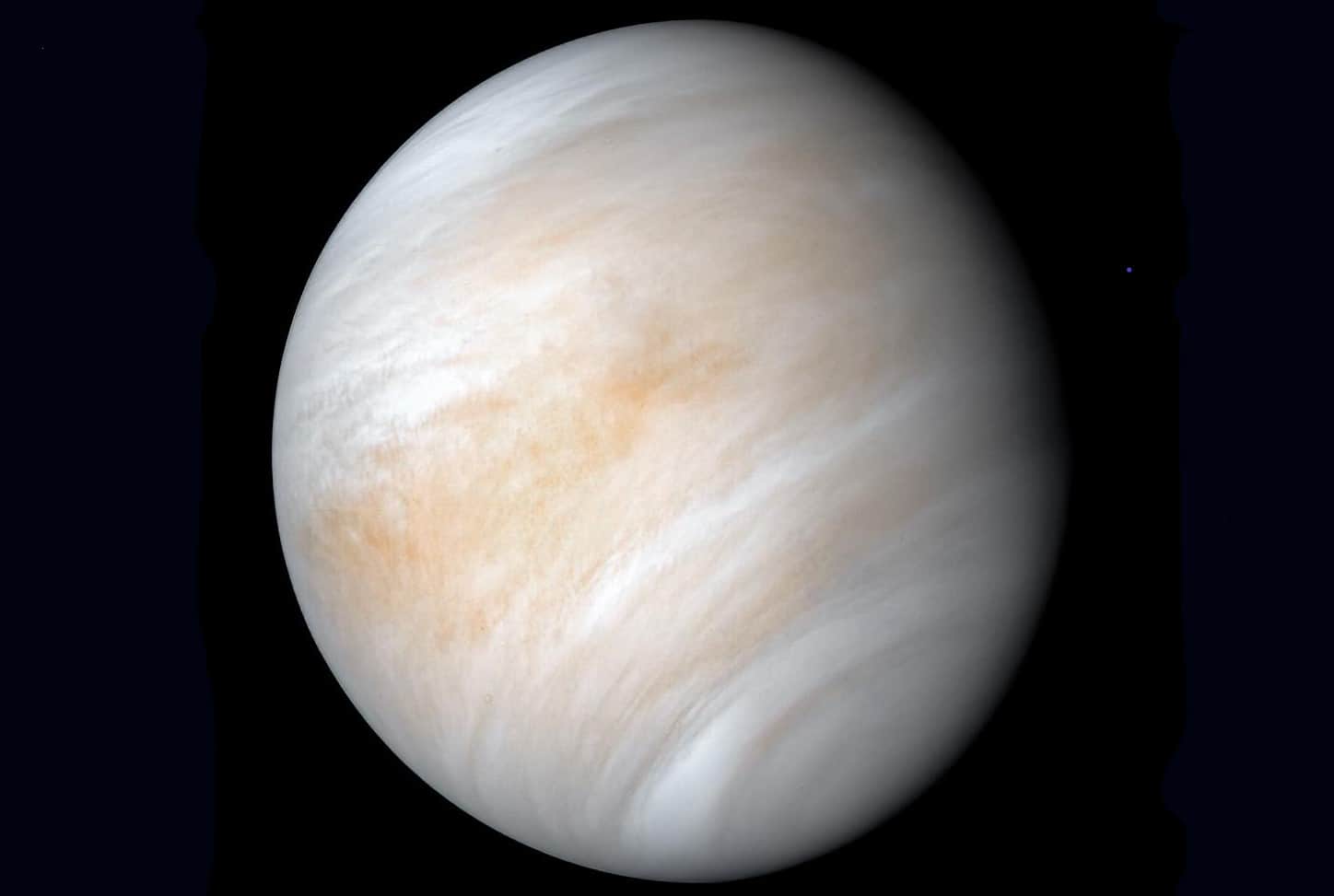
The rocky planets—Mercury, Venus, Earth, and Mars—are much denser still because they consist largely of rock and metal.
Saturn stands alone as the only planet with an average density low enough to float.
Floating Doesn’t Mean Lightweight
It is easy to misunderstand what floating means.
Saturn is anything but light.
Its gravity dominates a vast region of the Solar System.
It has more than a hundred known moons, including the fascinating moon Titan, which possesses rivers, lakes, and seas of liquid methane and ethane.
Saturn also generates an enormous magnetic field and experiences some of the fastest winds in the Solar System, reaching speeds of around 1,800 kilometers per hour (about 1,100 miles per hour) in parts of its atmosphere.
Calling Saturn “light” simply refers to its average density relative to water—not its total mass.
Saturn Continues to Surprise Scientists
Space missions such as NASA’s Cassini spacecraft transformed our understanding of Saturn.
During its thirteen-year exploration of the Saturn system, Cassini revealed towering storms, mysterious hexagonal clouds at the north pole, active icy geysers erupting from the moon Enceladus, and intricate details of the planet’s rings.
Scientists continue studying Saturn to better understand how giant planets form, how their atmospheres evolve, and how similar worlds may exist around distant stars.
Every new discovery reminds us that Saturn is far more complex than a simple floating thought experiment.
A Simple Question with a Powerful Lesson
The question “Could Saturn float on water?” may sound playful, but it teaches one of the most important ideas in science.
Nature often challenges our everyday intuition.
A planet that is nearly ten times wider than Earth and contains ninety-five times Earth’s mass can still have an average density lower than water.
That surprising fact reminds us that science is not about guessing based on appearances. It is about measuring, testing, and understanding how the universe truly works.
Saturn’s ability to theoretically float is one of astronomy’s most delightful facts—not because anyone will ever find an ocean large enough, but because it reveals the incredible diversity of worlds beyond Earth. The ringed giant shows us that even the largest objects can hold astonishing secrets, waiting for curious minds to discover them.