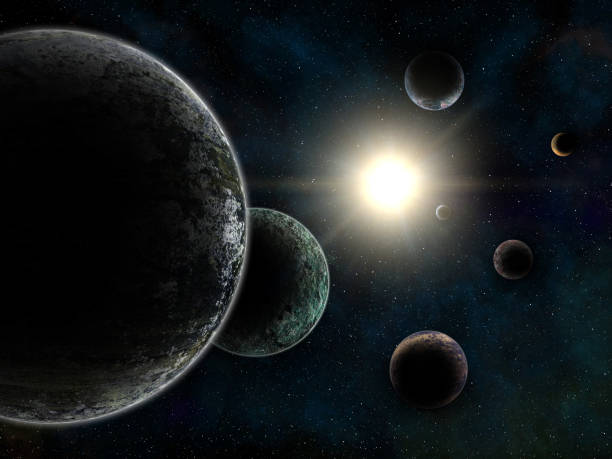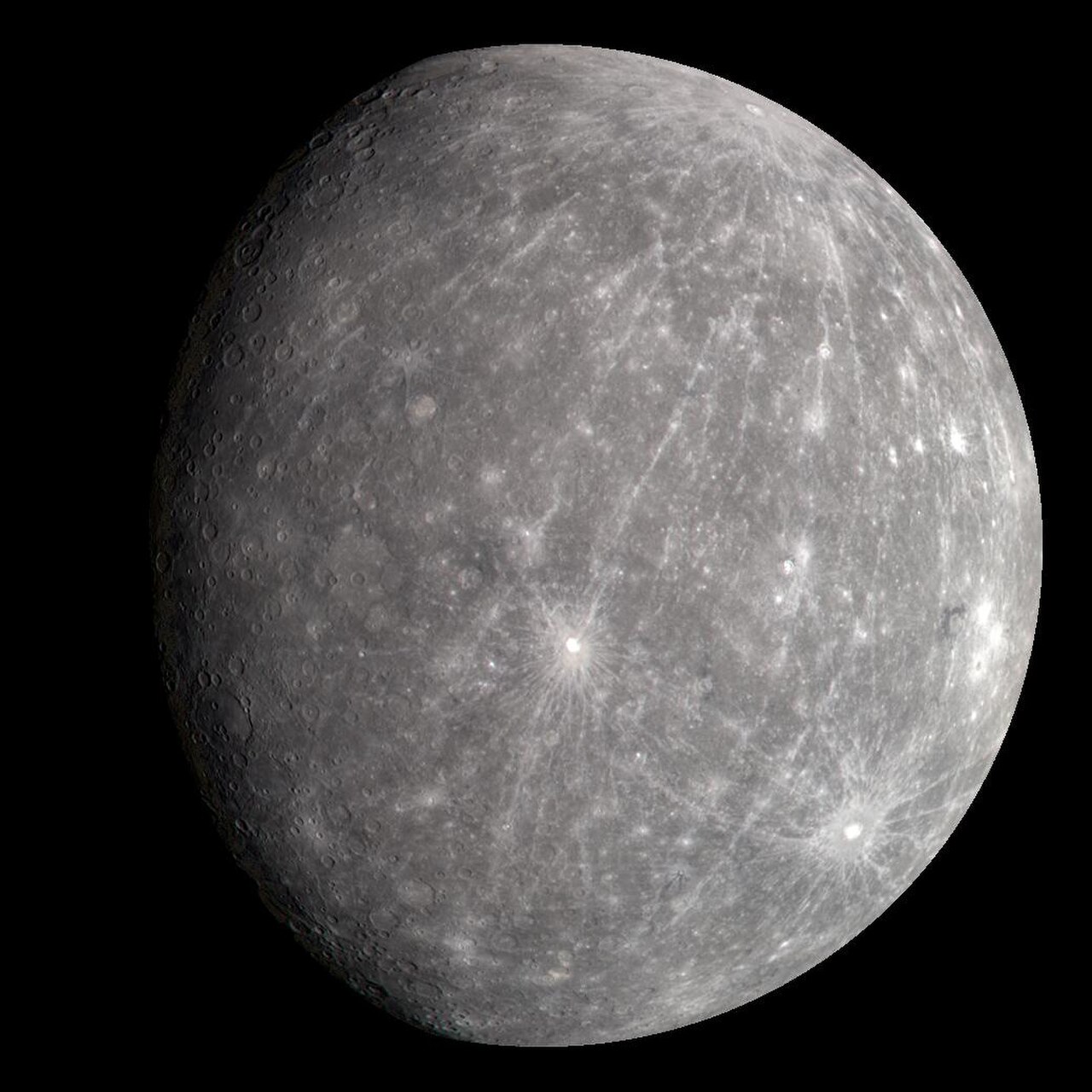
Imagine standing on a world where the ground beneath your feet is hot enough to melt lead. The Sun fills the sky, appearing more than three times larger than it does from Earth. Shadows are incredibly dark, the sunlight is blindingly bright, and there is almost no air to soften the harsh environment.
Welcome to Mercury, the smallest planet in our Solar System and the closest one to the Sun.
When people first hear about Mercury, they usually assume they know the reason it is so hot. The explanation seems obvious: Mercury is the nearest planet to the Sun, so it receives the most sunlight.
That answer is correct—but it is only part of the story.
Mercury is indeed incredibly hot during the daytime, but it is also one of the coldest planets at night. Its temperature swings are the most dramatic anywhere in the Solar System. Understanding why Mercury becomes so scorching hot during the day—and so freezing cold after sunset—reveals fascinating secrets about the planet, the Sun, and the physics of heat itself.
Mercury Lives Closest to the Sun
The biggest reason Mercury is so hot is simple: it is the closest planet to our star.
On average, Mercury orbits about 58 million kilometers (36 million miles) from the Sun. Earth, by comparison, is about 150 million kilometers (93 million miles) away.
This means Mercury is only about 39% as far from the Sun as Earth.
Because sunlight spreads out as it travels through space, planets closer to the Sun receive much more solar energy. According to the inverse-square law, the intensity of sunlight increases dramatically as distance decreases.
As a result, Mercury receives about 6.5 to 7 times more solar energy than Earth receives.
Every square meter of Mercury’s surface is constantly bombarded with an enormous amount of sunlight whenever it faces the Sun.
That intense solar energy is the primary reason Mercury becomes so incredibly hot.
The Sun Looks Enormous from Mercury
If you could somehow stand safely on Mercury during the day, one of the first things you would notice is the Sun itself.
From Earth, the Sun appears as a bright disk in the sky. From Mercury, it looks much larger.
Because Mercury’s orbit is not perfectly circular, the apparent size of the Sun changes throughout the planet’s year.
When Mercury is closest to the Sun, the Sun appears more than three times wider than it does from Earth. Since apparent area increases with the square of diameter, the Sun can cover more than ten times the area of the sky that it appears to occupy from Earth.
The sunlight is astonishingly intense.
Without clouds or a thick atmosphere to scatter the light, the sky remains black even during daytime, while the Sun shines with overwhelming brilliance.
Mercury Has Almost No Atmosphere
Many people are surprised to learn that Mercury has almost no atmosphere.
Earth is surrounded by a thick blanket of gases that performs several important jobs.
Our atmosphere scatters sunlight, creates weather, transports heat around the globe, and helps keep nighttime temperatures relatively warm.
Mercury has none of these protections.
Instead of a true atmosphere, Mercury has an extremely thin exosphere, made of tiny amounts of atoms such as sodium, potassium, oxygen, helium, and hydrogen. These particles are so sparse that they rarely collide with one another.
Because the exosphere is so thin, it cannot trap heat like Earth’s atmosphere does.
It also cannot carry warmth from the sunny side of the planet to the dark side.
This is one reason Mercury experiences such extraordinary temperature differences.
Mercury’s Surface Absorbs Intense Sunlight
Mercury’s rocky surface acts like a giant solar collector.
When sunlight strikes the ground, rocks and dust absorb much of the incoming energy.
As the surface continues facing the Sun for long periods, it becomes hotter and hotter.
During the hottest part of the day, temperatures can reach about 430°C (800°F).
That is hot enough to melt metals such as tin and lead.
If you placed many everyday objects on Mercury’s sunlit surface, they would quickly overheat or melt.
Mercury Has Very Long Days
Mercury rotates surprisingly slowly.
One complete rotation takes about 59 Earth days.
At first glance, that already sounds slow, but Mercury’s unusual orbit makes its solar day even longer.
A solar day—the time from one sunrise to the next—lasts about 176 Earth days.
That means one location on Mercury experiences continuous daylight for nearly three months before the Sun finally sets.
Imagine leaving a frying pan under a powerful heat lamp for months without interruption.
The pan would continue heating for a very long time.
Mercury’s surface experiences something similar.
Its rocks remain under intense sunlight for weeks, allowing temperatures to climb to extraordinary levels.
No Clouds Mean No Shade
Earth’s clouds reflect some sunlight back into space.
They also provide shade that can cool the ground.
Mercury has no weather.
There are no clouds.
There is no rain.
There are no winds carrying cool air across the landscape.
The sunlight reaches the surface almost completely uninterrupted.
This allows Mercury’s daytime temperatures to rise to extreme levels.
Why Doesn’t Mercury Keep That Heat?
One of Mercury’s greatest mysteries disappears once we understand its missing atmosphere.
Although Mercury gets extremely hot during the day, it cannot hold onto that heat.
On Earth, the atmosphere acts like a blanket.
It slows the escape of heat into space.
Mercury lacks this insulating layer.
Once the Sun sets, the hot surface begins radiating heat directly into space.
Because space is almost a perfect vacuum, there is nothing to trap the escaping thermal energy.
The planet cools astonishingly quickly.
Nighttime temperatures can fall to around −180°C (−290°F).
This means Mercury experiences a temperature difference of more than 600°C (over 1,100°F) between day and night—the largest of any planet in the Solar System.
Mercury Is Hotter Than Venus During the Day
This fact surprises many people.
Mercury is the closest planet to the Sun, but Venus has a much higher average surface temperature.
Venus reaches about 465°C (869°F) across almost its entire surface, making it the hottest planet in the Solar System.
Why?
The answer lies in the atmosphere.
Venus has an incredibly dense atmosphere composed mostly of carbon dioxide.
This thick atmosphere creates an extreme greenhouse effect that traps enormous amounts of heat.
Mercury, by contrast, has almost no atmosphere.
As a result, Mercury’s daytime temperatures reach around 430°C (800°F), which is slightly lower than Venus’s average temperature.
Mercury receives far more direct sunlight, but Venus is better at holding onto heat.
This comparison shows that distance from the Sun is not the only factor controlling a planet’s temperature.
Atmospheres play an equally important role.
Mercury’s Orbit Makes Its Temperature Even More Extreme
Mercury follows the most elliptical orbit of all the major planets.
This means its distance from the Sun changes significantly throughout its year.
When Mercury is closest to the Sun, called perihelion, it receives much more solar energy than when it is farthest away, at aphelion.
These changing distances contribute to variations in surface heating.
Some regions experience even more intense temperatures when Mercury passes close to the Sun.
The Surface Is Covered with Dark Rock
Mercury’s surface is covered by ancient volcanic plains, impact craters, cliffs, and rocky debris.
Many of these materials absorb sunlight efficiently.
The dark, dusty landscape converts incoming solar energy into heat, helping raise surface temperatures during the long day.
Although the exact reflectivity varies across the planet, Mercury reflects only a modest fraction of the sunlight that reaches it.
Most of the remaining energy becomes heat.
The Poles Hide Frozen Water
One of the most surprising discoveries about Mercury is that it contains water ice.
At first, this sounds impossible.
How could the hottest nearby planet contain frozen water?
The answer lies at the poles.
Mercury’s axis is tilted by less than one degree.
Because of this tiny tilt, the floors of some deep polar craters never receive direct sunlight.
These permanently shadowed regions remain extremely cold.
Temperatures stay low enough for water ice to survive for billions of years.
Radar observations from Earth first hinted at these icy deposits, and NASA’s MESSENGER spacecraft later confirmed that large amounts of water ice exist inside these permanently dark craters.
So while Mercury’s equator can become hot enough to melt lead, some polar craters remain colder than many places on Pluto.
Mercury Has No Weather
On Earth, weather constantly redistributes heat.
Warm air rises.
Cool air sinks.
Winds carry heat across continents.
Oceans move warm water toward the poles.
Clouds reflect sunlight.
Rain cools the land.
Mercury has none of these processes.
Its surface simply heats under the Sun and cools in darkness.
The absence of weather contributes to the planet’s dramatic temperature extremes.
What Spacecraft Have Taught Us
For many years, Mercury remained one of the least explored planets because visiting it is surprisingly difficult. Reaching the innermost planet requires spacecraft to carefully reduce their speed against the Sun’s strong gravitational pull.
NASA’s Mariner 10 became the first spacecraft to visit Mercury in the 1970s, revealing a heavily cratered world.
Decades later, NASA’s MESSENGER orbited Mercury from 2011 to 2015, transforming our understanding of the planet. It mapped nearly the entire surface, discovered evidence of ancient volcanic activity, measured Mercury’s magnetic field in detail, and confirmed the presence of water ice in permanently shadowed polar craters.
Today, the joint European Space Agency and Japan Aerospace Exploration Agency mission BepiColombo is traveling toward Mercury. Once in orbit, it is expected to provide even more detailed information about the planet’s interior, magnetic environment, surface composition, and interaction with the solar wind.
Could Humans Survive on Mercury?
Mercury would be one of the most difficult places in the Solar System for humans to live.
The intense sunlight, extreme heat, freezing nights, constant radiation, and lack of breathable air make the surface extraordinarily hostile.
Any future exploration would require highly advanced habitats capable of withstanding enormous temperature changes.
Interestingly, if humans ever established a research station on Mercury, the permanently shadowed polar craters might offer one of the safest locations because they remain cold and contain water ice that could potentially be used as a resource.
Mercury Teaches Us About Planetary Science
Mercury is much more than a hot, barren world.
It helps scientists understand how rocky planets form, how surfaces evolve without weather, how the Sun influences nearby worlds, and how heat moves through airless environments.
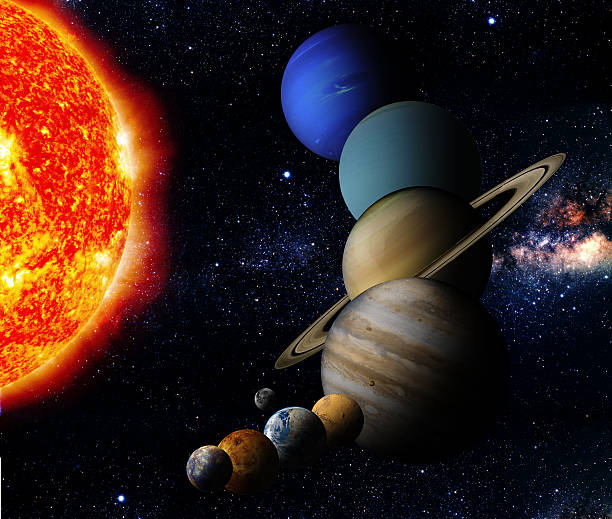
By comparing Mercury with Earth, Venus, Mars, and the Moon, researchers gain valuable clues about the history of the Solar System.
Mercury also reminds us that planets are shaped by many interacting factors. Distance from the Sun is important, but so are atmospheric composition, rotation rate, surface properties, orbital shape, and geological history.
The Real Reason Mercury Is So Hot
Mercury’s extreme heat is the result of several factors working together.
Its close proximity to the Sun allows it to receive vastly more solar energy than Earth. Its slow rotation keeps the same regions facing the Sun for weeks at a time, allowing the ground to absorb heat continuously. The absence of a substantial atmosphere means there are no clouds to block sunlight, no winds to distribute heat, and no insulating blanket to retain warmth after sunset.
Together, these conditions create one of the most dramatic environments in the Solar System—a world where blazing days hotter than 430°C (800°F) are followed by freezing nights near −180°C (−290°F).
Mercury may be the smallest planet, but it offers one of the greatest lessons in planetary science: a planet’s temperature is not determined by distance from the Sun alone. It is the result of a delicate balance between sunlight, atmosphere, rotation, surface properties, and the laws of physics that govern every world in our cosmic neighborhood.