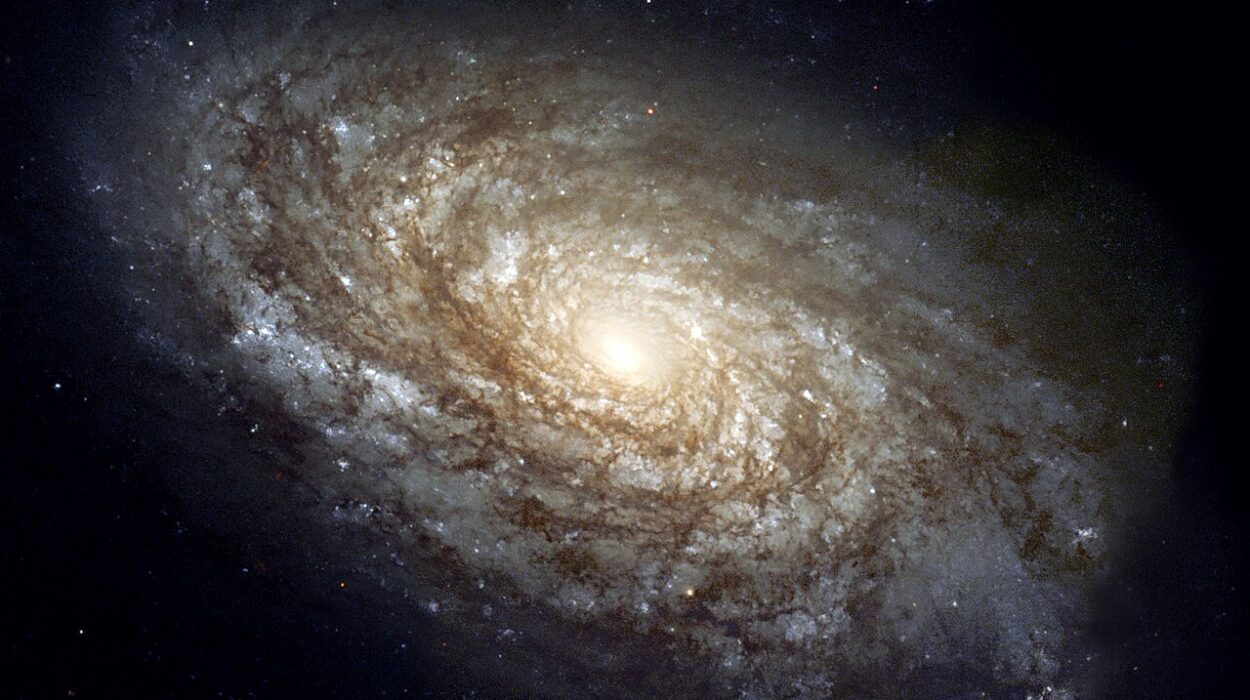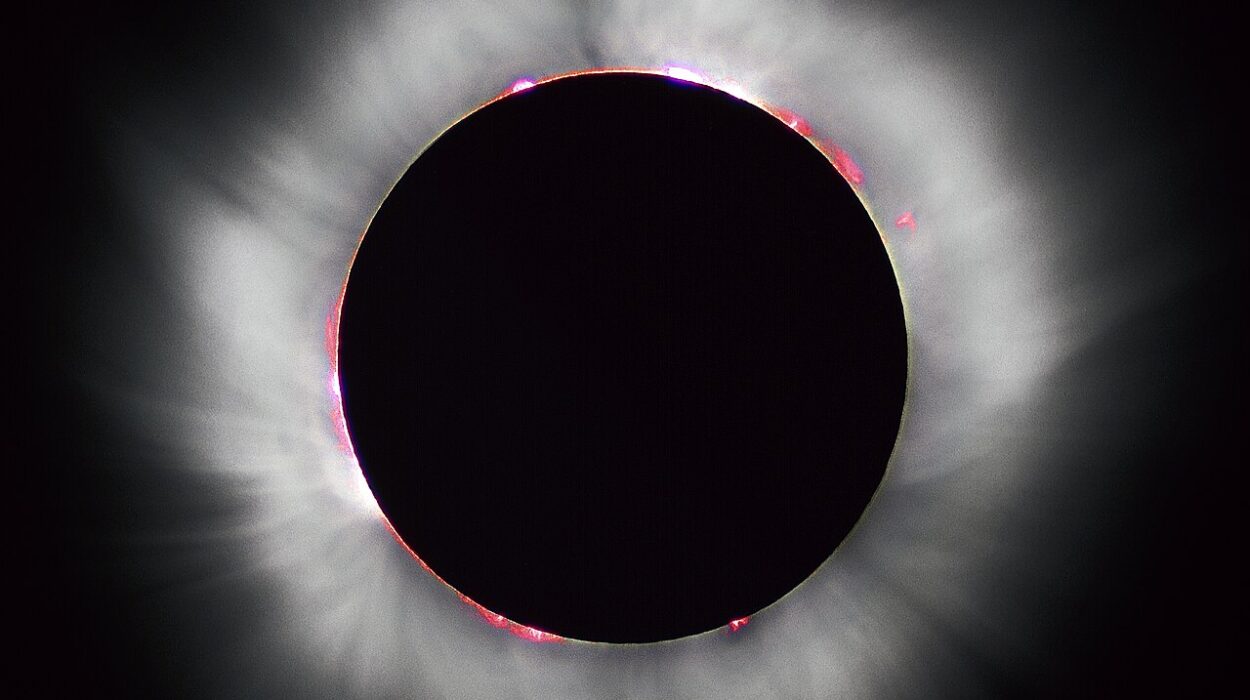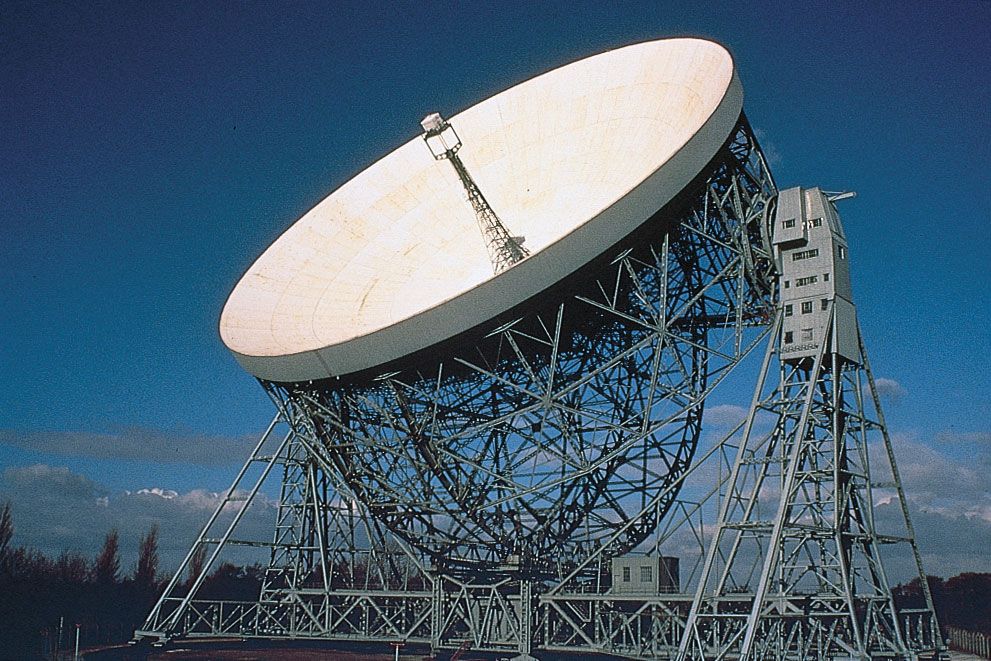
When most people imagine a telescope, they picture a long tube with glass lenses or mirrors pointed toward the night sky. These familiar instruments collect visible light, allowing us to see planets, stars, and galaxies. But the universe has much more to say than what our eyes can see. It constantly sends out invisible radio waves that travel across vast distances through space. To detect these hidden signals, astronomers use a remarkable scientific instrument called a radio telescope.
A radio telescope does not observe the universe by collecting visible light. Instead, it captures radio waves emitted by celestial objects. These faint signals reveal phenomena that ordinary optical telescopes cannot detect, allowing scientists to explore the coldest clouds of gas, the birth of stars, the powerful jets of black holes, distant galaxies, and even the faint afterglow of the Big Bang.
Radio telescopes have transformed our understanding of the cosmos. They have uncovered entirely new classes of astronomical objects, helped test Einstein’s theory of general relativity, contributed to the discovery of planets beyond our Solar System, and allowed scientists to study parts of the universe that remain invisible in visible light.
Understanding Radio Waves
To understand a radio telescope, it is helpful to first understand radio waves.
Light comes in many forms, all of which belong to the electromagnetic spectrum. Visible light is only a tiny portion of this spectrum—the small range that human eyes can detect. Beyond visible light are infrared radiation, ultraviolet light, X-rays, gamma rays, microwaves, and radio waves.
Radio waves have the longest wavelengths and the lowest frequencies in the electromagnetic spectrum. Although we cannot see them, they are everywhere around us. They carry television broadcasts, radio stations, mobile phone signals, Wi-Fi communications, and satellite transmissions.
Many objects in space naturally produce radio waves. Unlike human-made radio signals, these cosmic radio waves originate from stars, galaxies, planets, black holes, clouds of hydrogen gas, pulsars, quasars, and many other astronomical sources.
A radio telescope is designed to collect these natural radio emissions from the universe.
What Is a Radio Telescope?
A radio telescope is a scientific instrument that detects and measures radio waves coming from objects in space.
Instead of using glass lenses or mirrors to focus visible light, a radio telescope uses a large metal antenna—usually shaped like a giant dish—to collect radio waves. These signals are extremely weak by the time they reach Earth, so highly sensitive electronic receivers amplify them before computers process the data.
The result is not a traditional photograph like those taken with optical telescopes. Instead, astronomers create images, maps, and measurements by analyzing the strength, timing, frequency, and direction of the radio signals they receive.
In many cases, the colorful radio images seen in astronomy are not photographs. They are computer-generated visualizations that represent invisible radio emissions using colors chosen by scientists to highlight different features.
Why the Universe Emits Radio Waves
Many astronomical objects naturally produce radio waves through different physical processes.
Electrons moving through powerful magnetic fields generate radio emissions. This happens around pulsars, supernova remnants, and active galaxies.
Cold clouds of hydrogen gas emit radio waves at a specific wavelength of 21 centimeters. This emission allows astronomers to map the structure of our Milky Way and other galaxies.
Charged particles accelerated near black holes produce intense radio signals that can travel billions of light-years through space.
Exploding stars, energetic galaxies, planetary atmospheres, and even lightning on planets can all generate detectable radio emissions.
Because radio waves originate from so many different sources, radio telescopes reveal parts of the universe that would otherwise remain hidden.
How a Radio Telescope Works
The most recognizable feature of a radio telescope is its enormous dish.
The dish acts like a giant collector. As radio waves from space strike its curved surface, they are reflected toward a central receiver positioned above the dish or at its center.
The receiver converts the incoming radio waves into electrical signals.
Because cosmic radio waves are incredibly weak, the signals pass through highly sensitive amplifiers that strengthen them without introducing significant noise.
The amplified signals are then processed by sophisticated computers that analyze their properties.
Scientists study characteristics such as frequency, intensity, polarization, and arrival time to learn about the distant object that produced them.
Modern radio telescopes often collect enormous amounts of data every second, requiring powerful computers to process and interpret the observations.
Why Radio Telescope Dishes Are So Large
One of the first things people notice about radio telescopes is their enormous size.
Unlike visible light, radio waves often have much longer wavelengths. To detect these long wavelengths efficiently and produce sharp images, astronomers need collecting surfaces that are much larger than optical telescope mirrors.
Some radio telescope dishes measure more than 100 meters (328 feet) across.
The larger the dish, the more radio energy it can collect and the more sensitive the telescope becomes.
A larger dish also improves the telescope’s ability to distinguish fine details in distant objects, a property known as angular resolution.
This is why some of the world’s most powerful radio telescopes are among the largest scientific instruments ever built.
The Main Parts of a Radio Telescope
Although radio telescopes vary in design, most include several essential components.
The large reflecting dish collects incoming radio waves.
A receiver positioned at the focus gathers the concentrated radio signals.
Low-noise amplifiers strengthen the extremely faint signals arriving from space.
Electronic systems filter unwanted interference.
Powerful computers analyze the data and transform it into meaningful scientific information.
Many modern radio telescopes also use advanced cooling systems that keep receivers at extremely low temperatures. Cooling reduces electronic noise, allowing astronomers to detect even weaker cosmic signals.
Radio Telescopes See the Invisible Universe
Visible light tells only part of the universe’s story.
Many regions of space are hidden behind thick clouds of cosmic dust that block visible light completely.
Radio waves, however, can often pass through these dusty regions.
This allows radio telescopes to observe stellar nurseries where new stars are forming deep inside giant molecular clouds.
They can also study the center of our Milky Way, where dust prevents optical telescopes from seeing clearly.
Without radio astronomy, much of the universe would remain invisible.
Radio Astronomy Reveals the Birth of Stars
Stars are born inside enormous clouds of cold gas and dust.
These clouds are often opaque in visible light, making them difficult to observe with optical telescopes.
Radio telescopes detect emissions from the hydrogen molecules and other gases within these clouds.
By studying these signals, astronomers can watch the earliest stages of star formation.
They can measure how the gas moves, determine its temperature, estimate its density, and understand the physical conditions that lead to the birth of new stars.
Radio observations have dramatically expanded our knowledge of how stars and planetary systems form.
Exploring Galaxies with Radio Waves
Galaxies emit radio waves for many different reasons.
Some contain enormous black holes that eject powerful streams of energetic particles called jets. These jets shine brightly in radio wavelengths and can extend for hundreds of thousands of light-years.
Radio telescopes also map the hydrogen gas spread throughout galaxies.
This allows astronomers to measure galaxy rotation, estimate the amount of invisible dark matter, and study how galaxies evolve over billions of years.
Because radio waves can travel great distances through space, radio telescopes are capable of observing galaxies that formed when the universe was much younger than it is today.
Discovering Pulsars
One of the greatest achievements of radio astronomy was the discovery of pulsars in 1967.
Pulsars are rapidly spinning neutron stars—the incredibly dense remnants left behind after massive stars explode as supernovae.
As they rotate, pulsars emit narrow beams of radio waves from their magnetic poles.
If one of these beams sweeps across Earth, astronomers detect it as an extremely regular pulse of radio energy.
Some pulsars rotate hundreds of times every second with astonishing precision.
These natural cosmic clocks help scientists study gravity, test Einstein’s theory of general relativity, and even search for gravitational waves.
Studying Black Holes
Black holes themselves do not emit light because their gravity is so strong that nothing—not even light—can escape once it crosses the event horizon.
However, the matter surrounding black holes often becomes extremely hot and energetic.
As gas spirals inward, magnetic fields accelerate charged particles that produce intense radio emissions.
Radio telescopes detect these signals, allowing astronomers to study black hole environments, powerful jets, and the behavior of matter under extreme gravitational conditions.
Radio observations have played a major role in producing the first images of black hole shadows.
Mapping Hydrogen Across the Universe
Hydrogen is the most abundant element in the universe.
Neutral hydrogen atoms naturally emit radio waves with a wavelength of approximately 21 centimeters.
This special signal has become one of the most valuable tools in astronomy.
By observing the 21-centimeter emission, radio telescopes map hydrogen throughout the Milky Way and distant galaxies.
These maps reveal spiral arms, measure galaxy rotation, and provide insights into how galaxies form and evolve over cosmic time.
Radio Telescopes Work Day and Night
Unlike optical telescopes, radio telescopes do not depend on sunlight or darkness.
Because radio waves are invisible, observations can continue during both daytime and nighttime.
Clouds, fog, and moderate weather often have much less effect on radio observations than they do on visible-light astronomy.
However, extremely heavy rain or atmospheric water vapor can interfere with certain radio frequencies, particularly at shorter wavelengths.
Even so, radio telescopes generally enjoy much greater observing flexibility than optical telescopes.
Avoiding Radio Interference
One of the biggest challenges in radio astronomy comes not from space but from Earth.
Human technology produces enormous amounts of radio interference.
Television stations.
Mobile phones.
Wi-Fi networks.
Satellites.
Aircraft.
Radar systems.
These signals can overwhelm the faint radio waves arriving from distant galaxies.
For this reason, many radio observatories are built in remote deserts, mountain valleys, or isolated regions where human-made radio noise is minimal.
Some countries even establish legally protected “radio quiet zones” around major observatories to reduce interference.
Radio Telescope Arrays
Instead of building one gigantic dish, astronomers often connect many smaller radio telescopes into a network called an array.
Each telescope observes the same object simultaneously.
Powerful computers combine the signals using a technique called interferometry.
Together, the array behaves like a single telescope whose effective size equals the maximum distance between its individual antennas.
This greatly improves image resolution.
Some arrays stretch across entire countries, while others link radio telescopes located on different continents.
Very Long Baseline Interferometry (VLBI) allows astronomers to achieve some of the highest-resolution observations ever made in astronomy.
Famous Radio Telescopes Around the World
Several radio telescopes have become landmarks of scientific achievement.
The Very Large Array in New Mexico consists of dozens of movable antennas working together to study galaxies, stars, and black holes.
China’s Five-hundred-meter Aperture Spherical Telescope (FAST) is currently the world’s largest filled-aperture radio telescope. Its enormous collecting area allows scientists to detect extremely faint radio signals from distant pulsars and galaxies.
The Atacama Large Millimeter/submillimeter Array (ALMA) in Chile studies cold gas and dust where stars and planets form. Although it operates at millimeter and submillimeter wavelengths, it is part of the broader field of radio astronomy.
These observatories continue to make groundbreaking discoveries about the universe.
Radio Telescopes and the Search for Extraterrestrial Life
Radio telescopes also play an important role in the scientific search for intelligent life beyond Earth.
Programs searching for extraterrestrial intelligence analyze radio signals from nearby stars, looking for narrow-band transmissions that might indicate advanced technology.
So far, no confirmed artificial extraterrestrial radio signal has been detected.
Nevertheless, radio telescopes remain among the best tools available for conducting systematic searches because radio waves travel efficiently across interstellar distances.
Radio Telescopes and the Big Bang
One of radio astronomy’s greatest contributions has been the study of the cosmic microwave background.
This faint radiation fills the entire universe and represents the cooled remnant of the hot, dense state that existed shortly after the Big Bang.
Although technically part of the microwave region of the electromagnetic spectrum, it is observed using specialized radio astronomy techniques.
Measurements of this ancient radiation have revealed the age, composition, geometry, and evolution of the universe with remarkable precision.
These observations have become one of the strongest pieces of evidence supporting the Big Bang model.
Radio Astronomy and Modern Technology
Radio astronomy has driven advances far beyond astronomy itself.
The need to process enormous volumes of data has contributed to improvements in computing and signal processing.
Sensitive radio receivers have influenced telecommunications technology.
Techniques developed for radio astronomy have found applications in medical imaging, satellite communications, wireless networking, and remote sensing.
Many innovations originally created to study distant galaxies now benefit everyday life on Earth.
The Future of Radio Telescopes
Radio astronomy continues to evolve rapidly.
New observatories are becoming larger, more sensitive, and capable of observing wider regions of the sky than ever before.
Future facilities will help scientists study the earliest galaxies, map hydrogen throughout cosmic history, investigate dark matter, detect more pulsars, monitor black holes, and search for previously unknown astronomical phenomena.
As computing power continues to improve, radio telescopes will reveal increasingly detailed views of the invisible universe.
Conclusion
A radio telescope is far more than a giant metal dish. It is a powerful scientific instrument that allows humanity to hear the universe in a way our eyes never could. By detecting invisible radio waves from planets, stars, galaxies, black holes, hydrogen clouds, and the remnants of the Big Bang, radio telescopes reveal a hidden cosmos filled with extraordinary activity.
They have expanded our understanding of how stars are born, how galaxies evolve, how gravity behaves under extreme conditions, and how the universe has changed over billions of years. Every faint radio signal captured from deep space carries valuable information, helping scientists piece together the story of the cosmos. In many ways, radio telescopes remind us that the universe is constantly communicating—and with the right instruments, we can continue listening to its most distant and fascinating messages.