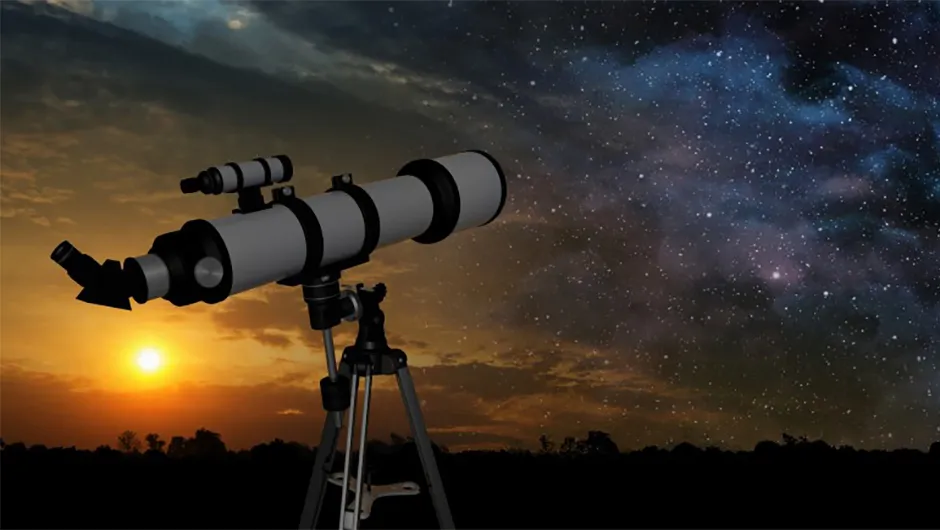
On a clear night, the sky can feel endless. Thousands of stars sparkle overhead, the Moon shines brightly, and if you’re lucky, you might even catch a glimpse of a distant planet. Yet what our eyes can see is only a tiny fraction of the universe. Countless galaxies, glowing nebulae, star clusters, and faint planets remain invisible because they are simply too far away or too dim for human vision.
This is where telescopes become extraordinary. They allow us to see far beyond the limits of our eyes, revealing breathtaking cosmic landscapes and helping scientists answer some of the biggest questions about the universe. Every spectacular image of Saturn’s rings, the colorful clouds of the Orion Nebula, or distant galaxies billions of light-years away began with a telescope collecting tiny amounts of light.
But how does a telescope actually work? Despite their impressive appearance, the basic idea behind a telescope is surprisingly simple. A telescope gathers much more light than the human eye can collect and focuses that light into a clear, magnified image. This simple principle has transformed astronomy and completely changed our understanding of the cosmos.
What Is a Telescope?
A telescope is an optical instrument designed to observe distant objects by collecting and focusing light or other forms of electromagnetic radiation. While people often think of telescopes as devices used only for astronomy, they are also used in Earth observation, surveillance, scientific research, and even space exploration.
Astronomical telescopes are specifically designed to study objects in space, including the Moon, planets, stars, galaxies, nebulae, comets, asteroids, and even the faint glow left behind by the Big Bang.
The main purpose of a telescope is not simply to make objects appear larger. Its most important job is to collect as much light as possible from distant objects that are too faint to see with the naked eye.
Why Our Eyes Have Limits
The human eye is a remarkable natural instrument, but it has important limitations.
The pupil of the eye usually measures only about 2 to 8 millimeters across, depending on lighting conditions. Because the pupil is relatively small, it can collect only a limited amount of light.
Many stars and galaxies are so distant that only a tiny number of their photons—the individual particles of light—reach Earth. By the time this light reaches our eyes, there simply is not enough of it for us to detect.
Even objects that are bright enough to see may appear as tiny points because our eyes cannot distinguish very fine details.
A telescope solves both of these problems by collecting much more light than the human eye and by producing images with greater detail.
The Basic Principle Behind a Telescope
At its core, every telescope works by performing two important tasks.
First, it gathers light from distant objects.
Second, it focuses that light to create an image.
Imagine trying to collect rainwater. A small cup collects only a little rain, while a large bucket gathers much more. A telescope works in a similar way. A larger telescope collects far more light than the tiny pupil of your eye.
The more light a telescope gathers, the brighter and clearer the image becomes.
This is why professional observatories often build telescopes with mirrors several meters across. Their enormous size allows them to detect extremely faint objects billions of light-years away.
How Light Travels Through a Telescope
Light travels through space in straight lines until it reaches a telescope.
The front part of the telescope, called the objective, is responsible for collecting this incoming light. Depending on the telescope’s design, the objective may be a large lens or a curved mirror.
The objective bends or reflects the incoming light so that all the rays meet at a point called the focal point.
At this point, a real image forms.
The eyepiece, which is another carefully designed set of lenses, magnifies this image so your eye can observe it comfortably.
Modern digital telescopes often replace the human eye with electronic cameras that record the focused light far more efficiently than our vision can.
Why Collecting Light Is More Important Than Magnification
Many people believe that magnification is the most important feature of a telescope.
In reality, astronomers care much more about light-gathering ability.
Imagine looking at a dark forest at night with binoculars that magnify everything twenty times but collect very little light. The image would still be dim.
Now imagine using a telescope that gathers one hundred times more light. Even with lower magnification, the scene would appear much brighter and reveal far more detail.
Large telescopes can detect incredibly faint galaxies, distant supernovae, and tiny planets orbiting other stars because they collect enormous amounts of light.
Magnification alone cannot reveal objects that are too faint to see.
Resolution: Seeing Fine Details
Another important feature of a telescope is its resolving power, often called resolution.
Resolution measures how well a telescope can distinguish small details or separate two nearby objects.
A telescope with high resolution can reveal craters on the Moon, cloud bands on Jupiter, and the delicate rings surrounding Saturn.
The larger the telescope’s objective, the better its theoretical resolution.
However, observations made from Earth’s surface are often limited by atmospheric turbulence. Tiny changes in air temperature constantly bend incoming light, causing stars to appear to twinkle.
This atmospheric effect can blur telescope images even if the telescope itself is extremely powerful.
Refracting Telescopes
The earliest telescopes used lenses to collect and focus light.
These instruments are known as refracting telescopes, or refractors.
A refractor uses a large convex lens at its front to bend incoming light toward a focal point.
An eyepiece then magnifies the focused image.
Galileo Galilei famously used an early refracting telescope in 1609 to observe the Moon, discover four large moons orbiting Jupiter, and observe the phases of Venus. These observations provided powerful evidence that Earth was not the center of the universe.
Modern refractors produce exceptionally sharp images and are especially popular for observing the Moon and planets.
However, manufacturing very large lenses is difficult because they become heavy and can distort under their own weight.
Reflecting Telescopes
Most modern research telescopes are reflecting telescopes.
Instead of lenses, they use curved mirrors to collect light.
A large concave primary mirror reflects incoming light toward a secondary mirror, which directs the light into an eyepiece or scientific instrument.
Reflecting telescopes offer several important advantages.
Mirrors can be made much larger than lenses.
They avoid a problem called chromatic aberration, where different colors focus at slightly different positions.
They are generally lighter and easier to support than giant lenses.
Today, nearly all of the world’s largest optical telescopes use mirrors rather than lenses.
Catadioptric Telescopes
Some telescopes combine both lenses and mirrors.
These are called catadioptric telescopes.
Popular designs include Schmidt-Cassegrain and Maksutov-Cassegrain telescopes.
These systems use specially shaped lenses together with mirrors to create compact telescopes capable of producing high-quality images.
Because they combine the strengths of refractors and reflectors, they are widely used by amateur astronomers and researchers alike.
The Importance of the Aperture
One of the most important measurements of a telescope is its aperture.
The aperture is the diameter of the main lens or mirror.
A larger aperture means the telescope collects more light.
For example, a telescope with a 200-millimeter aperture gathers many times more light than one with a 50-millimeter aperture.
This allows astronomers to observe fainter stars, more distant galaxies, and finer details in planetary surfaces.
Professional observatories invest enormous effort into building increasingly larger apertures because they directly improve scientific capability.
Focal Length and Image Size
Another important property is focal length.
The focal length is the distance between the objective and the point where incoming light comes into focus.
Longer focal lengths generally produce larger images of distant objects.
This is especially useful for observing planets and the Moon.
Shorter focal lengths provide wider views of the sky, making them ideal for observing large nebulae, star fields, and galaxies.
Different astronomical targets require different telescope designs depending on their size and brightness.
How the Eyepiece Works
The eyepiece acts like a powerful magnifying glass.
It enlarges the image already formed by the objective.
Changing the eyepiece changes the telescope’s magnification.
A lower-power eyepiece produces a wider field of view, making it easier to locate objects.
Higher-power eyepieces reveal greater detail but also reduce brightness and make atmospheric turbulence more noticeable.
Astronomers often switch eyepieces depending on what they are observing.
Computerized and Digital Telescopes
Modern telescopes have become far more advanced than the simple instruments used centuries ago.
Many amateur telescopes now include computerized mounts that automatically locate thousands of celestial objects.
After a simple alignment procedure, the telescope can track stars and planets as Earth rotates.
Digital cameras attached to telescopes can collect light for minutes or even hours, revealing details invisible to the human eye.
Image-processing software combines multiple exposures to produce stunning photographs of galaxies, nebulae, and star clusters.
This technology has made astronomy more accessible than ever before.
Space Telescopes
Earth’s atmosphere protects life, but it also blocks and distorts much of the light coming from space.
For this reason, scientists place some telescopes above the atmosphere.
Space telescopes avoid atmospheric turbulence entirely, producing much sharper images.
They can also observe forms of radiation that never reach Earth’s surface, including much of the ultraviolet, infrared, X-ray, and gamma-ray regions of the electromagnetic spectrum.
The Hubble Space Telescope revolutionized astronomy by capturing incredibly detailed images of distant galaxies, star-forming regions, and nebulae.
More recently, the James Webb Space Telescope has begun exploring the early universe using infrared light, allowing astronomers to study some of the first galaxies that formed after the Big Bang.
Telescopes See More Than Visible Light
Visible light is only a tiny portion of the electromagnetic spectrum.
Many astronomical objects emit radiation that human eyes cannot detect.
Radio telescopes observe radio waves from galaxies, pulsars, and interstellar gas.
Infrared telescopes can see through clouds of dust where new stars are forming.
Ultraviolet telescopes study extremely hot stars.
X-ray telescopes detect violent cosmic events such as exploding stars and black holes.
Gamma-ray telescopes investigate the highest-energy phenomena in the universe.
By combining information from different kinds of telescopes, astronomers gain a much more complete understanding of the cosmos.
How Telescopes Discover New Worlds
Telescopes do far more than produce beautiful pictures.
They allow scientists to discover planets orbiting distant stars, measure the expansion of the universe, study black holes, detect exploding stars, observe galaxy collisions, and investigate the mysterious nature of dark matter and dark energy.
Some telescopes can even analyze the light passing through the atmospheres of distant exoplanets, searching for molecules such as water vapor, carbon dioxide, methane, and oxygen.
These observations help scientists investigate whether other worlds might be capable of supporting life.
The Role of Telescopes in Modern Astronomy
Nearly everything we know about the universe beyond Earth comes from telescopes.
They have revealed that Earth is just one planet orbiting an ordinary star.
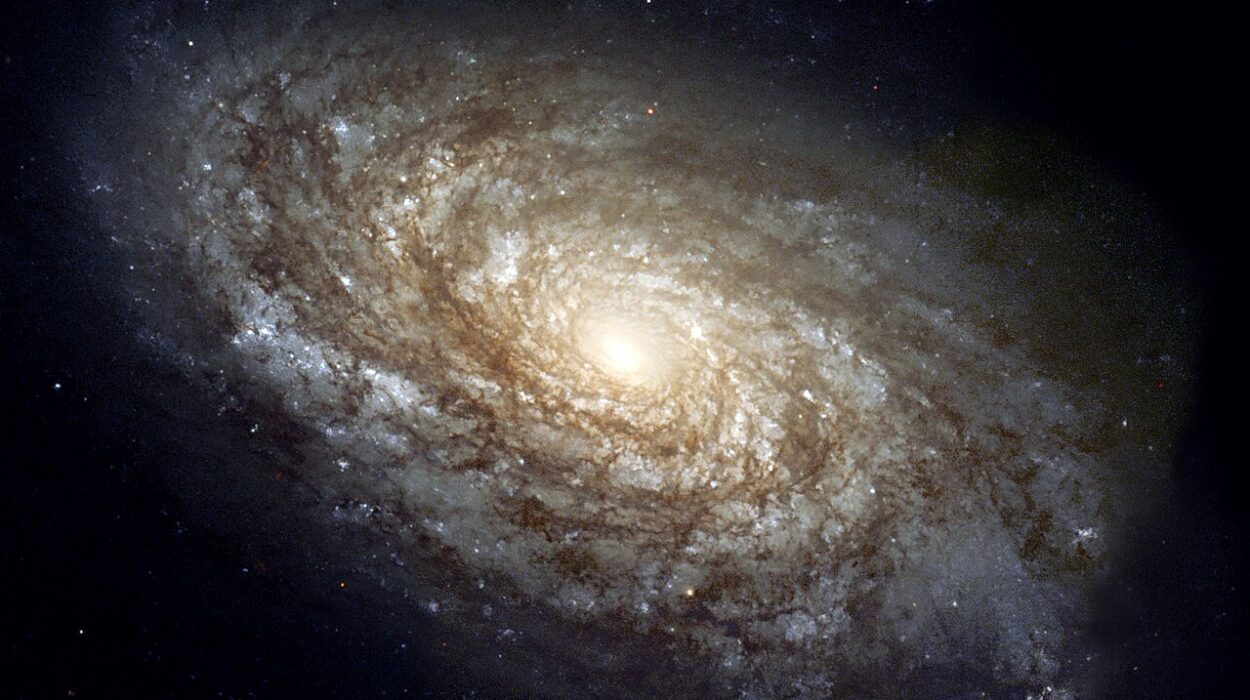
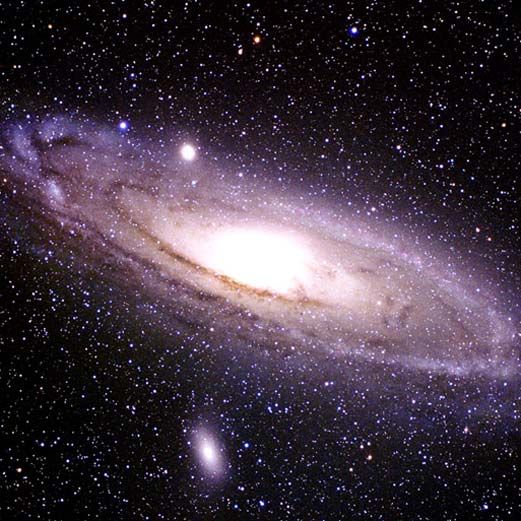
They have shown that our Milky Way is only one galaxy among hundreds of billions.
They have demonstrated that the universe has been expanding for nearly 13.8 billion years.
They have captured images of black holes, detected gravitational-wave counterparts, and helped scientists understand how stars are born, evolve, and die.
Without telescopes, modern astronomy simply would not exist.
Why Bigger Telescopes Matter
Astronomers continue building larger and more sophisticated telescopes because every increase in size allows them to collect more light and observe fainter, more distant objects.
The newest generation of giant observatories features mirrors more than 30 meters in diameter and uses adaptive optics systems that constantly adjust mirror shapes to compensate for atmospheric distortion.
These remarkable instruments will allow scientists to study the earliest galaxies, directly image more exoplanets, and explore the universe with unprecedented clarity.
Every new telescope opens another window onto the cosmos, revealing discoveries that were once beyond imagination.
Conclusion
A telescope works by collecting light from distant objects and focusing that light into a clear image. Whether it uses lenses, mirrors, or a combination of both, its greatest strength lies in gathering far more light than the human eye can collect. This allows us to observe objects that are incredibly faint, unimaginably distant, and astonishingly beautiful.
From Galileo’s modest telescope to today’s giant ground-based observatories and powerful space telescopes, these instruments have transformed our understanding of the universe. They have revealed countless stars, galaxies, planets, and cosmic phenomena that were once hidden from view. Every time a telescope points toward the night sky, it extends the reach of human curiosity, allowing us to explore places our feet may never touch but our minds can always discover.