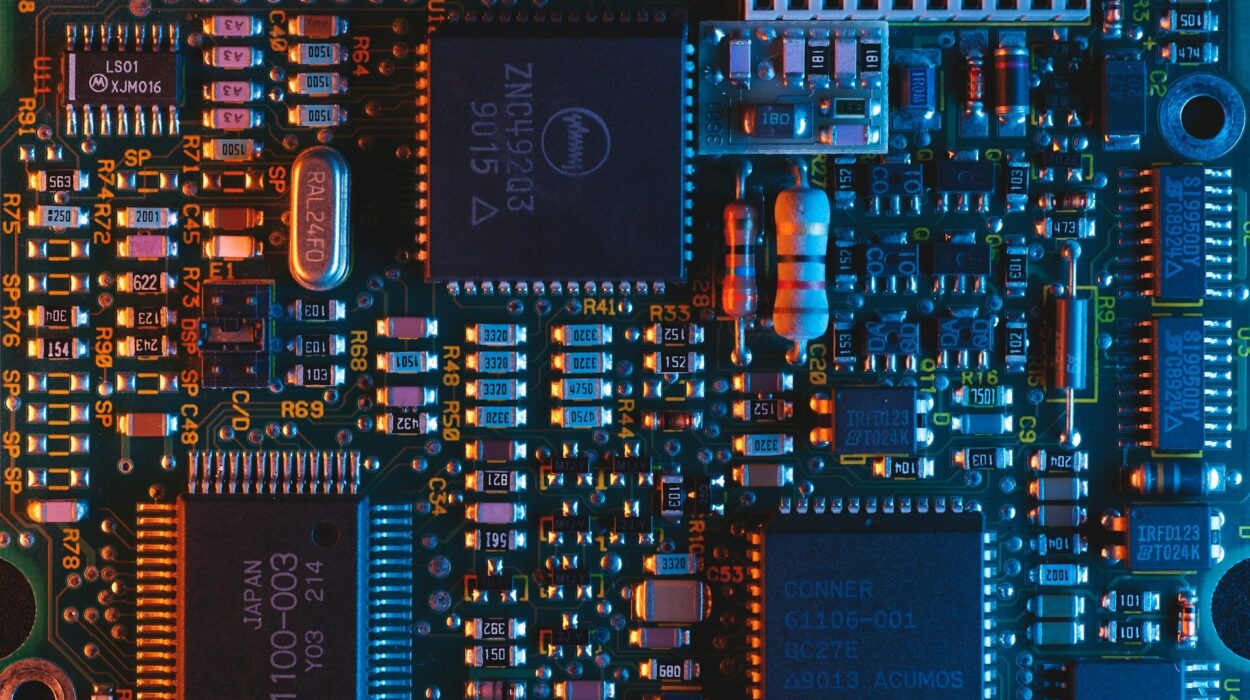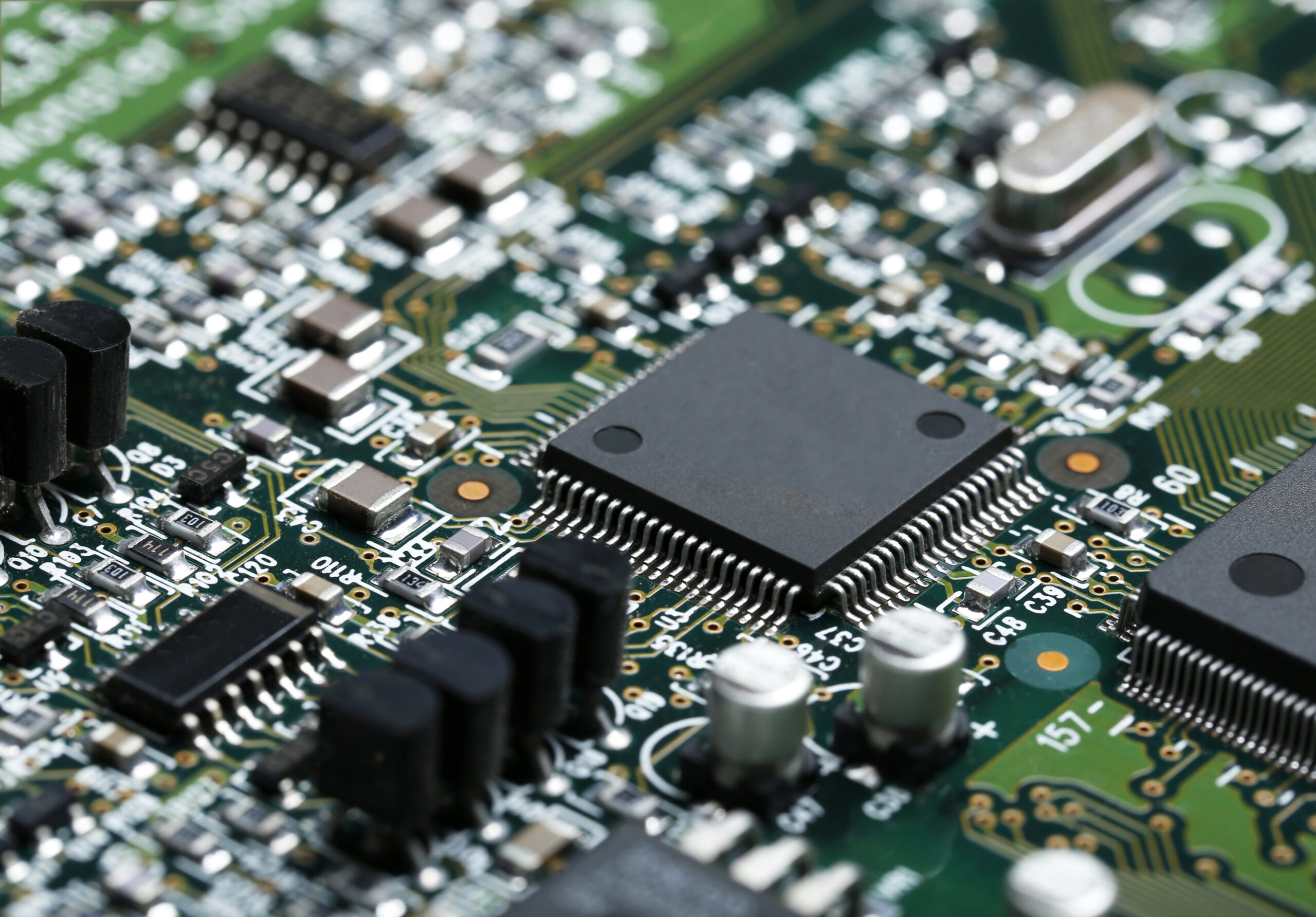
Imagine waking up in the morning and reaching for your smartphone. Within seconds, you check the weather, send a message, scroll through social media, and perhaps ask an AI assistant a question. Later, you drive a modern car, use a laptop at work, watch a movie on a smart TV, or visit a hospital where doctors use advanced medical equipment. Although these experiences seem very different, they all have one remarkable thing in common: each depends on tiny pieces of technology called microchips.
A microchip is one of humanity’s greatest inventions. It is so small that it can fit on the tip of a finger, yet powerful enough to perform billions—or even trillions—of calculations every second. Without microchips, there would be no smartphones, computers, satellites, GPS, the internet, artificial intelligence, modern automobiles, or many of the medical devices that save lives every day.
Despite their enormous importance, most people never actually see a microchip. Hidden inside electronic devices, these tiny components quietly perform millions of tasks every moment, making modern life possible.
What Is a Microchip?
A microchip is a small electronic device made from a thin piece of semiconductor material, usually silicon, that contains microscopic electronic circuits. These circuits consist of millions, billions, or even hundreds of billions of tiny components called transistors, along with other electronic elements that work together to process information, store data, or control electronic systems.
The word “microchip” comes from the fact that the chip is extremely small. Many are only a few millimeters across, yet they contain incredibly complex circuits that would stretch for kilometers if laid out in a straight line.
Microchips are also known as integrated circuits, or ICs. The term “integrated” refers to the fact that many electronic components are combined into a single piece of silicon instead of being built separately.
Today, almost every electronic device contains one or more microchips.
Why Are Microchips So Important?
Modern civilization depends on microchips in ways that are easy to overlook.
Every time you unlock your smartphone with your fingerprint, a microchip processes the fingerprint data in a fraction of a second. When you stream a video, another chip decodes the video, while others manage your internet connection, display the images on the screen, and control the battery.
In a modern car, dozens or even hundreds of microchips monitor the engine, control fuel injection, activate airbags, manage navigation, operate cameras, and assist with braking systems.
Even household appliances like washing machines, microwave ovens, refrigerators, and air conditioners contain microchips that make them smarter and more energy-efficient.
Without microchips, modern electronics simply would not exist.
What Is a Microchip Made Of?
Most microchips are made from silicon, one of the most abundant elements on Earth.
Silicon is not chosen because it is rare or expensive. Instead, it has unique electrical properties that make it an excellent semiconductor.
A semiconductor is a material whose ability to conduct electricity falls between that of a conductor, such as copper, and an insulator, such as rubber.
Scientists can carefully control how electricity moves through silicon by adding extremely small amounts of other elements in a process called doping. This allows engineers to create tiny electronic switches known as transistors.
Although the silicon itself is inexpensive, transforming it into a microchip requires some of the most advanced manufacturing technologies ever developed.
What Is Inside a Microchip?
Looking at a microchip with the naked eye reveals only a small, flat surface. However, under a powerful microscope, an astonishing world appears.
Inside are microscopic pathways, switches, memory cells, and connections arranged into incredibly complex patterns.
The most important component inside nearly every microchip is the transistor.
A transistor is an electronic switch that controls the flow of electricity.
It has only two basic states: on or off.
These two states represent the binary digits 1 and 0, the language of computers.
By switching billions of transistors on and off at incredible speeds, a microchip performs calculations, stores information, displays graphics, and runs software.
Modern high-performance processors may contain tens of billions of transistors packed into an area smaller than a postage stamp.
How Does a Microchip Work?
Although the technology inside a microchip is extraordinarily complex, the basic idea is surprisingly simple.
Electricity flows through microscopic circuits inside the chip.
Tiny transistors control that flow, rapidly turning electrical signals on and off.
These signals represent binary numbers.
By combining countless binary operations, the chip performs mathematical calculations, follows instructions, makes decisions, and communicates with other components.
Everything a computer does—from opening a web page to editing a photograph—ultimately comes down to billions of these tiny electrical operations occurring every second.
Modern processors perform these operations so quickly that users experience them almost instantly.
The Journey from Sand to Microchip
One of the most fascinating aspects of microchips is their origin.
Silicon comes from silica, which is found in ordinary sand and quartz.
However, the sand used to make chips must undergo extensive purification.
Manufacturers produce extremely pure silicon crystals, often more than 99.9999999 percent pure.
These crystals are sliced into thin circular disks called wafers.
Engineers then build microscopic circuits onto the wafer through dozens or even hundreds of highly controlled manufacturing steps.
Each layer adds new features to the chip until the final electronic circuit is complete.
The finished wafer is then cut into individual chips, tested for quality, and packaged for installation into electronic devices.
How Small Are Modern Microchips?
The components inside today’s microchips are almost unimaginably tiny.
Many modern transistors measure only a few nanometers across.
A nanometer is one billionth of a meter.
For comparison, a human hair is roughly 70,000 to 100,000 nanometers wide.
This means modern transistors are thousands of times smaller than a single strand of hair.
At these scales, engineers must account for quantum mechanical effects that are completely irrelevant in everyday life.
Manufacturing such tiny structures requires some of the most precise equipment ever created.
Different Types of Microchips
Not all microchips perform the same job.
Some chips are designed for general-purpose computing, while others have specialized functions.
A central processing unit, or CPU, serves as the main processor in computers and smartphones. It executes instructions and performs calculations needed to run software.
Graphics processing units, or GPUs, specialize in handling graphics and parallel computations. They are widely used for gaming, scientific simulations, video editing, and artificial intelligence.
Memory chips temporarily or permanently store data. Some remember information only while power is supplied, while others retain data even after the device is turned off.
Microcontrollers combine a processor, memory, and input-output functions on a single chip. They control countless everyday devices, including washing machines, automobiles, medical equipment, and industrial machines.
Artificial intelligence accelerators, often called AI chips or neural processing units, are specifically designed to process machine learning algorithms efficiently.
Communication chips enable Wi-Fi, Bluetooth, 5G, GPS, and satellite communications.
Each type of chip has a unique purpose, but together they allow modern electronic systems to function smoothly.
The Amazing World of Transistors
Every major advance in microchip technology has been driven by improvements in the transistor.
The first electronic computers relied on vacuum tubes, which were large, fragile, and consumed enormous amounts of electricity.
The invention of the transistor in 1947 revolutionized electronics.
Transistors were much smaller, faster, more reliable, and far more energy-efficient.
As engineers learned to make transistors increasingly tiny, they could fit more of them onto each chip.
This dramatically increased computing power while reducing cost and energy consumption.
Today, billions of transistors fit into spaces once occupied by a single vacuum tube.
Moore’s Law and Rapid Progress
In 1965, engineer Gordon Moore observed that the number of transistors on integrated circuits seemed to double approximately every two years.
This observation became known as Moore’s Law.
Although it was never a physical law of nature, it accurately described the rapid progress of the semiconductor industry for decades.
As transistor density increased, computers became faster, smaller, cheaper, and more powerful.
Smartphones today possess vastly greater computing power than the room-sized supercomputers of the 1960s.
While the pace of transistor scaling has slowed in recent years due to physical and engineering challenges, innovation continues through new chip architectures, advanced packaging, and specialized processors.
How Microchips Are Manufactured
Making a microchip is among the most complex manufacturing processes ever developed.
Production takes place inside semiconductor fabrication plants, often called fabs.
These facilities are extraordinarily clean.
Even tiny dust particles can damage microscopic circuits.
To prevent contamination, workers wear specialized cleanroom suits that cover nearly every part of their bodies.
Advanced machines use ultraviolet light to project intricate circuit patterns onto silicon wafers through a process known as photolithography.
Additional manufacturing steps deposit thin layers of materials, remove unwanted regions, implant atoms into the silicon, and create microscopic metal connections linking billions of transistors.
A single advanced microchip may require hundreds of processing steps and several months to complete.
Why Microchips Become Hot
Whenever electricity flows through electronic circuits, some energy is converted into heat.
Modern processors perform billions of calculations every second, generating significant amounts of heat.
If chips become too hot, they may slow down automatically or even stop functioning properly.
To keep temperatures under control, computers and smartphones use cooling systems such as heat spreaders, heat sinks, cooling fans, liquid cooling, or specially designed materials that efficiently transfer heat away from the chip.
Managing heat has become one of the greatest engineering challenges in modern computing.
Microchips and Artificial Intelligence
Artificial intelligence has dramatically increased demand for advanced microchips.
Training large AI models requires enormous computational power.
Specialized AI chips contain architectures optimized for performing the mathematical operations used in machine learning.
These processors can complete certain AI calculations much faster and more efficiently than traditional CPUs.
AI chips now power voice assistants, image recognition systems, autonomous vehicles, language models, scientific research, robotics, and medical diagnostics.
As AI continues to evolve, microchip technology will remain one of its most essential foundations.
Microchips in Everyday Life
Many people associate microchips mainly with computers, but they are present almost everywhere.
Modern automobiles rely on microchips to control engines, safety systems, entertainment features, navigation, and electric power management.
Medical devices use chips to monitor heart rhythms, regulate insulin pumps, perform diagnostic imaging, and assist surgeons during delicate procedures.
Spacecraft depend on radiation-resistant microchips capable of surviving harsh conditions beyond Earth’s atmosphere.
Factories use chips to automate production lines.
Banks use secure microchips in payment cards.
Agriculture increasingly relies on sensors controlled by microchips to improve crop management.
Even children’s toys often contain microcontrollers that respond to sounds, movement, or touch.
Why the Semiconductor Industry Matters
Because microchips are essential to modern technology, semiconductor manufacturing has become one of the world’s most strategically important industries.
Advanced chip production requires enormous investments, highly specialized equipment, and years of scientific expertise.
Only a limited number of companies possess the capability to manufacture the most advanced chips.
As a result, semiconductor production plays a major role in global economics, scientific research, national security, and technological innovation.
Disruptions to chip manufacturing can affect industries ranging from automotive production to consumer electronics.
The Future of Microchips
Engineers continue searching for ways to make microchips faster, smaller, and more energy-efficient.
Researchers are developing new transistor designs, three-dimensional chip architectures, advanced packaging technologies, optical communication within chips, and novel semiconductor materials.
Quantum computing represents another exciting frontier.
Instead of using ordinary binary bits, quantum computers use quantum bits, or qubits, which can exist in multiple states according to the principles of quantum mechanics.
Although quantum computers are not expected to replace conventional microchips for most everyday tasks, they could eventually solve certain scientific and engineering problems far beyond the reach of today’s computers.
Meanwhile, traditional silicon microchips continue to improve through creative engineering and innovative manufacturing techniques.
Challenges Facing Modern Microchips
As transistors approach atomic dimensions, engineers face increasingly difficult challenges.
Quantum effects become more significant.
Heat becomes harder to remove.
Manufacturing costs continue to rise.
Design complexity increases dramatically.
Creating the next generation of processors now requires collaboration among experts in physics, chemistry, materials science, computer engineering, and nanotechnology.
Despite these challenges, innovation continues at an impressive pace.
Why Understanding Microchips Matters
Microchips are among the most influential inventions in human history. They quietly power nearly every aspect of modern life, from communication and transportation to healthcare, entertainment, scientific discovery, and artificial intelligence.
Understanding what a microchip is helps us appreciate the extraordinary science and engineering hidden inside the devices we use every day. A piece of silicon no larger than a fingernail can contain billions of microscopic transistors working together with astonishing precision, performing calculations at speeds that would have seemed impossible only a few generations ago.
As technology continues to advance, microchips will remain at the heart of innovation. Whether enabling smarter AI systems, more efficient renewable energy, safer transportation, or deeper exploration of the universe, these tiny electronic marvels will continue shaping the future of humanity—one transistor at a time.