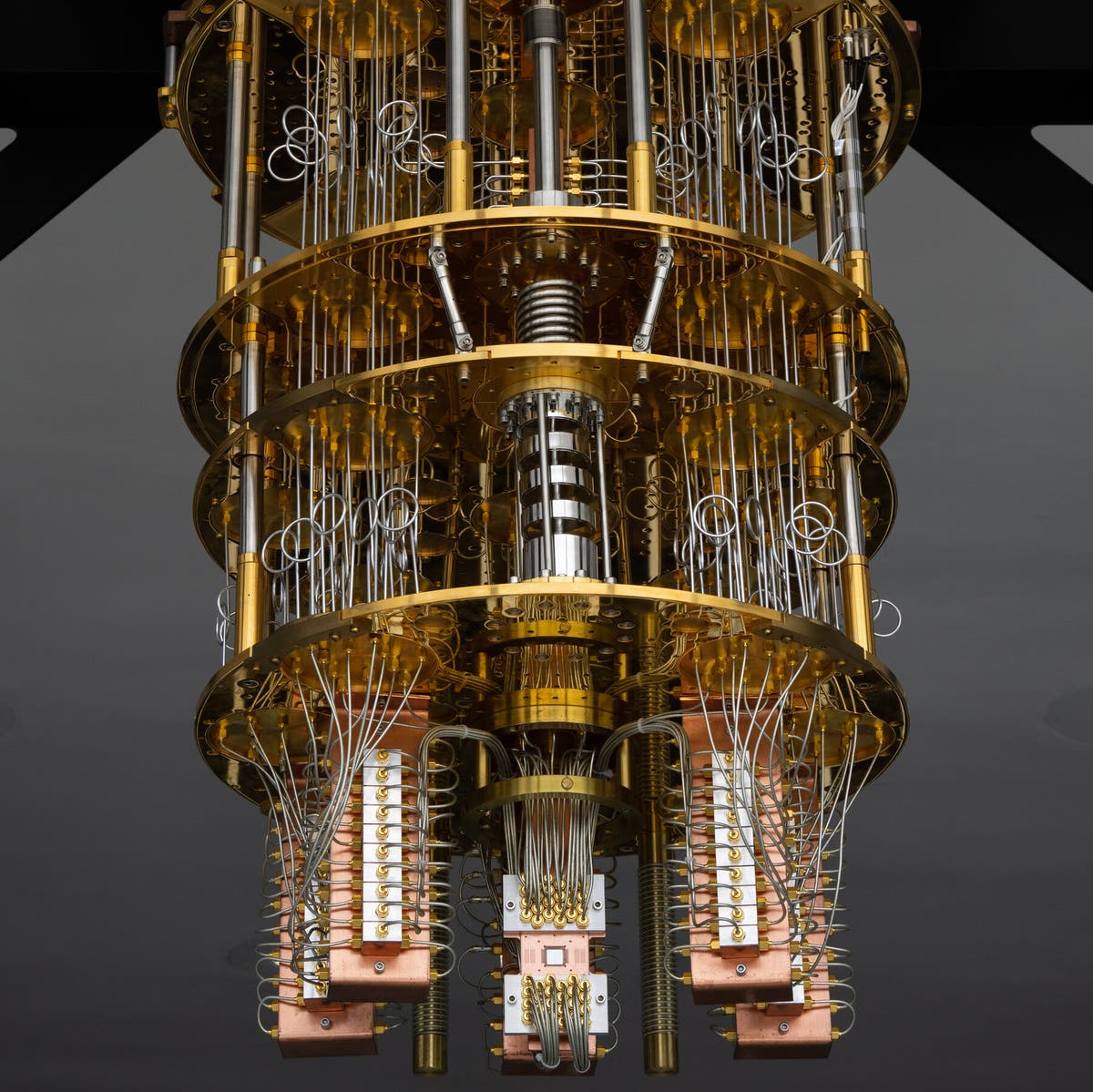
Quantum computers are among the most exciting scientific and technological developments of the 21st century. They promise to tackle problems that are far beyond the reach of today’s most powerful supercomputers. Although they are still in the early stages of development, researchers around the world believe quantum computers could revolutionize fields ranging from medicine and chemistry to artificial intelligence and climate science.
This does not mean quantum computers will replace the laptops or smartphones we use every day. Instead, they are being designed for a very different purpose: solving extremely complex problems that would take ordinary computers thousands, millions, or even billions of years to complete.
To understand what quantum computers can solve, it helps to first understand why they are so different from the computers we use today.
Why Classical Computers Have Limits
Every computer in the world today—from tiny smartwatches to giant supercomputers—works using bits. A bit is the smallest unit of information and can only have one of two values: 0 or 1.
Modern computers process billions of these bits every second. They are incredibly fast, but they still solve problems by following one sequence of calculations after another. As problems become more complicated, the number of possible solutions often grows exponentially. Eventually, even the world’s fastest supercomputers run into practical limits.
Imagine trying to find one specific grain of sand on every beach on Earth. Even with incredible speed, the task could become overwhelming because there are simply too many possibilities to check.
Some scientific and mathematical problems are so enormous that classical computers cannot solve them within a useful amount of time.
This is where quantum computing offers a fundamentally different approach.
How Quantum Computers Think Differently
Quantum computers are built using qubits, or quantum bits. Unlike ordinary bits, qubits can exist in combinations of states thanks to the principles of superposition and quantum entanglement.
Superposition allows a qubit to represent multiple possible states until it is measured. Entanglement creates powerful relationships between qubits, allowing them to work together in ways that have no equivalent in classical computing.
This does not mean a quantum computer magically tries every possible answer at once. Instead, specially designed quantum algorithms use quantum mechanics to manipulate probabilities and interference so that correct answers become more likely while incorrect ones are suppressed.
Only certain kinds of problems benefit from this approach. Quantum computers are expected to excel where the structure of a problem matches the strengths of quantum algorithms.
Solving Problems That Involve Enormous Numbers of Possibilities
Many real-world challenges involve an enormous number of possible combinations.
Imagine planning delivery routes for thousands of trucks serving millions of customers. There may be more possible routes than there are atoms in the observable universe.
A classical computer often has to evaluate an immense number of possibilities before finding an excellent solution.
Quantum computers may solve certain optimization problems much more efficiently by exploring the mathematical structure of these enormous search spaces in new ways.
Finding better solutions could save companies time, fuel, money, and energy while reducing environmental impacts.
Designing Better Medicines
One of the most promising applications of quantum computing lies in medicine.
Every drug interacts with proteins and molecules inside the human body. Understanding these interactions requires studying the behavior of atoms and electrons.
Unfortunately, molecules are quantum systems themselves.
As molecules become larger, accurately simulating their behavior quickly becomes impossible for ordinary computers because the complexity grows dramatically.
Quantum computers naturally follow the same quantum rules that govern atoms.
This could allow researchers to model complex biological molecules far more accurately than today’s computers.
Better simulations may help scientists discover new medicines faster, reduce development costs, and identify promising treatments before expensive laboratory testing begins.
Researchers hope this capability could accelerate progress against diseases such as cancer, Alzheimer’s disease, antibiotic-resistant infections, and many rare genetic disorders.
Quantum computers will not replace laboratory experiments, but they could dramatically improve which experiments scientists choose to perform.
Understanding Chemistry at the Atomic Level
Chemistry is fundamentally governed by quantum mechanics.
Chemical reactions occur because electrons move, share energy, and rearrange themselves between atoms.
Simulating these interactions accurately remains one of the greatest computational challenges.
Quantum computers may allow chemists to predict chemical reactions with much greater precision.
This could lead to entirely new materials with extraordinary properties.
Scientists hope to design stronger metals, lighter aircraft materials, more efficient fertilizers, environmentally friendly industrial chemicals, and entirely new types of catalysts that speed up chemical reactions while using less energy.
The ability to simulate chemistry directly could transform manufacturing across many industries.
Developing Better Batteries
The world is rapidly moving toward electric vehicles and renewable energy.
One major challenge is creating batteries that charge faster, last longer, store more energy, and rely on safer materials.
Battery chemistry involves extremely complex interactions between atoms.
Quantum computers could simulate these interactions much more accurately than classical computers.
Researchers hope this will help identify new battery materials that improve electric cars, portable electronics, and large-scale energy storage systems needed for renewable power grids.
Even small improvements in battery performance could have enormous economic and environmental benefits.
Creating Advanced Materials
Modern civilization depends on materials with carefully designed properties.
Engineers constantly seek materials that are lighter, stronger, more flexible, more heat-resistant, or better at conducting electricity.
Finding these materials usually requires years of laboratory experiments.
Quantum computers may greatly accelerate this search.
Scientists could test thousands or even millions of possible molecular structures through quantum simulations before manufacturing the most promising candidates.
This could lead to improved solar panels, superconductors, aircraft components, medical implants, and electronics.
Improving Artificial Intelligence
Artificial intelligence has transformed many aspects of modern life.
AI systems recognize speech, translate languages, generate images, recommend movies, and assist scientific research.
However, training advanced AI models often requires enormous computational resources.
Researchers are investigating whether quantum computing can improve certain machine learning algorithms.
Quantum machine learning remains an active research area.
Scientists believe quantum computers could accelerate some calculations used in pattern recognition, optimization, and data analysis.
However, current evidence does not suggest that every AI task will automatically become faster on quantum computers.
Instead, quantum techniques may benefit specific types of machine learning problems where quantum algorithms offer genuine advantages.
Optimizing Transportation Networks
Transportation systems involve countless moving parts.
Airlines schedule thousands of flights.
Shipping companies coordinate millions of containers.
Ride-sharing services match drivers with passengers.
Cities manage traffic signals and public transportation.
Each decision affects many others.
Quantum computers could help optimize these interconnected systems by identifying better solutions among vast numbers of possibilities.
More efficient transportation could reduce delays, lower fuel consumption, decrease pollution, and improve customer service.
Improving Supply Chains
Global supply chains connect manufacturers, warehouses, retailers, ports, and customers around the world.
Unexpected events such as storms, equipment failures, political disruptions, or changing demand can create complex logistical challenges.
Quantum computing could help companies adapt more quickly by identifying efficient production schedules, inventory levels, shipping routes, and distribution strategies.
Better optimization could reduce waste while making supply chains more resilient.
Supporting Financial Modeling
Financial institutions analyze enormous amounts of information when assessing investment risks, pricing financial products, or building portfolios.
Many of these calculations involve probability and optimization.
Researchers are exploring quantum algorithms that may improve certain financial models.
Potential applications include risk analysis, fraud detection, portfolio optimization, and market simulations.
Because financial systems are extremely complex, practical quantum advantages in finance remain an active area of research rather than an established commercial reality.
Accelerating Scientific Research
Many areas of science rely on computer simulations.
Astronomers model galaxy formation.
Climate scientists study Earth’s atmosphere.
Physicists investigate particle interactions.
Engineers analyze fluid dynamics.
Biologists examine protein structures.
Whenever simulations become too large or mathematically complex, progress slows.
Quantum computers may help scientists solve specific mathematical problems that currently limit research.
Rather than replacing experiments, quantum simulations could guide researchers toward more promising hypotheses.
Better Weather and Climate Modeling
Earth’s climate system involves interactions between oceans, clouds, ice, vegetation, atmospheric chemistry, and solar radiation.
These interactions create extraordinarily complex mathematical models.
Today’s climate simulations already use some of the world’s fastest supercomputers.
Quantum computing may eventually improve parts of these simulations by accelerating specific calculations involved in modeling physical systems.
Researchers hope this could contribute to more accurate climate predictions and better understanding of long-term environmental changes.
However, climate modeling is such a large challenge that quantum computers would likely complement classical supercomputers rather than replace them.
Helping Discover New Sources of Clean Energy
Producing clean energy often depends on discovering improved materials and chemical reactions.
Scientists are searching for better catalysts that produce hydrogen efficiently, more effective solar cell materials, and improved methods for capturing carbon dioxide.
Quantum simulations could accelerate these discoveries by allowing researchers to study molecular behavior in unprecedented detail.
This may support the transition toward more sustainable energy technologies.
Breaking Certain Encryption Systems
One of the most widely discussed applications of quantum computing involves cryptography.
Many current internet security systems rely on mathematical problems that are extremely difficult for classical computers to solve.
One example is factoring very large numbers.
A sufficiently powerful fault-tolerant quantum computer running Shor’s algorithm could solve this problem much faster than known classical methods.
If such machines become practical, some widely used public-key encryption systems, including RSA, would no longer provide adequate security.
Fortunately, researchers have been preparing for this possibility by developing post-quantum cryptography, which uses mathematical methods believed to remain secure even against future quantum computers.
Modern cybersecurity is already moving toward these quantum-resistant encryption standards.
Searching Large Databases More Efficiently
Some quantum algorithms can search certain unstructured datasets more efficiently than classical methods.
The best-known example is Grover’s algorithm, which provides a mathematical speedup for specific search problems.
This does not mean quantum computers will instantly search the entire internet.
Instead, they can improve particular types of search tasks where the mathematical conditions fit the algorithm.
Many practical applications remain under investigation.
Solving Complex Mathematical Problems
Mathematics often presents problems involving enormous numbers of possible solutions.
Quantum algorithms may accelerate some mathematical calculations used in optimization, simulation, number theory, and scientific computing.
These advances could benefit many areas of science and engineering that depend on solving difficult mathematical equations.
Exploring the Quantum World Itself
Perhaps the greatest use of quantum computers is studying quantum mechanics itself.
Nature operates according to quantum laws.
Because quantum computers also operate using quantum principles, they may become uniquely suited for investigating fundamental questions about matter, energy, and particle interactions.
Scientists hope this capability will deepen our understanding of the universe at its smallest scales.
What Quantum Computers Cannot Solve
Despite the excitement surrounding quantum computing, many misconceptions exist.
Quantum computers are not universally faster than classical computers.
They will not instantly solve every difficult problem.
They are not expected to replace personal computers for everyday tasks such as browsing the internet, writing documents, watching videos, or playing games.
Many calculations remain more efficient on ordinary computers.
Quantum computers are specialized scientific tools designed for particular categories of computational problems.
For most daily applications, classical computers will continue to be the better choice.
The Challenges That Still Remain
Building useful quantum computers is extraordinarily difficult.
Qubits are highly sensitive to their surroundings.
Tiny disturbances such as heat, electromagnetic noise, or vibrations can introduce errors into calculations.
Researchers are developing sophisticated methods known as quantum error correction to overcome these challenges.
Creating large, reliable, fault-tolerant quantum computers remains one of the biggest engineering challenges in modern science.
Although remarkable progress has been made, today’s quantum computers are still limited in size and capability.
Scientists continue improving hardware, algorithms, and error-correction techniques.
The Future of Quantum Computing
Many experts believe quantum computing will eventually become an essential scientific tool, much like supercomputers are today. Rather than replacing existing computers, quantum machines are expected to work alongside classical computers, each solving the kinds of problems they handle best.
In the coming decades, quantum computing could accelerate discoveries in medicine, chemistry, materials science, energy, logistics, finance, and fundamental physics. Some breakthroughs may transform industries in ways that are difficult to predict today, while others will likely emerge gradually as the technology matures.
The journey is still in its early stages, but every advance brings researchers closer to practical quantum computers capable of solving problems that once seemed impossible.
Conclusion
Quantum computers represent a fundamentally new way of processing information. Their greatest strength lies not in making every computation faster, but in tackling specific problems that become overwhelmingly difficult for even the world’s most powerful classical computers.
From simulating molecules and designing life-saving medicines to discovering advanced materials, optimizing transportation, improving energy technologies, and expanding our understanding of the quantum universe, quantum computers have the potential to reshape scientific discovery and technological innovation.
At the same time, it is important to maintain realistic expectations. Quantum computing is not a magical solution to every challenge, and many technical hurdles remain before its full potential can be realized. Even so, the progress achieved over the past few decades has been remarkable.
As researchers continue refining quantum hardware and developing more powerful algorithms, quantum computers may open doors to discoveries that are currently beyond human reach. Much like the invention of the transistor transformed the modern world, the continued evolution of quantum computing could mark the beginning of another revolutionary chapter in the history of science and technology.