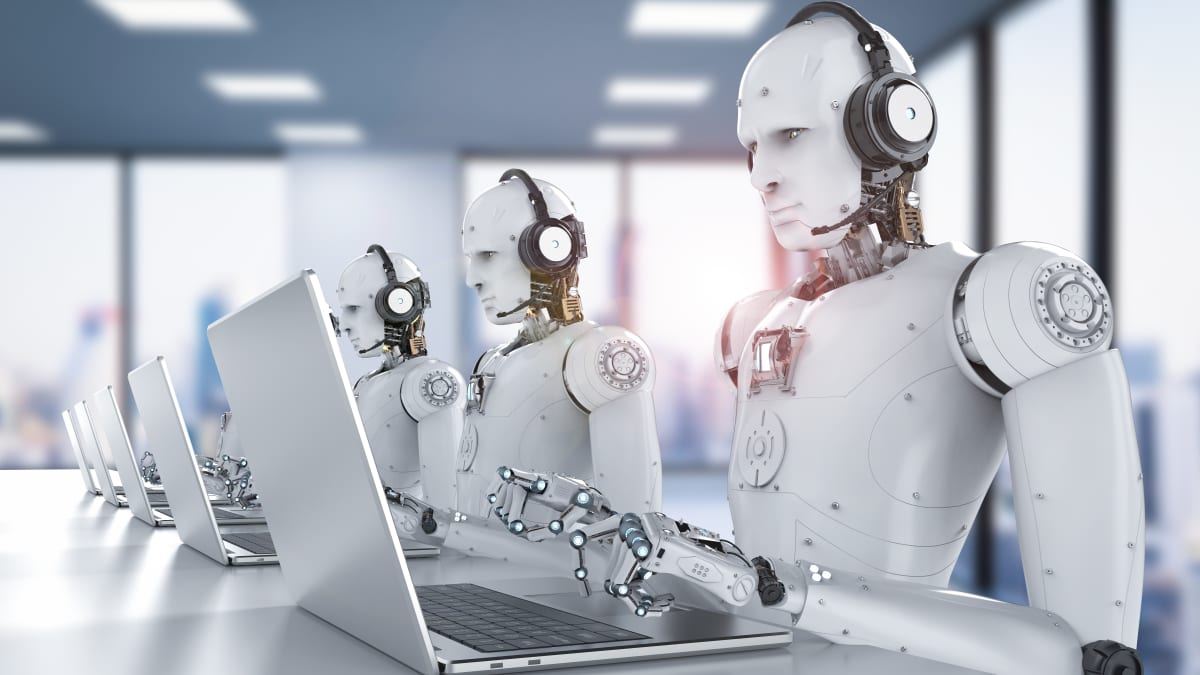
Imagine walking into a factory where hundreds of machines work day and night without stopping for lunch, sleep, or vacations. Robotic arms lift heavy objects with incredible precision. Autonomous vehicles move supplies across warehouses without human drivers. Artificial intelligence analyzes thousands of documents in seconds, while chatbots answer customer questions around the clock.
Scenes like these were once considered science fiction. Today, they are becoming part of everyday life.
As robots and artificial intelligence become more advanced, one question continues to spark curiosity and concern around the world: Can robots replace human workers?
The answer is more complex than a simple yes or no. Robots are already replacing people in some kinds of jobs, but they are also creating entirely new careers that did not exist just a few decades ago. More importantly, there are many things humans can do that robots still struggle to achieve.
Understanding how robots are changing the workplace helps us prepare for the future rather than fear it.
What Is a Robot?
A robot is a machine designed to perform tasks automatically or with limited human control. Some robots are physical machines that move, lift, assemble products, or explore dangerous environments. Others exist mainly as software, such as virtual assistants or automated systems that process information.
Modern robots often use artificial intelligence (AI), sensors, cameras, and advanced computer programs to understand their surroundings and make decisions. However, not every robot is intelligent in the human sense. Many industrial robots simply repeat the same programmed actions with remarkable speed and accuracy.
Robots come in many forms. Some look like mechanical arms in factories, while others resemble wheeled vehicles, flying drones, or even human-like machines called humanoid robots.
Their appearance may differ, but their purpose is generally the same: to perform work efficiently.
Why Companies Use Robots
Businesses adopt robots for many practical reasons.
Unlike humans, robots do not become tired after working long hours. They can perform repetitive tasks with consistent precision, reducing errors that may occur when people become fatigued.
In manufacturing, robots can weld, paint, assemble electronic devices, and package products much faster than humans. In warehouses, autonomous machines transport goods efficiently, helping companies deliver products more quickly.
Robots can also improve workplace safety by handling dangerous jobs such as working with toxic chemicals, entering burning buildings, inspecting damaged nuclear facilities, or operating in deep underwater environments.
Although purchasing and maintaining robots can require significant investment, companies often find that automation lowers long-term operating costs for repetitive tasks.
Jobs That Robots Are Already Replacing
Automation has already transformed many industries.
Factories have used industrial robots for decades to assemble automobiles, electronics, and household appliances. Many repetitive manufacturing tasks that once required large numbers of workers are now performed by robotic systems.
Warehouses increasingly rely on robots to transport shelves, organize inventory, and prepare customer orders.
Self-service checkout machines reduce the need for cashiers in some stores.
Banks encourage customers to use online banking and automated teller machines instead of visiting physical branches for routine transactions.
Some restaurants use robotic systems to prepare simple meals or deliver food.
Customer service has also changed. AI-powered chatbots answer millions of routine questions every day, helping businesses provide support at any hour.
In offices, software can automatically sort emails, organize schedules, process invoices, and analyze large amounts of data.
These examples show that automation is already replacing certain tasks traditionally performed by humans.
The Difference Between Replacing Jobs and Replacing Tasks
One of the biggest misunderstandings about automation is the belief that robots replace entire jobs.
In reality, robots often replace specific tasks rather than complete occupations.
Consider a doctor. Part of a doctor’s work involves analyzing medical images. AI systems can help detect certain abnormalities in X-rays or scans, sometimes improving speed and supporting diagnosis. However, the doctor’s role includes far more than image interpretation.
Doctors communicate with patients, explain treatment options, understand emotions, make complex medical decisions, and consider each patient’s unique circumstances. These responsibilities require judgment, empathy, and communication skills that machines cannot fully replicate.
The same pattern appears across many professions.
Teachers use technology to grade quizzes automatically, but teaching also involves motivating students, answering unexpected questions, adapting lessons, and building trust.
Lawyers use AI to search legal documents, yet they still negotiate, advise clients, and argue cases.
Architects use computer software, but creativity and collaboration remain essential.
Rather than eliminating entire professions, robots often change how people work.
Jobs That Are Difficult for Robots to Replace
Despite impressive technological progress, many occupations remain difficult to automate.
Caregivers provide emotional support and respond to the unique needs of elderly people and patients.
Psychologists and counselors help individuals navigate complex emotions and personal experiences.
Teachers inspire curiosity, encourage confidence, and adapt to different learning styles.
Scientists develop new ideas by asking creative questions and designing original experiments.
Artists, musicians, writers, and filmmakers create works that express imagination, culture, and human experience.
Emergency responders must adapt quickly to unpredictable situations.
Managers motivate teams, resolve conflicts, and make strategic decisions involving uncertainty.
Although AI tools can assist professionals in many of these fields, replacing the full range of human abilities remains an enormous challenge.
Creativity Is More Than Producing Information
Modern AI systems can generate text, images, music, and computer code, leading some people to believe that machines have become creative.
However, creativity is more than producing new content.
Human creativity involves curiosity, personal experience, cultural understanding, imagination, long-term goals, and the ability to assign meaning.
A novelist may write a story inspired by childhood memories.
An engineer may invent a new technology after observing a problem in daily life.
A scientist may develop an entirely new theory after years of experimentation and critical thinking.
AI can assist with creative work by generating ideas or speeding up certain processes, but human creators continue to guide direction, purpose, and meaning.
Emotional Intelligence Matters
Many jobs depend heavily on emotional intelligence.
People naturally recognize facial expressions, understand tone of voice, interpret social situations, and respond with empathy.
When someone loses a loved one, they usually seek comfort from another person rather than a machine.
A nurse caring for a frightened child offers reassurance alongside medical treatment.
A teacher notices when a student feels discouraged.
A manager senses tension within a team before conflicts become serious.
Robots can be programmed to recognize certain emotional signals, but genuine human relationships involve subtle understanding built through lived experience.
This remains one of the greatest differences between humans and machines.
Robots Are Creating New Jobs Too
Every major technological revolution has changed employment.
During the Industrial Revolution, machines replaced many forms of manual labor but also created new industries and professions.
The rise of computers eliminated some office jobs while creating careers in software engineering, cybersecurity, digital marketing, and information technology.
Robotics and artificial intelligence are following a similar pattern.
Engineers design robots.
Technicians repair automated systems.
Programmers develop AI software.
Data scientists analyze information.
Cybersecurity experts protect digital infrastructure.
Ethics researchers study responsible AI development.
Human-robot interaction specialists improve collaboration between people and machines.
Many occupations that are growing today barely existed twenty years ago.
History suggests that technology often changes work rather than simply eliminating it.
Human and Robot Collaboration
Instead of competing directly, humans and robots increasingly work together.
This partnership is sometimes called collaborative automation.
In factories, robots perform heavy lifting while human workers supervise operations, solve unexpected problems, and ensure quality.
In hospitals, robotic systems assist surgeons by improving precision during certain procedures, while surgeons remain responsible for medical decisions.
In agriculture, autonomous machines help monitor crops, but farmers still make important decisions based on weather, soil conditions, and market demand.
In journalism, AI can summarize information, while reporters investigate stories, interview people, verify facts, and provide context.
The future workplace may involve more cooperation between humans and intelligent machines than complete replacement.
The Rise of Artificial Intelligence
Artificial intelligence has accelerated automation far beyond traditional robotics.
Unlike earlier machines that simply followed fixed instructions, many AI systems can recognize patterns, analyze images, understand language, and improve performance using data.
This allows automation to expand beyond physical labor into knowledge-based work.
AI can translate languages, detect fraud, recommend medical treatments for review, identify manufacturing defects, and help researchers analyze enormous scientific datasets.
However, today’s AI still has important limitations.
It can produce incorrect information, misunderstand context, reflect biases present in training data, and struggle with unfamiliar situations.
Human oversight remains essential in many important decisions.
Which Workers Face the Greatest Changes?
Jobs involving highly repetitive, predictable activities are generally easier to automate.
Routine manufacturing tasks, simple data entry, repetitive quality inspection, and basic document processing are examples where automation can be effective.
Jobs involving creativity, complex communication, ethical judgment, unpredictable environments, leadership, and personal relationships tend to be much harder to automate.
Many careers combine both kinds of work.
As automation increases, workers may spend less time on repetitive tasks and more time on creative thinking, communication, and problem-solving.
Education for the Future
As technology changes, education becomes increasingly important.
Learning no longer ends after graduation.
Workers throughout their careers may need to develop new skills as industries evolve.
Digital literacy, critical thinking, creativity, communication, adaptability, and lifelong learning are becoming increasingly valuable.
Understanding how to work alongside AI may become as important as learning to use computers was several decades ago.
Rather than fearing automation, many educators encourage preparing for it through continuous learning.
Ethical Questions
The growth of robotics raises important ethical questions.
What happens if large numbers of workers lose their jobs faster than new opportunities appear?
How should societies support workers during technological transitions?
Who is responsible if an autonomous machine causes harm?
How should AI systems avoid unfair bias?
How can personal privacy be protected when intelligent systems collect large amounts of data?
Governments, businesses, researchers, and communities continue to debate these questions.
The future of robotics is not only a technological challenge but also a social one.
Can Robots Think Like Humans?
Despite impressive advances, robots do not think exactly like humans.
Current AI systems recognize patterns from enormous amounts of data rather than possessing human consciousness, self-awareness, or personal understanding of the world.
Humans combine reasoning with emotions, intuition, values, cultural knowledge, and personal experiences developed over a lifetime.
Researchers continue to study intelligence, but creating machines with human-like general understanding remains one of science’s greatest challenges.
The Future Workplace
The workplace of the future will likely look very different from today’s.
Robots may perform more physical labor.
AI may automate routine paperwork.
Autonomous vehicles could transform transportation.
Advanced software may assist scientists in discovering new medicines and engineers in designing safer buildings.
Yet humans will continue making important decisions, solving unexpected problems, leading organizations, caring for one another, and creating new ideas.
Technology will probably become an increasingly powerful partner rather than a complete replacement for human workers.
A Lesson From History
Throughout history, new technologies have repeatedly changed the way people work.
The steam engine transformed transportation and manufacturing.
Electricity reshaped industry.
Computers revolutionized communication and business.
The internet connected billions of people.
Each innovation caused uncertainty, but each also created opportunities that earlier generations could scarcely imagine.
Robots and artificial intelligence represent the next chapter in this long story of technological progress.
Like previous revolutions, they will bring challenges alongside remarkable possibilities.
So, Can Robots Replace Human Workers?
The evidence suggests that robots can replace some human tasks and, in certain cases, entire jobs that are repetitive, predictable, and rule-based. They are already transforming industries ranging from manufacturing and logistics to customer service and healthcare.
However, replacing all human workers is a very different challenge.
Humans possess creativity, empathy, ethical reasoning, adaptability, imagination, and social understanding that remain difficult for machines to reproduce. Many professions rely on these uniquely human qualities every day.
Rather than a future where robots completely replace people, a more likely future is one where humans and intelligent machines work together. Robots will handle tasks they perform best, while people focus on the areas where human abilities continue to make the greatest difference.
The future of work is not simply about choosing between humans and robots. It is about learning how both can contribute to building a safer, more productive, and more innovative world. Those who remain curious, continue learning, and adapt to new technologies will be well positioned to thrive in this changing landscape, proving that the most valuable skill in the age of intelligent machines may be the uniquely human ability to learn, create, and evolve.