If you could travel back 50,000 years, you might expect to find a world waiting for the first humans to conquer it. But you would be in for a surprise.
You would not be alone.
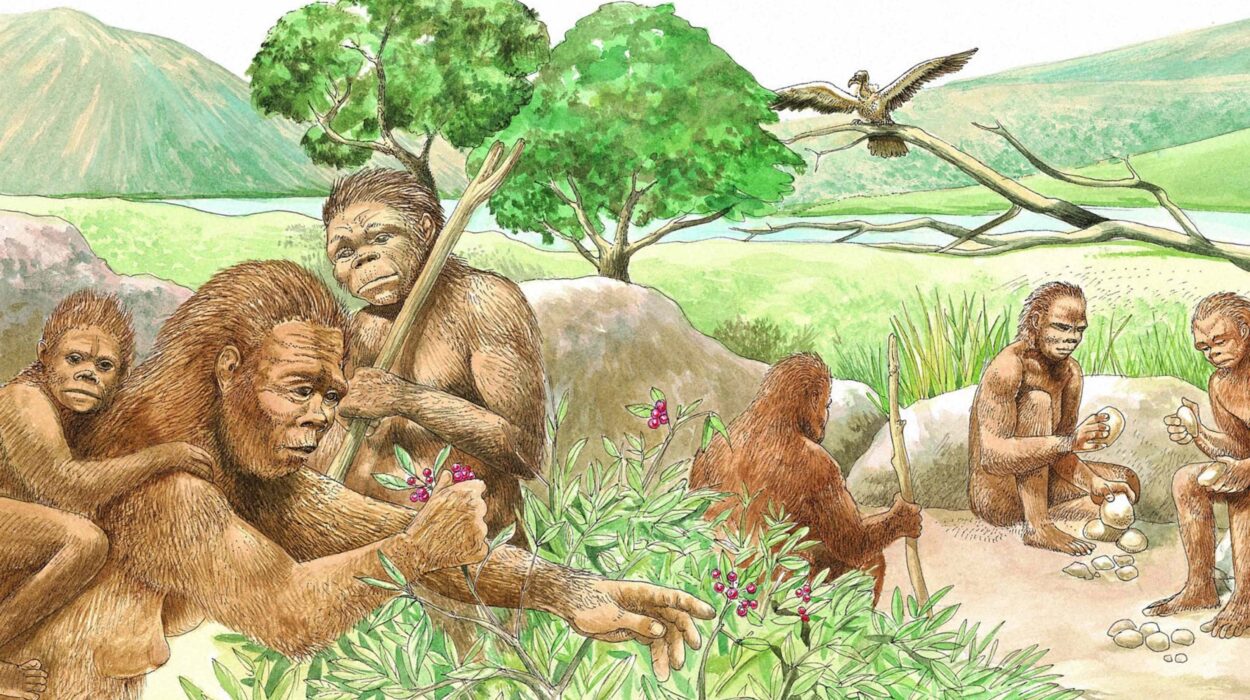
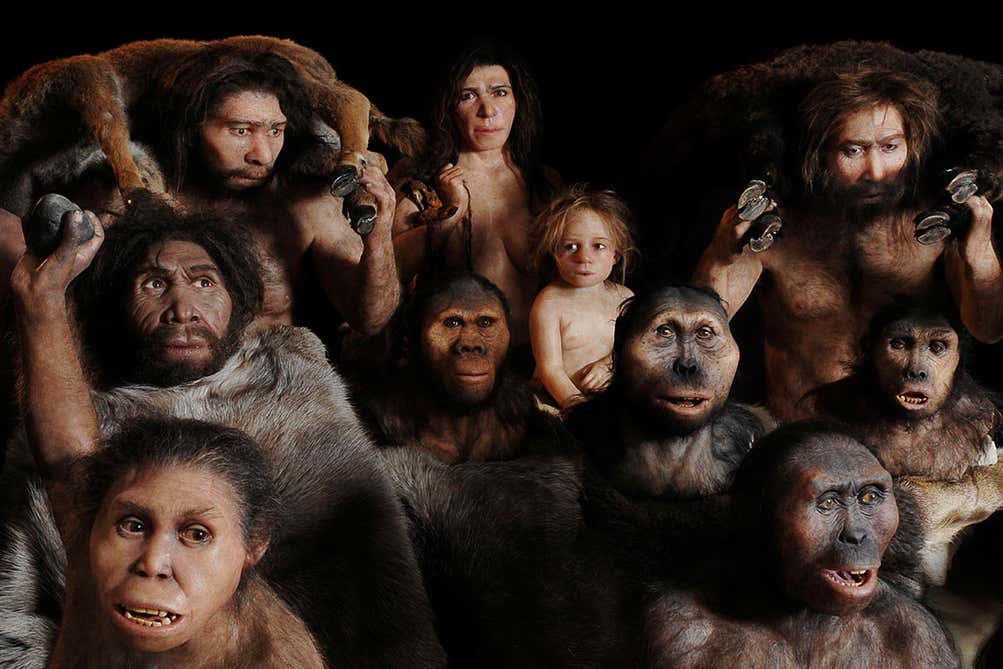
As you walked through the forests of Europe, the mountains of Central Asia, the islands of Southeast Asia, or the grasslands of Africa, you might encounter other kinds of humans. Some would look surprisingly familiar. Others would appear shorter, stockier, or more robust than modern people. They would make tools, hunt animals, care for their children, control fire, and perhaps even create art and bury their dead.
For most of human history, our species was just one branch of a much larger human family.
Today, every living person belongs to a single species: Homo sapiens. It is easy to assume that this has always been true. In reality, Earth was once home to several human species living at the same time. They shared landscapes, competed for resources, exchanged ideas, and in some cases even had children together.
Then, one by one, they disappeared.
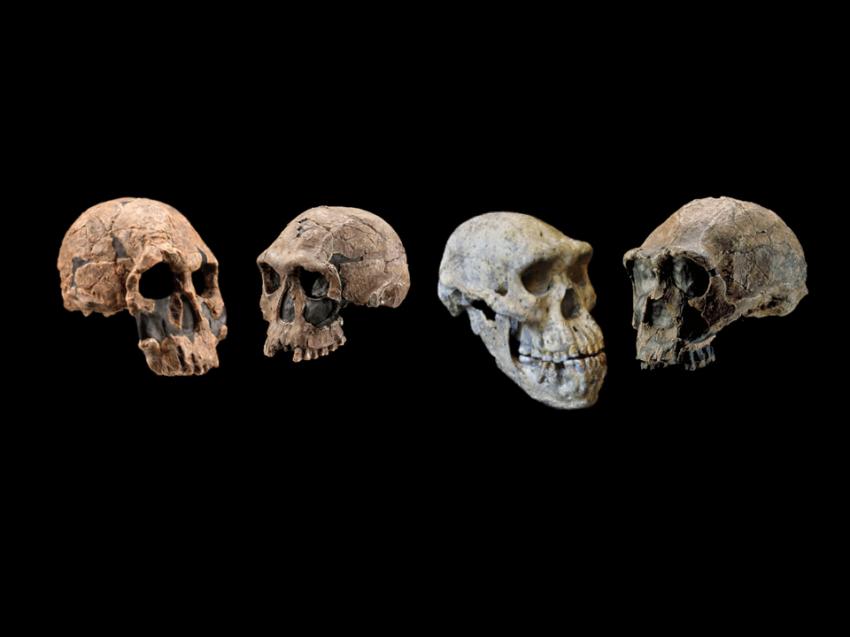
Their bones remained buried beneath caves, riverbanks, and ancient sediments for tens of thousands of years. Only recently has archaeology, genetics, and modern technology begun revealing their extraordinary stories.
These discoveries have transformed one of humanity’s oldest questions: Where did we come from?
The answer is far more fascinating than anyone once imagined.
Our ancestors were never alone.
Rethinking What It Means to Be Human
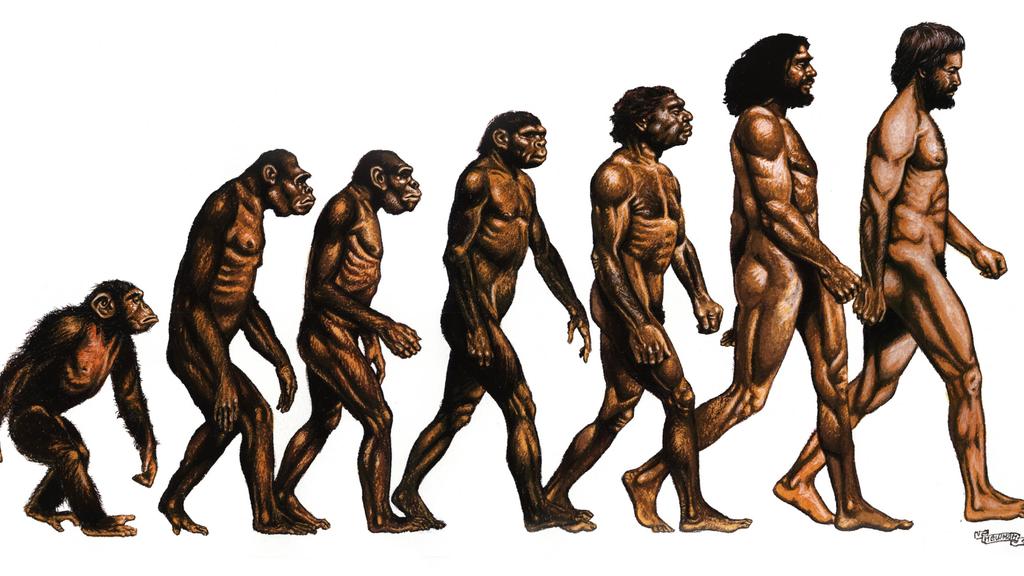
For centuries, people believed human evolution resembled a ladder.
At the bottom stood ape-like ancestors.
Each new species represented another step upward until modern humans finally appeared at the top.
This simple picture was comforting.
Unfortunately, it was also wrong.
Today, scientists understand that evolution resembles a branching tree rather than a ladder.
Different human species evolved from common ancestors, spread into new environments, adapted in different ways, and often lived alongside one another.
Some branches survived for long periods.
Others ended quickly.
Only one branch remains alive today.
The human family tree is therefore far richer—and far more complicated—than earlier generations imagined.
The Beginning of the Human Story
Our story begins millions of years ago in Africa.
Long before modern humans existed, ancient relatives gradually evolved to walk upright.
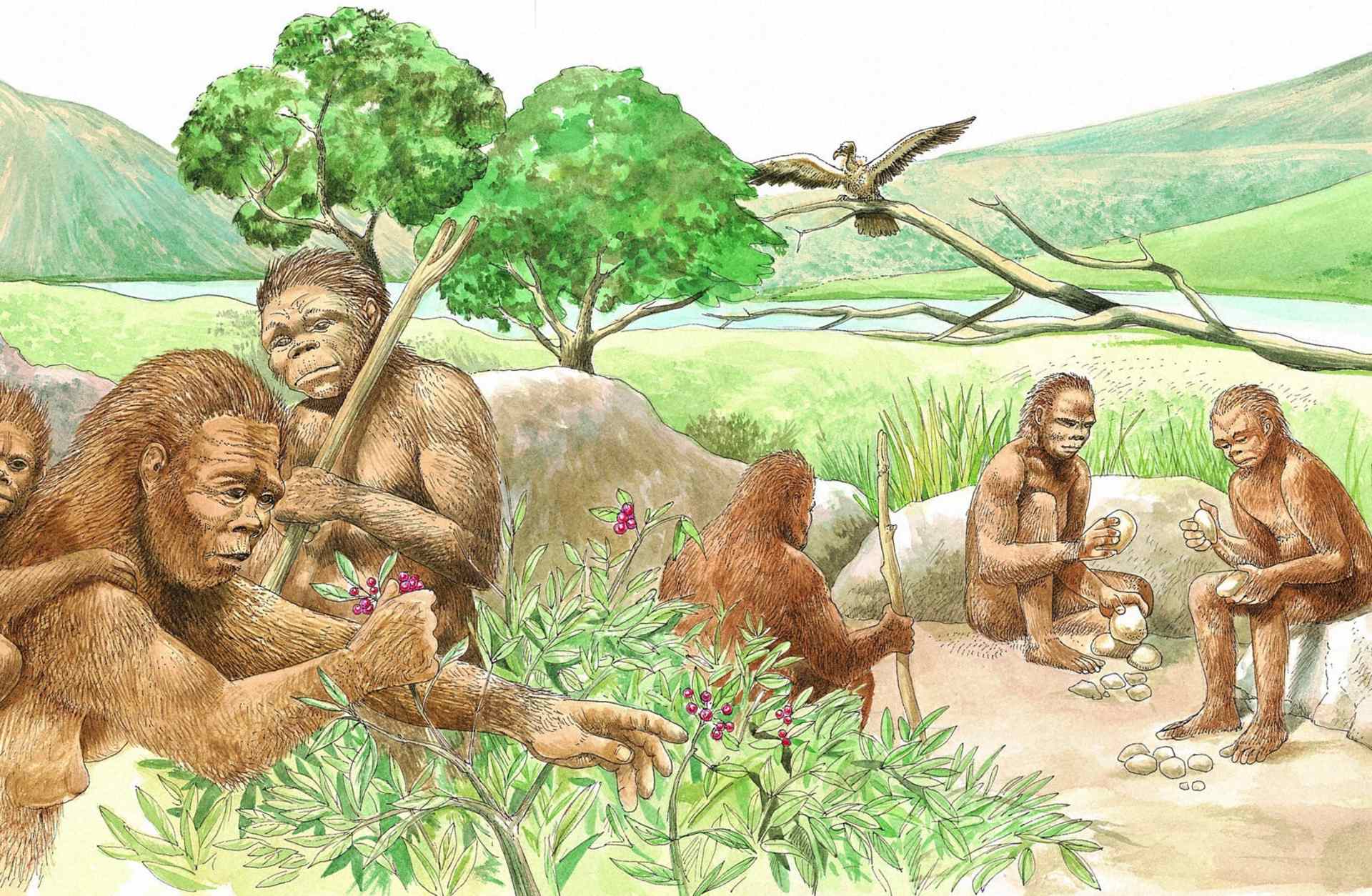
Walking on two legs freed the hands, allowing early humans to carry food, use tools, and eventually manipulate objects with remarkable precision.
Over countless generations, brains slowly became larger.
Hands became more dexterous.
Social behavior grew increasingly complex.
Language may have begun to emerge.
These gradual changes eventually produced the genus Homo, the group to which modern humans belong.
But evolution did not produce a single perfect species.
Instead, it generated diversity.
Different populations adapted to different climates and environments.
Some survived.
Others vanished.
The First Members of the Human Family
Among the earliest members of the genus Homo was Homo habilis, which lived roughly 2.4 to 1.4 million years ago.
Its name means “handy human” because early discoveries suggested it made simple stone tools.
Although its brain was smaller than ours, it represented an important evolutionary step.
Later came Homo erectus.
This remarkable species transformed human history.
Appearing nearly two million years ago, Homo erectus possessed longer legs, larger brains, and bodies much like our own.
Most importantly, it became the first known human species to leave Africa.
Its descendants spread across Asia and parts of Europe.
For over a million years, Homo erectus survived changing climates that would have challenged any species.
Its success demonstrates that intelligence and adaptability were already becoming defining human traits.
Leaving Africa
At different times during prehistory, several human species expanded beyond Africa.
They crossed deserts, followed rivers, climbed mountains, and explored unfamiliar landscapes.
Unlike many animals, humans possessed extraordinary flexibility.
They could survive in forests, grasslands, cold environments, and coastal regions.
Stone tools improved.
Knowledge accumulated across generations.
Fire offered warmth and protection.
Migration became one of humanity’s greatest strengths.
Yet every journey into new territory also created opportunities for evolution.
Separated populations gradually changed.
New species emerged.
The human family tree continued branching.
The Rise of the Neanderthals
Perhaps no lost human species has captured the imagination more than the Neanderthals.
For over a century, they were portrayed as crude cavemen.
Artists depicted them hunched over with heavy brows, dragging clubs behind them.
Modern science has completely transformed this image.
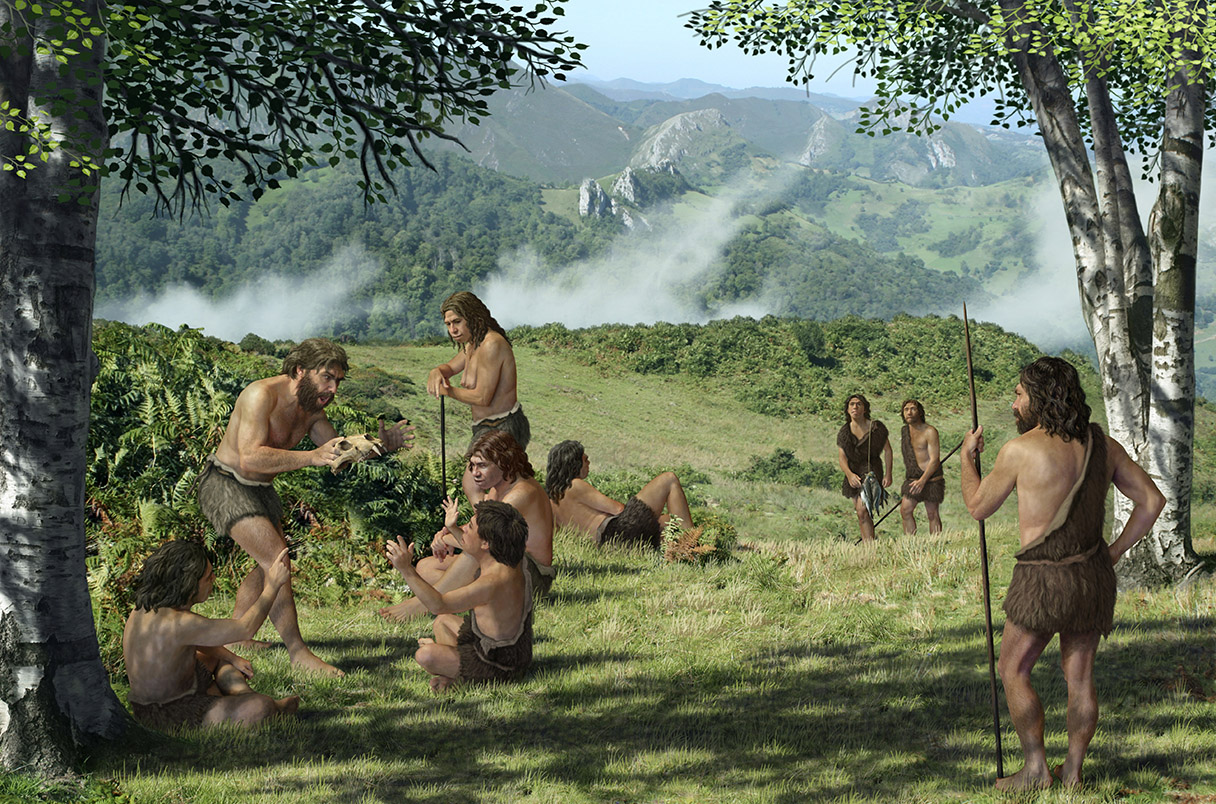
Neanderthals were intelligent, adaptable people.
They lived across Europe and western Asia for hundreds of thousands of years.
Their bodies were powerfully built.
Broad chests, short limbs, and strong muscles helped conserve heat during Ice Age winters.
They hunted large animals including mammoths, bison, deer, and woolly rhinoceroses.
Their stone tools became increasingly sophisticated over time.
Evidence suggests they controlled fire, built shelters, and manufactured clothing from animal hides.
Far from being primitive, Neanderthals mastered some of Earth’s harshest environments.
Life During the Ice Age
The world inhabited by Neanderthals looked dramatically different from today.
Massive glaciers covered much of northern Europe.
Cold grasslands stretched across vast distances.
Large mammals dominated the landscape.
Hunting required courage, planning, and cooperation.
Groups probably worked together to surround dangerous prey before attacking with wooden spears tipped with carefully crafted stone points.
Every successful hunt meant survival.
Every failure carried serious risks.
Life demanded resilience.
Yet archaeological discoveries show Neanderthals did more than simply survive.
They lived meaningful social lives.
Families, Friendship, and Compassion
One of the most moving discoveries about Neanderthals comes from injured skeletons.
Scientists have found individuals who survived severe injuries that would have prevented hunting.
Some lost limbs.
Others suffered broken bones or serious illnesses.
Yet they lived for years afterward.
This could only happen if other members of their communities cared for them.
Food had to be shared.
Protection had to be provided.
Compassion existed long before modern civilization.
Neanderthal communities demonstrated cooperation that challenges outdated stereotypes.
Their societies valued relationships.
Did Neanderthals Create Art?
For decades, many scientists believed symbolic thinking belonged only to modern humans.
Recent discoveries have changed that view.
Some caves contain paintings and markings that may have been created by Neanderthals.
Researchers have also found decorated eagle claws, pigments, engraved objects, and carefully selected shells.
Although debate continues over certain discoveries, increasing evidence suggests Neanderthals possessed symbolic behavior.
They may have created ornaments.
They may have painted.
They may even have performed rituals.
Their minds were probably far more similar to ours than once believed.
Meeting Homo sapiens
Around 300,000 years ago, our own species emerged in Africa.
Homo sapiens possessed lighter skeletons, rounded skulls, and remarkably flexible thinking.
Over time, modern humans developed increasingly sophisticated technology.
Around 70,000 years ago, groups began expanding beyond Africa.
Eventually they entered regions already occupied by other human species.
This was one of history’s greatest encounters.
Different humans met face to face.
For thousands of years, multiple human species shared the same world.
More Than Competition
Early scientists assumed modern humans simply replaced other species through competition.
The reality appears more complicated.
Ancient DNA has revealed astonishing evidence.
Modern humans and Neanderthals had children together.
Their descendants inherited genes from both groups.
Today, people whose ancestry lies outside Africa typically carry between one and two percent Neanderthal DNA.
These genes continue influencing aspects of immunity, metabolism, skin biology, and other traits.
Neanderthals did not disappear completely.
Part of them lives on inside billions of people today.
The Discovery of the Denisovans
One of the greatest scientific surprises arrived in 2010.
Researchers analyzed DNA extracted from a tiny finger bone discovered in Siberia’s Denisova Cave.
The results shocked everyone.
The individual belonged to an entirely unknown human species.
Scientists named them the Denisovans.
Remarkably, almost nothing about them had been known before DNA analysis.
Few bones have ever been found.
Yet genetics revealed an extraordinary story.
Denisovans were close relatives of Neanderthals but formed their own distinct lineage.
They spread across much of Asia.
Like Neanderthals, they also interbred with modern humans.
Today, people from parts of Asia and Oceania carry Denisovan DNA.
Some of these inherited genes help modern Tibetans survive at extremely high altitudes where oxygen levels are low.
Ancient human evolution continues influencing people alive today.
The Tiny Humans of Flores
In 2003, archaeologists working on the Indonesian island of Flores uncovered something astonishing.
Hidden inside a cave lay the skeleton of an adult standing only about one meter tall.
The individual possessed a tiny brain yet clearly belonged to the genus Homo.
Scientists named the species Homo floresiensis.
Nicknamed “the Hobbit,” this little human transformed ideas about evolution.
Despite its small brain, Homo floresiensis manufactured stone tools and survived on an isolated island for thousands of years.
Its existence demonstrates that evolution sometimes follows unexpected paths.
Brain size alone does not determine intelligence or survival.
A New Surprise from the Philippines
Even after the discovery of the Hobbit, more surprises awaited.
In 2019, scientists announced another human species from the Philippines.
Known as Homo luzonensis, it displayed a fascinating combination of ancient and modern characteristics.
Very little is known about this species.
Only a handful of fossils have been discovered.
Yet even these few remains reveal that Southeast Asia hosted far greater human diversity than anyone imagined only decades ago.
Each discovery reminds us that many chapters of human evolution remain unwritten.
The Mystery of Homo naledi
Deep inside a cave system in South Africa, researchers uncovered hundreds of fossils belonging to another remarkable species.
Named Homo naledi, these individuals possessed a strange mixture of primitive and modern traits.
Their brains were relatively small.
Yet some evidence suggests they deliberately placed bodies deep inside difficult-to-access cave chambers.
If confirmed, this behavior would imply surprisingly sophisticated social or symbolic practices.
Scientists continue debating the meaning of these discoveries.
Regardless of the final interpretation, Homo naledi demonstrates that human evolution was extraordinarily diverse.
Why So Many Human Species?
Evolution constantly experiments.
Populations become separated.
Different environments favor different adaptations.
Over thousands of generations, these differences accumulate.
Some groups develop larger bodies for colder climates.
Others evolve smaller sizes on isolated islands.
Some create new technologies.
Others specialize in particular food sources.
Human evolution was therefore not a straight march toward perfection.
It was an ongoing process of adaptation to changing environments.
Multiple successful strategies existed simultaneously.
Sharing the Same World
Imagine standing in western Asia 60,000 years ago.
Neanderthals occupy nearby valleys.
Modern humans arrive from Africa.
Denisovans may inhabit neighboring mountains farther east.
Each species makes tools.
Each raises children.
Each understands landscapes intimately.
Sometimes they compete.
Sometimes they avoid one another.
Occasionally they form families together.
For thousands of years, Earth hosted a remarkable diversity of humans.
This forgotten world would seem almost unbelievable today.
What Happened to Our Cousins?
Eventually every human species except Homo sapiens disappeared.
Why?
Scientists continue investigating this question.
Climate change certainly played a role.
Ice Ages repeatedly transformed habitats.
Food sources shifted.
Animal populations moved.
Competition for resources intensified.
Modern humans may have possessed advantages through larger social networks, more flexible technologies, or more extensive trade.
Diseases may also have contributed.
Rather than one dramatic event, extinction probably resulted from multiple interacting factors over thousands of years.
There may never have been a single cause.
The Role of Climate
Throughout prehistory, Earth’s climate changed dramatically.
Glaciers expanded.
Forests disappeared.
Grasslands emerged.
Sea levels rose and fell.
Human species constantly faced environmental challenges.
Some adapted successfully.
Others struggled.
Rapid climate shifts may have fragmented populations into isolated groups.
Small populations are especially vulnerable to extinction.
Natural disasters, food shortages, or disease can have devastating effects when numbers become too low.
Ancient DNA Revolutionizes History
Perhaps the greatest breakthrough in understanding lost humans came from ancient DNA.
For decades, scientists relied almost entirely on bones and stone tools.
Now genetic material preserved inside ancient fossils reveals relationships invisible to archaeology alone.
Researchers can reconstruct family trees.
They can detect interbreeding.
They can estimate population sizes.
They can identify inherited adaptations.
Ancient DNA has transformed anthropology into one of the fastest-changing scientific fields.
Each new genome reveals another piece of humanity’s forgotten past.
What Makes Humans Unique?
Ironically, studying extinct humans has changed how we define ourselves.
Once researchers believed language, compassion, art, planning, and symbolic thought belonged exclusively to modern humans.
Now evidence suggests many of these abilities appeared in other human species as well.
Neanderthals cared for injured companions.
They controlled fire.
They may have created art.
Denisovans adapted to extreme environments.
Other species manufactured sophisticated tools.
Modern humans remain unique, but perhaps not in the ways once imagined.
Our greatest strength may have been extraordinary flexibility, innovation, and the ability to build increasingly large social networks.
A Family Rather Than a Ladder
The history of humanity resembles a vast family reunion rather than a race with a single winner.
Every extinct cousin contributed to our understanding of evolution.
Each species solved life’s challenges differently.
Each adapted creatively to its environment.
Their successes lasted hundreds of thousands of years.
In evolutionary terms, they were anything but failures.
Their extinction does not diminish their remarkable achievements.
Instead, it highlights the unpredictable nature of evolution itself.
The Fossils Still Waiting Underground
Many discoveries likely remain buried.
New caves continue yielding astonishing fossils.
Improved dating techniques refine timelines.
Genetic technology becomes increasingly powerful each year.
Scientists suspect additional unknown human species may yet be discovered.
The human family tree is almost certainly incomplete.
Every excavation holds the possibility of rewriting history once again.
Looking Into the Mirror of Time
Studying extinct humans changes how we see ourselves.
Instead of standing alone at the summit of evolution, we become part of a much larger story.
Our ancestors shared the Earth with remarkable relatives.
Some looked almost identical to us.
Others followed unique evolutionary paths.
Together they formed a diverse human family stretching across continents for hundreds of thousands of years.
Their lives, struggles, triumphs, and eventual disappearances shaped the world we inherited.
Conclusion
For most of human history, our species was never alone. Across Africa, Europe, Asia, and the islands of Southeast Asia, multiple kinds of humans walked the Earth together. Neanderthals hunted across Ice Age landscapes, Denisovans adapted to Asia’s mountains and forests, Homo floresiensis thrived on isolated islands, Homo naledi left behind remarkable clues deep within caves, and many other ancient relatives contributed to the rich tapestry of human evolution.
Modern archaeology, fossil discoveries, and especially ancient DNA have transformed our understanding of this forgotten world. They reveal that our ancestors sometimes competed with these cousins, sometimes learned from them, and sometimes formed families with them. Their genetic legacy remains within millions of people alive today, reminding us that extinction did not erase every trace of their existence.
The mystery of our lost cousins is not merely about bones buried in ancient caves. It is about redefining what it means to be human. The qualities we once believed belonged only to ourselves—compassion, creativity, intelligence, cooperation, and adaptability—were shared, at least in part, by other members of our ancient family. Humanity was never a single, lonely branch growing in isolation. It was once a thriving forest of closely related species, each adapting to the challenges of its time.
Today, only Homo sapiens remains. Yet the echoes of our lost cousins continue to shape our biology, enrich our history, and deepen our understanding of evolution. Every fossil unearthed, every ancient genome decoded, and every archaeological discovery brings us closer to knowing those who came before us. In learning their stories, we discover something equally important about ourselves. We realize that our place in nature is not defined by standing apart from the rest of life, but by belonging to a long, extraordinary family whose story is still being uncovered, one remarkable discovery at a time.