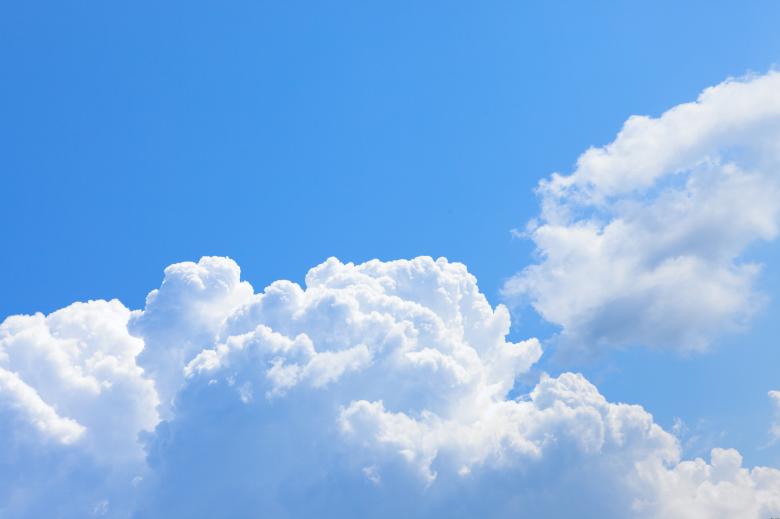
Look up on a clear afternoon here on Earth, and you will almost certainly see a beautiful blue sky stretching from horizon to horizon. It feels so ordinary that we rarely stop to wonder why it is blue instead of green, purple, or white. Yet if you could stand on the dusty surface of Mars and look up during the day, you would witness a completely different scene. Instead of a bright blue sky, you would usually see a sky tinted with shades of reddish, tan, or butterscotch. Even more surprisingly, around sunset on Mars, the sky can appear blue near the Sun while the rest of the sky remains reddish—a striking reversal of what we experience on Earth.
The difference is not because space itself has different colors. Nor is it because the Sun shines differently on Mars. The same Sun illuminates both planets. The dramatic contrast comes from something much closer to the ground: each planet’s atmosphere.
The story of Earth’s blue sky and Mars’ red sky is a fascinating journey through light, tiny particles, and the invisible physics that surrounds us every day.
Light Is More Colorful Than It Looks
Sunlight may appear white, but it is actually a mixture of many different colors. If sunlight passes through a glass prism, it spreads into a rainbow, revealing colors that range from red and orange to yellow, green, blue, indigo, and violet.
Each color represents light with a different wavelength. Red light has a relatively long wavelength, while blue and violet light have much shorter wavelengths.
When sunlight travels through empty space, all these colors move together, making the light appear white. It is only when the light encounters matter—such as gas molecules, water droplets, or dust—that these colors begin to behave differently.
This interaction between light and matter creates some of nature’s most beautiful sights, including blue skies, colorful sunsets, rainbows, and even the appearance of distant planets.
Earth’s Atmosphere Is Full of Tiny Molecules
Earth is surrounded by an atmosphere composed mainly of nitrogen and oxygen, along with smaller amounts of argon, carbon dioxide, water vapor, and other gases.
Although the atmosphere seems invisible, it contains an enormous number of tiny molecules. As sunlight enters Earth’s atmosphere, these molecules interact with the incoming light.
Because the molecules are much smaller than the wavelengths of visible light, they scatter the shorter wavelengths much more efficiently than the longer ones. This process is known as Rayleigh scattering, named after the British physicist Lord Rayleigh, who explained the phenomenon in the nineteenth century.
Blue light has a shorter wavelength than red light, so it is scattered in many different directions as sunlight passes through the atmosphere.
As a result, wherever you look in the daytime sky, scattered blue light is reaching your eyes from all directions. This is why the sky appears blue.
Why Isn’t the Sky Violet?
If violet light has an even shorter wavelength than blue light, it should be scattered even more strongly. So why don’t we see a violet sky?
The answer lies in several factors working together.
First, the Sun emits slightly less violet light than blue light.
Second, Earth’s upper atmosphere absorbs some violet light.
Finally, the human eye is much more sensitive to blue light than to violet light. Our vision naturally emphasizes blue wavelengths, making the sky appear blue instead of violet.
The result is the familiar sky that has inspired artists, poets, scientists, and dreamers throughout history.
Why Clouds Stay White
If Earth’s atmosphere scatters blue light, why don’t clouds turn blue?
Clouds are made of tiny water droplets and ice crystals that are much larger than the molecules responsible for Rayleigh scattering.
These larger particles scatter nearly all visible wavelengths more equally. Since the different colors remain mixed together, the scattered light appears white.
When clouds become especially thick, less sunlight passes through them, making them appear gray or dark gray before storms.
Why Sunsets Become Red
The same process that creates Earth’s blue sky also produces its spectacular sunsets.
When the Sun is high overhead, sunlight travels through a relatively short path in the atmosphere before reaching your eyes.
Near sunrise or sunset, however, sunlight must pass through a much thicker layer of air.
Along this longer journey, most of the blue light is scattered away before the remaining sunlight reaches you. The light that continues toward your eyes contains proportionally more reds, oranges, and yellows.
This creates the brilliant colors that often paint the sky during sunrise and sunset.
Dust, smoke, volcanic ash, and pollution can make these colors even more vivid because they scatter and absorb light in additional ways.
Mars Has a Very Different Atmosphere
Mars also has an atmosphere, but it is dramatically different from Earth’s.
The Martian atmosphere is much thinner, containing less than one percent of the atmospheric pressure found at Earth’s surface. It is composed mostly of carbon dioxide, with only small amounts of nitrogen, argon, oxygen, and water vapor.
If atmospheric composition were the only difference, Mars might still have a bluish sky.
But Mars has another important feature that completely changes the picture.
Its atmosphere is filled with enormous amounts of extremely fine dust.
The Red Dust of Mars
The surface of Mars is covered with dust rich in iron-containing minerals. Over billions of years, these minerals have reacted with oxygen, forming iron oxides—the same types of compounds commonly known as rust on Earth.
This rusty dust gives Mars its famous reddish appearance when viewed from space.
Powerful winds frequently lift these microscopic dust particles high into the atmosphere. Some dust storms grow so large that they cover the entire planet for weeks or even months.
Because so much dust remains suspended in the air, sunlight reaching the Martian surface passes through a dusty filter unlike anything on Earth.
How Martian Dust Changes the Sky
The dust particles floating in Mars’ atmosphere are much larger than the gas molecules that dominate Earth’s atmosphere.
Instead of producing Rayleigh scattering, these larger particles scatter light in a different way.
The iron-rich dust tends to scatter and transmit light so that the daytime sky usually appears reddish, orange, tan, or butterscotch.
Rather than filling the sky with blue light, the suspended dust gives it the warm colors associated with the planet’s rusty surface.
The result is a landscape that looks dramatically different from anything found on Earth.
A Strange Blue Sunset on Mars
One of the most surprising discoveries made by Mars rovers is that sunsets on Mars can display blue colors near the Sun.
This seems completely opposite to what happens on Earth.
The explanation again comes from the unique properties of Martian dust.
Fine dust particles in the Martian atmosphere scatter red light widely while allowing more blue light to travel forward toward the direction of the setting Sun.
As a result, observers on Mars can see a bluish glow surrounding the Sun during sunset, while the rest of the sky remains reddish.
Photographs taken by NASA’s Mars rovers have confirmed this unusual effect, giving scientists a fascinating example of how different atmospheric conditions can completely change the appearance of a sky.
The Sun Looks Smaller on Mars
Another noticeable difference is the size of the Sun.
Mars orbits farther from the Sun than Earth does. On average, Mars is about one and a half times farther from the Sun than Earth.
Because of this greater distance, the Sun appears somewhat smaller in the Martian sky.
It also provides less energy to the surface, making Mars much colder than Earth.
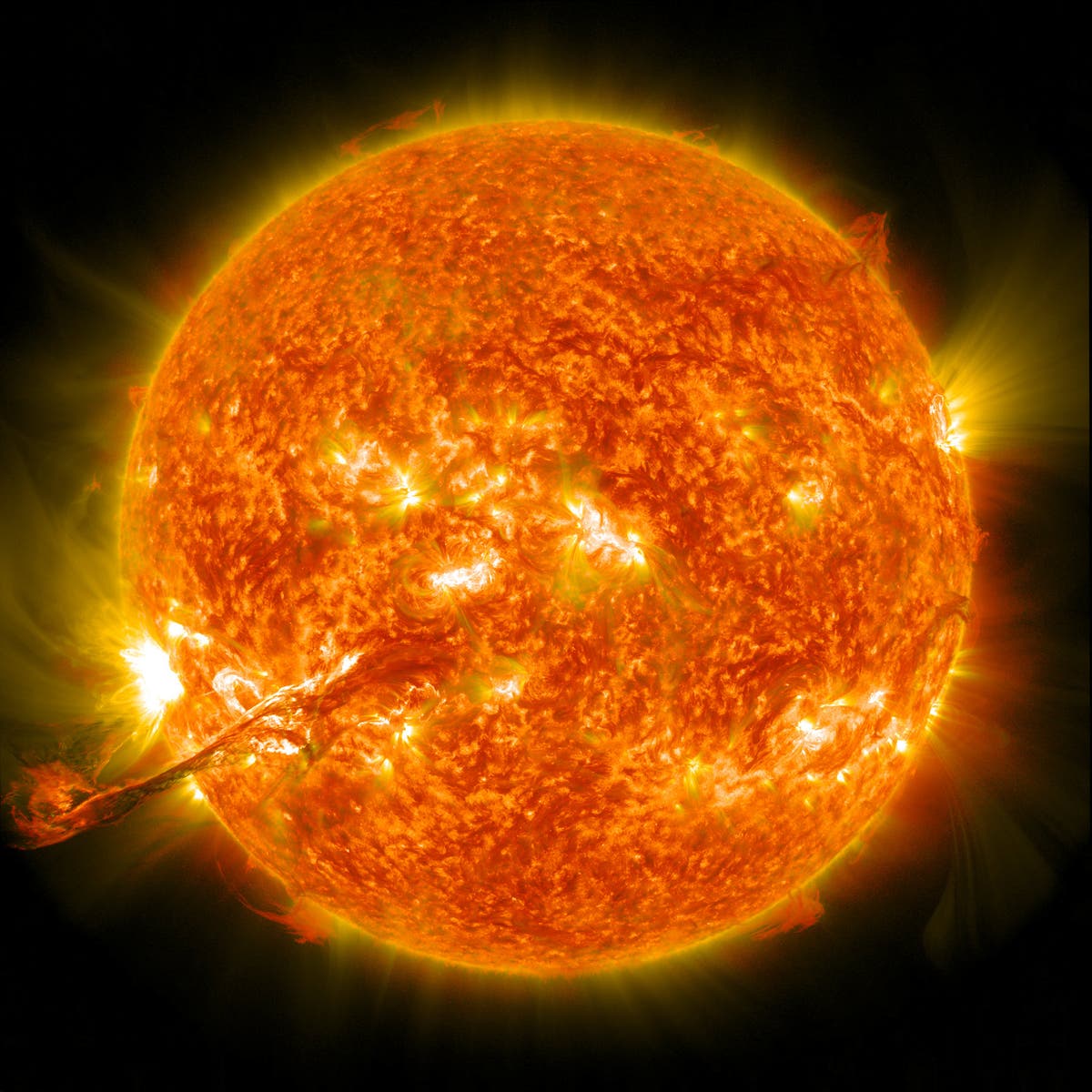
Even though the Sun is smaller and dimmer, it is still the same star illuminating both worlds.
Dust Storms Can Transform the Martian Sky
Mars experiences some of the largest dust storms in the Solar System.
Small local storms can quickly grow into regional events.
Occasionally, enormous storms spread across nearly the entire planet.
During these global dust storms, so much dust enters the atmosphere that sunlight becomes heavily filtered.
The sky grows darker, visibility drops dramatically, and the landscape can almost disappear beneath the swirling haze.
These storms also affect robotic missions by reducing the amount of sunlight reaching solar-powered spacecraft.
Why Earth’s Sky Could Look Different
Although Earth usually has a blue sky, it does not always appear that way.
Wildfires can fill the atmosphere with smoke, making the sky look hazy or orange.
Volcanic eruptions inject ash high into the atmosphere, sometimes creating unusually colorful sunsets around the world.
Heavy pollution can turn the sky pale or gray.
Dense fog can make the sky appear almost white.
These examples show that the appearance of the sky depends not only on sunlight but also on what is floating in the atmosphere.
Could Humans Ever See a Blue Sky on Mars?
If future generations were somehow able to dramatically change the Martian atmosphere, the appearance of the sky might also change.
However, creating an atmosphere similar to Earth’s would require enormous changes far beyond current technology.
Even then, the color of the sky would depend on the atmosphere’s composition, density, and the amount of dust present.
For now, Mars remains a world where rust-colored dust dominates the landscape and paints the sky in warm shades that are unlike those of our home planet.
Other Planets Have Different Skies Too
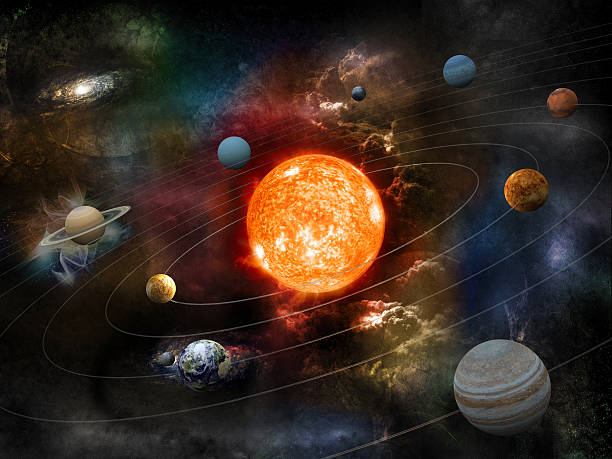
Earth and Mars are only two examples among many worlds in our Solar System.
Venus has an extremely thick atmosphere covered by dense clouds that completely hide its surface.
Titan, Saturn’s largest moon, has a thick atmosphere rich in nitrogen with a permanent orange haze created by complex organic particles.
The giant planets—Jupiter, Saturn, Uranus, and Neptune—have deep atmospheres made largely of hydrogen and helium, with clouds of different chemicals creating a wide range of colors and patterns.
Each world has its own unique sky because each has a unique atmosphere.
The color of a planet’s sky tells scientists important information about its gases, particles, weather, and climate.
What the Sky Teaches Us About Physics
The color of the sky may seem like a simple question, but it reveals some of the most fundamental principles of physics.
It demonstrates how light interacts with matter.
It shows how tiny molecules and dust particles influence what our eyes perceive.
It reminds us that even invisible gases shape the beauty of our everyday world.
By studying why Earth’s sky is blue and why Mars’ sky is red, scientists gain a deeper understanding of planetary atmospheres across the Solar System and beyond.
Looking Up With New Eyes
The next time you stand beneath a clear blue sky, remember that its color is not painted across the heavens. It is created every moment by billions upon billions of tiny molecules scattering sunlight through the atmosphere. The blue above us is a beautiful consequence of the laws of physics acting continuously around our planet.
And somewhere millions of kilometers away, robotic explorers sit beneath a dusty Martian sky, watching a very different world where rust-colored dust transforms daylight into warm shades of red and tan, and where the setting Sun is surrounded by an unexpected halo of blue.
Together, these two skies tell a remarkable story. They remind us that the universe follows the same physical laws everywhere, yet each planet expresses those laws in its own unique way. Simply by looking up, we can discover that even something as familiar as the sky holds clues to the extraordinary science that shapes worlds.