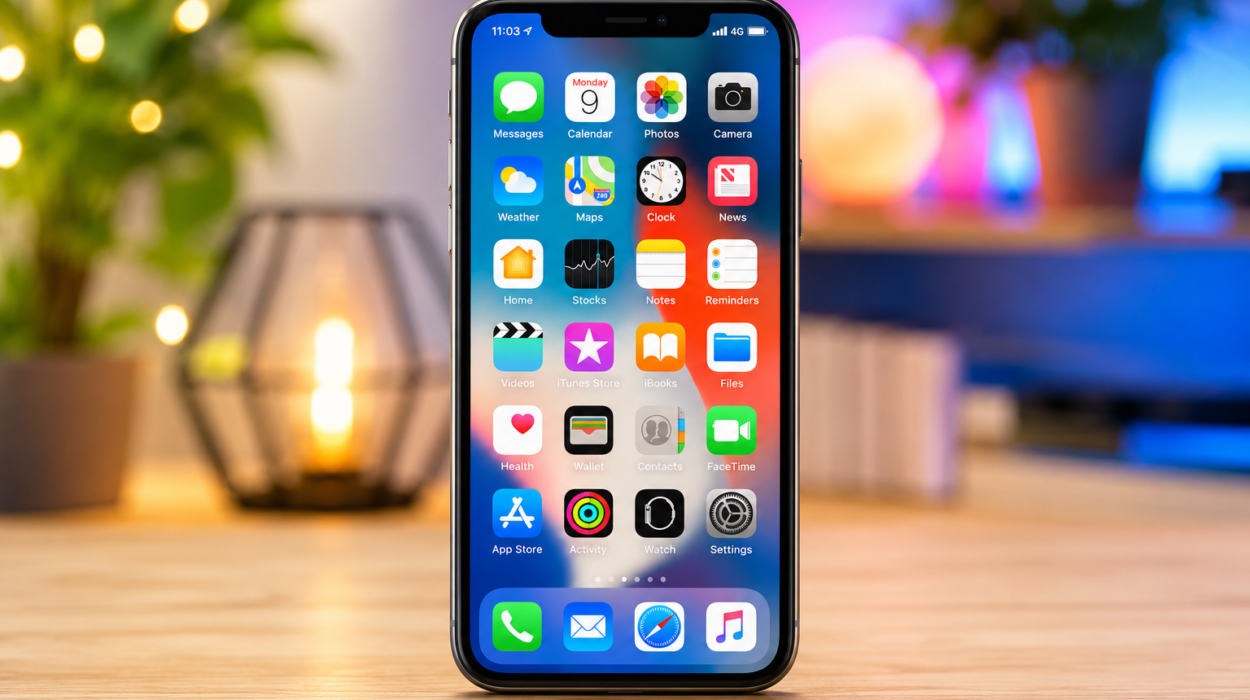
Artificial intelligence is no longer something that exists only in research labs or futuristic movies. Today, it helps smartphones recognize faces, laptops translate languages in real time, cameras improve photos instantly, and voice assistants understand natural conversations. Behind many of these intelligent features is a specialized piece of hardware that most people have never heard of: the Neural Processing Unit, or NPU.
As AI becomes a core part of everyday computing, NPUs are rapidly becoming just as important as CPUs and GPUs. Whether you are buying a new laptop, smartphone, or PC, you are increasingly likely to see manufacturers advertising devices with a built-in NPU. But what exactly is an NPU, why does it exist, and how does it work?
The answer lies in understanding that artificial intelligence requires a different style of computing than traditional software. While CPUs and GPUs remain essential, AI workloads often benefit from hardware designed specifically for neural networks. That is where the NPU comes in.
What Is an NPU?
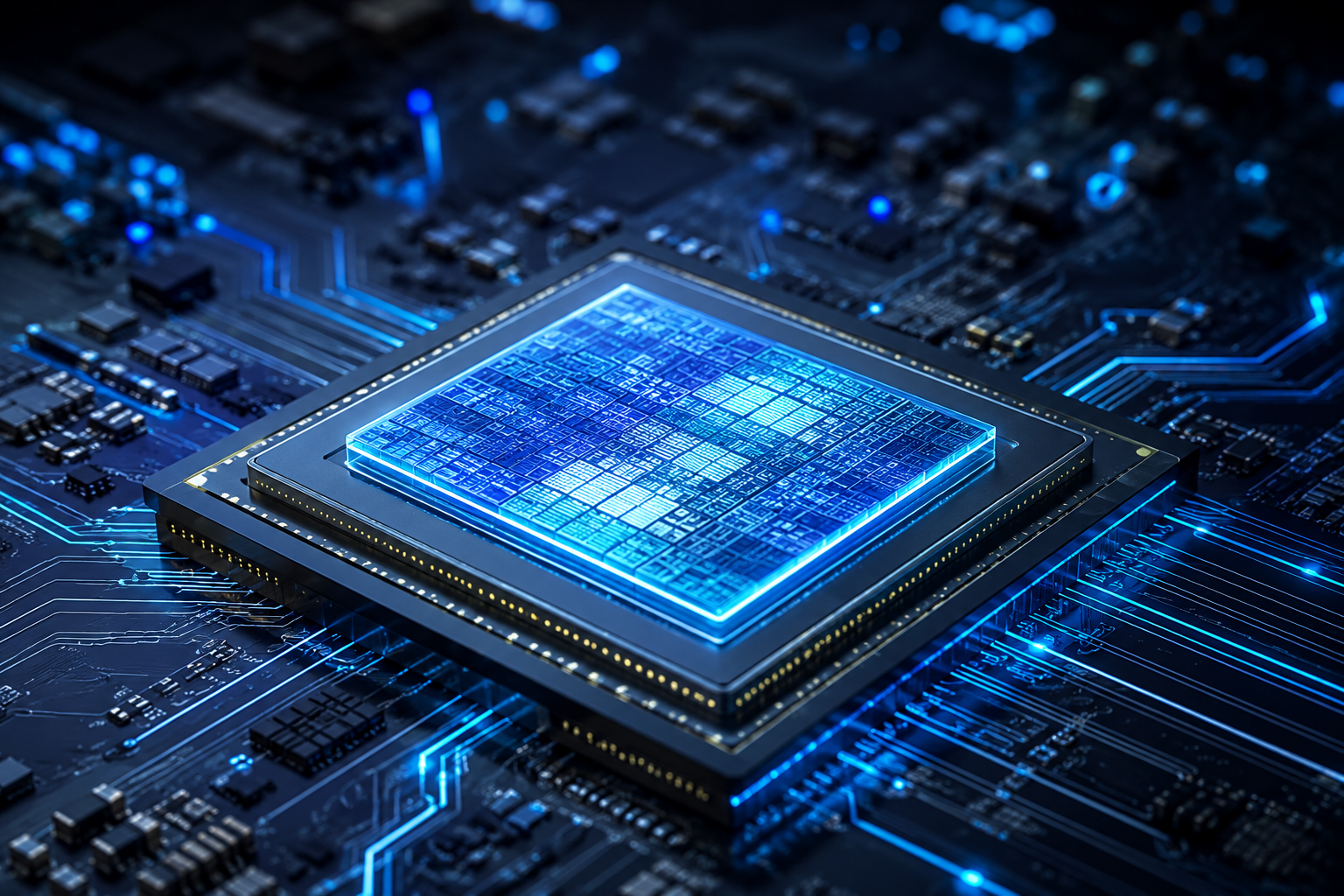
An NPU (Neural Processing Unit) is a specialized computer processor designed to accelerate artificial intelligence and machine learning tasks. Unlike a CPU, which is built to handle a wide variety of instructions, or a GPU, which excels at graphics and massively parallel calculations, an NPU is optimized specifically for the mathematical operations performed by neural networks.
The name “Neural Processing Unit” comes from artificial neural networks, which are computer models inspired by the interconnected neurons of the human brain. Although artificial neural networks are much simpler than biological brains, they have become the foundation of modern AI systems.
An NPU is designed to execute these neural network calculations quickly while consuming far less power than a CPU or GPU would require for the same work.
Why Were NPUs Created?
For decades, CPUs handled nearly every computing task. As graphics became more advanced, GPUs were developed to process millions of pixels simultaneously.
Artificial intelligence introduced an entirely new challenge.
Modern AI models perform enormous numbers of mathematical operations. Image recognition, speech recognition, language translation, object detection, and generative AI all rely on billions—or even trillions—of calculations involving matrices and vectors.
Although CPUs can perform these calculations, they are not optimized for them.
GPUs improved AI performance because they can perform many calculations in parallel. However, even GPUs are designed primarily for graphics and general-purpose parallel computing.
Engineers realized that AI deserved its own specialized processor.
The result was the Neural Processing Unit.
Understanding AI Workloads
To understand why NPUs are so effective, imagine three workers performing different jobs.
One worker is a skilled problem solver who can perform almost any task but works on one problem at a time. That is similar to a CPU.
Another worker is an expert at handling thousands of similar tasks simultaneously. That resembles a GPU.
The third worker specializes in one specific job and performs it with extraordinary speed and efficiency. That is the NPU.
Artificial intelligence often repeats the same mathematical operations millions of times. Since these operations are highly predictable, hardware can be designed specifically to perform them extremely efficiently.
How Does an NPU Work?
At its core, an NPU accelerates the mathematical operations required by artificial neural networks.
Most modern AI models rely heavily on matrix multiplication. A matrix is simply a grid of numbers arranged in rows and columns.
When an AI model processes an image, understands speech, or predicts the next word in a sentence, it performs countless matrix multiplications.
These calculations determine how information flows through layers of artificial neurons.
Instead of using general-purpose hardware to execute these operations, an NPU contains specialized circuits designed specifically for matrix arithmetic.
Because the hardware matches the needs of AI algorithms, calculations can be completed much faster and with much lower energy consumption.
The Role of Artificial Neural Networks
Artificial neural networks are mathematical models that learn patterns from data.
During training, the network adjusts millions or even billions of internal parameters, called weights, until it can accurately perform a task.
For example, a neural network trained to recognize cats learns subtle visual patterns by analyzing enormous collections of labeled images.
Once training is complete, the network can recognize cats in photographs it has never seen before.
Running a trained AI model is called inference.
Most NPUs are designed primarily to accelerate inference rather than the much more computationally intensive training process.
This makes them ideal for consumer devices like smartphones and laptops.
What Happens When You Use AI on Your Device?
Imagine taking a photograph with your smartphone.
The camera captures the image almost instantly.
But before you even see it, AI may already have analyzed the scene.
The NPU can detect faces.
It can identify the sky.
It can recognize buildings, food, pets, or landscapes.
It can reduce image noise.
It can improve sharpness.
It can enhance colors.
It can blur the background for portrait mode.
All of these tasks happen within fractions of a second because the NPU processes the AI models efficiently.
Without an NPU, many of these operations would rely more heavily on the CPU or GPU, often requiring more power and potentially reducing battery life.
Why Is an NPU So Energy Efficient?
One of the biggest advantages of an NPU is its remarkable energy efficiency.
General-purpose processors must support thousands of different instruction types.
An NPU performs a much narrower range of operations.
Because it focuses on AI-specific tasks, unnecessary hardware is eliminated.
Specialized memory paths reduce the need to move data long distances inside the chip.
Dedicated arithmetic units perform matrix calculations with minimal wasted energy.
The result is dramatically lower power consumption.
This is particularly important for laptops, tablets, wearables, and smartphones, where battery life is a major concern.
CPUs, GPUs, and NPUs: Working Together
Modern computers increasingly include all three processor types.
The CPU manages the operating system, applications, file management, and general computing tasks.
The GPU renders graphics, processes videos, and accelerates parallel workloads.
The NPU handles AI inference, enabling intelligent features with minimal power consumption.
Rather than replacing one another, these processors complement each other.
A modern AI application may use all three simultaneously.
For example, during a video conference, the CPU runs the software, the GPU renders graphics, and the NPU powers AI features such as background blur, eye contact correction, automatic framing, and noise suppression.
What Is AI Inference?
Many people hear about AI training but are less familiar with inference.
Training is the process of teaching an AI model using enormous datasets. This often requires powerful servers equipped with many high-performance GPUs and can take days or weeks.
Inference happens after training.
During inference, the AI uses what it has already learned to analyze new information and produce predictions.
When your phone unlocks using facial recognition, it is performing inference.
When your laptop generates live captions, it is performing inference.
When your camera identifies a flower, it is performing inference.
NPUs excel at inference because they can execute trained neural networks quickly and efficiently.
NPUs in Smartphones
Smartphones were among the first consumer devices to adopt NPUs.
Modern mobile AI relies heavily on dedicated neural processors.
They help improve photography by recognizing scenes, enhancing images in low light, reducing noise, and optimizing colors.
Voice assistants become faster because speech recognition can happen directly on the device.
Real-time language translation becomes smoother.
Security features like facial recognition become both faster and more secure.
Since many of these AI tasks run locally instead of relying on cloud servers, user privacy can also improve because sensitive data may remain on the device.
NPUs in Windows PCs
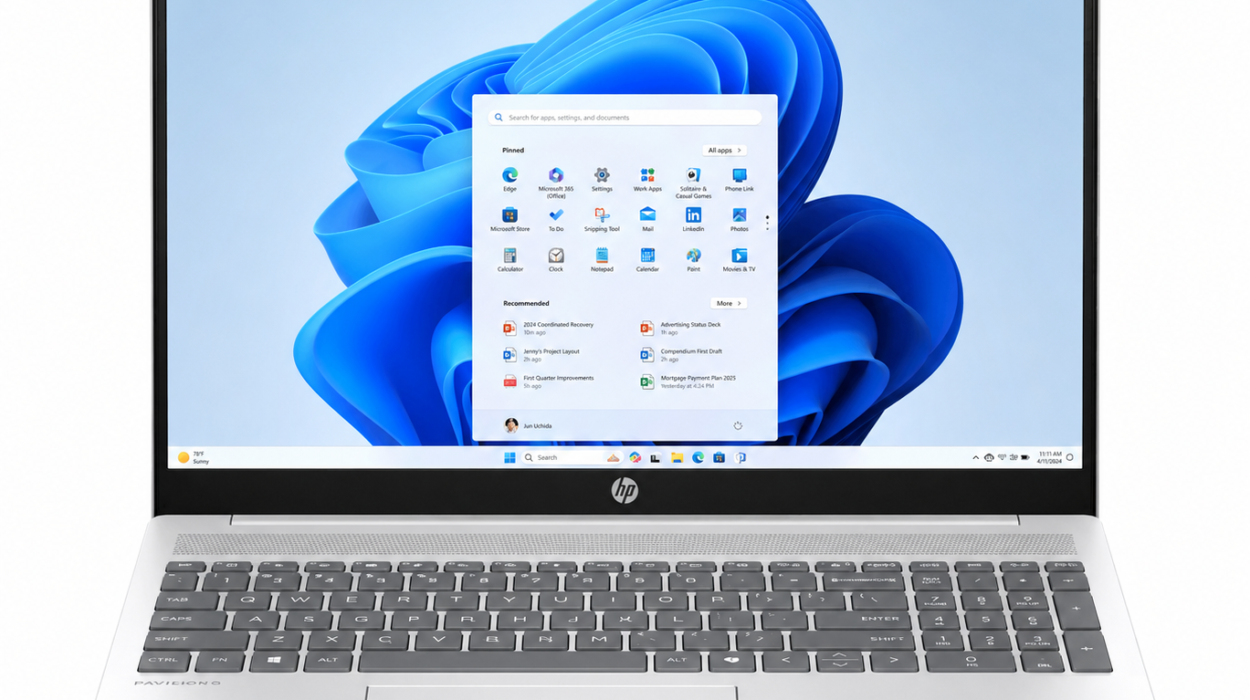
The newest generation of Windows AI PCs includes built-in NPUs capable of accelerating many AI features.
These processors help power live captions, language translation, Windows Studio Effects for video calls, image generation features, and other AI-powered experiences.
Because the NPU handles these workloads efficiently, the CPU and GPU remain available for other applications.
This improves overall responsiveness while reducing energy consumption.
NPUs in Macs
Apple introduced its Neural Engine to bring dedicated AI acceleration to its devices.
The Neural Engine works alongside the CPU and GPU within Apple Silicon chips.
It accelerates numerous machine learning tasks, including image processing, speech recognition, handwriting recognition, and many Apple Intelligence features.
Developers can also use Apple’s machine learning frameworks to take advantage of the Neural Engine for compatible applications.
NPUs in AI PCs
The term AI PC has become increasingly common.
An AI PC typically includes a CPU, GPU, and a dedicated NPU capable of accelerating AI workloads directly on the computer.
Unlike cloud-based AI services, many AI features on an AI PC can run locally.
This offers several important advantages.
Responses may be faster because data does not need to travel across the internet.
Battery life may improve because the NPU performs AI tasks efficiently.
Sensitive information can remain on the device instead of being sent to remote servers, depending on how the software is designed.
These capabilities are driving the growing adoption of AI-focused hardware.
What Types of AI Tasks Can an NPU Accelerate?
NPUs are particularly effective at accelerating AI workloads such as image recognition, object detection, speech recognition, natural language processing, handwriting recognition, facial recognition, background removal, photo enhancement, video effects, recommendation systems, gesture recognition, and many other neural network applications.
As AI software evolves, NPUs are expected to support an even broader range of intelligent features across everyday devices.
Can an NPU Train Large AI Models?
Generally, no.
Although some NPUs can perform limited on-device training or adaptation for specific applications, they are primarily designed for inference rather than training large foundation models.
Training state-of-the-art AI models requires enormous computational resources, vast amounts of memory, and powerful data center hardware, typically using clusters of GPUs or specialized AI accelerators.
Consumer NPUs focus on running already-trained models efficiently.
Why Is On-Device AI Becoming More Important?
Cloud computing has made powerful AI widely accessible.
However, relying entirely on remote servers has limitations.
Internet connections may be slow or unavailable.
Sending data to the cloud introduces network delays.
Some users also prefer to keep personal information on their own devices whenever possible.
Running AI directly on a device addresses many of these challenges.
With an NPU, features such as image enhancement, speech recognition, translation, and accessibility tools can often work more quickly and without constant internet access, depending on the application.
The Future of NPUs
Artificial intelligence is rapidly becoming a standard feature of personal computing.
As AI models become more capable, demand for efficient AI hardware will continue to grow.
Future NPUs are expected to deliver higher performance while using even less energy. They may support increasingly sophisticated language models, smarter assistants, advanced robotics, augmented reality, autonomous systems, and personalized AI experiences.
Researchers are also exploring new chip architectures that could further improve AI efficiency and enable more complex models to run directly on consumer devices.
Rather than serving as optional hardware, NPUs are likely to become a standard component of future computers, much as GPUs did over the past few decades.
Conclusion
The Neural Processing Unit represents a major step forward in the evolution of computer processors. While CPUs remain the versatile brains of modern computers and GPUs excel at graphics and large-scale parallel computing, NPUs are purpose-built for the unique demands of artificial intelligence.
By accelerating the mathematical operations used in neural networks, NPUs enable faster AI performance while consuming far less power. This makes features such as intelligent photography, real-time translation, voice recognition, video enhancements, accessibility tools, and many forms of on-device AI both practical and efficient.
As artificial intelligence becomes woven into everyday technology, NPUs are transforming from specialized components into essential hardware. They are helping devices become smarter, faster, more responsive, and more energy efficient—bringing advanced AI experiences into the hands of millions of people without requiring constant reliance on powerful cloud servers.