Since the earliest days of human civilization, people have looked toward the sky, the sea, the mountains, and the mysteries of life seeking answers to questions that seemed impossible to understand. Why does lightning split the heavens? Why do storms destroy entire villages? What causes the Sun to rise each morning and disappear each night? Why do people live, suffer, and die?
Long before modern science offered explanations, cultures around the world created myths. These stories helped people make sense of nature, human emotions, and the universe itself. At the center of many of these myths stood gods—powerful supernatural beings who controlled forces beyond human understanding.
The gods of world mythology were far more than fictional characters. They represented the hopes, fears, values, and imagination of entire civilizations. Some ruled the skies. Some governed death and the afterlife. Others created worlds, commanded oceans, controlled time, or shaped the destiny of humanity.
Across thousands of years and countless cultures, certain gods emerged as especially powerful figures. Their influence extended over entire pantheons, and their stories became central to the identities of their civilizations.
Exploring these powerful gods is also a journey through human history. Each deity reflects the culture that worshipped them and reveals how ancient people understood their place in the cosmos.
Understanding Power in Mythology
Before examining the most powerful gods, it is important to understand what power meant in mythology.
Power was not always measured by physical strength alone. In many traditions, wisdom, creation, knowledge, destiny, and cosmic authority were considered even greater forms of power.
A god who created the universe could be more powerful than a god who ruled storms. A deity who controlled fate might outrank warriors and kings. Some gods possessed authority over life and death, while others governed time itself.
Different cultures valued different qualities. Therefore, the concept of the “most powerful” god varied widely across civilizations.
Yet certain deities consistently stood at the highest levels of their mythological worlds.
Zeus and the Rule of Olympus
Among the most famous gods in world mythology is Zeus.
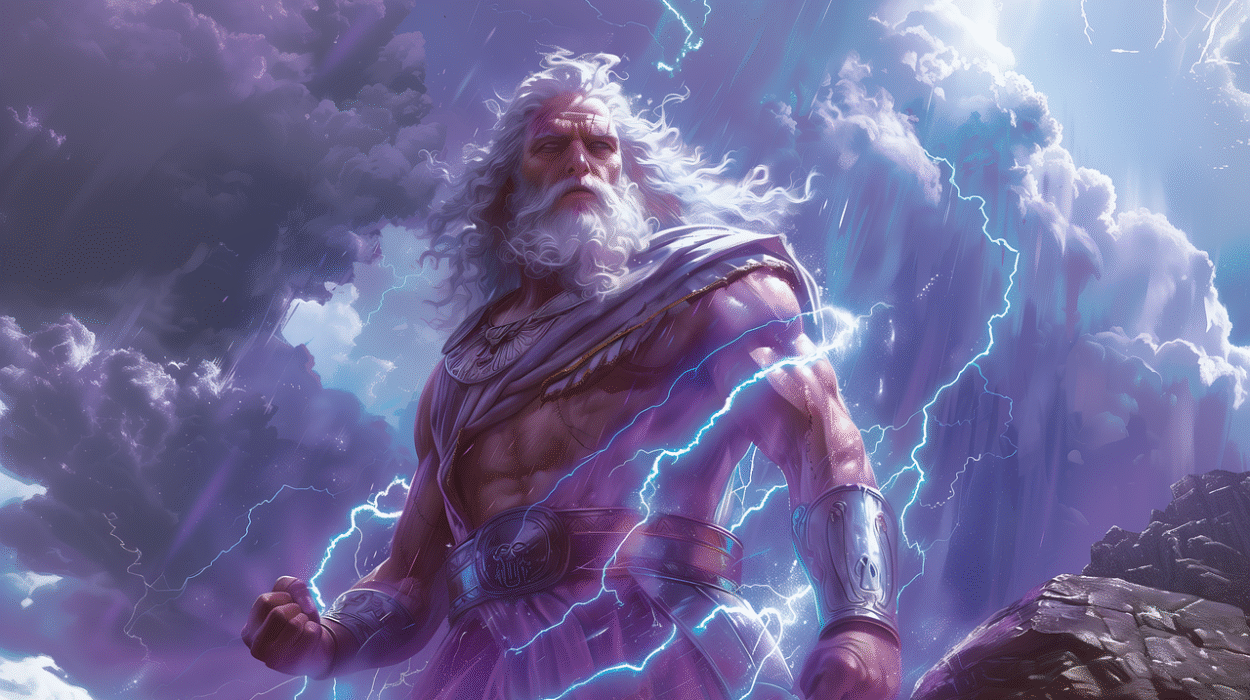
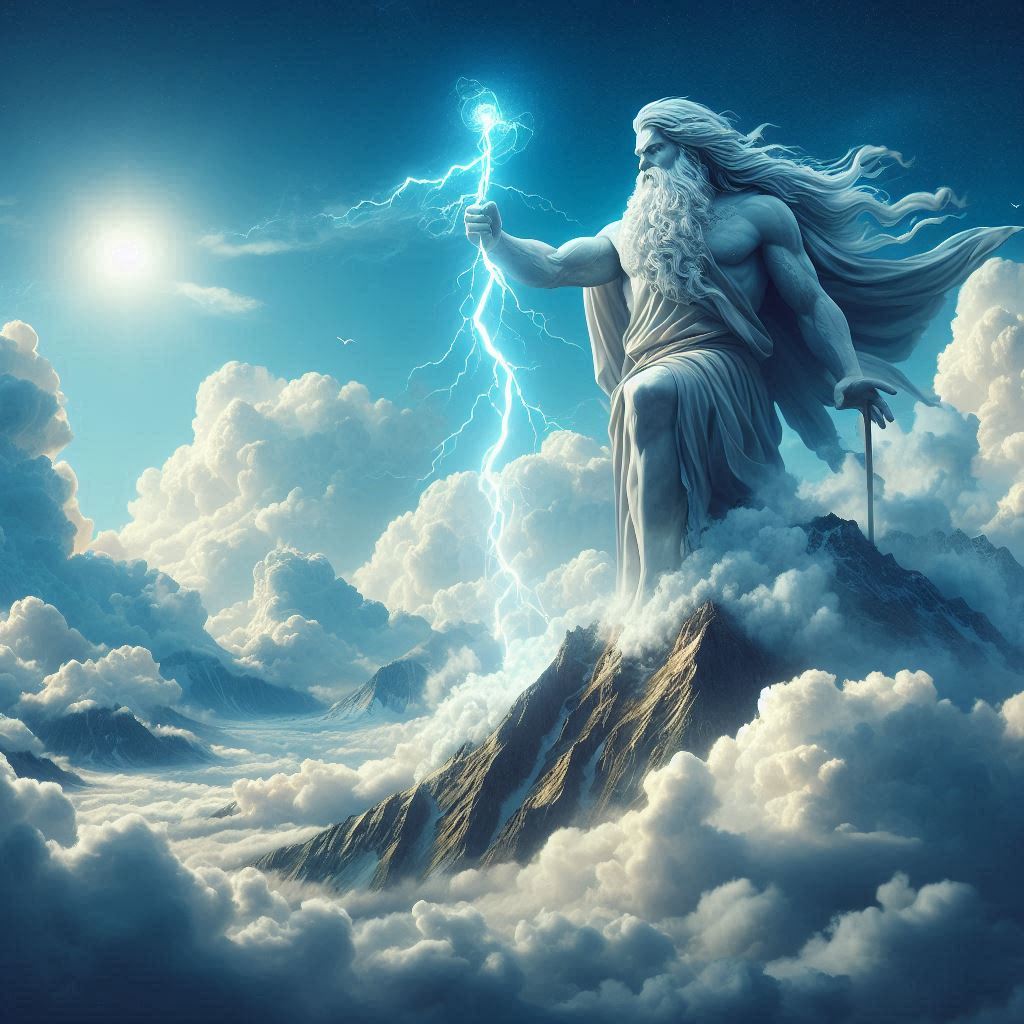
In Greek mythology, Zeus ruled from Mount Olympus as king of the gods. His authority extended over the heavens, weather, thunder, lightning, law, and justice.
According to myth, Zeus was the son of the Titans Cronus and Rhea. Cronus feared being overthrown by his children and swallowed them at birth. Zeus escaped this fate and eventually led a rebellion against the Titans.
After a tremendous cosmic conflict known as the Titanomachy, Zeus and his allies emerged victorious.
As ruler of Olympus, Zeus maintained order among gods and mortals alike. His thunderbolts became symbols of divine authority and immense power.
Greek myths often portray Zeus as both powerful and deeply human. He could be wise and protective, yet also impulsive and flawed. These characteristics helped make him one of mythology’s most memorable figures.
For the ancient Greeks, Zeus represented the ultimate authority governing both heaven and Earth.
Odin and the Wisdom of the Norse Gods
Far to the north, the Vikings told stories of a very different supreme deity.
Odin ruled the Norse pantheon and occupied a central place in Scandinavian mythology.
Unlike Zeus, Odin’s greatest strength was not brute force but wisdom.
Odin devoted himself to acquiring knowledge about the universe and fate. According to legend, he sacrificed one of his eyes in exchange for wisdom from a sacred well. He also hung himself from the cosmic tree Yggdrasil for nine days and nights to gain knowledge of magical runes.
As ruler of Asgard, Odin oversaw war, poetry, wisdom, magic, and death.
He was constantly preparing for Ragnarök, the prophesied end of the world. Even though Odin knew that many gods—including himself—were destined to die during this final battle, he continued gathering knowledge and warriors.
This combination of power, sacrifice, and wisdom made Odin one of mythology’s most fascinating deities.
Thor and the Strength of Thunder
Although Odin ruled the Norse gods, his son Thor became one of the most beloved figures in Scandinavian mythology.
Thor wielded the legendary hammer Mjölnir, one of the most powerful weapons in mythology.
The hammer could crush mountains, defeat giants, and return to Thor’s hand after being thrown.
Thor’s primary role was protecting gods and humans from dangerous forces, particularly the giants who threatened cosmic order.
Unlike the mysterious and intellectual Odin, Thor was straightforward, courageous, and immensely strong.
His stories often emphasize bravery, loyalty, and determination.
For ordinary Vikings facing harsh environments and constant dangers, Thor symbolized protection and strength.
Ra and the Sun of Ancient Egypt
The civilization of ancient Egypt flourished for thousands of years along the Nile River. Among its many gods, few were more important than Ra.
Ra was the sun god and one of the supreme deities of Egyptian religion.
Each day, Egyptians believed Ra sailed across the sky in a solar boat, bringing light to the world. Each night, he traveled through the underworld, battling forces of chaos before rising again at dawn.
This daily cycle symbolized renewal, order, and the triumph of life over darkness.
Because the Sun was essential for agriculture and survival, Ra occupied a position of extraordinary importance.
Egyptian kings often claimed special connections to Ra, reinforcing his status as a source of divine authority.
The power of Ra extended beyond the physical Sun. He represented creation itself and the sustaining force behind existence.
Osiris and the Kingdom of the Dead
Another major Egyptian deity was Osiris.
Osiris governed the afterlife, resurrection, and eternal life.
According to myth, Osiris was murdered by his jealous brother Set. His wife Isis gathered the pieces of his body and restored him through magical means.
Although Osiris did not return permanently to the world of the living, he became ruler of the underworld.
For ancient Egyptians, Osiris represented hope beyond death.
His story offered reassurance that life continued after physical existence ended.
Millions of Egyptians believed that after death they would face judgment before Osiris, making him one of the most powerful spiritual figures in their religion.
Isis and the Power of Magic
Few goddesses in world mythology achieved the prominence of Isis.
Isis was associated with motherhood, healing, protection, wisdom, and magic.
Her devotion to Osiris and her efforts to restore him became one of Egypt’s most beloved stories.
Over time, the worship of Isis spread far beyond Egypt. Temples dedicated to her appeared across the Mediterranean world.
Many ancient people believed her magical abilities surpassed those of nearly any other deity.
Her influence endured for centuries and made her one of the most powerful female figures in mythology.
Shiva and the Cosmic Dance
In Hindu mythology, power often exists on a cosmic scale.
Among the most important deities is Shiva.
Shiva forms part of the Trimurti, a concept involving creation, preservation, and destruction.
Shiva’s role is often associated with transformation and destruction, but these ideas should not be understood as purely negative.
In Hindu philosophy, destruction allows renewal and rebirth.
One of Shiva’s most famous forms is Nataraja, the Lord of the Dance. His cosmic dance symbolizes the continual creation, preservation, and transformation of the universe.
Shiva embodies immense spiritual power, ascetic discipline, and cosmic authority.
His influence extends far beyond mythology into living religious traditions followed by millions today.
Vishnu and the Preserver of the Universe
Another central figure in Hindu tradition is Vishnu.
Vishnu is regarded as the preserver and protector of the universe.
When cosmic balance becomes threatened, Vishnu descends into the world through various avatars.
Among the most famous avatars are Rama and Krishna.
Through these manifestations, Vishnu restores order and righteousness.
His role emphasizes protection, compassion, and divine intervention.
Many Hindu traditions regard Vishnu as the supreme reality underlying existence itself.
His influence has shaped religious thought, literature, philosophy, and culture across South Asia for centuries.
Brahma and the Creator
Completing the Trimurti is Brahma.
Brahma is traditionally associated with creation.
According to Hindu cosmology, Brahma brings the universe into existence at the beginning of each cosmic cycle.
Although Brahma plays a crucial role in creation, he is less widely worshipped today than Vishnu or Shiva.
Nevertheless, his mythological significance remains immense.
Creation itself represents one of the highest forms of power imaginable, placing Brahma among the most influential divine figures in world mythology.
Indra and the Warrior King
Before the rise of later Hindu traditions, Indra occupied a dominant position in Vedic mythology.
Indra was a storm god, warrior, and king of the gods.
His most famous achievement involved defeating a great serpent or dragon associated with chaos and drought.
By defeating this monster, Indra released life-giving waters and restored order.
This victory made him a heroic symbol of courage and divine strength.
Many early hymns celebrate Indra as the greatest and most powerful deity of his age.
Amaterasu and the Light of Japan
In Japanese mythology, one of the most revered deities is Amaterasu.
Amaterasu is the goddess of the Sun and a central figure in Shinto tradition.
According to myth, the Japanese imperial family traces its ancestry to her.
One of the most famous stories tells how Amaterasu withdrew into a cave after a conflict with her brother. Her absence plunged the world into darkness.
Only through the efforts of other gods was she persuaded to emerge, restoring light to creation.
As the source of sunlight and life, Amaterasu holds an exceptionally important position in Japanese mythology.
Susanoo and the Storms
The brother of Amaterasu, Susanoo, represents another powerful figure.
Susanoo governs storms and the sea.
Though often portrayed as reckless and unpredictable, he also performs heroic deeds.
His most famous achievement involves slaying a giant eight-headed serpent.
This victory demonstrated his immense strength and secured his place among Japan’s greatest mythological heroes.
Anu and the Sky of Mesopotamia
The civilizations of ancient Mesopotamia created some of humanity’s earliest recorded myths.
One of their supreme deities was Anu.
Anu ruled the heavens and occupied the highest level of divine authority.
Although later myths often focused on more active gods, Anu remained a symbol of ultimate cosmic power.
His authority shaped the divine hierarchy of Mesopotamian religion and influenced neighboring cultures.
Enlil and Divine Authority
Another major Mesopotamian deity was Enlil.
Enlil controlled wind, storms, and royal power.
Ancient Mesopotamians regarded him as one of the most influential forces in the universe.
Kings often claimed divine approval from Enlil to legitimize their rule.
His power affected both nature and human society, making him a central figure in Mesopotamian thought.
Marduk and the Defeat of Chaos
In Babylonian mythology, Marduk rose to supreme status.
The Babylonian creation epic describes how Marduk defeated the primordial chaos monster Tiamat.
After his victory, he used parts of her body to create the ordered universe.
This act transformed Marduk into the ruler of gods and humanity.
His triumph over chaos became a powerful symbol of cosmic order and civilization.
Quetzalcoatl and the Feathered Serpent
Across the Atlantic, the civilizations of Mesoamerica developed rich mythological traditions.
One of the most important deities was Quetzalcoatl.
Quetzalcoatl was associated with wisdom, knowledge, creation, wind, and culture.
Unlike many war-oriented gods, Quetzalcoatl often represented learning and civilization.
Stories credited him with helping humanity and contributing to the creation of the world.
His influence extended across multiple Mesoamerican cultures over many centuries.
Huitzilopochtli and the Sun of the Aztecs
Among the Aztecs, Huitzilopochtli held extraordinary importance.
He was both a solar deity and a god of war.
According to Aztec beliefs, cosmic stability depended upon maintaining the strength of the Sun.
Huitzilopochtli’s battles against darkness reflected the ongoing struggle required to sustain the universe.
His role made him one of the most powerful and revered figures in Aztec religion.
The Jade Emperor of China
Chinese mythology contains a vast heavenly bureaucracy governed by the Jade Emperor.
The Jade Emperor rules heaven, Earth, and the celestial realm.
His authority extends over gods, spirits, and supernatural beings.
Unlike warrior gods associated with storms and battles, the Jade Emperor embodies order, governance, and cosmic administration.
His role reflects the importance of organized authority within traditional Chinese culture.
The Great Spirit in Indigenous Traditions
Many Indigenous cultures around the world possess traditions centered on a supreme spiritual force often referred to by terms translated as the Great Spirit.
These beliefs vary greatly among cultures and should not be treated as a single mythology.
However, many traditions describe a powerful creator associated with life, nature, harmony, and the interconnectedness of all living things.
Rather than emphasizing domination or warfare, these spiritual concepts often focus on balance and respect for the natural world.
Their influence remains profound within the cultures that preserve them.
The Power of Creation Gods
Across many mythologies, creator gods occupy the highest level of power.
Creation represents the ultimate divine act.
A god capable of bringing the universe into existence transcends ordinary concepts of strength.
Whether it is Brahma creating the cosmos, Ra generating life through sunlight, or creator figures found in countless traditions, these deities embody humanity’s attempt to explain existence itself.
Their power extends beyond storms, battles, or kingdoms.
They govern the origin of reality.
Gods of Death and the Afterlife
Power also emerges through control over death.
Every civilization has confronted mortality.
As a result, gods associated with death often hold tremendous authority.
Osiris, for example, ruled the Egyptian afterlife.
Many other mythologies feature deities who guide souls, judge the dead, or govern spiritual realms.
Because death affects all people, these gods occupy unique positions within their mythological systems.
Their power is universal and unavoidable.
Why Powerful Gods Resemble Human Concerns
One fascinating aspect of mythology is that powerful gods often reflect the priorities of the societies that created them.
Agricultural civilizations frequently elevated sun gods and fertility deities.
Warrior cultures celebrated gods of battle and strength.
Maritime societies honored sea gods.
Civilizations concerned with justice emphasized divine rulers and lawgivers.
In many ways, mythology acts as a mirror.
The gods reveal what people feared, admired, and valued most.
Studying powerful deities therefore helps us understand not only ancient religions but also the cultures that imagined them.
The Enduring Legacy of Mythological Gods
Although many ancient religions are no longer practiced in their original forms, their gods continue to influence modern culture.
Literature, art, film, music, and popular entertainment regularly draw inspiration from mythological figures.
The names of planets, constellations, companies, and even days of the week preserve echoes of ancient deities.
Modern audiences continue to be fascinated by Zeus, Odin, Thor, Shiva, Ra, and countless others.
Their stories endure because they address timeless themes: power, wisdom, sacrifice, courage, creation, destruction, and destiny.
These themes remain meaningful regardless of era or culture.
Conclusion
The most powerful gods in world mythology represent far more than supernatural beings. They are symbols of humanity’s efforts to understand the universe, explain natural forces, confront mortality, and define the values that shape civilizations.
From Zeus ruling the skies of Greece to Odin seeking wisdom among the Norse gods, from Ra guiding the Sun across ancient Egypt to Shiva performing the cosmic dance of transformation, these figures reveal the extraordinary creativity of the human imagination. Some governed thunder and storms. Others controlled life, death, creation, or destiny itself. Their powers reflected the hopes, fears, and beliefs of the cultures that worshipped them.
While myths differ across continents and centuries, they share a common purpose. They help people make sense of a vast and often mysterious world. The gods who emerged from these stories became embodiments of cosmic forces, moral lessons, and spiritual aspirations.
Even today, thousands of years after many of these myths first appeared, their influence remains alive. Their stories continue to inspire books, films, art, scholarship, and religious traditions. They remind us that throughout history, humans have always looked beyond the visible world, searching for meaning in the stars, the storms, the seas, and the mysteries of existence.
The most powerful gods in mythology are therefore not merely characters from ancient tales. They are enduring symbols of humanity’s quest to understand the universe and our place within it—a quest that continues to this day.