Around 3,200 years ago, the ancient world experienced one of the greatest upheavals in human history. Powerful kingdoms that had flourished for centuries suddenly collapsed. Magnificent cities were burned to the ground. Long-distance trade networks disappeared. Palaces were abandoned, writing systems vanished in some regions, and entire civilizations entered periods of decline that lasted for generations.
For centuries, historians struggled to understand what had caused this dramatic transformation. Then they turned to ancient Egyptian inscriptions, where they found repeated references to mysterious enemies known today as the Sea Peoples.
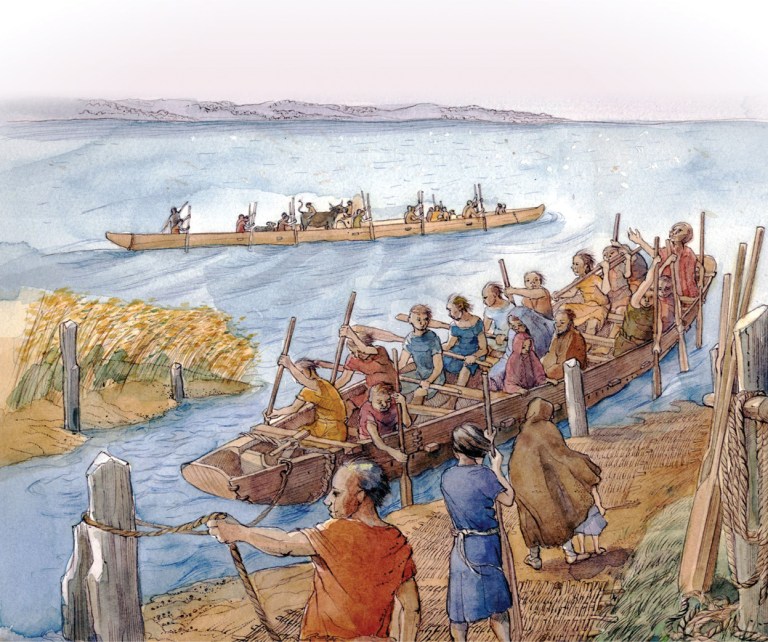
According to Egyptian pharaohs, these newcomers arrived by land and sea with warriors, ships, families, wagons, and determination. They attacked kingdoms across the eastern Mediterranean, leaving destruction in their wake. Egyptian records describe fierce battles against these invaders and celebrate the pharaohs who claimed to have defeated them.
But who were the Sea Peoples?
Were they ruthless pirates who terrorized ancient coastlines? Were they desperate refugees fleeing famine, drought, earthquakes, or political collapse? Were they mercenary soldiers searching for new opportunities after the collapse of old kingdoms? Or were they something entirely different—a loose coalition of migrating peoples whose movements reshaped the ancient Mediterranean?
Despite more than a century of archaeological research, no single answer has solved the mystery.
Unlike the Egyptians or Hittites, the Sea Peoples left no known written records explaining who they were or where they came from. Almost everything we know comes from the civilizations that fought against them. This creates an enormous challenge because ancient kings often exaggerated their victories and portrayed enemies in ways that supported political propaganda.
Today, archaeologists combine ancient texts with excavations, climate studies, DNA research, and scientific dating methods to reconstruct one of history’s greatest mysteries.
The story of the Sea Peoples is not simply about war. It is also a story about migration, climate change, economic collapse, resilience, and the interconnected nature of ancient civilizations. It reminds us that even the most powerful empires can be vulnerable when multiple crises strike at the same time.
The World Before the Collapse
To understand the Sea Peoples, we must first understand the world they entered.
During the Late Bronze Age, roughly between 1600 and 1200 BCE, the eastern Mediterranean was one of the most advanced regions on Earth.
Great powers dominated the landscape.
Egypt ruled vast territories along the Nile and parts of the Levant.
The Hittite Empire controlled much of Anatolia, modern-day Turkey.
The Mycenaean kingdoms flourished in Greece.
Powerful cities such as Ugarit became thriving centers of international trade.
Merchant ships crossed the Mediterranean carrying copper, tin, gold, ivory, textiles, pottery, wine, olive oil, spices, and luxury goods.
Kings exchanged diplomatic letters.
Royal families arranged international marriages.
Trade connected distant civilizations into an interconnected economic system.
Although these kingdoms sometimes fought one another, they also depended heavily on mutual trade.
It was one of history’s earliest examples of an international world economy.
A Fragile Network
At first glance, the Bronze Age world appeared stable and prosperous.
However, its success depended upon delicate connections.
Bronze, the metal that defined the age, required copper mixed with tin.
Copper and tin usually came from different regions.
This meant kingdoms relied on extensive trade routes to obtain essential materials.
If shipping lanes were disrupted, bronze production suffered.
If harvests failed, cities dependent upon imported grain faced shortages.
If one kingdom collapsed, neighboring states often experienced economic consequences.
The system worked remarkably well—until multiple problems struck simultaneously.
The Earliest References to the Sea Peoples
The Sea Peoples first appear in Egyptian records during the reign of Pharaoh Merneptah in the late thirteenth century BCE.
His inscriptions describe battles against foreign groups allied with Libya.
Among these groups were peoples identified by names such as the Sherden, Shekelesh, Ekwesh, Lukka, and Teresh.
Several decades later, Egyptian inscriptions from Pharaoh Ramesses III provide the most famous descriptions.
According to these records, numerous foreign peoples attacked Egypt by both land and sea.
The inscriptions claim these invaders had already destroyed powerful kingdoms before reaching Egypt.
Temple reliefs at Medinet Habu depict dramatic naval battles.
Egyptian archers fire arrows from ships while enemy vessels become entangled and overturned.
Captives appear wearing distinctive feathered headdresses that have become closely associated with the Sea Peoples.
These images remain among the most important historical sources for understanding the mystery.
Why Are They Called the Sea Peoples?
Interestingly, the term “Sea Peoples” is a modern invention.
Ancient Egyptians referred to several different groups by individual names.
Modern historians grouped these peoples together because many appeared in Egyptian records connected with attacks arriving by sea.
There is no evidence that these groups considered themselves one nation or shared a common identity.
Instead, they may have represented multiple communities with different languages, cultures, and origins.
This distinction is important.
Rather than imagining a single enormous invading army, many archaeologists view the Sea Peoples as a coalition of different groups moving across the Mediterranean during a time of widespread instability.
The Mysterious Tribes
Egyptian inscriptions mention several names repeatedly.
Among them are the Sherden, Peleset, Shekelesh, Denyen, Tjeker, Weshesh, Teresh, Lukka, and Ekwesh.
Unfortunately, these names do not provide clear answers.
Scholars continue debating where each group originated.
Some may have come from western Anatolia.
Others may have originated in the Aegean world.
Still others could have come from islands scattered across the Mediterranean.
Some names resemble those of later peoples known from Greek traditions, but these identifications remain uncertain.
The mystery persists because ancient spellings often changed between languages.
Did They Come from Greece?
One long-standing theory connects some Sea Peoples with the Mycenaean civilization of Greece.
Around the same time that the Sea Peoples appeared, many Mycenaean palaces experienced destruction.
Some archaeologists suggest displaced Mycenaean populations may have migrated across the Mediterranean after their own kingdoms collapsed.
Certain pottery styles, weapons, and cultural similarities support limited connections.
However, the evidence does not indicate that all Sea Peoples came from Greece.
Instead, some groups may have included former Mycenaean communities among many others.
Connections to Anatolia
Western Anatolia also appears significant.
The Lukka, for example, are often associated with regions in southwestern Anatolia because Hittite texts mention peoples bearing similar names.
This area experienced political instability during the Late Bronze Age.
If governments weakened, local populations may have sought new lands elsewhere.
Some researchers believe western Anatolia became one important source of migration during this turbulent era.
Climate Change and Drought
One of the most influential modern explanations involves climate change.
Scientific studies examining pollen, lake sediments, cave formations, and other environmental evidence indicate that parts of the eastern Mediterranean experienced prolonged drought around the end of the Bronze Age.
Reduced rainfall would have lowered crop production.
Food shortages could have spread rapidly.
Livestock would suffer.
Communities facing repeated harvest failures might have abandoned their homes in search of more fertile land.
Migration caused by environmental stress has occurred throughout history.
Rather than viewing the Sea Peoples simply as invaders, some scholars believe they included climate refugees escaping increasingly difficult living conditions.
Earthquakes and Natural Disasters
Another theory suggests earthquakes contributed to regional instability.
The eastern Mediterranean lies within an active seismic zone.
Some archaeologists proposed an “earthquake storm” affecting numerous cities over several decades.
Destroyed buildings, damaged fortifications, and disrupted infrastructure would have weakened kingdoms already facing other challenges.
Although earthquakes undoubtedly occurred, most researchers believe they cannot alone explain the widespread collapse.
Instead, they may have added another layer of difficulty during an already troubled period.
Economic Collapse
Trade formed the backbone of Bronze Age civilization.
When trade declined, economies suffered.
Copper shipments decreased.
Tin became scarce.
Luxury industries collapsed.
Palaces lost income.
Workers lost employment.
Merchants abandoned dangerous trade routes.
Economic crises often produce political instability.
Governments struggle to maintain authority.
Military funding declines.
Food distribution becomes less reliable.
Communities facing unemployment and hunger sometimes migrate or rebel.
The Sea Peoples may have emerged partly from this broader economic breakdown.
Internal Rebellions
Modern historians increasingly emphasize internal problems rather than outside invasion alone.
Large kingdoms often contained dissatisfied populations.
Heavy taxation, political corruption, competition among elites, and local conflicts could weaken governments.
When central authority declined, smaller communities gained opportunities to challenge existing rulers.
Some groups labeled as Sea Peoples may have included former subjects rebelling against established kingdoms.
Rather than outsiders alone, they may have represented people already living within collapsing political systems.
Raiders or Refugees?
Perhaps the most fascinating question concerns identity.
Were the Sea Peoples violent raiders?
Certainly, archaeological evidence confirms destruction at numerous sites.
Ancient texts describe warfare.
However, Egyptian records also depict women, children, and ox-drawn wagons traveling alongside warriors.
This detail is extremely important.
Pirates rarely travel with entire families.
Migrating populations often do.
Many researchers therefore believe at least some Sea Peoples represented communities seeking permanent settlement rather than temporary plunder.
Their movement may have combined warfare, migration, and resettlement.
The line between refugee and invader may not have been clear.
The Battle Against Ramesses III
The most famous confrontation occurred during the reign of Ramesses III around 1177 BCE.
Egyptian inscriptions describe foreign peoples advancing toward Egypt after devastating neighboring lands.
Ramesses prepared both land and naval defenses.
The naval battle depicted at Medinet Habu remains among history’s earliest detailed illustrations of sea warfare.
Egyptian ships confronted enemy vessels in close combat.
Archers filled the sky with arrows.
Enemy ships became trapped and overturned.
The inscriptions claim Egypt achieved complete victory.
Like many royal inscriptions, these accounts likely exaggerate success.
Nevertheless, Egypt appears to have survived the crisis better than many neighboring kingdoms.
The Fall of the Hittite Empire
One of the greatest casualties of the Late Bronze Age collapse was the Hittite Empire.
Its capital, Hattusa, was abandoned.
Imperial administration disappeared.
Trade networks collapsed.
Written records ended.
The exact causes remain debated.
The Sea Peoples may have contributed.
However, famine, internal political struggles, economic decline, and regional conflict probably played important roles as well.
Rather than a single catastrophic invasion, historians increasingly favor explanations involving multiple interconnected crises.
The Destruction of Ugarit
Perhaps no archaeological discovery illustrates the suddenness of the collapse better than Ugarit.
Before its destruction, this wealthy coastal city maintained diplomatic correspondence with numerous kingdoms.
One surviving letter reveals desperate pleas for military assistance.
The city reported enemy ships approaching while its own forces were absent.
Shortly afterward, Ugarit disappeared forever.
Excavations uncovered widespread destruction.
The city was never rebuilt to its former importance.
Its final letters provide haunting glimpses into a civilization facing disaster without understanding its full scale.
Did the Sea Peoples Cause the Bronze Age Collapse?
For many years, textbooks suggested the Sea Peoples single-handedly destroyed Bronze Age civilization.
Today, most historians reject such a simple explanation.
Instead, the Sea Peoples appear to have been one factor within a much larger crisis.
Climate change reduced harvests.
Economic systems weakened.
Trade declined.
Political instability spread.
Earthquakes damaged cities.
Internal rebellions erupted.
Migration increased.
The Sea Peoples likely accelerated ongoing collapse rather than initiating it entirely.
This interpretation better matches archaeological evidence showing regional differences rather than one uniform catastrophe.
Archaeological Evidence
Unlike legends, archaeology relies on physical evidence.
Destroyed cities show signs of fire.
Abandoned settlements reveal population shifts.
Pottery styles indicate cultural change.
Weapons reveal military developments.
Animal bones provide clues about diet.
Scientific dating establishes chronological sequences.
Interestingly, archaeological evidence varies greatly between regions.
Some cities experienced violent destruction.
Others declined gradually.
Still others survived with relatively little damage.
This diversity suggests no single explanation fits every location.
The Philistines and the Sea Peoples
One group receives particular attention.
Many scholars associate the Peleset mentioned in Egyptian texts with the Philistines known from later historical and biblical sources.
Archaeological evidence indicates that Philistine culture emerged along the southern coast of the Levant shortly after the Sea Peoples appeared.
Early Philistine pottery shows similarities to Aegean traditions.
However, the Philistines quickly developed their own distinct culture influenced by local populations.
Rather than replacing existing societies entirely, they became part of the diverse cultural landscape of the eastern Mediterranean.
Advances in Ancient DNA
Modern genetic research is providing exciting new information.
Ancient DNA studies from Philistine cemeteries suggest limited genetic input from populations with southern European ancestry during the early Iron Age.
Interestingly, this foreign genetic signature appears relatively small and decreases over subsequent generations.
These findings support the idea that migrating groups mixed with local populations rather than replacing them.
They also illustrate how archaeology and genetics complement one another.
Were They the First Global Invaders?
Calling the Sea Peoples the “first global invaders” is dramatic but somewhat misleading.
They certainly operated across an unusually broad geographic region.
Their movements affected Anatolia, the Levant, Cyprus, Egypt, and perhaps Greece.
However, the ancient world was not “global” in the modern sense.
Instead, the Sea Peoples may represent one of history’s earliest examples of interconnected migration across multiple civilizations.
Their story demonstrates how crises in one region can influence societies hundreds of kilometers away.
Lessons from the Sea Peoples
The mystery of the Sea Peoples offers remarkable lessons.
Civilizations rarely collapse because of one single event.
Instead, multiple pressures often interact.
Environmental change can influence food supplies.
Economic problems weaken governments.
Political instability encourages migration.
Conflict disrupts trade.
Social tensions increase.
Eventually, systems become too fragile to withstand additional shocks.
This pattern appears repeatedly throughout history.
Studying the Sea Peoples helps historians better understand how complex societies respond to periods of extraordinary stress.
Why the Mystery Endures
Despite remarkable scientific advances, many questions remain unanswered.
We still cannot identify every Sea People with certainty.
Their original homelands remain debated.
Their languages are largely unknown.
We possess almost no written records created by the migrants themselves.
Instead, nearly everything comes from civilizations that viewed them as enemies.
Future archaeological discoveries may transform our understanding.
New inscriptions, settlements, shipwrecks, or DNA evidence could answer questions that have puzzled historians for generations.
Until then, the Sea Peoples remain among archaeology’s greatest enigmas.
Conclusion
The story of the Sea Peoples is one of history’s most fascinating unsolved mysteries. Emerging during the turbulent years at the end of the Bronze Age, these mysterious groups appeared in Egyptian inscriptions as formidable enemies who arrived by both land and sea. For centuries they were portrayed simply as violent invaders responsible for the destruction of powerful kingdoms. Modern archaeology, however, paints a far more complex picture.
Evidence increasingly suggests that the Sea Peoples were not a single nation but a collection of diverse communities moving through an ancient world already under immense pressure. Climate change, prolonged drought, economic disruption, failing trade networks, political instability, earthquakes, migration, and warfare all combined to create one of the greatest periods of transformation in ancient history. In this context, the Sea Peoples may have been raiders in some places, refugees in others, mercenaries seeking new opportunities, or settlers searching for permanent homes. Different groups likely had different motivations.
Their story reminds us that history is rarely simple. Civilizations rise and fall through the interaction of many forces rather than one dramatic event. The collapse of the Bronze Age world was not caused by a single invasion but by a complex web of interconnected crises that reshaped the Mediterranean forever.
More than three thousand years later, the Sea Peoples continue to capture our imagination because they stand at the crossroads of archaeology, history, climate science, and human migration. Every new excavation, every ancient DNA study, and every deciphered inscription brings us a little closer to understanding who they really were. Yet some mysteries remain stubbornly beyond our reach. Perhaps that is why the Sea Peoples continue to fascinate us—not only because they helped transform the ancient world, but because they remind us that history still holds secrets waiting beneath the soil, hidden for future generations to uncover.