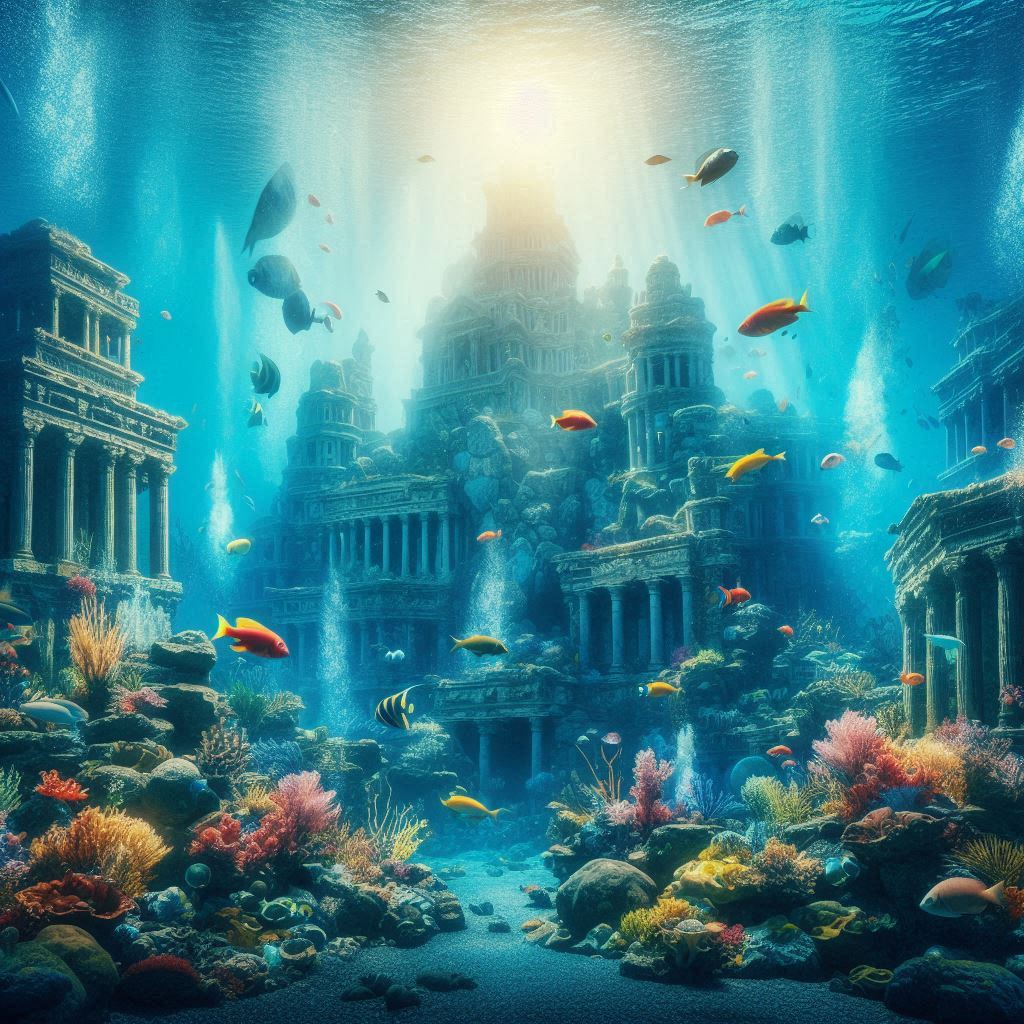
Few stories in human history have captured the imagination quite like Atlantis. For more than two thousand years, people have searched for this mysterious lost civilization. Some believe it was a magnificent island kingdom that disappeared beneath the sea in a single terrible day. Others think it was merely a philosophical tale invented to teach a lesson. Still others wonder whether fragments of real history became woven into an unforgettable legend.
Books have been written about it. Explorers have searched for it. Filmmakers have imagined it. Countless theories have placed Atlantis everywhere from the Atlantic Ocean and the Mediterranean Sea to Antarctica, the Caribbean, and even beneath the Sahara Desert.
Yet despite centuries of searching, one question remains unanswered:
Did Atlantis ever truly exist?
The answer is far more fascinating than a simple yes or no. It is a story that blends ancient philosophy, archaeology, geology, history, and humanity’s enduring fascination with lost worlds.
The Birth of the Atlantis Story
The story of Atlantis first appeared in the writings of the ancient Greek philosopher Plato around 360 BCE.
Plato described Atlantis in two of his dialogues, Timaeus and Critias. These were philosophical works rather than history books. In them, Plato used conversations between characters to explore ideas about politics, morality, and the ideal society.
According to the story, an Egyptian priest told the Athenian lawmaker Solon about a powerful island civilization that had existed roughly 9,000 years before Solon’s own time.
Atlantis was said to lie beyond the “Pillars of Heracles,” the ancient Greek name generally associated with the Strait of Gibraltar, where the Mediterranean Sea meets the Atlantic Ocean.
The island was described as enormous, wealthy, and technologically advanced for its time. Its people built magnificent cities, cultivated fertile farmland, possessed abundant natural resources, and commanded a mighty navy.
At the heart of Atlantis stood an extraordinary capital city.
A City Like No Other
Plato painted an unforgettable picture of the Atlantean capital.
The city consisted of alternating rings of land and water connected by bridges and canals. Ships could sail directly into its center, where stood magnificent temples, palaces, gardens, marketplaces, and harbors.
One of the grandest buildings was a temple dedicated to Poseidon, the Greek god of the sea. According to Plato, the temple was decorated with precious metals, including gold, silver, and a mysterious metal called orichalcum, whose exact identity remains uncertain today.
The surrounding plains were carefully organized with irrigation canals and productive farms.
The city appeared to represent perfect planning, engineering, and prosperity.
Whether real or imagined, Plato’s description remains one of the most vivid accounts of a lost civilization ever written.
The Rise and Fall of Atlantis
According to Plato, Atlantis began as a virtuous society.
Its rulers governed wisely, respecting both divine laws and moral principles.
Over time, however, wealth and power corrupted the Atlanteans.
Greed replaced wisdom.
Ambition replaced justice.
Seeking to conquer other nations, Atlantis expanded aggressively.
Only ancient Athens, according to Plato’s story, resisted the Atlantean invasion.
Then came disaster.
The gods, angered by the moral decline of Atlantis, decided to punish the civilization.
Plato wrote that in a single day and night of catastrophic earthquakes and floods, Atlantis sank beneath the sea.
The once-great island vanished forever.
This dramatic ending has inspired generations of writers and treasure hunters.
Was Plato Describing Real History?
The central question has puzzled scholars for centuries.
Did Plato intend readers to believe Atlantis was a real place?
Many historians think the answer is probably no.
Plato often used fictional stories to illustrate philosophical ideas.
In his dialogues, the tale of Atlantis contrasts two societies.
Atlantis symbolizes a wealthy, powerful nation corrupted by pride and imperial ambition.
Ancient Athens represents virtue, discipline, and justice.
Viewed this way, Atlantis functions much like a moral lesson rather than a historical account.
Most classical scholars conclude that Plato likely created the story—or at least greatly reshaped older traditions—to support his philosophical arguments.
However, the debate does not end there.
Could the Legend Have Been Inspired by Real Events?
Although most researchers doubt Atlantis existed exactly as Plato described, many believe the story may contain echoes of real historical disasters.
Throughout history, entire cities have been destroyed by earthquakes, volcanic eruptions, tsunamis, floods, and rising seas.
Ancient people often preserved memories of such catastrophes through myths and oral traditions.
Over generations, factual events can become embellished, combined with other stories, and transformed into legends.
Some scientists think this process may explain Atlantis.
Rather than representing a single lost civilization, Atlantis could be a blend of several historical events remembered across centuries.
The Minoan Civilization
One of the most widely discussed possibilities involves the Minoans.
The Minoan civilization flourished on the island of Crete and nearby islands in the eastern Mediterranean between roughly 3000 BCE and 1100 BCE.
The Minoans built impressive palaces, developed advanced art, traded across the Mediterranean, and possessed sophisticated engineering.
Around 1600 BCE, the nearby volcanic island of Thera, known today as Santorini, experienced one of the largest volcanic eruptions in human history.
The eruption blasted enormous quantities of ash into the atmosphere, triggered powerful earthquakes, and generated tsunamis that struck nearby coastlines.
Many Minoan settlements suffered severe damage.
Although the eruption did not immediately destroy the Minoan civilization, it likely weakened it significantly, making it more vulnerable to later invasions and decline.
Some researchers suggest that stories of this catastrophic event may have survived in oral traditions and eventually inspired Plato’s Atlantis.
However, important differences remain.
The Minoan civilization existed thousands of years later than Plato’s claimed date for Atlantis, and its location lies inside rather than beyond the Strait of Gibraltar.
The Santorini Connection
The island of Santorini itself often appears in Atlantis theories.
Today, visitors can see the island’s dramatic crescent shape surrounding a flooded volcanic caldera.
Beneath layers of volcanic ash lies the remarkably preserved Bronze Age town of Akrotiri.
Excavations have revealed multi-story buildings, colorful frescoes, advanced plumbing systems, and evidence of a thriving maritime society.
The volcanic eruption buried the settlement beneath ash, preserving it in a way that has sometimes been compared to Pompeii.
The destruction of Akrotiri demonstrates that advanced ancient communities could indeed vanish suddenly because of natural disasters.
Even so, archaeological evidence does not support the idea that Akrotiri was Plato’s Atlantis.
The Search Across the Atlantic
Because Plato located Atlantis beyond the Pillars of Heracles, many people have searched the Atlantic Ocean.
Some early explorers even wondered whether newly discovered lands in the Americas might somehow be connected to Atlantis.
Later theories proposed submerged islands in the Atlantic.
Modern geology, however, presents a major challenge to these ideas.
Earth’s continents move through plate tectonics over millions of years, but entire continent-sized landmasses do not simply sink beneath the ocean within historical times.
The Atlantic Ocean floor has been extensively studied using sonar mapping, deep-sea exploration, and satellite observations.
No evidence has been found for a lost continent matching Plato’s description.
Small volcanic islands can certainly appear and disappear over geological timescales, but no known geological process supports the sudden sinking of a vast advanced island civilization in the middle of the Atlantic during human history.
Atlantis in Antarctica?
One of the more unusual theories claims Atlantis lies beneath Antarctica’s ice.
This idea gained popularity through speculative books rather than scientific research.
Modern geology clearly shows that Antarctica has been covered by large ice sheets for millions of years, long before humans evolved.
There is no evidence that an advanced human civilization once flourished beneath its ice.
While Antarctica contains fascinating geological features hidden beneath glaciers, these formed through natural geological processes.
Scientific evidence does not support an Antarctic Atlantis.
Could Atlantis Be in the Sahara?
Some researchers have suggested that Atlantis may have been located in North Africa.
Attention often focuses on the Richat Structure in Mauritania, sometimes called the “Eye of the Sahara.”
This enormous circular geological formation resembles concentric rings when viewed from space, leading some people to compare it with Plato’s description of Atlantis.
However, geologists understand the Richat Structure to be a natural geological formation created through uplift and erosion over millions of years.
No archaeological evidence indicates that it once housed a lost advanced civilization matching Plato’s account.
Although visually striking, similarity in shape alone does not establish historical connections.
The Role of Archaeology
Archaeology has transformed our understanding of ancient civilizations.
Entire cities once thought mythical, such as Troy, have been excavated after centuries of doubt.
Because of discoveries like these, many people wonder whether Atlantis might someday be found as well.
Archaeologists remain open to new evidence.
If convincing artifacts, inscriptions, buildings, or settlements matching Plato’s description were discovered, the scientific community would carefully investigate them.
So far, however, no archaeological site has provided persuasive evidence for Atlantis as described in Plato’s writings.
Many supposed discoveries have later proven to be natural formations, misunderstood ruins, or exaggerated claims.
Science depends on evidence rather than speculation.
Why Do Lost Civilizations Fascinate Us?
The enduring popularity of Atlantis reveals something about human nature.
Lost civilizations invite us to imagine forgotten worlds filled with mystery and possibility.
They raise questions about the fragility of human societies.
Can even great civilizations disappear?
History suggests they can.
Ancient Egypt declined.
The Maya experienced periods of collapse.
The Roman Empire fragmented.
The Indus Valley Civilization faded.
Many once-powerful societies disappeared through combinations of environmental change, warfare, economic decline, disease, and political instability.
Atlantis symbolizes this universal truth.
No civilization, however advanced, is guaranteed to last forever.
Separating Science from Pseudoscience
Because Atlantis is so mysterious, it has attracted countless extraordinary claims.
Some writers have suggested Atlanteans possessed advanced machines, flying vehicles, crystal power sources, or even extraterrestrial technology.
Others claim Atlantis explains every ancient monument on Earth.
These ideas may make exciting stories, but they lack credible scientific evidence.
Archaeologists evaluate claims using excavation, dating methods, material analysis, historical records, and peer-reviewed research.
Extraordinary claims require extraordinary evidence.
So far, none of the more sensational Atlantis theories have met that standard.
Scientific skepticism does not mean rejecting new ideas automatically.
It means asking whether the available evidence actually supports them.
What Modern Science Says
Today, most historians, archaeologists, and classicists agree on several important points.
Plato is the earliest known source describing Atlantis.
No earlier surviving texts mention the civilization.
No archaeological evidence confirms the existence of Atlantis exactly as Plato described it.
Several real historical disasters, particularly the eruption of Thera and the decline of the Minoan civilization, may have contributed ideas that resemble parts of the legend.
The story continues to hold enormous cultural importance regardless of whether it records actual history.
In other words, Atlantis remains historically unverified but intellectually fascinating.
Atlantis in Popular Culture
Even without scientific confirmation, Atlantis has become one of the world’s most recognizable legends.
It appears in novels, films, television series, comic books, video games, and documentaries.
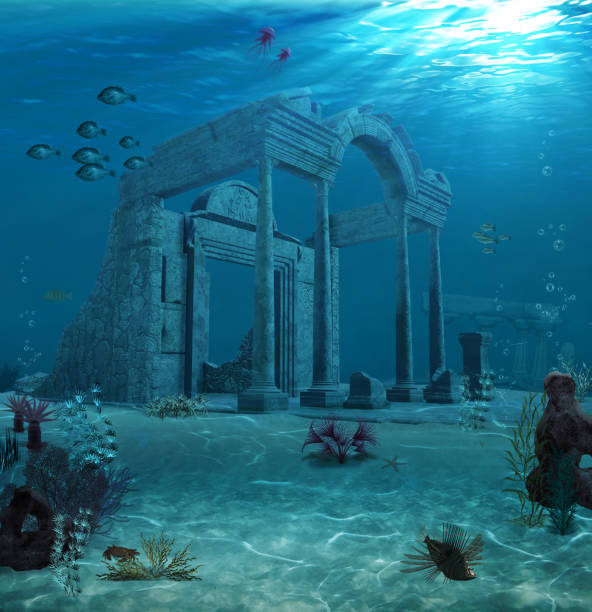
Some portray Atlantis as an underwater kingdom.
Others imagine futuristic technology, magical powers, or hidden wisdom preserved beneath the sea.
These fictional portrayals often differ greatly from Plato’s original account.
Nevertheless, they keep the legend alive for each new generation.
The name “Atlantis” has become synonymous with mystery itself.
The Enduring Legacy of a Lost World
Whether Atlantis was a real island, a philosophical invention, or a legend inspired by ancient disasters, its story continues to captivate us because it touches something deeply human.
It reminds us that even the greatest civilizations can rise and fall. It encourages us to explore the unknown, question the past, and search for evidence rather than accept assumptions. It also demonstrates the remarkable power of storytelling. A tale written more than two thousand years ago still inspires scientific investigations, archaeological debates, and endless curiosity.
Perhaps the greatest mystery of Atlantis is not where it disappeared, but why it has never disappeared from our imagination.
As long as people wonder about forgotten worlds beneath the sea, ancient wisdom lost to time, and civilizations swallowed by catastrophe, the legend of Atlantis will continue to live on. Whether it is ultimately remembered as myth, history, or something in between, Atlantis remains one of humanity’s most compelling stories—a powerful reminder that the boundary between legend and reality is sometimes as mysterious as the ocean itself.