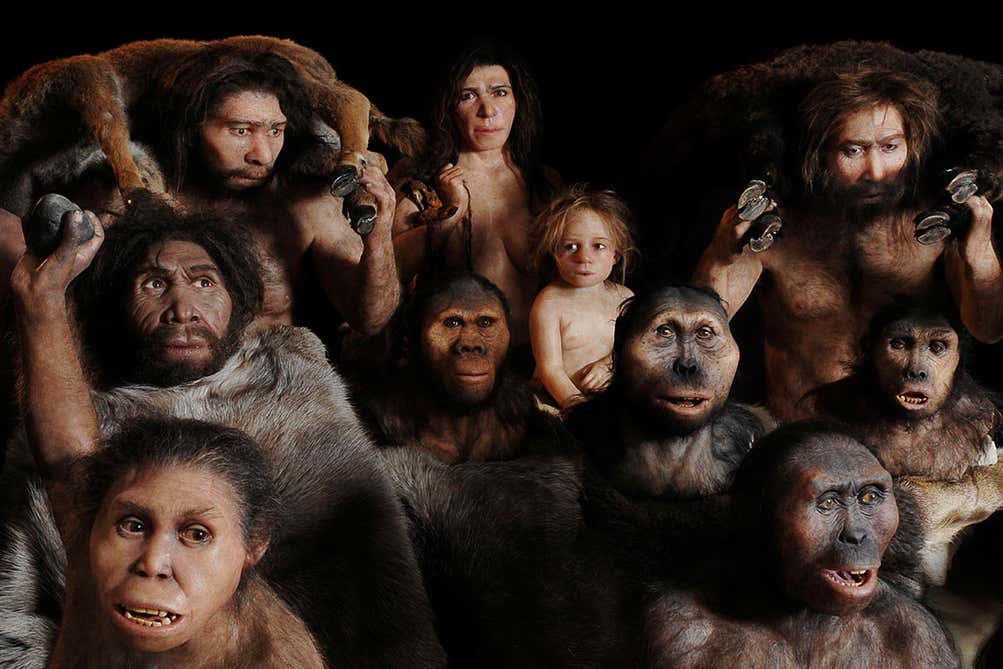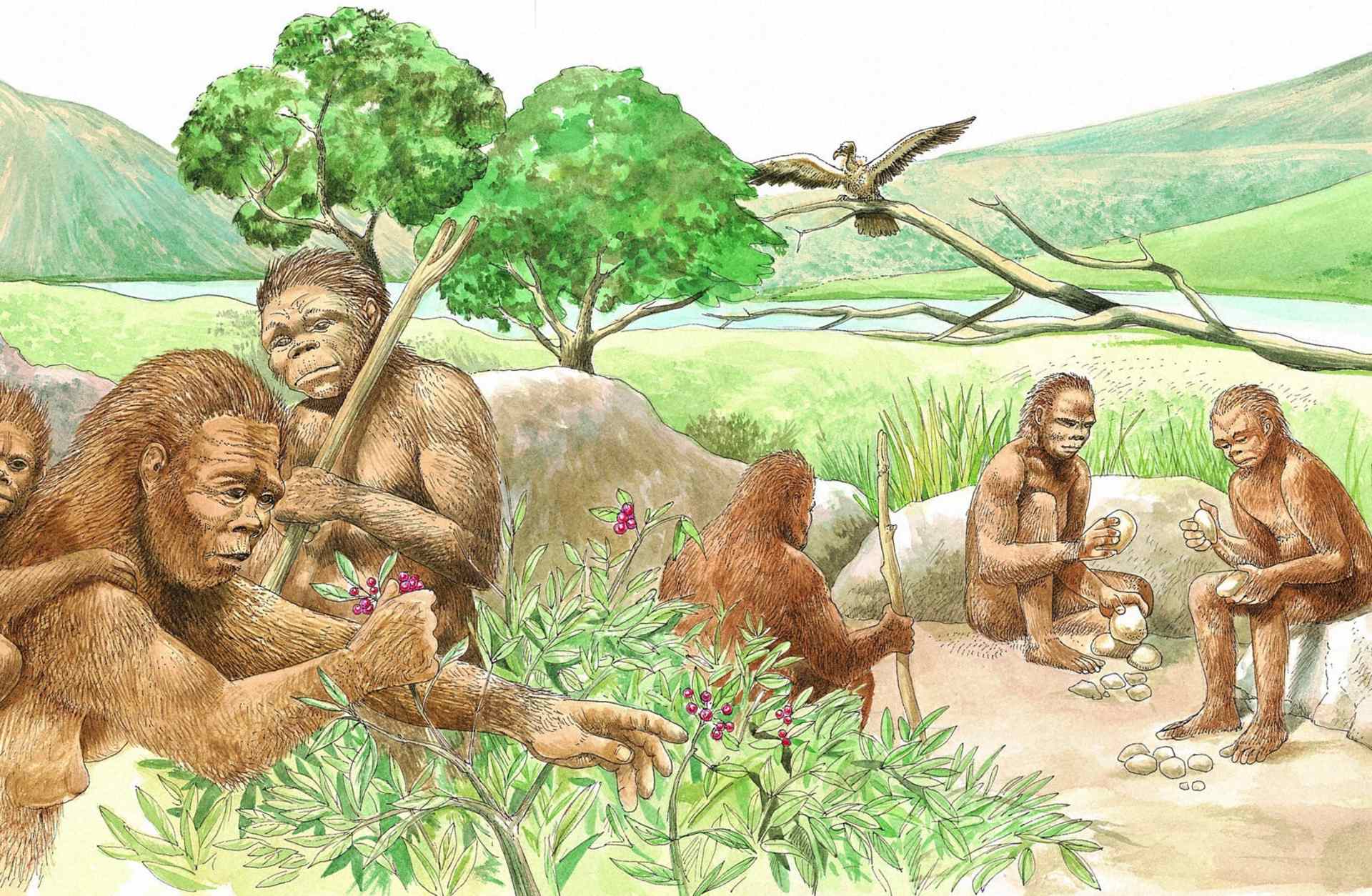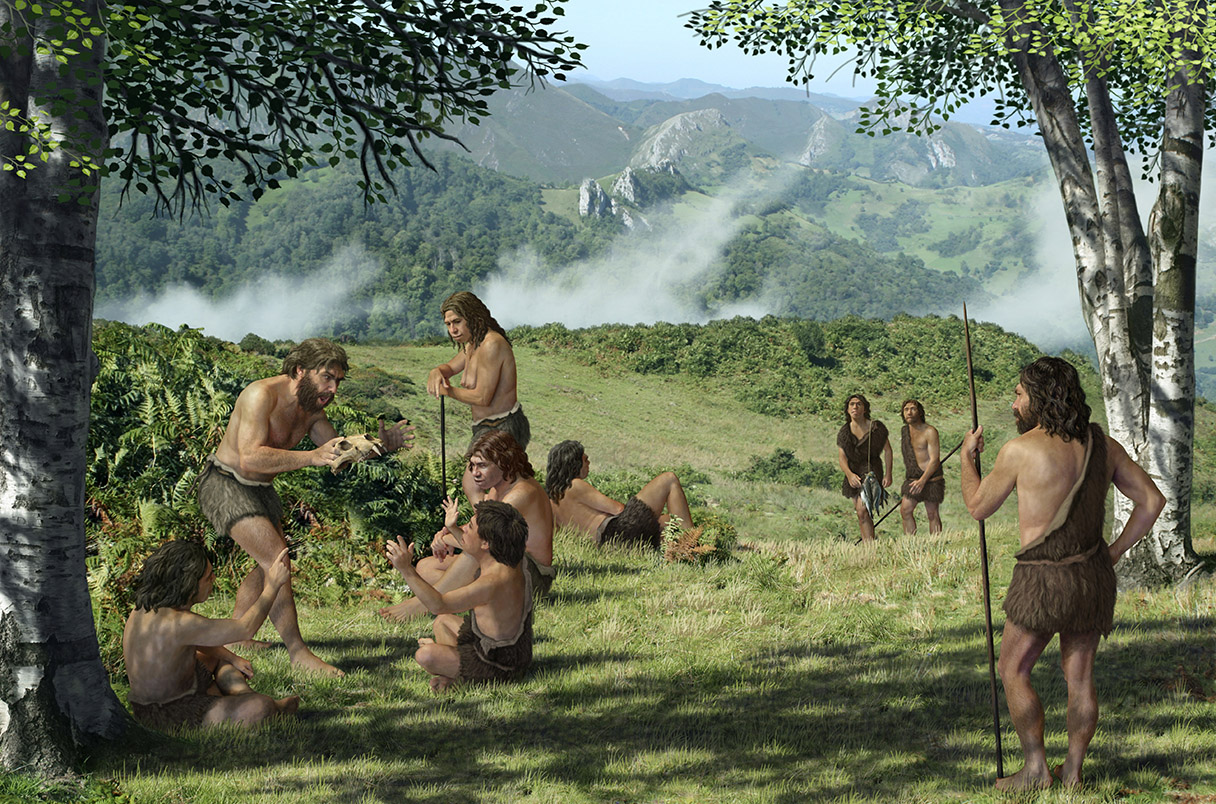
Every human being carries an incredible story that began millions of years before the first cities, the first farms, or even the first words were spoken. It is a story written not in books but in fossils, DNA, ancient footprints, stone tools, and the genes shared by every person alive today.
When we look into a mirror, it is easy to think of ourselves as completely different from every other animal. Yet science tells a far more fascinating story. Humans are part of nature, shaped by the same evolutionary processes that have produced every living organism on Earth. Our intelligence, upright posture, dexterous hands, and remarkable ability to communicate did not appear overnight. They evolved gradually over millions of years through countless generations of change.
Human evolution is not a story of one species suddenly transforming into another. Instead, it is a long, branching journey involving many different human relatives, some of whom lived alongside one another for hundreds of thousands of years. Most eventually disappeared, leaving only one surviving human species—Homo sapiens.
Understanding how humans evolved is one of science’s greatest achievements. It reveals not only where we came from but also why our bodies, brains, and behaviors are the way they are today.
What Is Human Evolution?
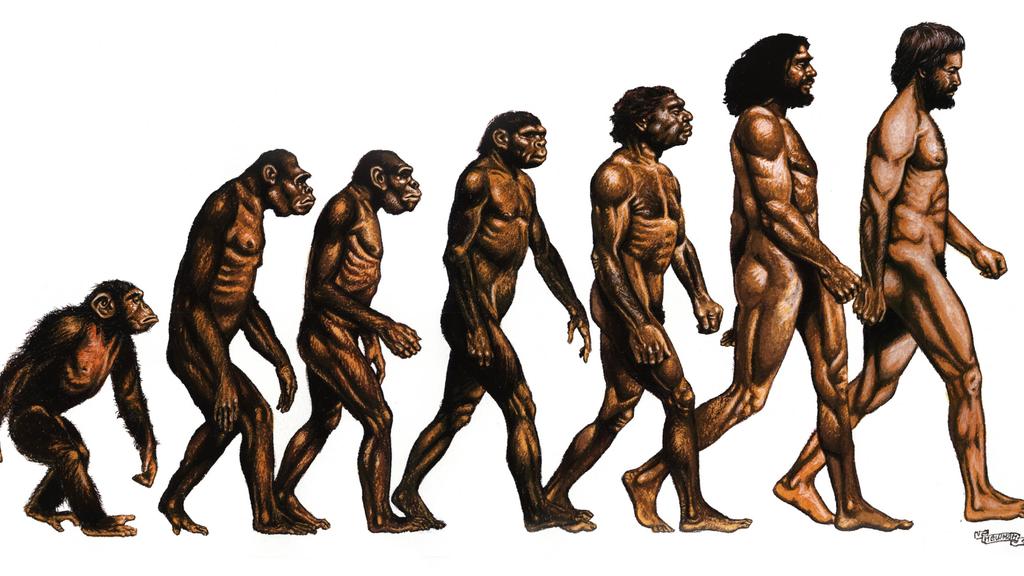
Human evolution is the scientific process through which modern humans developed from earlier ancestors over millions of years through genetic changes, natural selection, and environmental adaptation.
Evolution does not mean that an individual changes during its lifetime. Instead, it refers to changes that occur in populations across many generations. Tiny genetic variations appear naturally, and some of these variations help individuals survive and reproduce more successfully in their environment. Over long periods, beneficial traits become more common.
This gradual process has produced the enormous diversity of life on Earth, including humans.
Modern humans did not evolve from chimpanzees or gorillas living today. Instead, humans and modern apes share a common ancestor that lived millions of years ago. From that ancestral population, different evolutionary branches emerged, eventually leading to humans, chimpanzees, bonobos, gorillas, and orangutans.
The Evidence Behind Human Evolution
The story of human evolution is supported by multiple independent lines of scientific evidence.
Fossils reveal the changing anatomy of ancient human relatives through time. They show gradual changes in brain size, facial structure, teeth, walking ability, and body proportions.
Ancient stone tools provide evidence of increasing intelligence, planning, and technological skill.
Genetics offers some of the strongest evidence. Human DNA is remarkably similar to that of chimpanzees, reflecting our shared ancestry. Modern DNA studies also reveal that our ancestors interbred with other ancient human species, including Neanderthals and Denisovans.
Comparative anatomy shows similarities between humans and other primates in skeletal structure, muscles, organs, and embryonic development.
Together, fossils, genetics, archaeology, geology, and biology create one of the most thoroughly supported explanations in all of science.
Our Earliest Ancestors
The evolutionary journey toward modern humans began long before humans themselves existed.
The earliest ancestors belonged to groups of primates that lived in forests millions of years ago. Primates evolved characteristics that would later become important for humans, including forward-facing eyes, grasping hands, flexible shoulders, and relatively large brains compared with body size.
Around seven million years ago, one branch of these ancient primates separated from the lineage that eventually produced modern chimpanzees.
Scientists have discovered fossils of several very early human relatives from Africa, where the earliest stages of human evolution occurred. These species possessed mixtures of ape-like and human-like characteristics, providing clues about how our ancestors gradually changed over time.
Why Africa Is Called the Cradle of Humanity
Nearly all of the oldest known human ancestors have been discovered in Africa.
This is not a coincidence. Fossil discoveries, genetic evidence, and archaeological findings overwhelmingly indicate that the human evolutionary lineage originated on the African continent.
Some of the oldest known hominin fossils date back approximately six to seven million years. Over millions of years, numerous human species evolved across Africa before some eventually spread into Europe, Asia, and later the rest of the world.
Genetic studies of living humans also point to African origins. Human populations in Africa contain the greatest genetic diversity, consistent with the continent being the birthplace of our species.
Learning to Walk on Two Legs
One of the most important steps in human evolution was the development of bipedalism, the ability to walk upright on two legs.
Early human ancestors gradually shifted from climbing trees to spending more time moving across open landscapes.
Walking upright offered several advantages. It freed the hands for carrying food, infants, and eventually tools. Standing taller improved the ability to see over grasses and detect predators. Bipedal walking also proved surprisingly energy-efficient for traveling long distances.
Fossil pelvises, leg bones, feet, and even ancient footprints show that several early human relatives walked upright millions of years before large brains evolved.
The famous 3.66-million-year-old footprints preserved at Laetoli in Tanzania provide remarkable evidence that upright walking had already become well established in some early human ancestors.
The World of Australopithecus
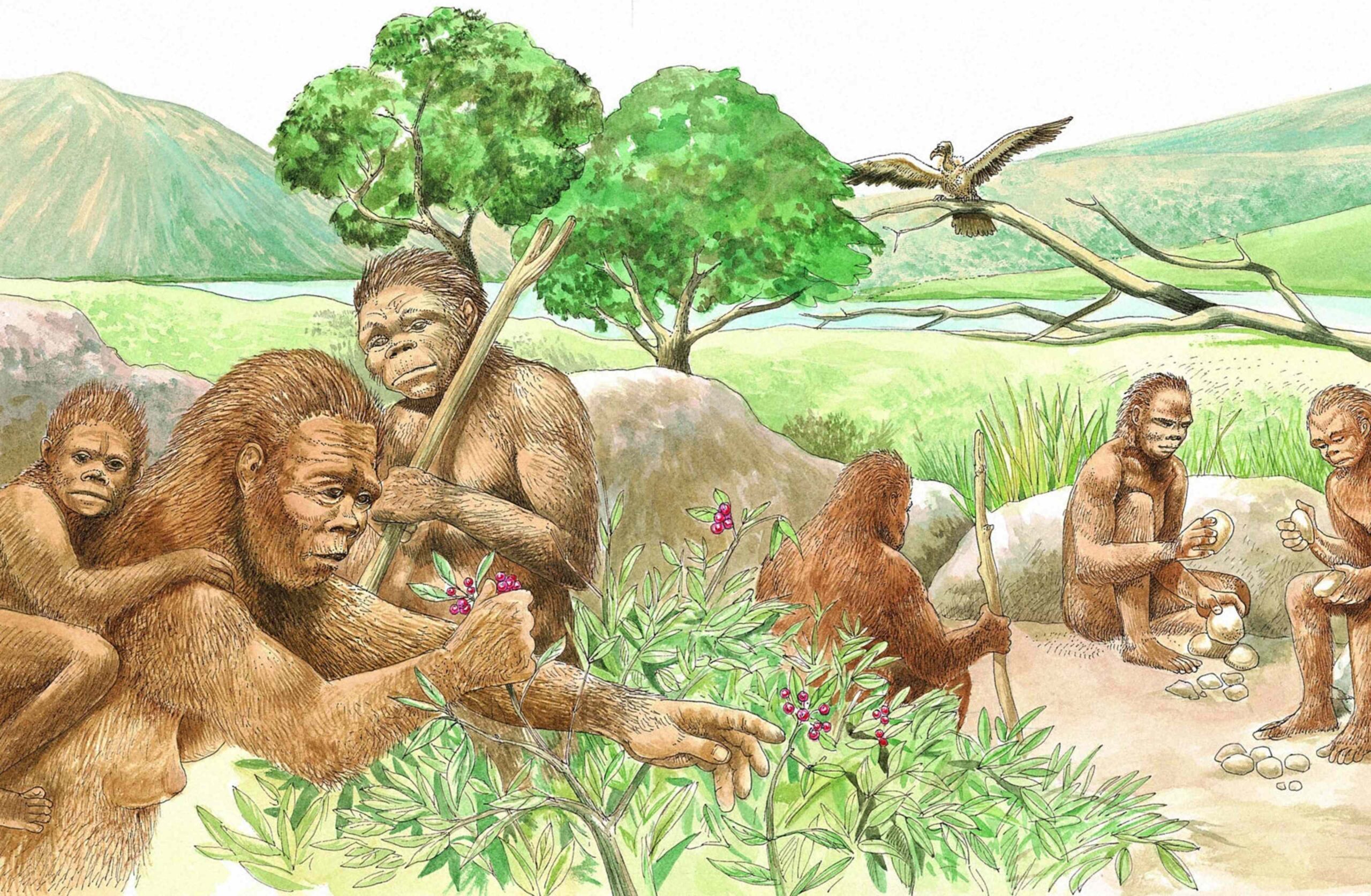
Among the best-known early human relatives are the australopithecines, which lived between roughly four and two million years ago.
One of the most famous fossils is “Lucy,” discovered in Ethiopia in 1974. Lucy belonged to the species Australopithecus afarensis.
Although Lucy stood only about one meter tall and had a relatively small brain, her skeleton clearly shows adaptations for upright walking. At the same time, features of her arms and shoulders indicate that climbing trees remained an important part of her lifestyle.
Australopithecines represent an important transitional stage in human evolution. They combined ape-like features with distinctly human characteristics, demonstrating that walking upright evolved long before large brains.
The Emergence of the Genus Homo
Around 2.8 million years ago, fossils reveal the appearance of the genus Homo, to which modern humans belong.
Compared with earlier relatives, early Homo species generally had larger brains, smaller teeth, flatter faces, and greater skill in making stone tools.
These changes likely reflected shifts in diet, behavior, and increasingly complex social lives.
Stone tools became more sophisticated, allowing ancient humans to process food more efficiently and perhaps exploit new ecological opportunities.
Although brains were still much smaller than those of modern humans, they were steadily increasing in size over evolutionary time.
Homo erectus Changed the Human Story
One of the most successful human species was Homo erectus, which appeared around 1.9 million years ago.
This species had a body remarkably similar to modern humans. Long legs, shorter arms, and efficient walking made Homo erectus capable of traveling great distances.
Evidence suggests Homo erectus was the first human species to spread beyond Africa into Asia and Europe.
Its larger brain supported more advanced tool-making and perhaps increasingly sophisticated social behavior.
Many archaeologists also believe Homo erectus learned to control fire. Although the exact timing remains debated, evidence from several archaeological sites indicates that ancient humans were using fire hundreds of thousands of years ago.
Fire transformed human life. It provided warmth, protection from predators, cooked food, extended activity after sunset, and may even have contributed to changes in human anatomy by making food easier to digest.
Bigger Brains and Smarter Behavior
One of the most striking trends in human evolution is the gradual increase in brain size.
However, brain size alone does not explain intelligence. The organization of the brain, communication between different regions, memory, learning, and social interaction all became increasingly sophisticated.
Larger brains allowed early humans to solve complex problems, cooperate in groups, remember landscapes, recognize patterns, and create increasingly advanced tools.
Language likely evolved gradually rather than appearing suddenly. Although scientists continue to debate exactly when fully modern language emerged, increasing evidence suggests that communication became progressively more complex throughout human evolution.
The ability to share knowledge across generations became one of humanity’s greatest evolutionary advantages.
Stone Tools Changed Everything
The earliest known stone tools date back more than three million years, although exactly which human relatives first made them remains under investigation.
Over time, tools became increasingly refined.
Simple stone flakes eventually gave way to carefully shaped hand axes, blades, spears, bone tools, fishing equipment, sewing needles, and eventually bows and arrows.
Tools allowed humans to hunt more effectively, prepare food, build shelters, process plants, and adapt to a wide range of environments.
Unlike physical evolution, technological innovation could spread rapidly through learning, allowing human societies to adapt much faster than genetic evolution alone.
Many Human Species Once Shared the Earth
Modern humans were not the only humans who ever lived.
For much of our evolutionary history, several human species existed at the same time.
Neanderthals inhabited Europe and parts of western Asia.
Denisovans lived in parts of Asia, although they are primarily known through DNA and a small number of fossils.
Other species, including Homo floresiensis, Homo naledi, and Homo luzonensis, demonstrate that human evolution was far more diverse than scientists once imagined.
Rather than a straight ladder of progress, evolution resembles a branching tree with many experiments, many successes, and many extinct branches.
Who Were the Neanderthals?
Neanderthals were close evolutionary relatives of modern humans.
They lived in Europe and western Asia for hundreds of thousands of years before disappearing approximately 40,000 years ago.
Far from being primitive cave dwellers, Neanderthals made sophisticated tools, hunted large animals, controlled fire, cared for injured individuals, and buried some of their dead.
Genetic evidence has revealed that Neanderthals and modern humans interbred after Homo sapiens expanded into Eurasia.
Today, many people whose ancestry lies outside Africa carry a small percentage of Neanderthal DNA, demonstrating that these ancient populations met and exchanged genes.
The Rise of Homo sapiens
Modern humans, Homo sapiens, evolved in Africa approximately 300,000 years ago.
Compared with earlier human species, Homo sapiens developed a rounded skull, smaller face, lighter skeleton, and exceptionally complex cognitive abilities.
Our species demonstrated remarkable flexibility.
Humans adapted to deserts, forests, mountains, tropical islands, frozen tundra, and coastal environments.
Art, symbolic thinking, music, ornaments, and long-distance trade gradually became increasingly common.
Eventually, Homo sapiens spread across nearly every continent, replacing or absorbing other human populations.
Humans Leave Africa
One of the most important events in human history was the migration of Homo sapiens out of Africa.
Although there were probably multiple waves of migration, one major expansion began roughly 60,000 to 70,000 years ago.
Small groups gradually spread across the Middle East, Europe, Asia, Australia, and eventually the Americas.
As humans encountered new climates and environments, they adapted culturally and biologically.
Different populations evolved variations in traits such as skin pigmentation, which reflects adaptation to differing levels of ultraviolet radiation. Despite these differences, all living humans belong to the same species and share remarkably similar genomes.
Agriculture Changed Human Evolution
For most of human history, people lived as hunter-gatherers.
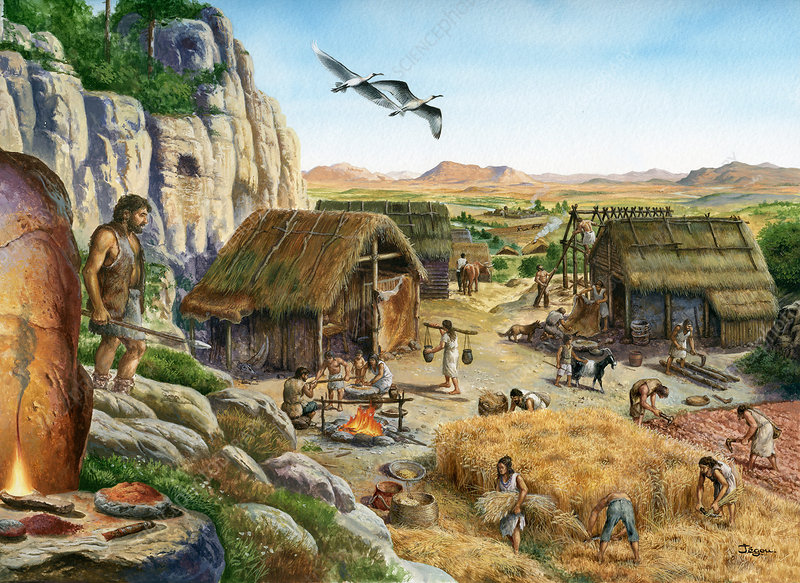
About 12,000 years ago, agriculture began independently in several regions of the world.
Farming transformed human society.
Permanent settlements grew into villages and cities. Populations increased dramatically. Writing, governments, trade, and civilizations eventually emerged.
Agriculture also influenced biological evolution. Certain populations evolved the ability to digest milk into adulthood, while others developed genetic adaptations to new diets or resistance to diseases associated with larger communities.
Human evolution did not stop when civilization began. It continues today.
Is Human Evolution Still Happening?
Yes.
Evolution is an ongoing process.
Genetic mutations continue to occur in every generation. Natural selection, genetic drift, migration, and changes in reproductive patterns continue to shape human populations.
Modern medicine, technology, and culture have altered many of the selective pressures that affected our ancestors, but evolution itself has not ended.
Scientists have identified recent evolutionary changes involving immunity, metabolism, adaptation to high-altitude environments, and responses to local climates.
Human evolution continues, although often in ways that are subtle and difficult to observe over a single lifetime.
Common Misconceptions About Human Evolution
One of the most widespread misunderstandings is that humans evolved directly from modern monkeys or chimpanzees. In reality, humans and living apes share ancient common ancestors.
Another misconception is that evolution has a predetermined goal. Evolution has no planned direction. It simply reflects how populations change over time in response to environmental conditions and chance genetic variation.
Some people also imagine evolution as a straight line leading inevitably to modern humans. Fossil discoveries tell a different story. Human evolution resembles a branching tree with many extinct relatives and overlapping species.
Modern humans are not the “end point” of evolution. Like every living species, we are simply one branch of life’s continuing history.
Why Human Evolution Matters
Learning about human evolution changes the way we see ourselves.
It reminds us that every person on Earth belongs to one remarkably young species with shared origins.
The differences between human populations are small compared with the overwhelming genetic similarities that unite us.
Human evolution also demonstrates the extraordinary power of adaptation, cooperation, curiosity, and learning.
Our ancestors survived dramatic climate changes, dangerous predators, volcanic eruptions, ice ages, and countless environmental challenges. Their resilience became our inheritance.
Every heartbeat, every thought, every smile, and every discovery carries echoes of millions of years of evolutionary history.
The Ongoing Story of Humanity
Human evolution is not merely the history of bones buried in ancient rocks. It is the story of every person alive today.
From small primates living in African forests to explorers walking on the Moon and spacecraft traveling beyond the Solar System, our journey has been astonishing. Along the way, countless species appeared, adapted, and disappeared, each contributing a chapter to the story that ultimately led to us.
Fossils continue to emerge from ancient sediments. New DNA technologies reveal hidden relationships among extinct human relatives. Archaeological discoveries constantly refine our understanding of when, where, and how our ancestors lived.
The story of human evolution is still being written. Every new discovery reminds us that we are not separate from nature but one remarkable expression of it—a species shaped by millions of years of change, connected to all living things, and still evolving as the future unfolds.