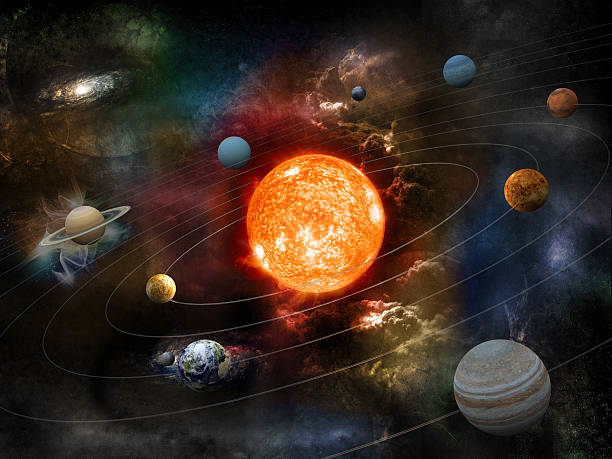
When we look up at the night sky, it is easy to imagine that the Solar System is quietly sitting in one place, with the planets circling the Sun like a perfectly still carousel. It feels stable, familiar, and unchanging. Yet this picture is far from reality.
The truth is far more extraordinary.
At this very moment, Earth is spinning on its axis. At the same time, it is racing around the Sun. Meanwhile, the Sun is carrying every planet, moon, asteroid, and comet through the Milky Way Galaxy. Even the Milky Way itself is traveling through the universe alongside countless other galaxies.
Nothing in the cosmos is truly standing still.
Every second of every day, our entire Solar System is moving through space in several different ways at once. We are passengers on a remarkable cosmic journey that has been unfolding for more than 4.5 billion years.
Motion Is the Natural State of the Universe
One of the most important ideas in physics is that motion is everywhere.
From tiny atoms vibrating inside your body to giant galaxies drifting across the universe, movement is one of the defining features of nature.
There is no universal “stationary” point in space. Motion is always measured relative to something else.
When you are sitting comfortably in a chair, you may feel completely still. But in reality, you are already moving at incredible speeds because Earth itself is constantly in motion.
Understanding how the Solar System moves means looking at each of these motions separately before seeing how they combine into one magnificent cosmic dance.
Earth Spins Every Day
The first motion is the one we notice most easily, even though we cannot feel it.
Earth rotates around its axis once approximately every 24 hours. This spinning creates day and night.
At the equator, Earth’s surface moves at about 1,670 kilometers (1,040 miles) per hour due to this rotation.
Despite this astonishing speed, we do not feel it because everything around us—including the atmosphere—is moving together with Earth.
This smooth, constant rotation is one reason life has evolved with regular cycles of daylight and darkness.
Earth Travels Around the Sun
While Earth is spinning, it is also orbiting the Sun.
Our planet completes one journey around the Sun every 365.25 days.
Earth travels along its orbit at an average speed of about 29.8 kilometers (18.5 miles) every second. That is more than 107,000 kilometers (67,000 miles) every hour.
At this speed, Earth could circle our planet’s equator in less than half an hour if such travel were possible.
This orbital motion creates the yearly cycle that we call a year and, together with Earth’s tilted axis, produces the changing seasons.
The Moon Joins the Journey
Earth does not travel alone.
The Moon continuously orbits Earth while both bodies orbit the Sun together.
The Moon moves at an average speed of about 1 kilometer (0.6 miles) per second around Earth.
If you could watch the Moon’s path from far outside the Solar System, you would not see a series of loops around the Sun. Instead, you would see a gently wavy path that always curves forward as the Earth-Moon system races through space.
Every Planet Is Constantly Moving
Each planet follows its own orbit around the Sun.
Mercury, being closest to the Sun, moves the fastest, traveling at nearly 48 kilometers (30 miles) per second.
Venus moves slightly more slowly.
Earth follows behind.
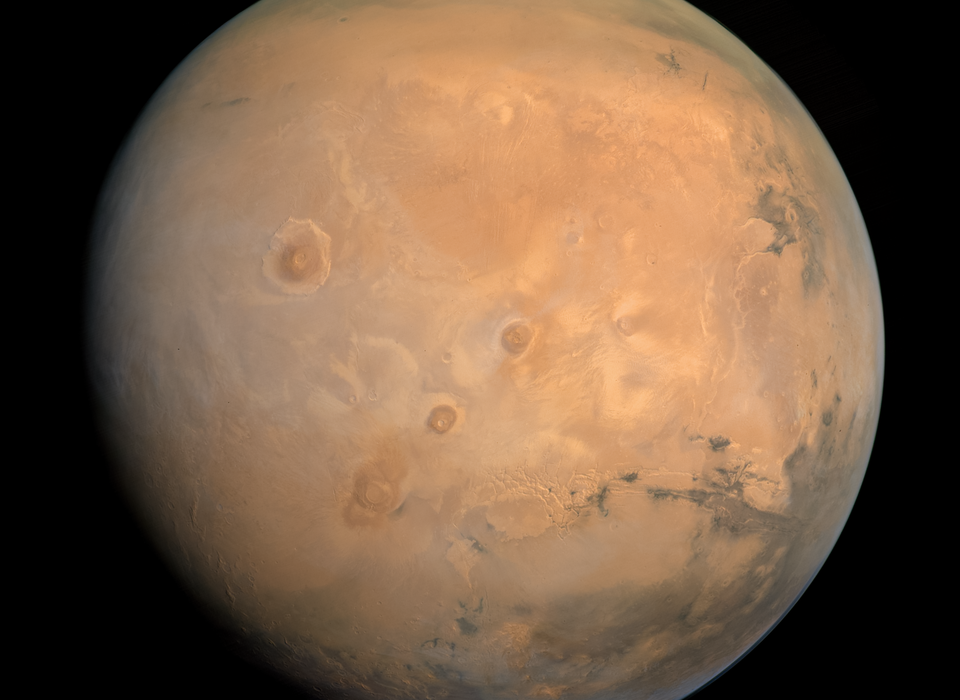
Mars takes a wider and slower path.
The giant planets—Jupiter, Saturn, Uranus, and Neptune—travel even more slowly because they orbit much farther from the Sun.
Although their speeds differ, every planet is continuously moving, held in orbit by the Sun’s gravity.
The Sun Is Not Standing Still
For centuries, people often imagined the Sun as the fixed center of everything.
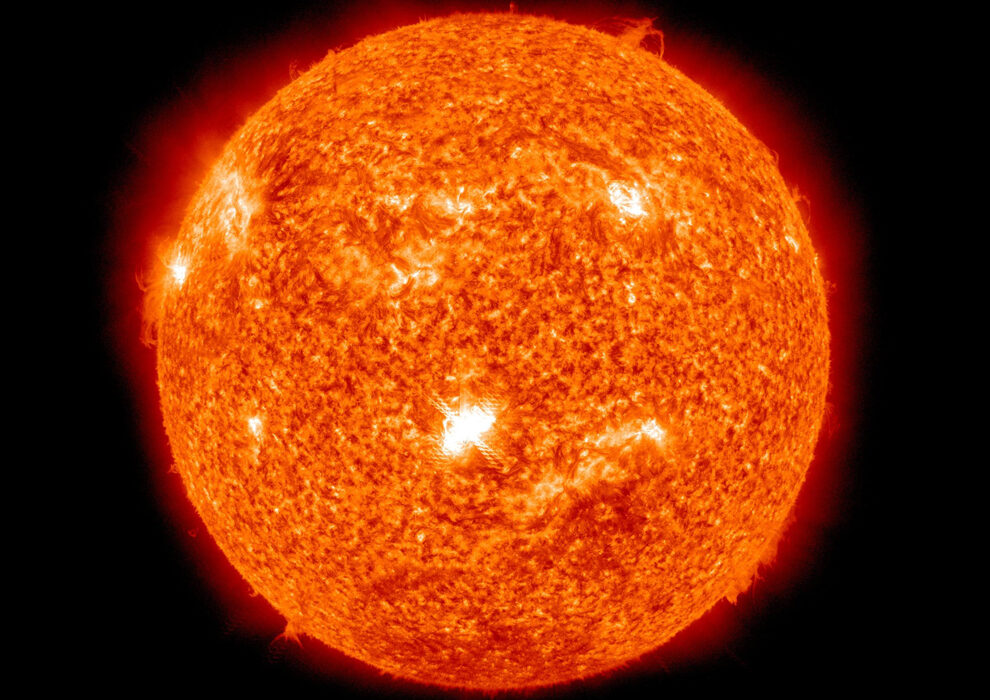
While the Sun is indeed the center of the Solar System, it is far from stationary.
The Sun itself is traveling through the Milky Way Galaxy.
Every planet, moon, comet, asteroid, and spacecraft follows along because they are bound by the Sun’s gravity.
Think of a parent walking through a park while children run in circles around them. The children are moving around the parent, but together the entire group is also moving forward.
The Solar System behaves in much the same way.
Orbiting the Center of the Milky Way
The Milky Way is a giant spiral galaxy containing hundreds of billions of stars.
Our Solar System lies in one of its spiral arms, called the Orion Arm or Orion Spur, about 26,000 light-years from the galactic center.
The Sun orbits the center of the Milky Way at an astonishing average speed of about 220 kilometers (137 miles) per second.
That is roughly 790,000 kilometers (490,000 miles) every hour.
Even at this enormous speed, the journey around the galaxy is incredibly long because the Milky Way is immense.
A Galactic Year
One complete orbit of the Sun around the Milky Way takes approximately 225 to 250 million Earth years.
Astronomers sometimes call this a galactic year or cosmic year.
The last time the Solar System occupied its current position in the galaxy, dinosaurs had not yet appeared.
When the Solar System completes its next orbit around the Milky Way, Earth’s continents will likely look completely different, and many current species may no longer exist.
Since the Solar System formed about 4.6 billion years ago, it has completed only around 20 galactic orbits.
Why We Stay Together
If the Solar System is moving so rapidly through the galaxy, why don’t the planets get left behind?
The answer is gravity.
Gravity keeps every planet bound to the Sun.
The Sun contains about 99.8 percent of all the mass in the Solar System, making its gravitational pull overwhelmingly dominant.
As the Sun travels through the Milky Way, its gravity carries the entire Solar System with it.
Each planet continues orbiting the moving Sun, just as passengers remain inside a moving airplane while walking down the aisle.
The entire system moves together.
The Sun Also Rotates
The Sun has another motion of its own.
Like Earth, it spins on its axis.
However, the Sun is not solid. It is a giant sphere of hot plasma, so different regions rotate at different speeds.
Near the equator, the Sun rotates roughly once every 25 days.
Near its poles, one rotation takes about 35 days.
This difference contributes to the Sun’s changing magnetic field and helps drive the solar activity cycle.
The Solar System Moves Above and Below the Galactic Plane
The Solar System does not simply travel in a perfectly flat circle around the Milky Way.
As it orbits the galaxy, it also gently oscillates above and below the galactic plane.
This slow up-and-down motion takes tens of millions of years to complete.
The exact causes involve the gravitational influence of the galaxy’s overall mass distribution.
The movement resembles a horse on a carousel that slowly rises and falls while moving around the center.
The Milky Way Is Also Traveling
The journey does not stop with our galaxy.
The Milky Way itself moves through space.
It is gravitationally bound to dozens of neighboring galaxies in a collection known as the Local Group.
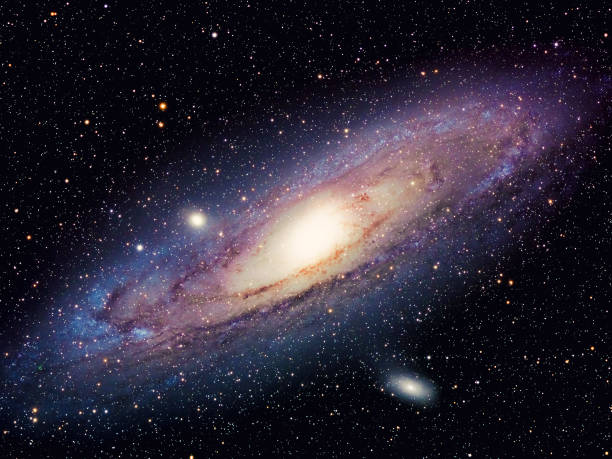
Within this group, the Milky Way and the Andromeda Galaxy are gradually moving toward one another under their mutual gravitational attraction.
The Milky Way also moves relative to the cosmic microwave background—the faint afterglow of the Big Bang—at hundreds of kilometers per second.
This means our Solar System is participating in motions that extend far beyond our own galaxy.
A Future Collision With Andromeda
One of the most dramatic events awaiting the Milky Way is its future encounter with the Andromeda Galaxy.
Astronomers predict that the two galaxies will begin merging in about 4 to 5 billion years.
Although this sounds catastrophic, individual stars are so widely separated that direct collisions between stars are expected to be extremely rare.
Instead, gravity will slowly reshape both galaxies into a new, larger galaxy over billions of years.
If Earth still exists by then, the night sky would look spectacularly different.
Why We Never Feel These Speeds
It may seem surprising that we cannot feel ourselves moving so quickly.
The reason lies in how motion works.
We mainly notice changes in speed or direction, known as acceleration.
When an airplane flies smoothly at constant speed, passengers usually feel calm because they share the airplane’s motion.
Similarly, everything on Earth—including people, buildings, oceans, and the atmosphere—is moving together.
Because our motions are smooth and continuous, our bodies do not sense these tremendous speeds.
The Shape of the Solar System’s Journey
People sometimes imagine the Solar System tracing a giant corkscrew or spiral through space.
While this image is visually appealing, it is an oversimplification.
The actual paths of the planets depend on the chosen frame of reference and the combined gravitational motions of the Sun and the galaxy. There is no single, absolute shape for the Solar System’s trajectory through the universe.
What remains true is that the planets continually orbit the Sun while the entire Solar System simultaneously travels around the Milky Way.
How Scientists Measure the Solar System’s Motion
Astronomers determine these motions using several techniques.
Careful observations of stars reveal their positions and motions across the sky.
The Doppler effect measures whether objects are moving toward or away from us by examining changes in the wavelengths of light.
Spacecraft tracking provides extremely precise measurements of planetary motion.
Radio telescopes, satellites, and observatories combine their observations to build accurate models of how the Solar System moves through the galaxy.
Modern measurements have become so precise that scientists can predict planetary positions decades or even centuries into the future.
Does the Solar System Wander?
Although the Solar System follows a stable orbit around the Milky Way, its path is not perfectly unchanging.
Passing stars, giant molecular clouds, and the galaxy’s spiral structure exert small gravitational influences over millions of years.
These effects can gradually alter the Solar System’s orbit, but the changes are extremely slow.
For human timescales, the Solar System’s galactic journey appears remarkably stable.
The Solar System’s Place in the Universe
The Solar System is only one tiny neighborhood within a vast galaxy.
The Milky Way itself is just one of hundreds of billions, and likely more than a trillion, galaxies in the observable universe.
Yet the same laws of gravity and motion that guide Earth’s orbit also govern the movement of galaxies across cosmic distances.
This remarkable consistency is one of the greatest triumphs of physics.
The universe follows elegant rules that apply across scales ranging from tiny planets to enormous galaxy clusters.
A Never-Ending Cosmic Voyage
Every second, you are traveling through space in ways that are almost impossible to imagine.
You are spinning with Earth, orbiting the Sun, circling the center of the Milky Way, moving with the Milky Way through the Local Group, and journeying through the expanding universe—all at the same time.
Although we rarely notice this incredible voyage, it has been happening throughout the entire history of humanity.
The Solar System is not anchored in a quiet corner of space. It is part of a dynamic, ever-changing universe where everything is in motion. Every sunrise, every season, every orbit, and every distant star reminds us that we are passengers on an extraordinary journey—one that began billions of years ago and will continue for billions more as our cosmic home sails through the vastness of space.