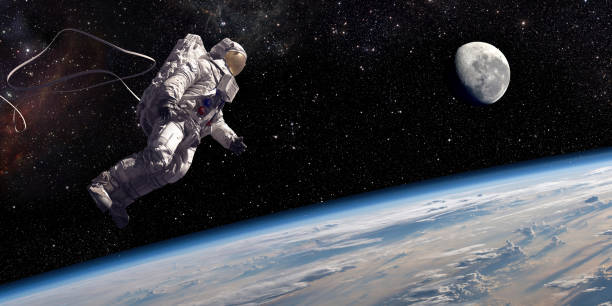
The idea of floating effortlessly through space has fascinated people for generations. Movies often show astronauts drifting inside spacecraft, gently pushing off walls and gliding from one end of a cabin to the other. This strange and graceful movement is commonly described as “zero gravity.” It looks almost magical, as if gravity has completely disappeared.
But is there really a place where gravity is zero?
The surprising answer is no—not in the way many people imagine. Even astronauts aboard the International Space Station are still under the influence of Earth’s gravity. What they experience is not the complete absence of gravity but a condition called weightlessness, which creates the sensation of zero gravity.
Understanding zero gravity takes us on a fascinating journey through physics, space exploration, and the forces that shape our universe.
What Does Zero Gravity Mean?
Zero gravity refers to a condition in which an object appears to have no weight. In everyday language, people use the term to describe the feeling of floating freely without being pulled toward the ground.
Scientifically, however, true zero gravity means that the gravitational force acting on an object is exactly zero.
This situation is extremely rare in the universe. Gravity extends across enormous distances, and every object with mass produces its own gravitational field. Planets, stars, moons, galaxies, and even your own body exert tiny gravitational forces.
Because gravity never completely disappears, what people usually call “zero gravity” is actually apparent weightlessness rather than the total absence of gravity.
Understanding Gravity First
To understand zero gravity, we first need to understand gravity itself.
Gravity is one of the four fundamental forces of nature. It is the force that attracts objects with mass toward one another.
Earth’s gravity keeps us standing on the ground. It causes rain to fall, oceans to remain on the planet, and the Moon to orbit Earth.
Sir Isaac Newton described gravity as an attractive force between masses. Centuries later, Albert Einstein explained gravity in a different way. According to his theory of general relativity, massive objects like Earth bend the fabric of space and time, and other objects move along these curved paths.
Whether viewed through Newton’s laws or Einstein’s theory, gravity is always present wherever mass exists.
Why Astronauts Float in Space
One of the biggest misconceptions is that astronauts float because there is no gravity in space.
In reality, gravity at the altitude of the International Space Station is still quite strong.
The International Space Station orbits Earth about 400 kilometers (250 miles) above the surface. At that altitude, Earth’s gravitational pull is still roughly 90 percent as strong as it is on the ground.
So why do astronauts float?
The answer lies in continuous free fall.
The space station and everything inside it—including astronauts—are constantly falling toward Earth. However, they are also moving sideways at an incredibly high speed of about 28,000 kilometers per hour (17,500 miles per hour).
Because of this tremendous sideways motion, the station keeps missing Earth as it falls. Instead of crashing, it continually falls around the planet, creating an orbit.
Since astronauts and the spacecraft are falling together at the same rate, they experience no support force from the floor beneath them. Without this upward force, they feel weightless and float freely inside the station.
Weightlessness Is Different from Zero Gravity
Weight and gravity are closely related, but they are not the same thing.
Gravity is the force pulling you toward Earth.
Weight is the force you feel because the ground pushes back against you while gravity pulls you downward.
When you stand on the ground, gravity pulls you toward Earth, and the ground pushes upward with an equal force. This upward support force is what you experience as weight.
In orbit, there is no floor constantly pushing upward against astronauts because everything is falling together.
Gravity is still acting, but the sensation of weight disappears.
This condition is known as weightlessness or microgravity, not true zero gravity.
What Is Microgravity?
The environment inside orbiting spacecraft is more accurately called microgravity.
The prefix “micro” means extremely small.
Scientists use this term because tiny forces still exist inside spacecraft.
These small forces come from sources such as:
The slight drag of Earth’s upper atmosphere.
Small vibrations from onboard equipment.
Movements made by astronauts.
Tiny changes in the spacecraft’s orbit.
Because of these small influences, the environment is not perfectly weightless.
Even so, it is close enough that objects appear to float freely for long periods.
Can Gravity Ever Be Zero?
In theory, there are places where gravitational forces from multiple objects balance each other.
For example, between Earth and the Moon, there are special locations called Lagrange points, where gravitational pulls combine in unique ways.
However, even at these points, gravity is not completely absent. Instead, the gravitational influences from different bodies balance in certain directions.
Since every object with mass produces gravity, finding a location with absolutely no gravitational influence is practically impossible.
True zero gravity would require being infinitely far away from every object in the universe, which is not physically realistic.
Zero Gravity on Earth
Although Earth always pulls us downward, scientists have developed ways to create short periods of weightlessness.
These methods allow researchers to study how humans, plants, animals, and materials behave without normal gravity.
One common method uses specially modified aircraft known as parabolic flight aircraft.
These airplanes climb steeply and then descend along carefully controlled curved paths.
During part of each maneuver, everyone inside enters free fall for about 20 to 30 seconds.
For those brief moments, passengers float just like astronauts in orbit.
Because of this unusual flight pattern, these aircraft are sometimes nicknamed the “Vomit Comet,” as the rapid changes in motion can cause motion sickness.
Scientists also use drop towers, where experimental equipment is dropped inside tall vertical shafts. As everything falls together, brief periods of weightlessness occur before the equipment reaches the bottom.
Living in Weightlessness
Life in space is very different from life on Earth.
Without normal gravity, even simple daily activities become challenging.
Astronauts cannot simply place a cup on a table because it would drift away.
Sleeping requires attaching sleeping bags to walls.
Eating demands specially designed food packages to prevent crumbs and liquids from floating around the cabin.
Water behaves in fascinating ways. Instead of flowing downward, it forms floating spheres due to surface tension.
Even tears do not fall from the eyes as they do on Earth. They collect into blobs that cling to the face until wiped away.
Everyday tasks must be adapted to this unusual environment.
How the Human Body Changes in Microgravity
Gravity has shaped life on Earth for billions of years. When humans leave Earth’s surface for extended periods, the body begins to change.
Muscles gradually weaken because they no longer need to support body weight.
Bones lose minerals and become less dense since they are not constantly bearing loads.
Body fluids shift upward toward the head, making astronauts’ faces appear puffier while their legs become thinner.
Some astronauts temporarily experience changes in vision due to fluid redistribution.
The heart also adapts because pumping blood upward against gravity becomes much easier.
To stay healthy, astronauts exercise for about two hours every day using specially designed equipment that works even without normal gravity.
These workouts help reduce muscle and bone loss during long missions.
Why Scientists Study Weightlessness
Weightlessness offers a unique laboratory for scientific research.
Many physical processes behave differently without gravity.
Flames burn differently.
Liquids mix in unusual ways.
Crystals often grow more perfectly.
Cells and tissues can behave differently than they do on Earth.
Scientists use these conditions to improve our understanding of biology, chemistry, physics, and materials science.
Research conducted in space has contributed to advances in medicine, engineering, fluid dynamics, and manufacturing.
Studying life in microgravity also helps prepare astronauts for future missions to the Moon, Mars, and beyond.
How Zero Gravity Affects Objects
In a weightless environment, objects continue moving unless another force changes their motion.
A gently pushed pencil may float across an entire room.
A spinning ball keeps rotating for much longer because there is little friction to slow it down.
Small movements can send people drifting across spacecraft.
Astronauts quickly learn to move carefully, using gentle pushes from walls or handrails to travel through the station.
Newton’s laws of motion become very easy to observe in space.
Does the Moon Have Zero Gravity?
The Moon does not have zero gravity.
Its gravity is about one-sixth as strong as Earth’s.
An astronaut weighing 90 kilograms on Earth would still have the same mass on the Moon, but their weight would be much lower because the Moon’s gravitational pull is weaker.
This reduced gravity allows astronauts to jump higher and move differently, but they remain firmly pulled toward the lunar surface.
Does Space Have Gravity Everywhere?
Gravity exists throughout the universe.
The Sun’s gravity keeps planets in orbit.
Planets pull on their moons.
Galaxies influence one another through gravity.
Black holes possess incredibly strong gravitational fields.
Even in the vast emptiness between galaxies, gravity from distant objects continues to extend across space.
Although gravitational forces become weaker with increasing distance, they never suddenly disappear.
This is why the phrase “zero gravity” can be misleading.
Common Misconceptions About Zero Gravity
Many people believe astronauts float because they have escaped Earth’s gravity.
In reality, astronauts remain firmly within Earth’s gravitational influence.
Another misconception is that space contains no gravity at all.
The truth is that gravity fills the universe.
People also sometimes think zero gravity and weightlessness are identical concepts.
In scientific terms, weightlessness describes the experience of having no apparent weight, while zero gravity refers to the complete absence of gravitational force—a condition that is essentially impossible to achieve in practice.
Understanding this difference helps explain why astronauts float even while gravity continues pulling them toward Earth.
Why Zero Gravity Fascinates Us
Floating freely challenges everything we experience in daily life.
Since birth, gravity has influenced every movement we make. It determines how we walk, run, jump, pour water, and even sit in a chair.
Imagining a world without these familiar experiences naturally captures our curiosity.
Weightlessness also represents exploration. It reminds us of humanity’s journey beyond Earth, from the first astronauts to future missions aimed at establishing bases on the Moon and eventually reaching Mars.
The ability to adapt to environments with little or no apparent weight demonstrates both the power of science and the remarkable flexibility of the human body.
The Future of Living in Low Gravity
As space exploration advances, understanding weightlessness will become increasingly important.
Future astronauts may spend months or even years traveling to Mars. Scientists are investigating how prolonged exposure to low-gravity environments affects human health and how artificial gravity might be created inside future spacecraft.
Engineers are also designing habitats for the Moon and Mars, where gravity is weaker than on Earth but stronger than in orbit.
Learning to live and work under these conditions will be essential for humanity’s next great era of exploration.
Conclusion
Zero gravity is one of the most fascinating concepts in science, but it is often misunderstood. Contrary to popular belief, astronauts do not float because gravity has disappeared. Instead, they experience weightlessness because they and their spacecraft are continuously falling around Earth together. Gravity remains very much present, even hundreds of kilometers above our planet.
True zero gravity is extraordinarily rare, as gravity extends throughout the universe wherever mass exists. What people commonly call “zero gravity” is almost always microgravity—a state in which the effects of gravity are greatly reduced, creating the remarkable sensation of floating.
By studying weightlessness, scientists gain valuable insights into physics, biology, medicine, and engineering while preparing humanity for future journeys deeper into space. Far from being the absence of a force, the experience of zero gravity reveals just how deeply gravity shapes every moment of life on Earth—and how extraordinary the universe becomes when that familiar pull seems to disappear.