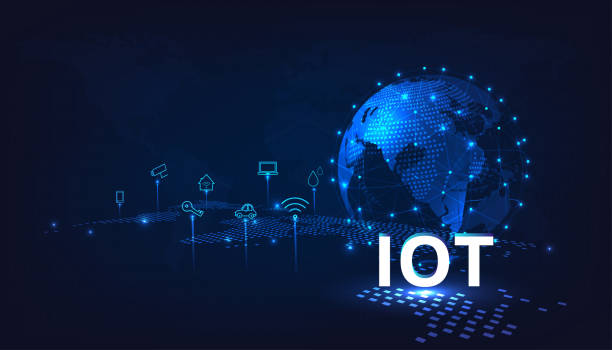
Not long ago, the internet was something we accessed through desktop computers. Later, smartphones allowed us to carry the internet in our pockets. Today, the internet is expanding far beyond computers and phones. It is quietly connecting everyday objects—from watches and refrigerators to cars, factories, streetlights, medical devices, and even entire cities. This remarkable transformation is known as the Internet of Things (IoT).
The Internet of Things is changing the way people live, work, travel, communicate, and care for their health. Millions of devices around the world are constantly collecting information, sharing data, and making intelligent decisions with little or no human intervention. Your smartwatch can monitor your heart rate. A smart thermostat can adjust your home’s temperature automatically. Farmers can monitor soil moisture without walking through every field. Hospitals can remotely observe patients, and factories can predict when machines need maintenance before they break down.
Although it often works quietly in the background, the Internet of Things is becoming one of the most important technologies of the twenty-first century. It is creating a world where physical objects are no longer isolated but connected, aware of their surroundings, and capable of communicating with each other.
Understanding the Internet of Things
The Internet of Things, commonly abbreviated as IoT, refers to a vast network of physical objects that are connected to the internet and equipped with technologies that allow them to collect, exchange, and sometimes analyze data.
Unlike traditional computers or smartphones, IoT devices are often designed to perform specific tasks. They may contain sensors that detect changes in the environment, software that processes information, and communication systems that send data over the internet.
In simple terms, the Internet of Things allows everyday objects to “sense,” “communicate,” and sometimes “act” based on the information they receive.
For example, instead of simply being a refrigerator that keeps food cold, a smart refrigerator can monitor its internal temperature, notify its owner if the door is left open, detect maintenance problems, or even help manage grocery inventories.
The “things” in the Internet of Things can include almost anything that can be connected to a network and equipped with sensors or electronic components.
Why Is It Called the Internet of Things?
The phrase “Internet of Things” combines two important ideas.
The first is the Internet, the global network that allows devices to communicate across the world.
The second is Things, meaning physical objects rather than traditional computing devices.
These “things” may include household appliances, wearable devices, industrial machines, vehicles, agricultural equipment, medical instruments, environmental sensors, and countless other objects.
By connecting these physical objects to the internet, they become capable of sharing information, receiving instructions, and working together in ways that were impossible before.
The Basic Idea Behind IoT
Imagine your home on a cold winter morning.
Before you wake up, your smart thermostat has already warmed the rooms.
Your coffee machine starts brewing automatically.
Your smartwatch has monitored your sleep throughout the night.
Your smart lights gradually brighten to simulate sunrise.
Your security camera has already notified you if anyone approached your front door.
None of these devices are simply operating independently. Instead, they are communicating through the internet, responding to data, and often coordinating with one another.
This connected ecosystem represents the core idea of the Internet of Things.
How the Internet of Things Works
Although IoT systems can be highly sophisticated, they generally follow the same basic process.
Everything begins with data collection.
Sensors embedded inside devices measure physical conditions such as temperature, humidity, pressure, light, movement, location, air quality, heart rate, vibration, or electricity usage.
The collected information is then transmitted through communication technologies such as Wi-Fi, Bluetooth, cellular networks, Ethernet, satellite connections, or other wireless systems.
Once the data reaches a computer, cloud platform, or edge computing device, software analyzes the information.
Based on predefined rules or artificial intelligence algorithms, the system may make decisions automatically.
Finally, actions can occur.
A smart irrigation system turns on water when soil becomes too dry.
A fitness tracker reminds someone to exercise.
A factory machine slows down to prevent overheating.
A security system sends an alert when unusual movement is detected.
This continuous cycle of sensing, communicating, analyzing, and acting allows IoT devices to operate intelligently.
The Building Blocks of IoT
Every Internet of Things system depends on several key components working together.
Sensors allow devices to detect changes in the physical world. They serve as the “eyes,” “ears,” and “touch” of connected devices.
Processors or microcontrollers perform calculations and control device operations. These small computers decide how the device responds to incoming information.
Communication technologies allow devices to exchange information over networks.
Cloud computing provides storage and powerful computing resources that process enormous amounts of data.
Software applications present information to users through smartphones, tablets, or computers, allowing people to monitor and control connected devices.
Artificial intelligence increasingly enables IoT systems to recognize patterns, make predictions, and automate complex decisions.
Together, these technologies create intelligent connected systems.
Sensors: Giving Objects the Ability to Sense
Sensors are among the most important parts of the Internet of Things.
Without sensors, devices would have no awareness of their surroundings.
Different sensors measure different physical properties.
Temperature sensors monitor heat.
Motion sensors detect movement.
Pressure sensors measure force.
Light sensors respond to brightness.
Humidity sensors monitor moisture.
GPS receivers determine location.
Accelerometers detect changes in motion and orientation.
Gyroscopes measure rotation.
Microphones capture sound.
Cameras record visual information.
Medical sensors can measure heart rate, blood oxygen levels, blood pressure, and other biological signals.
These sensors continuously generate valuable information that IoT systems can analyze.
Connectivity: Linking Everything Together
Collecting data alone is not enough.
Devices must also communicate.
Different IoT applications use different communication technologies depending on their requirements.
Wi-Fi is common in homes and offices because it provides high-speed internet access.
Bluetooth allows nearby devices to exchange information while consuming relatively little power.
Cellular networks enable vehicles, remote sensors, and mobile devices to remain connected over long distances.
Satellite communication supports IoT devices in remote regions where traditional networks are unavailable.
Newer technologies such as 5G provide faster speeds, lower communication delays, and support for massive numbers of connected devices.
Reliable connectivity forms the backbone of the Internet of Things.
Cloud Computing and IoT
Many IoT devices generate enormous amounts of information.
Instead of storing all this data locally, much of it is transmitted to cloud computing platforms.
Cloud computing provides powerful servers capable of storing, organizing, analyzing, and processing data from millions of devices simultaneously.
This approach allows users to access their information from almost anywhere with an internet connection.
For example, someone can check home security cameras while traveling abroad or monitor energy usage from another city.
The cloud makes large-scale IoT systems practical and scalable.
Artificial Intelligence Makes IoT Smarter
Modern IoT systems increasingly rely on Artificial Intelligence (AI).
Artificial intelligence helps devices learn from data instead of simply following fixed instructions.
Rather than merely recording information, AI can identify unusual patterns, predict future events, and improve decision-making.
For example, a smart security camera may distinguish between a person, a pet, and a moving tree branch.
A manufacturing system may predict machine failures days before they happen.
Healthcare devices can detect abnormal heart rhythms that require medical attention.
By combining AI with IoT, connected devices become increasingly intelligent over time.
Smart Homes
One of the most familiar examples of IoT is the smart home.
Many modern homes now include connected devices that improve comfort, convenience, safety, and energy efficiency.
Smart thermostats automatically adjust heating and cooling.
Smart lighting systems respond to voice commands or occupancy.
Smart locks allow homeowners to control doors remotely.
Connected smoke detectors send alerts to smartphones.
Security cameras provide real-time video monitoring.
Smart speakers act as voice-controlled assistants capable of managing multiple household devices.
These systems often communicate with one another, creating an integrated living environment.
Wearable Technology
Wearable devices have become one of the fastest-growing areas of the Internet of Things.
Smartwatches and fitness trackers continuously monitor physical activity, heart rate, sleep quality, calorie expenditure, and other health indicators.
Some advanced wearable devices can detect irregular heart rhythms, measure blood oxygen saturation, estimate stress levels, or monitor body temperature.
These devices encourage healthier lifestyles while providing valuable information to users and, in some cases, healthcare professionals.
As sensor technology improves, wearable IoT devices are becoming increasingly accurate and capable.
Smart Healthcare
Healthcare has experienced enormous benefits from IoT technologies.
Hospitals use connected medical equipment to monitor patients continuously.
Remote patient monitoring allows doctors to observe chronic conditions without requiring frequent hospital visits.
Connected insulin pumps assist diabetes management.
Wearable heart monitors can detect abnormalities and alert medical professionals.
Smart hospital beds monitor patient movement and reduce the risk of complications.
IoT also improves hospital efficiency by tracking medical equipment, monitoring medication storage temperatures, and optimizing resource management.
These innovations contribute to better patient care and more efficient healthcare systems.
Smart Cities
Cities around the world are increasingly adopting IoT technologies.
A smart city uses connected infrastructure to improve public services, transportation, environmental monitoring, and energy efficiency.
Traffic sensors help reduce congestion.
Smart streetlights automatically adjust brightness based on pedestrian activity.
Air quality sensors monitor pollution levels.
Connected waste bins notify collection services when they become full.
Smart parking systems help drivers locate available parking spaces.
Water management systems detect leaks before they become major problems.
By collecting real-time information, city officials can make better decisions and improve urban life.
Agriculture and Smart Farming
Agriculture has entered a new era through the Internet of Things.
Farmers now use connected sensors to monitor soil moisture, temperature, weather conditions, and crop health.
Instead of watering entire fields equally, smart irrigation systems provide water only where it is needed.
Livestock can wear tracking devices that monitor health and location.
Drones equipped with cameras help inspect crops over large areas.
These technologies increase productivity while reducing water consumption, fertilizer use, and operational costs.
IoT is helping agriculture become more sustainable as the global population continues to grow.
Industrial IoT
Factories represent one of the largest applications of IoT.
Known as the Industrial Internet of Things (IIoT), these systems connect machines, robots, production lines, and sensors throughout manufacturing facilities.
Industrial IoT allows companies to monitor equipment continuously.
Instead of waiting for machines to fail, predictive maintenance systems identify early warning signs.
This reduces unexpected breakdowns, lowers repair costs, and minimizes production interruptions.
Factories also use IoT to improve quality control, optimize energy consumption, and increase worker safety.
Many modern manufacturing facilities depend heavily on connected technologies.
Transportation and Connected Vehicles
Vehicles are becoming increasingly connected.
Modern cars contain dozens of sensors monitoring engine performance, fuel consumption, tire pressure, braking systems, and driver assistance technologies.
Some vehicles communicate with navigation systems that provide real-time traffic information.
Fleet management companies track vehicle locations, fuel efficiency, and maintenance needs.
Future transportation systems may involve connected vehicles communicating directly with traffic signals and nearby cars to reduce accidents and improve traffic flow.
The Internet of Things is expected to play a major role in the future of autonomous driving.
Environmental Monitoring
Scientists use IoT to better understand the natural environment.
Connected sensors monitor forests, rivers, oceans, weather conditions, glaciers, and wildlife habitats.
Environmental monitoring systems detect floods, earthquakes, volcanic activity, wildfires, and air pollution.
Researchers collect continuous data that helps improve weather forecasting, disaster preparedness, and conservation efforts.
These technologies provide valuable information for protecting ecosystems and addressing climate-related challenges.
Energy and Smart Grids
Electric power systems are becoming more intelligent through IoT.
Smart electricity meters automatically record energy consumption without manual readings.
Utility companies use connected sensors to monitor power grids and detect outages quickly.
Renewable energy systems such as solar panels and wind farms benefit from continuous performance monitoring.
Smart grids help balance electricity supply and demand while improving energy efficiency and reliability.
As renewable energy becomes more widespread, IoT will continue playing a critical role in modern energy infrastructure.
Benefits of the Internet of Things
The Internet of Things offers numerous advantages across nearly every sector of society.
Automation reduces repetitive tasks and improves efficiency.
Real-time monitoring provides immediate access to valuable information.
Predictive maintenance prevents costly equipment failures.
Resource optimization reduces waste, energy consumption, and operating costs.
Improved safety protects workers, patients, and the public.
Data-driven decision-making enables organizations to respond quickly to changing conditions.
Consumers enjoy greater convenience through smart devices that simplify everyday life.
As IoT technologies continue advancing, these benefits are expected to expand even further.
Challenges Facing IoT
Despite its enormous potential, the Internet of Things also faces significant challenges.
One of the biggest concerns is cybersecurity.
Connected devices can become targets for hackers if they are not properly protected.
Strong encryption, secure software updates, and careful device management are essential for reducing these risks.
Privacy is another important issue.
Many IoT devices collect sensitive personal information, including health data, location, and daily activities.
Protecting this information requires responsible data management and clear privacy practices.
Compatibility can also be challenging because devices made by different manufacturers do not always communicate easily with one another.
Power consumption presents another obstacle, particularly for battery-powered sensors that may operate in remote locations for years.
Researchers continue developing more secure, energy-efficient, and interoperable IoT technologies.
The Role of 5G in IoT
The expansion of 5G networks is expected to accelerate the growth of IoT.
Compared with earlier mobile technologies, 5G provides higher data speeds, lower latency, improved reliability, and the ability to support millions of connected devices within small geographic areas.
These capabilities are especially important for applications requiring rapid communication, such as autonomous vehicles, industrial automation, remote surgery, and smart cities.
Although IoT does not depend entirely on 5G, the technology significantly expands what connected devices can accomplish.
The Future of the Internet of Things
The future of IoT is likely to involve billions of connected devices working together seamlessly.
Homes may become increasingly intelligent, adjusting lighting, temperature, and appliances automatically according to individual preferences.
Healthcare may rely more heavily on continuous remote monitoring, allowing earlier detection of diseases and more personalized treatment.
Factories may become almost entirely autonomous, with machines coordinating production in real time.
Cities may use connected infrastructure to improve transportation, reduce pollution, and conserve energy.
Agriculture may become increasingly precise, producing more food while using fewer natural resources.
Advances in artificial intelligence, robotics, cloud computing, edge computing, and communication networks will continue expanding the capabilities of IoT systems.
As technology evolves, the Internet of Things will become more deeply integrated into daily life.
Why the Internet of Things Matters
The Internet of Things represents a major shift in the relationship between humans, technology, and the physical world. Instead of being passive tools, everyday objects are becoming active participants in gathering information, communicating with one another, and supporting intelligent decision-making. This transformation is reshaping industries, improving healthcare, increasing energy efficiency, enhancing transportation, and making homes and cities more responsive to human needs.
Although challenges such as cybersecurity, privacy, and interoperability remain important, ongoing scientific research and technological innovation continue to address these issues. As connected devices become more secure, affordable, and intelligent, the Internet of Things is expected to play an even greater role in modern society.
Ultimately, the Internet of Things is not simply about connecting devices to the internet. It is about creating systems that can sense the world, understand information, and respond in meaningful ways. By bringing together sensors, communication networks, cloud computing, and artificial intelligence, IoT is helping build a future where technology works more naturally alongside people, making everyday life safer, smarter, and more efficient.