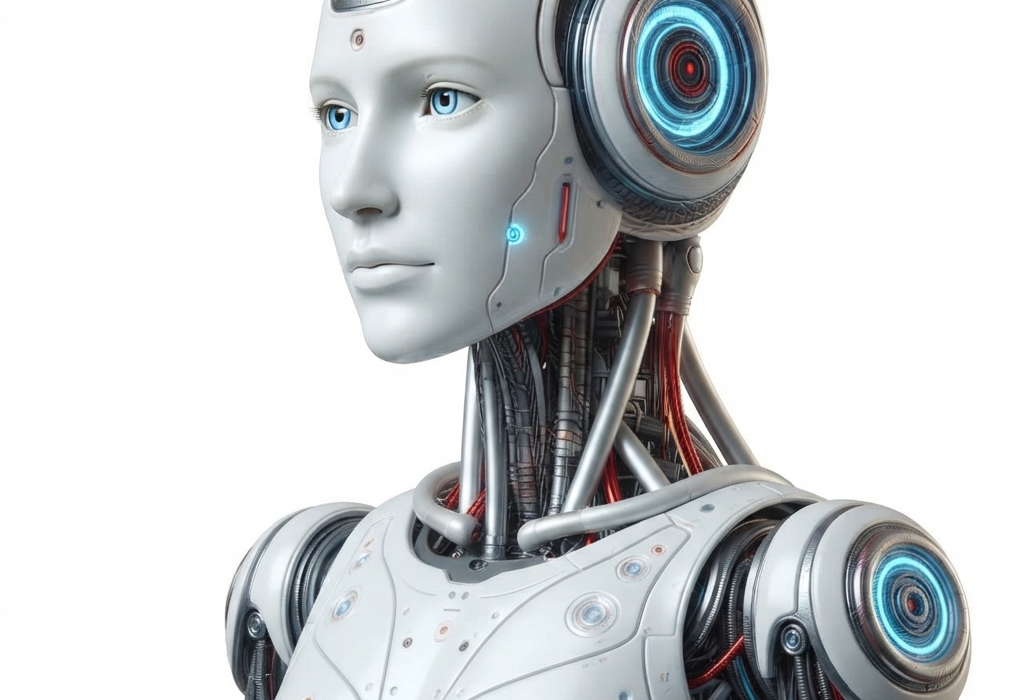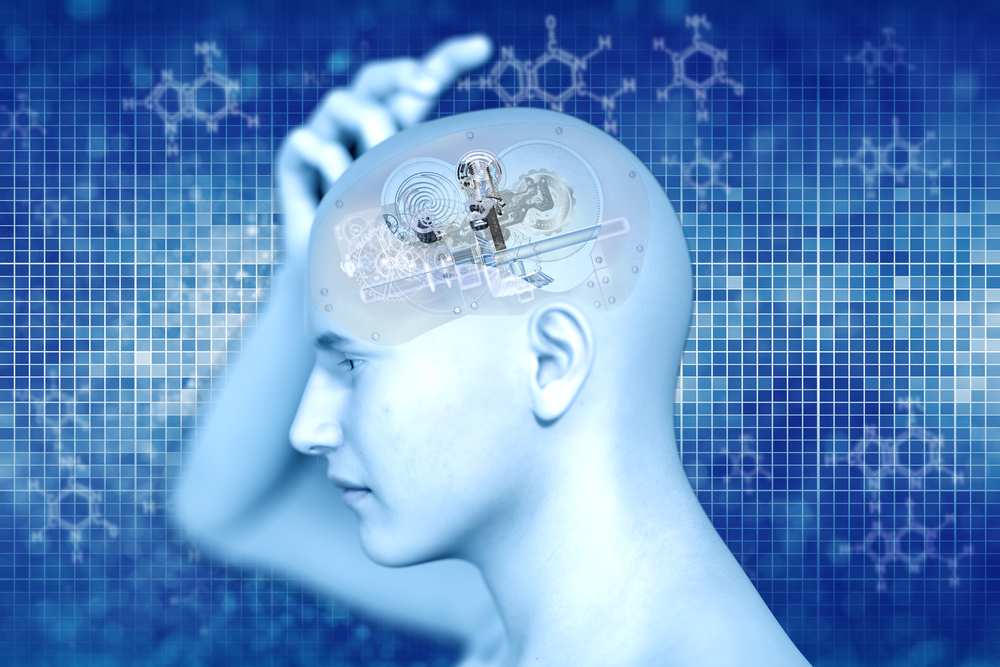
For decades, computers have become faster, smaller, and more powerful. They can perform trillions of calculations every second, analyze enormous amounts of data, and solve problems that once seemed impossible. Yet despite these remarkable achievements, even the world’s most advanced supercomputers still struggle with tasks that the human brain performs effortlessly. Recognizing a familiar face in a crowd, understanding a conversation in a noisy room, learning from just a few experiences, or adapting instantly to a changing environment are all things our brains do with astonishing efficiency.
This contrast has inspired scientists and engineers to ask a fascinating question: What if computers could work more like the human brain?
The answer has given rise to one of the most exciting fields in modern computing—brain-inspired computing, also known as neuromorphic computing. Instead of simply making traditional computers faster, researchers are redesigning computers to process information in ways that resemble the biological brain. These systems promise to make future computers far more energy-efficient, adaptive, and capable of intelligent decision-making.
Brain-inspired computers do not copy the human brain exactly. Rather, they borrow key principles from how the brain processes information and apply them to computer engineering. The result is an entirely different approach to computing that could transform artificial intelligence, robotics, medicine, autonomous vehicles, and many other technologies.
Why Traditional Computers Have Limits
To understand why brain-inspired computers are important, it helps to first understand how conventional computers work.
Most modern computers are based on an architecture proposed by mathematician John von Neumann in the 1940s. In this design, the processor and memory are separate components.
The processor performs calculations.
The memory stores information.
Whenever the processor needs data, it must retrieve it from memory, perform calculations, and then send the results back. This continuous movement of data happens billions of times every second.
Although this design has been enormously successful, it has an important weakness known as the von Neumann bottleneck. Moving data between memory and the processor consumes time and energy. As computers become more powerful, this constant data transfer increasingly limits performance.
The human brain works very differently.
Instead of separating memory and computation, the brain performs both functions together within vast networks of interconnected neurons. Information is processed where it is stored, greatly reducing unnecessary communication.
This difference is one of the biggest reasons why the brain is extraordinarily energy efficient.
The Human Brain: Nature’s Masterpiece of Computing
The human brain is one of the most remarkable information-processing systems known.
It contains approximately 86 billion neurons, each connected to thousands of other neurons through specialized junctions called synapses. Altogether, the brain contains hundreds of trillions of synaptic connections.
Unlike electronic computers that process instructions one after another at extremely high speeds, the brain performs billions of operations simultaneously through massive parallel processing.
Every neuron constantly receives signals from many other neurons.
Some signals encourage it to send a message.
Others discourage it.
When enough incoming signals reach a certain threshold, the neuron generates a brief electrical pulse called an action potential, often referred to as a neural spike.
This spike travels along the neuron’s axon and communicates with other neurons through synapses.
The brain’s intelligence emerges from the collective activity of these enormous interconnected networks rather than from any single neuron.
What Are Brain-Inspired Computers?
Brain-inspired computers are computer systems designed to mimic some of the brain’s methods of processing information.
Rather than using continuous streams of calculations like traditional processors, these systems often rely on networks of artificial neurons that communicate through short electrical pulses, similar to biological neurons.
Instead of separating memory from processing, many neuromorphic systems integrate both more closely, reducing the movement of information and improving efficiency.
The goal is not to reproduce every detail of the human brain but to capture its most useful computational strategies.
Researchers hope this approach will enable computers that can learn continuously, adapt quickly, recognize patterns efficiently, and consume far less energy.
Understanding Artificial Neurons
Artificial neurons are simplified mathematical or electronic versions of biological neurons.
Each artificial neuron receives signals from many inputs.
It combines those signals according to certain rules.
If the combined signal becomes strong enough, the neuron activates and sends an output to other neurons.
Although much simpler than real neurons, these artificial units can work together to solve surprisingly complex problems.
Millions or even billions of artificial neurons can form networks capable of recognizing images, understanding speech, translating languages, detecting diseases, and controlling robots.
The intelligence does not come from individual neurons but from the interactions among large networks.
The Role of Synapses
Synapses are essential to both biological and artificial intelligence.
In the brain, synapses determine how strongly one neuron influences another.
Every experience slightly changes many synapses.
Learning occurs because these connections strengthen or weaken over time.
Brain-inspired computers attempt to reproduce this behavior.
Artificial synapses adjust the strength of connections between neurons as the system learns.
When certain patterns occur repeatedly, some connections become stronger while others become weaker.
This gradual adjustment enables learning without requiring explicit programming for every situation.
Spiking Neural Networks
One of the most promising approaches in brain-inspired computing involves Spiking Neural Networks (SNNs).
Unlike conventional artificial neural networks that exchange continuous numerical values, spiking neural networks communicate using brief electrical pulses called spikes.
This resembles how biological neurons communicate.
Importantly, neurons remain mostly inactive until meaningful information arrives.
Because they process information only when necessary, spiking neural networks can consume much less energy than conventional computing methods.
Timing also becomes important.
Not only does the presence of a spike matter, but the precise moment it occurs can carry valuable information.
This temporal processing allows brain-inspired computers to analyze dynamic events such as moving objects, spoken language, or rapidly changing environments more naturally.
Parallel Processing: Working Together
Traditional computers typically execute instructions sequentially, completing one operation before beginning the next.
The brain works differently.
Millions of neurons operate simultaneously.
Different brain regions process vision, hearing, movement, memory, and emotions at the same time.
Brain-inspired computers adopt this principle through parallel processing.
Many artificial neurons perform computations simultaneously, allowing the system to analyze large amounts of information efficiently.
This parallel organization is especially useful for artificial intelligence applications involving images, sound, language, and sensor data.
Memory and Processing Become One
One of the brain’s greatest strengths is that memory and computation occur together.
Every synapse both stores information and participates in processing.
Brain-inspired hardware attempts to imitate this arrangement.
Instead of repeatedly transferring data between distant memory and processors, computation occurs closer to where information is stored.
This significantly reduces energy consumption while increasing speed.
Researchers are developing new electronic components capable of combining storage and computation within the same device.
These innovations may eventually overcome the limitations of traditional computer architectures.
Learning Instead of Programming
Traditional software follows carefully written instructions.
If programmers forget to anticipate a particular situation, the computer cannot respond appropriately.
Brain-inspired computers emphasize learning rather than strict programming.
Instead of memorizing fixed rules, they improve through experience.
As they encounter new information, they adjust internal connections to make better decisions in the future.
This ability resembles biological learning.
A child does not learn to recognize cats by memorizing mathematical rules.
Instead, the brain gradually discovers common features after seeing many examples.
Brain-inspired computers aim to develop similar flexibility.
Energy Efficiency
Perhaps the most impressive feature of the human brain is its efficiency.
Despite performing astonishingly complex tasks continuously, the adult human brain typically consumes only about 20 watts of power—roughly the energy required by a dim household light bulb.
Modern artificial intelligence systems often require enormous data centers consuming thousands or even millions of watts.
Brain-inspired computing seeks to close this gap.
Because neurons activate only when necessary, unnecessary calculations are avoided.
Reduced communication between memory and processors further decreases energy use.
Lower power consumption could allow powerful artificial intelligence to operate directly inside portable devices without relying heavily on cloud computing.
Specialized Brain-Inspired Hardware
Brain-inspired computing is not only about software.
It also involves designing entirely new kinds of computer chips.
These chips contain networks of artificial neurons and synapses directly implemented in hardware.
Unlike conventional processors optimized for sequential calculations, neuromorphic chips are optimized for event-driven computation and parallel processing.
Many researchers around the world are developing increasingly sophisticated neuromorphic processors capable of supporting millions of artificial neurons.
As semiconductor technology advances, these systems continue to become more capable while maintaining remarkable energy efficiency.
Artificial Intelligence and Brain-Inspired Computing
Brain-inspired computing and artificial intelligence are closely connected but are not identical.
Artificial intelligence focuses on creating systems capable of performing tasks associated with human intelligence.
Brain-inspired computing provides one possible way of building such systems.
Many current AI models run on traditional computer hardware.
However, as AI becomes increasingly complex, conventional hardware faces growing challenges related to speed and energy consumption.
Neuromorphic computing offers an alternative foundation that may allow future AI systems to become more adaptable, efficient, and autonomous.
Vision Inspired by Biology
Human vision is extraordinarily efficient.
Our eyes constantly send information to the brain, which immediately recognizes faces, objects, movement, colors, and depth.
Brain-inspired computers attempt to replicate this process.
Some systems use event-based vision sensors, sometimes called neuromorphic cameras.
Unlike ordinary cameras that capture complete images many times each second, these sensors record only changes in brightness.
If nothing changes, no data are transmitted.
This dramatically reduces the amount of information that must be processed while allowing extremely fast responses.
Such sensors are particularly useful for autonomous vehicles, robotics, and drones operating in rapidly changing environments.
Hearing Like the Human Brain
The brain is remarkably skilled at interpreting sound.
It can distinguish voices in crowded environments, recognize music, and identify subtle differences in speech.
Brain-inspired computing applies similar principles to audio processing.
Artificial neural systems can analyze speech, detect important sounds, remove background noise, and interpret spoken language more naturally.
Future hearing aids, voice assistants, and communication systems may become much more effective using neuromorphic technologies.
Brain-Inspired Robotics
Robots operating in the real world must constantly adapt.
Unexpected obstacles appear.
Lighting conditions change.
People move unpredictably.
Traditional programming often struggles with these dynamic environments.
Brain-inspired computers allow robots to learn continuously from experience.
Instead of following rigid instructions, they can gradually improve navigation, object recognition, and decision-making.
This flexibility makes robots more useful in homes, hospitals, factories, agriculture, and disaster response.
Healthcare Applications
Medicine is another area where brain-inspired computing may have a profound impact.
Neuromorphic systems can process enormous amounts of medical information while consuming relatively little energy.
They may help analyze medical images, detect diseases earlier, monitor patients continuously through wearable devices, and improve brain-machine interfaces.
Researchers are also investigating whether brain-inspired computers can better interpret signals from the nervous system, enabling more advanced prosthetic limbs and assistive technologies for people with neurological disorders.
Autonomous Vehicles
Self-driving vehicles must interpret complex environments in real time.
They continuously analyze cameras, radar, lidar, GPS, traffic signs, pedestrians, cyclists, and other vehicles.
These tasks require rapid decisions with minimal delay.
Brain-inspired computers offer significant advantages because they process sensor information efficiently while consuming less power.
Their event-driven architecture is especially well suited for environments where rapid responses are essential for safety.
Smart Devices of the Future
As electronics become increasingly intelligent, energy efficiency becomes more important.
Future smartphones, wearable devices, smart home systems, and Internet of Things sensors may rely on neuromorphic chips to perform artificial intelligence directly on the device.
Instead of constantly sending information to distant servers, many decisions could be made locally.
This approach reduces latency, lowers energy consumption, and may improve privacy because sensitive information does not always need to leave the device.
Can Brain-Inspired Computers Think Like Humans?
Despite impressive progress, brain-inspired computers are not human brains.
Today’s neuromorphic systems imitate only certain aspects of biological intelligence.
They do not possess consciousness, emotions, self-awareness, imagination, or the rich experiences that shape human thought.
The human brain remains vastly more complex than any artificial system ever built.
Scientists still do not fully understand how consciousness arises or how the brain integrates perception, memory, creativity, and reasoning into a unified experience.
Brain-inspired computers represent an engineering approach rather than an attempt to recreate the full richness of the human mind.
Challenges Facing Brain-Inspired Computing
Although the field is advancing rapidly, significant challenges remain.
The brain’s biological mechanisms are extraordinarily complex and not yet fully understood.
Building hardware that accurately reproduces neural behavior is technically demanding.
Programming neuromorphic systems requires new algorithms and software tools that differ from traditional computing.
Researchers must also develop methods for training these systems efficiently while ensuring they remain reliable and interpretable.
As with all forms of advanced artificial intelligence, ethical considerations such as privacy, transparency, fairness, and responsible deployment must also be carefully addressed.
The Future of Brain-Inspired Computing
Brain-inspired computing is still in its early stages, yet its potential is enormous.
Researchers continue exploring new materials, innovative electronic devices, advanced learning algorithms, and more realistic models of neural communication.
Future neuromorphic computers may operate with billions of artificial neurons while consuming only a fraction of the energy required by today’s AI hardware.
These systems could enable more capable robots, smarter healthcare technologies, efficient autonomous vehicles, advanced scientific research, and intelligent devices that interact with the world in increasingly natural ways.
Although they will not replace traditional computers for every task, brain-inspired systems are expected to complement existing technologies by solving problems that require learning, adaptation, perception, and real-time decision-making.
Conclusion
Brain-inspired computers represent one of the most ambitious efforts in the history of computing. Instead of relying solely on faster processors and larger memories, they seek inspiration from the most sophisticated information-processing system known—the human brain. By mimicking principles such as parallel processing, event-driven communication, adaptive learning, and tightly integrated memory and computation, these systems promise to make future computers faster, more energy-efficient, and better suited to intelligent tasks.
The journey is far from complete. Scientists are still uncovering the mysteries of the brain while simultaneously developing new forms of computer hardware and software. Every breakthrough brings us closer to machines that can learn more naturally, respond more efficiently, and operate with remarkable energy savings.
Brain-inspired computing reminds us that some of the greatest technological innovations begin not in factories or laboratories alone, but by observing nature itself. The human brain, shaped by hundreds of millions of years of evolution, continues to inspire a new generation of computers that may redefine artificial intelligence and transform the future of technology.