Imagine trying to predict the path of a hurricane months before it forms, simulate the birth of an entire galaxy, design life-saving medicines in days instead of years, or train artificial intelligence systems that can understand the world with remarkable accuracy. These extraordinary tasks require far more computing power than even the fastest personal computers can provide. This is where supercomputers come into the picture.
Supercomputers are among the most powerful machines ever created by humanity. They can perform calculations at speeds that seem almost impossible to imagine, solving scientific and engineering problems that would take ordinary computers hundreds or even thousands of years to complete.
Yet today’s supercomputers are only the beginning. Researchers around the world are developing machines that are dramatically faster, smarter, and more energy-efficient than ever before. The future of supercomputers promises to reshape science, medicine, engineering, climate research, artificial intelligence, and countless other fields. As technology advances, these incredible machines may become one of humanity’s most important tools for understanding and solving the world’s greatest challenges.
What Is a Supercomputer?
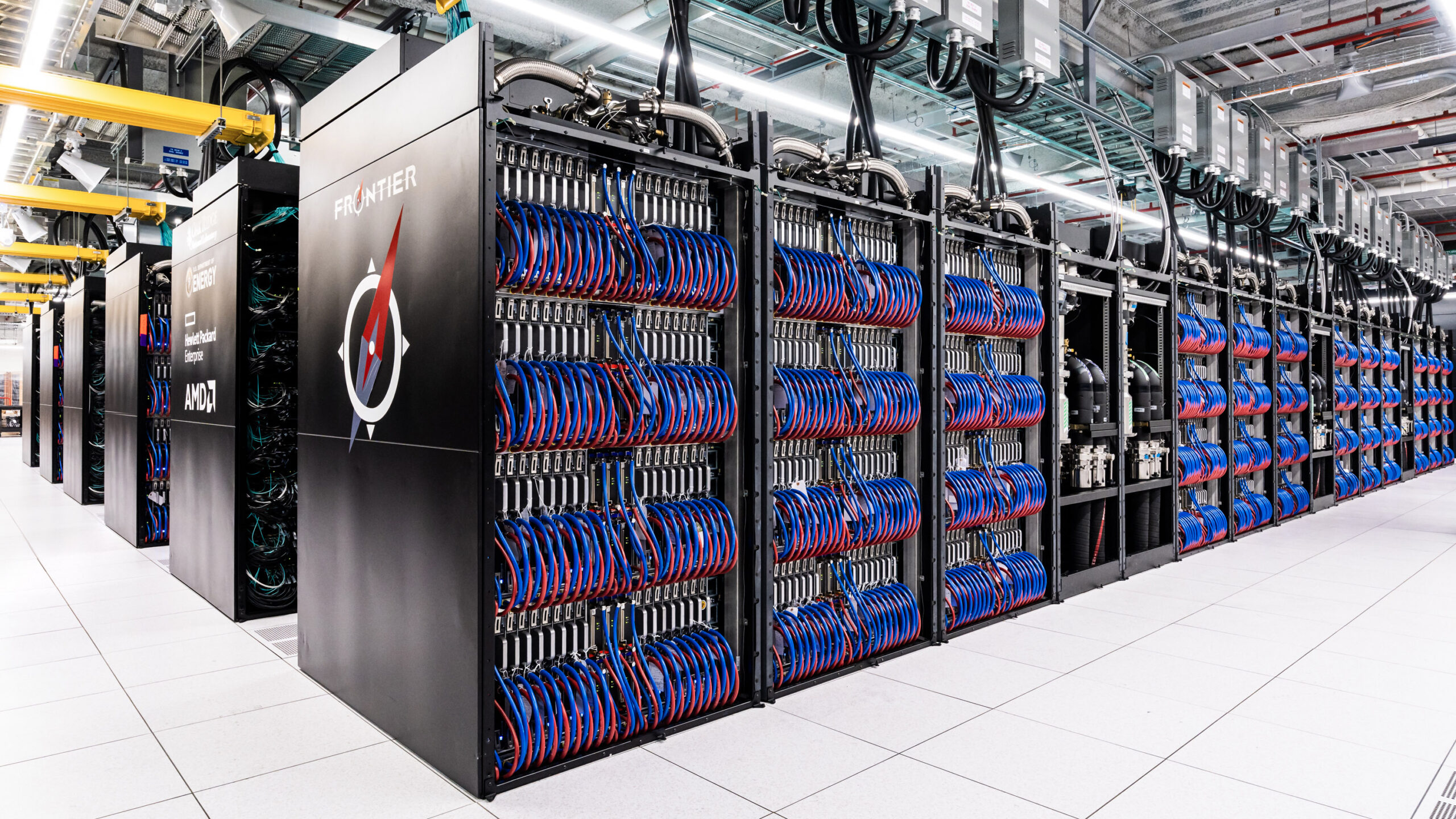
A supercomputer is an extremely powerful computer designed to perform massive numbers of calculations at incredible speeds. Unlike a home computer, which typically focuses on running a few applications at once, a supercomputer can divide enormous problems into millions of smaller tasks and solve them simultaneously.
Modern supercomputers contain thousands or even hundreds of thousands of processors working together as a single system. These processors communicate continuously, allowing the machine to analyze vast amounts of data in a very short time.
The performance of supercomputers is commonly measured in floating-point operations per second, or FLOPS. Today’s fastest systems can perform calculations in the quintillions every second, a level of performance known as exascale computing.
This enormous computing power allows scientists to tackle problems that would otherwise be impossible to solve.
Why Supercomputers Matter
The importance of supercomputers extends far beyond scientific laboratories. They help researchers understand the natural world, improve technology, and make better decisions in situations where accuracy is essential.
Weather forecasting depends heavily on supercomputers because Earth’s atmosphere is incredibly complex. Every hour, weather agencies process enormous amounts of information collected by satellites, weather balloons, aircraft, ships, and ground stations. Powerful simulations allow meteorologists to predict storms, hurricanes, floods, and heat waves with increasing accuracy.
Medical researchers use supercomputers to study diseases, simulate how proteins fold into complex shapes, analyze DNA, and search for promising drug candidates. These simulations can dramatically reduce the time needed to develop new treatments.
Astronomers rely on supercomputers to model galaxy formation, black holes, neutron stars, and the evolution of the universe itself. Engineers use them to design safer aircraft, faster automobiles, more efficient wind turbines, and advanced spacecraft.
Without supercomputers, many of today’s scientific breakthroughs would simply not be possible.
How Supercomputers Have Evolved
The earliest supercomputers were enormous machines that occupied entire rooms while delivering only a tiny fraction of the performance available today. During the 1960s and 1970s, they represented the cutting edge of technology, but their capabilities would now seem modest compared to even modern smartphones.
As semiconductor technology improved, processors became faster, smaller, and more energy-efficient. Engineers discovered that using many processors together could produce much greater performance than relying on a single extremely fast processor.
This idea of parallel computing transformed the field. Instead of solving one calculation at a time, supercomputers could perform millions of calculations simultaneously.
Over the decades, advances in processor design, memory systems, networking technology, and software have increased computing power by many orders of magnitude.
Today, the world’s fastest supercomputers perform more calculations in one second than earlier machines could complete in many years.
Entering the Exascale Era
One of the most significant milestones in computing history has been the arrival of exascale computing.
An exascale supercomputer can perform at least one exaflop, equivalent to one quintillion floating-point calculations every second.
Reaching this level required decades of engineering innovation. Simply increasing processor speed was not enough. Engineers had to redesign nearly every aspect of supercomputer architecture, including processors, memory, communication networks, storage systems, and cooling technologies.
Exascale computing enables simulations with unprecedented detail. Scientists can study weather systems at much higher resolution, simulate materials atom by atom, and model biological processes with greater realism than ever before.
The exascale era is not the end of supercomputer development. It is only the beginning of an even more ambitious future.
Artificial Intelligence Is Changing Supercomputers
Artificial intelligence is becoming one of the most important forces shaping the future of supercomputers.
Training advanced AI models requires enormous computational resources. Modern AI systems learn by processing vast collections of text, images, videos, and scientific data. This training often takes weeks or months on powerful computing clusters.
Future supercomputers are being designed specifically to accelerate AI workloads. Many combine traditional processors with specialized accelerators that excel at machine learning tasks.
At the same time, AI is helping improve supercomputers themselves. Intelligent software can optimize how computing resources are allocated, predict hardware failures before they occur, and improve energy efficiency by adjusting system operations in real time.
This growing partnership between artificial intelligence and supercomputing is creating machines that are not only faster but also smarter.
The Rise of Specialized Processors
For many years, central processing units, or CPUs, handled most scientific calculations. While CPUs remain essential, today’s supercomputers increasingly rely on specialized hardware.
Graphics processing units, or GPUs, were originally developed to render computer graphics. Researchers later discovered that GPUs are exceptionally effective at performing many mathematical calculations simultaneously.
As a result, many of the world’s fastest supercomputers now use large numbers of GPUs alongside traditional CPUs.
In the future, additional specialized processors designed specifically for artificial intelligence, scientific simulations, and data analysis may become common. These processors can deliver higher performance while consuming less energy.
Rather than relying on one universal processor, future supercomputers are likely to combine multiple types of computing hardware, each optimized for particular tasks.
Energy Efficiency Will Become a Major Challenge
As supercomputers become more powerful, they also require enormous amounts of electricity.
Some of today’s largest systems consume tens of megawatts of power, comparable to the electricity used by thousands of homes.
Providing sufficient power while controlling operating costs has become one of the greatest engineering challenges in high-performance computing.
Future supercomputers must become dramatically more energy-efficient.
Researchers are developing processors that perform more calculations while using less electricity. Improved software can reduce unnecessary operations, while advanced cooling systems remove heat more effectively.
Many future computing centers are expected to use renewable energy sources such as solar, wind, or hydroelectric power to reduce environmental impacts.
Energy efficiency is becoming just as important as raw computing speed.
Revolutionary Cooling Technologies
Powerful processors generate tremendous amounts of heat.
If this heat is not removed efficiently, electronic components can become damaged or operate less effectively.
Traditional air cooling is no longer sufficient for many of today’s largest supercomputers.
Engineers are increasingly turning to liquid cooling systems that circulate coolant directly around processors. Liquids remove heat much more efficiently than air, allowing computers to operate at higher performance while using less energy.
Researchers are also exploring immersion cooling, in which entire electronic components operate inside specially designed non-conductive liquids.
Future cooling systems will become increasingly intelligent, automatically adjusting temperatures to maximize performance and minimize energy consumption.
Faster Memory and Storage
Computing power alone is not enough.
Supercomputers also require extremely fast memory and storage systems capable of feeding enormous amounts of data to processors without delays.
Future memory technologies promise significantly higher speeds while reducing energy consumption.
Storage systems will also continue improving, allowing scientists to manage the enormous datasets generated by modern research.
Some scientific simulations produce petabytes of information, equivalent to millions of gigabytes.
Efficiently storing, retrieving, and analyzing these massive datasets is becoming an increasingly important aspect of supercomputing.
Quantum Computing and Supercomputers
Quantum computing has attracted enormous attention because it operates according to the principles of quantum mechanics rather than classical computing.
Quantum computers use qubits, which can represent combinations of states in ways that differ fundamentally from ordinary binary bits.
Although quantum computers have enormous theoretical potential, they are not expected to replace classical supercomputers in the foreseeable future.
Instead, many experts believe the future lies in hybrid computing systems.
In these systems, classical supercomputers handle traditional calculations while quantum processors tackle highly specialized problems involving quantum chemistry, optimization, and certain mathematical computations.
This partnership could significantly expand the range of problems scientists can solve.
Simulating the Entire Earth
One exciting goal for future supercomputers is creating digital models of Earth’s entire climate system at unprecedented detail.
Today’s climate models already provide valuable predictions, but future systems could simulate clouds, oceans, forests, ice sheets, atmospheric chemistry, and ecosystems with much greater precision.
These detailed simulations may help scientists better understand climate change, predict extreme weather, evaluate environmental policies, and prepare communities for future risks.
Improved climate modeling represents one of the most valuable scientific applications of next-generation supercomputers.
Accelerating Medical Discoveries
Medicine may experience some of the greatest benefits from future supercomputers.
Researchers increasingly use computer simulations to understand how diseases develop, how proteins interact, and how medicines affect human cells.
Future systems will analyze enormous collections of genetic, medical, and biological information far more rapidly than today’s machines.
Scientists may be able to identify potential drug candidates faster, design personalized treatments based on individual genetic information, and simulate complex biological processes that are currently beyond our computational capabilities.
Although laboratory testing and clinical trials will always remain essential, supercomputers can greatly accelerate the early stages of medical research.
Exploring the Universe
Astronomy is entering an era of unprecedented data collection.
Modern telescopes observe billions of galaxies, while space missions continuously return enormous amounts of information about planets, stars, and distant cosmic events.
Future supercomputers will help scientists process these observations, identify subtle patterns, and create increasingly realistic simulations of the universe.
Researchers hope to better understand dark matter, dark energy, black hole formation, galaxy evolution, and the earliest moments after the Big Bang.
As observational technology improves, supercomputers will become indispensable partners in exploring the cosmos.
Digital Twins Will Become More Powerful
A growing field known as digital twin technology involves creating highly detailed virtual versions of real-world systems.
Future supercomputers will support digital twins of aircraft engines, power grids, factories, cities, hospitals, and even ecosystems.
These virtual models can simulate how systems behave under different conditions before changes are made in reality.
Engineers can test new designs without building expensive prototypes.
City planners can evaluate transportation systems.
Manufacturers can improve production efficiency.
Doctors may eventually use digital models to better understand complex biological systems.
The accuracy of these digital twins will continue improving as computing power grows.
Supercomputers and Artificial Scientific Discovery
One fascinating possibility is that future supercomputers may assist scientists in making entirely new discoveries.
Artificial intelligence combined with enormous computational resources could analyze scientific literature, examine experimental data, identify hidden relationships, and suggest promising research directions.
Rather than replacing human scientists, these systems would act as powerful collaborators.
Researchers would still formulate questions, design experiments, interpret results, and evaluate evidence.
The computer’s role would be to accelerate exploration and reveal patterns too complex for humans to detect alone.
Challenges Facing Future Supercomputers
Despite remarkable progress, several major challenges remain.
Increasing computing power becomes more difficult as semiconductor components approach extremely small sizes.
Energy consumption continues rising.
Developing software capable of efficiently using millions of processors requires extraordinary engineering expertise.
Managing enormous datasets demands increasingly sophisticated storage technologies.
Cybersecurity is also becoming increasingly important as supercomputers play larger roles in national infrastructure, scientific research, and industrial innovation.
Addressing these challenges will require continued advances across computer engineering, materials science, mathematics, and software development.
Could Supercomputers Ever Think Like Humans?
This question often captures the imagination.
Although future supercomputers will become vastly more powerful, raw computational speed alone does not produce human-like intelligence.
A supercomputer excels at performing enormous numbers of calculations rapidly, while intelligence involves reasoning, learning, creativity, memory, perception, language, and many other complex abilities.
Modern artificial intelligence has achieved remarkable progress in areas such as language understanding, image recognition, and scientific prediction. Even so, researchers continue studying how intelligence emerges and how best to build systems that can solve increasingly sophisticated problems.
The future will likely see closer integration between AI and supercomputers, but faster hardware alone does not guarantee machines that think exactly as humans do.
The Long-Term Future
Looking several decades ahead, the future of supercomputers appears extraordinarily promising.
Machines will continue becoming faster, more energy-efficient, and better integrated with artificial intelligence. Hybrid systems combining classical and quantum computing may solve problems currently considered impossible. Scientific simulations will become increasingly realistic, helping humanity better understand everything from the smallest quantum particles to the largest structures in the observable universe.
Future supercomputers may contribute to cleaner energy technologies, improved climate predictions, faster medical breakthroughs, safer transportation systems, stronger cybersecurity, and more advanced space exploration.
Perhaps most importantly, they will continue expanding humanity’s ability to ask deeper questions about nature and search for reliable answers through science.
Conclusion
The future of supercomputers is not simply about building faster machines. It is about expanding the limits of human knowledge. Every increase in computing power opens new opportunities to understand our planet, explore the universe, improve healthcare, develop sustainable technologies, and solve challenges that affect billions of people.
As processors become more capable, artificial intelligence grows more sophisticated, quantum technologies mature, and energy-efficient designs emerge, supercomputers will play an even greater role in scientific discovery and technological innovation.
Throughout history, each generation has built better tools to explore the unknown. Future supercomputers represent the next great step in that journey. They are not merely powerful computers—they are engines of discovery, helping humanity uncover the hidden patterns of nature and bringing us closer to answering some of the most profound questions about the universe and our place within it.