For most people on Earth, a sunset is painted in warm shades of orange, red, pink, and gold. Watching the Sun slowly disappear below the horizon has inspired artists, poets, and dreamers for thousands of years. It feels so familiar that we rarely stop to wonder whether sunsets would look the same elsewhere in the Solar System.
The answer is surprising.
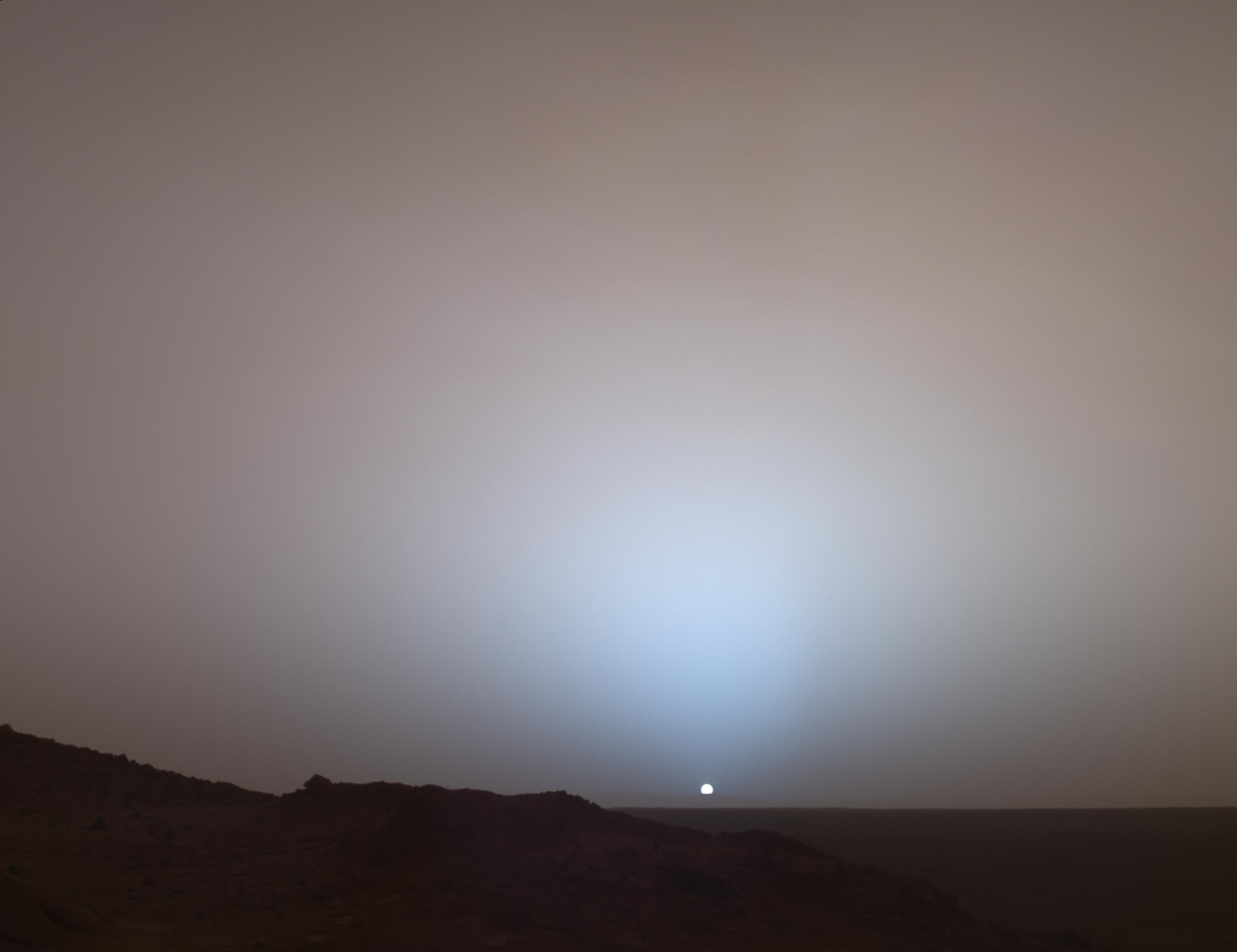
On Mars, sunsets are not dominated by fiery reds and oranges. Instead, the sky around the setting Sun often glows with a delicate blue color, creating one of the most beautiful and unexpected sights on another world. If an astronaut were standing on the Martian surface, they would witness a sunset unlike anything ever seen on Earth.
This strange phenomenon is not the result of a different Sun. The Sun shining over Mars is the same star that lights our own world. The secret lies in the Martian atmosphere, especially its tiny dust particles, which scatter sunlight in a very unusual way.
Understanding why Mars has blue sunsets reveals not only the fascinating nature of the Red Planet but also how light interacts with different atmospheres across the universe.
A Familiar Sun in an Alien Sky
Although Mars is much farther from the Sun than Earth, the Sun itself looks surprisingly familiar from the Martian surface.
Because Mars orbits at an average distance of about 228 million kilometers (142 million miles) from the Sun, compared with Earth’s average distance of about 150 million kilometers (93 million miles), sunlight reaching Mars is weaker. As a result, the Sun appears only about two-thirds as wide as it does from Earth and shines with less than half the brightness.
Even so, sunrise and sunset still occur every Martian day, known as a sol, which lasts about 24 hours and 39 minutes. To someone standing on Mars, the Sun slowly sinks below the rocky horizon just as it does on Earth—but the colors are dramatically different.
The Thin Atmosphere of Mars
To understand Martian sunsets, we first need to understand the Martian atmosphere.
Earth is wrapped in a thick atmosphere made mostly of nitrogen and oxygen. Mars, by contrast, has an atmosphere that is incredibly thin—only about one percent as dense as Earth’s at the surface.
Most of the Martian atmosphere consists of carbon dioxide, with small amounts of nitrogen, argon, oxygen, and water vapor.
Although this atmosphere is thin, it contains enormous amounts of fine dust suspended high above the surface.
This dust is the key to Mars’ unusual sunsets.
Why Is Mars Called the Red Planet?
Mars is famous for its reddish appearance.
The planet’s surface contains large amounts of iron-rich minerals. Over billions of years, iron reacted with oxygen to form iron oxides—the same compounds commonly known as rust.
Powerful winds constantly lift tiny particles of this reddish dust into the atmosphere.
As a result, the Martian sky usually appears dusty and butterscotch-colored during the day rather than bright blue like Earth’s sky.
This dusty atmosphere changes the way sunlight travels through it.
How Light Creates Colors
Sunlight may appear white, but it actually contains every visible color.
Each color has a different wavelength.
Blue light has relatively short wavelengths.
Red light has longer wavelengths.
When sunlight passes through an atmosphere, gases and particles scatter different wavelengths by different amounts.
This scattering determines the colors we see in the sky.
The process is one of the most important concepts in atmospheric physics.
Why Earth’s Sky Is Blue
Earth’s blue sky is caused mainly by Rayleigh scattering.
Our atmosphere is filled with tiny molecules of nitrogen and oxygen that are much smaller than the wavelengths of visible light.
These molecules scatter shorter wavelengths—especially blue light—much more effectively than longer red wavelengths.
During the day, blue light is scattered across the sky in every direction, making the entire sky appear blue.
At sunset, however, sunlight travels through a much thicker layer of atmosphere before reaching our eyes.
Most of the blue light is scattered away before the remaining sunlight reaches the horizon.
The direct sunlight becomes enriched in reds, oranges, and yellows, producing Earth’s familiar colorful sunsets.
Mars Follows Different Rules
Mars tells a different story.
The Martian atmosphere contains countless tiny dust particles rather than mostly clear gases.
These particles are much larger than atmospheric molecules and scatter light in a different way.
Instead of behaving like Earth’s atmosphere, Martian dust selectively scatters colors through a process that depends on the particles’ size, shape, and composition.
The result is the opposite of what many people expect.
The Special Role of Martian Dust
The dust particles floating in the Martian atmosphere are incredibly small, often only about one micrometer across.
Although tiny, they are still much larger than individual gas molecules.
These particles do not scatter sunlight equally in every direction.
Instead, they strongly forward scatter certain wavelengths of light.
Forward scattering means that light continues traveling in nearly the same direction rather than spreading evenly across the sky.
On Mars, blue light is scattered forward more efficiently than red light.
As the Sun approaches the horizon, this forward-scattered blue light becomes concentrated around the Sun’s position.
To an observer, the area immediately surrounding the setting Sun takes on a soft bluish glow.
Why the Rest of the Martian Sky Looks Red
While blue light becomes concentrated near the Sun during sunset, the rest of the Martian sky often appears reddish or brownish.
This happens because much of the red and orange light is scattered more broadly throughout the atmosphere by the suspended dust.
The contrast between the reddish sky and the bluish region surrounding the Sun creates one of the Solar System’s most striking natural spectacles.
Instead of the entire sky turning blue, only the area close to the setting or rising Sun develops this distinctive color.
Blue Sunrises on Mars
The same effect occurs during sunrise.
As the Sun begins climbing above the Martian horizon, a bluish halo often surrounds it.
This means Mars experiences both blue sunrises and blue sunsets.
Throughout the middle of the day, however, the sky generally returns to its familiar dusty tan or butterscotch appearance.
How Scientists Discovered Blue Sunsets
For many years, scientists predicted that Mars might have unusual sunsets, but confirmation required cameras on the planet itself.
NASA’s robotic explorers have provided spectacular evidence.
The Spirit and Opportunity rovers first photographed hints of bluish sunsets.
Later, the Curiosity rover captured stunning high-resolution images showing an unmistakable blue glow surrounding the setting Sun.
NASA’s Perseverance rover has continued observing Martian sunsets from Jezero Crater, providing even more detailed views.
These photographs match scientists’ understanding of how Martian dust scatters sunlight.
Rather than being artistic illusions, the blue colors are genuine atmospheric phenomena.
Dust Storms Can Change the Colors
Mars experiences some of the largest dust storms in the Solar System.
Some storms cover regions the size of continents.
Others grow so enormous that they engulf nearly the entire planet.
During these events, sunlight becomes much dimmer.
The increased amount of airborne dust changes how light scatters through the atmosphere.
As a result, the exact appearance of Martian sunsets can vary depending on how much dust is suspended in the air.
Some sunsets become softer and more diffuse, while others display stronger blue halos.
Why the Blue Is Not Like Earth’s Blue Sky
It is important not to imagine Mars having bright blue evening skies similar to Earth’s daytime sky.
The blue color on Mars is usually subtle and concentrated near the Sun.
Most of the surrounding sky remains dusty orange, reddish-brown, or gray.
If humans eventually stand on Mars, they would likely notice the unusual blue glow immediately around the Sun while the rest of the landscape retained its characteristic reddish appearance.
It would be a remarkably different visual experience from sunsets on Earth.
The Physics Behind the Beauty
Although Martian sunsets are breathtaking, their explanation comes from well-understood physical principles.
Light interacts with particles according to the particles’ size, composition, and shape.
Scientists use mathematical models based on electromagnetic theory to predict exactly how different particles scatter different wavelengths.
Measurements made by Mars landers, orbiters, and rovers have confirmed these predictions with remarkable accuracy.
The blue sunsets of Mars are therefore not mysterious anomalies but natural consequences of atmospheric physics.
Comparing Sunsets Across the Solar System
Every world with an atmosphere has the potential for unique sunsets.
On Earth, atmospheric molecules create vivid reds and oranges.
On Mars, suspended dust produces blue glows around the setting Sun.
Titan, Saturn’s largest moon, has a thick atmosphere rich in nitrogen and organic particles, creating entirely different lighting conditions.
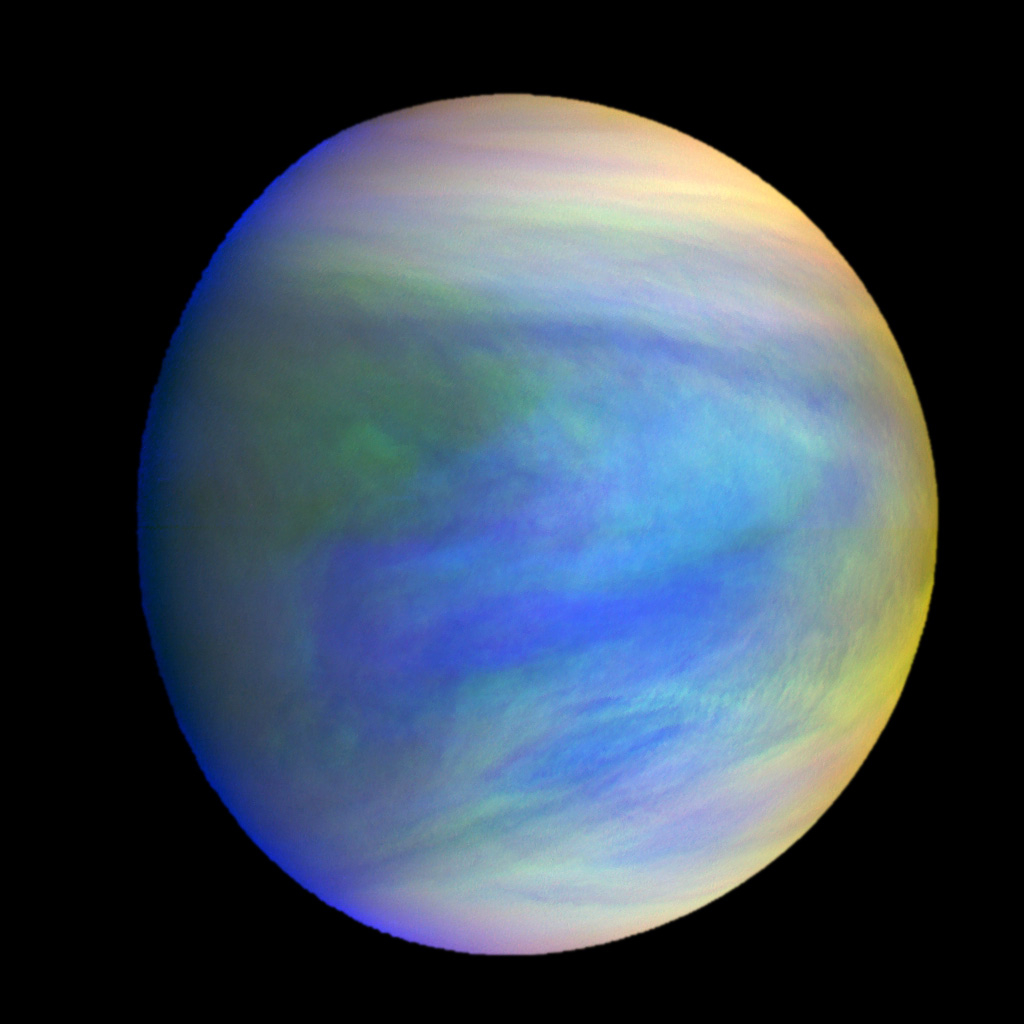
Venus has an extremely dense atmosphere filled with sulfuric acid clouds that would dramatically alter the appearance of sunlight.
Even the giant planets experience complex atmospheric scattering involving ammonia clouds, methane, and other gases.
Studying these different worlds helps scientists understand not only our own atmosphere but also those of planets orbiting distant stars.
Why Studying Martian Sunsets Matters
At first glance, the color of a sunset might seem like a beautiful curiosity with little scientific importance.
In reality, it provides valuable information.
By studying how sunlight scatters through the Martian atmosphere, scientists can estimate the size, concentration, and composition of airborne dust particles.
These measurements improve weather forecasts for future Mars missions.
Understanding atmospheric dust is especially important because it affects solar-powered spacecraft, influences temperatures, shapes climate, and can pose challenges for astronauts.
Even a sunset photograph can become a scientific tool.
What Future Astronauts May See
One day, humans may watch the Sun set from the surface of Mars with their own eyes.
Imagine standing on an ancient volcanic plain surrounded by towering cliffs and scattered rocks shaped by billions of years of wind.
The air is thin and quiet.
The Sun appears smaller than it does on Earth.
As daylight fades, the dusty sky gradually darkens.
Near the horizon, instead of glowing orange and crimson, the Sun becomes surrounded by a cool, delicate blue halo that slowly fades into the reddish landscape.
It would be a reminder that even familiar events can become extraordinary when viewed from another world.
A Beautiful Lesson From Another Planet
Mars teaches us that nature often surprises us. The same Sun that paints Earth’s evening skies with brilliant reds creates soft blue sunsets on the Red Planet—not because the Sun changes, but because each world’s atmosphere shapes light in its own unique way.
The blue sunsets of Mars are a beautiful demonstration of physics in action. Tiny dust particles suspended in the planet’s thin carbon dioxide atmosphere scatter sunlight differently from the molecules in Earth’s atmosphere, producing a phenomenon that at first seems impossible. What appears strange is actually a perfect example of how the laws of nature operate consistently under different conditions.
As robotic explorers continue studying Mars and future astronauts prepare to visit its surface, these blue sunsets will remain one of the planet’s most unforgettable sights. They remind us that every world has its own character, and that even something as ordinary as the setting Sun can reveal extraordinary secrets about the universe.