Imagine standing on another world. You look up, expecting to see a familiar blue sky like the one above Earth. Instead, you see only endless darkness. There are no clouds drifting overhead, no colorful sunsets, and no glowing blue dome stretching across the horizon. It feels as though space begins right above your head.
This may sound strange, but not every planet has a visible sky. In fact, some worlds have no sky that a human observer would recognize. Others have skies so different from Earth’s that they would seem almost alien. Understanding why this happens takes us into the fascinating science of planetary atmospheres, sunlight, and the nature of light itself.
The sky is not something that exists on its own. It is created by the interaction between light and a planet’s atmosphere. Without the right conditions, the sky as we know it simply does not appear.
What Is a Sky?
When we think about the sky, we usually imagine the bright blue dome above Earth. But scientifically, the sky is not a solid object or a physical layer. It is an optical effect produced when sunlight interacts with gases and tiny particles in a planet’s atmosphere.
Sunlight contains all the colors of visible light. As this light enters Earth’s atmosphere, molecules of nitrogen and oxygen scatter the shorter blue wavelengths more efficiently than the longer red wavelengths. This process, known as Rayleigh scattering, spreads blue light across the sky, making it appear blue in every direction during the day.
If there were no atmosphere, there would be nothing to scatter sunlight. Even in broad daylight, the sky would remain black.
The appearance of a sky depends almost entirely on the atmosphere surrounding a planet.
Earth’s Blue Sky Is Actually Unusual
It is easy to assume that every planet has a sky like Earth’s, but our planet’s atmosphere creates a surprisingly special view.
Earth has a thick atmosphere made mostly of nitrogen and oxygen. It is dense enough to scatter sunlight efficiently but clear enough to allow us to see the Sun, clouds, and distant stars under the right conditions.
The balance is remarkably fortunate. If Earth’s atmosphere were much thinner, the sky would become darker. If it were much thicker or filled with dense particles, the sky might appear white, orange, or even remain hidden behind thick clouds.
The beautiful blue sky we experience every day is the result of a delicate combination of atmospheric composition, pressure, and sunlight.
A Planet Without an Atmosphere Has No Visible Sky
The simplest reason a planet may have no visible sky is that it lacks a significant atmosphere.
Without atmospheric gases, sunlight cannot scatter across the sky. Instead, light travels directly from the Sun to the ground without filling the sky with color.
An observer standing on such a world would see the Sun as an intensely bright disk surrounded by an almost perfectly black sky.
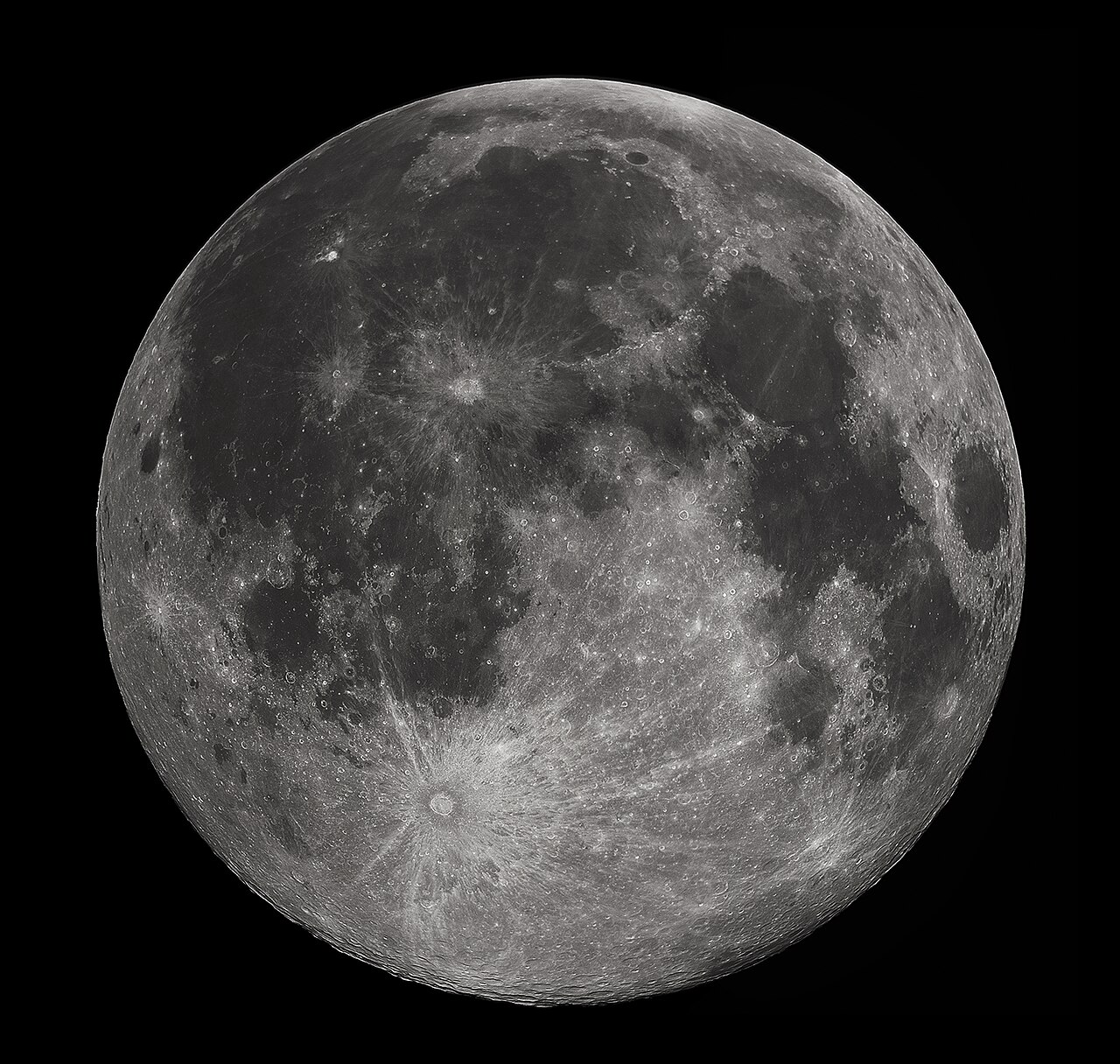
This is exactly what happens on Earth’s Moon.
Although the lunar surface is brightly illuminated during the day, astronauts standing there saw a completely black sky. The Moon has only an extremely thin exosphere, far too sparse to scatter sunlight in the way Earth’s atmosphere does.
The same principle applies to many small rocky bodies throughout the Solar System.
Mercury’s Surprisingly Dark Sky
Mercury, the closest planet to the Sun, experiences intense sunlight. Surprisingly, its daytime sky is almost completely black.
This may seem impossible. Mercury receives more than six times as much sunlight as Earth, yet its sky does not glow blue.
The reason is simple. Mercury has almost no atmosphere. It possesses only an extremely thin exosphere containing scattered atoms released from its surface by solar radiation and impacts from tiny meteoroids.
This exosphere is far too thin to scatter enough sunlight for a visible sky.
Standing on Mercury during the day, you would see a brilliant Sun against the darkness of space.
Why the Moon’s Sky Is Always Black
The Moon offers the clearest example of a world without a visible sky.
When astronauts from the Apollo missions explored its surface, photographs showed an entirely black background, even though the landscape was brightly lit.
Many people wonder why stars are not visible in these photographs. The answer is not that stars disappear. Instead, the cameras were adjusted to capture the brightly sunlit surface. Because the exposure was set for intense daylight, the much fainter stars did not appear in the images.
To human eyes, stars would become visible only when looking away from the dazzling Sun and after adapting to the darkness.
The black sky itself results directly from the Moon’s lack of a substantial atmosphere.
Thick Clouds Can Hide the Sky
Some planets have the opposite problem.
Instead of having too little atmosphere, they possess so much atmosphere that the sky becomes hidden beneath thick layers of clouds.
Venus is an excellent example.
Its atmosphere is about ninety times denser than Earth’s and consists mostly of carbon dioxide. Thick clouds made primarily of sulfuric acid completely cover the planet.
If you could stand safely on Venus—which is impossible because of its extreme temperature and pressure—you would never see open space above you. The thick clouds block direct views of the Sun and stars.
The sky would appear hazy, yellowish-orange, and dim rather than blue.
In this case, the sky exists, but it looks nothing like the clear skies we experience on Earth.
Dust Can Change the Appearance of the Sky
Not every atmosphere produces a blue sky.
Mars has a thin atmosphere composed mostly of carbon dioxide. Fine dust particles are constantly suspended in the air.
Instead of Rayleigh scattering dominating the sky’s color, the dust scatters sunlight differently.
As a result, the Martian sky usually appears butterscotch, tan, or reddish.
During sunsets, something remarkable happens.
Unlike Earth, where sunsets become red because blue light is scattered away, Mars often shows bluish sunsets near the Sun. This occurs because Martian dust scatters red and blue light differently than Earth’s atmosphere.
The result is one of the most unusual skies in the Solar System.
Gas Giants Do Not Have a Surface Sky
Planets like Jupiter and Saturn present an entirely different situation.
These giant planets have enormous atmospheres made mainly of hydrogen and helium.
Unlike Earth, they do not possess a solid surface where someone could stand and look upward.
As you descend into their atmospheres, the gases become denser and denser until they gradually merge into extremely high-pressure fluid layers.
There is no clear boundary where the atmosphere ends and the planet begins.
Because there is no solid ground, there is also no familiar viewpoint from which to experience a normal sky.
Instead, an explorer would be surrounded by layers of clouds, storms, and gases extending in every direction.
Why Color Depends on Tiny Particles
The color of a planet’s sky depends not only on the gases in its atmosphere but also on tiny particles suspended within it.
Water droplets, dust grains, volcanic ash, ice crystals, and aerosols all scatter sunlight in different ways.
On Earth, pollution and wildfire smoke can temporarily change the sky from blue to gray, orange, or even deep red.
The same physical principles apply across the Solar System.
Every atmosphere produces its own unique combination of colors depending on the particles floating within it.
Even small changes in atmospheric composition can dramatically alter the appearance of the sky.
The Role of Sunlight
The type of star a planet orbits also affects its sky.
Our Sun emits most of its energy in visible light, which interacts with Earth’s atmosphere to create familiar blue skies.
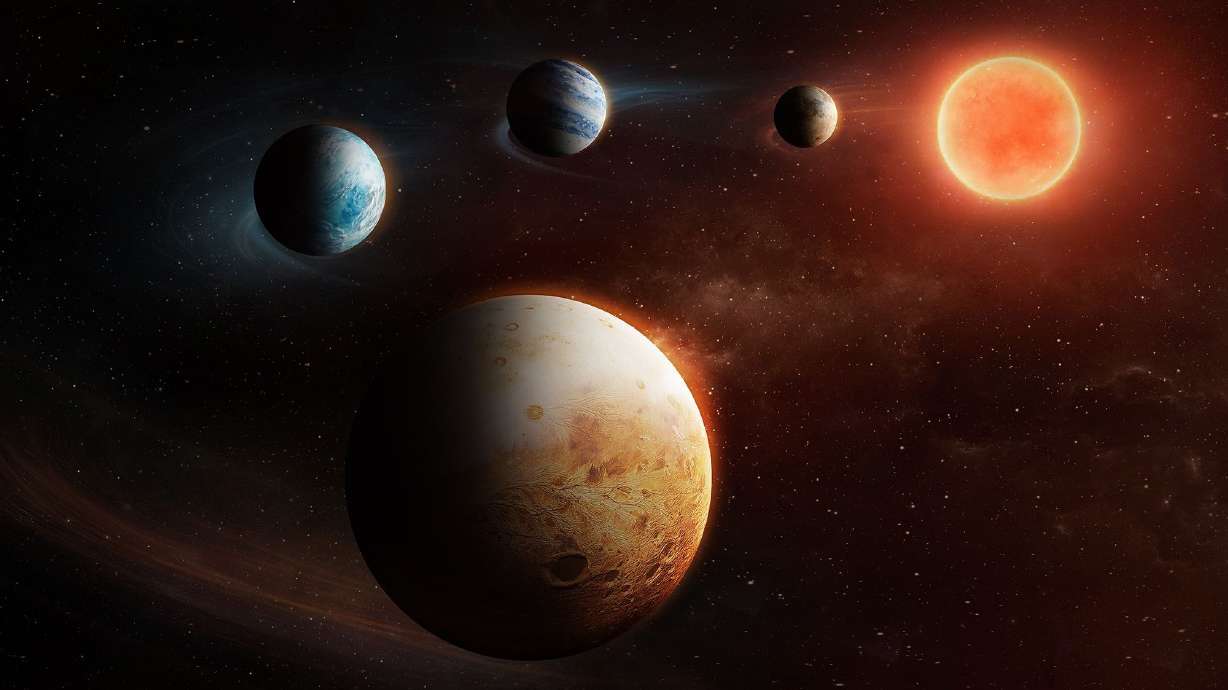
A planet orbiting a cooler red dwarf star would receive light with a different color balance.
Depending on the atmosphere, its sky might appear very different from Earth’s.
Scientists studying potentially habitable exoplanets use computer models to predict what skies on these distant worlds might look like.
Some could have pale blue skies, while others might appear lavender, orange, or even nearly white.
Can a Planet Lose Its Sky?
A planet’s atmosphere is not permanent.
Over billions of years, some planets lose much of their atmosphere to space.
Low gravity makes it easier for gases to escape.
Powerful solar wind can gradually strip away atmospheric particles.
Large asteroid impacts can also alter atmospheric conditions.
Mars probably had a much thicker atmosphere billions of years ago. Geological evidence suggests that rivers, lakes, and perhaps even oceans once existed there.
As Mars gradually lost much of its atmosphere, its climate became colder and drier.
Its sky changed as well, becoming thinner and less Earth-like over immense spans of time.
Exoplanets May Have Extraordinary Skies
Thousands of planets have been discovered orbiting stars beyond our Solar System.
Although we cannot directly stand on these distant worlds, scientists can estimate their atmospheres using telescopes that analyze starlight passing through planetary gases.
Some exoplanets may have skies filled with silicate clouds resembling tiny grains of glass.
Others may have iron clouds, methane hazes, or water-rich atmospheres unlike anything found in our Solar System.
Some extremely hot planets may have no stable clouds at all, while others could possess atmospheres so thick that no direct sunlight reaches the lower layers.
Every newly discovered exoplanet expands our understanding of what a sky can be.
Why Humans Associate the Sky With Home
For people on Earth, the blue sky is one of the most familiar sights in everyday life. It signals daylight, changing weather, and the passage of time. Because we have always lived beneath this blue dome, it feels natural to assume that all worlds must have something similar.
Planetary science reveals a much richer reality.
Some worlds have skies that glow orange.
Some have reddish skies filled with dust.
Some are hidden beneath endless clouds.
Some have no visible sky at all.
Others may possess skies unlike anything humans have ever imagined.
The universe reminds us that even something as ordinary as looking upward can be extraordinarily different from one planet to another.
A Window Into Planetary Science
The presence—or absence—of a visible sky tells scientists an enormous amount about a planet. It reveals whether the world has an atmosphere, what gases it contains, how dense that atmosphere is, how sunlight interacts with it, and even clues about the planet’s climate and geological history.
Every sky is the result of physics in action. It is shaped by light, molecules, gravity, temperature, and time. By studying these factors, scientists learn not only about individual planets but also about how planetary systems evolve throughout the universe.
The next time you look up at Earth’s bright blue sky, it is worth remembering how rare and remarkable it truly is. Across the countless worlds scattered through space, many have skies painted in unfamiliar colors, hidden behind thick clouds, or absent altogether. Our own sky is not simply a backdrop to daily life—it is a beautiful reminder of the unique atmosphere that makes Earth the home we know.