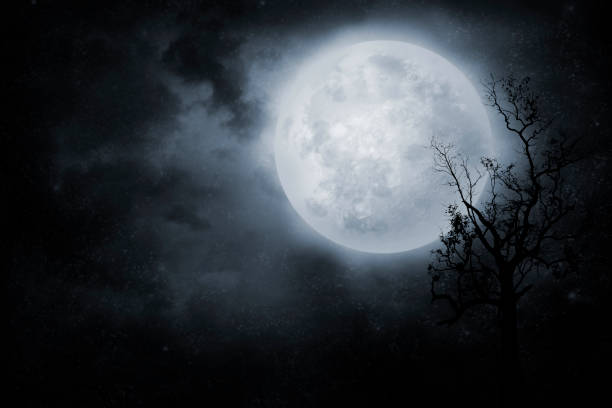
Imagine standing on the Moon. Above you stretches an endless sky unlike anything you have ever seen on Earth. There are no soft blue colors, no glowing sunrise, and no bright afternoon sky. Even with the Sun shining intensely overhead, the sky remains as dark as midnight. Against this black backdrop, stars can appear, and the Earth hangs in space like a giant blue-and-white marble.
It may seem surprising. After all, the Moon receives plenty of sunlight. If the Sun is shining just as brightly there as it does on Earth, why isn’t the lunar sky blue?
The answer lies in one simple but extraordinary difference between Earth and the Moon: the Moon has almost no atmosphere.
Understanding why the Moon’s sky is black instead of blue reveals not only how light behaves but also why Earth’s sky is one of the most beautiful natural wonders in the Solar System.
The Sun Shines on the Moon Just Like It Shines on Earth
Many people imagine the Moon as a permanently dark world, but this is far from the truth.
When the Sun is above the lunar horizon, its light is incredibly bright. In fact, because there are no clouds, haze, or pollution to block the sunlight, the Sun appears dazzling. The lunar surface is illuminated so strongly that astronauts walking on the Moon during the Apollo missions needed specially designed visors to protect their eyes.
So the problem is not a lack of sunlight.
The Moon receives nearly the same amount of sunlight as Earth because the two worlds orbit close to one another in space. The sunlight reaching the Moon is just as white and just as powerful.
Yet the sky remains black.
Why?
Earth’s Blue Sky Comes from the Atmosphere
To understand the Moon’s sky, we first need to understand our own.
The sky itself is not actually blue.
Sunlight appears white, but it is made up of many different colors. Each color has a different wavelength, from long red wavelengths to much shorter blue and violet wavelengths.
As sunlight enters Earth’s atmosphere, it encounters billions upon billions of tiny molecules of nitrogen and oxygen.
These tiny molecules scatter sunlight in every direction.
This process is known as Rayleigh scattering.
Shorter wavelengths, especially blue light, are scattered much more efficiently than longer red wavelengths.
As blue light bounces throughout the atmosphere, it reaches our eyes from every direction. No matter where we look during the day, scattered blue light fills the sky.
That is why the daytime sky appears blue.
The atmosphere acts almost like an enormous natural light diffuser surrounding our planet.
The Moon Has Almost No Atmosphere
The Moon is very different.
Unlike Earth, it does not have a thick blanket of gases surrounding it.
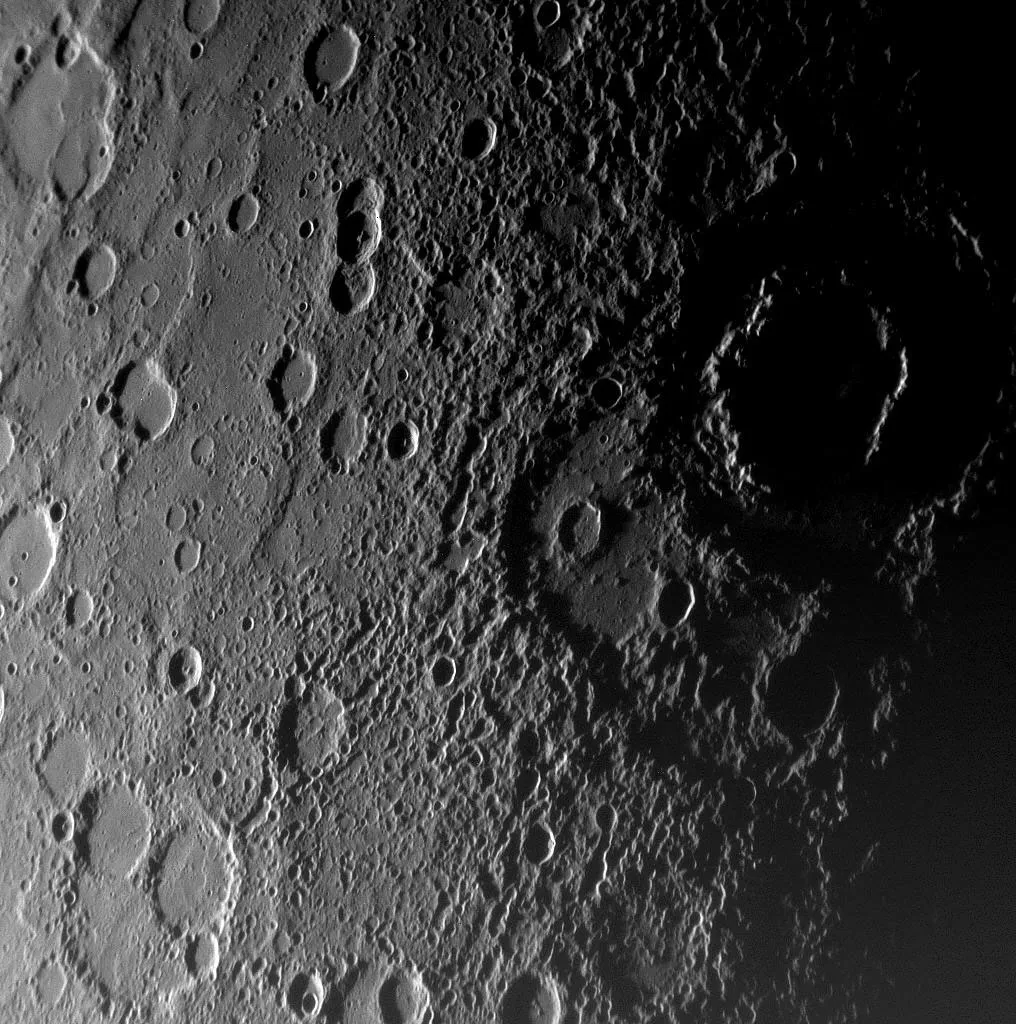
Instead, it has an extremely thin collection of atoms called an exosphere. This exosphere is so incredibly sparse that it is almost a perfect vacuum. The atoms are spread so far apart that they rarely collide with one another.
Compared with Earth’s atmosphere, the Moon’s exosphere is unimaginably thin.
Because there are so few particles, almost no sunlight is scattered.
Instead of bouncing around in all directions, sunlight travels in nearly straight lines from the Sun to the lunar surface.
Without scattered light filling the sky, there is nothing to create a blue color.
The result is a sky that remains black even in broad daylight.
Why Space Looks Black
The Moon’s sky looks very much like the sky astronauts see from spacecraft orbiting Earth.
Space itself has no atmosphere.
Without gas molecules or dust to scatter sunlight, empty space does not glow.
Even though sunlight is racing through space at the speed of light, you cannot actually see the light unless it reflects from something or scatters toward your eyes.
This is similar to shining a flashlight through a perfectly clean, invisible room.
You cannot see the beam itself.
You only see the light when it strikes dust, smoke, fog, or another object.
On Earth, the atmosphere reveals the sunlight.
On the Moon, there is almost nothing to scatter it.
Why the Sun Still Looks Bright
If the sky is black, you might wonder whether the Sun would also appear dim.
Quite the opposite.
The Sun appears brilliantly bright against the dark background.
Without an atmosphere, there is no haze to soften its light.
Its edges appear sharper than they do from Earth.
The contrast between the intensely bright Sun and the pitch-black sky is dramatic.
This creates one of the strangest views imaginable—a blazing Sun shining in what looks like the middle of the night.
Why the Stars Are Different
During the daytime on Earth, the bright blue sky overwhelms the faint light coming from distant stars.
The stars are still there, but scattered sunlight makes the sky so bright that we cannot usually see them.
On the Moon, there is no blue sky to hide them.
In principle, stars can remain visible even while the Sun is up because the surrounding sky stays black.
However, whether astronauts actually see stars depends on where they are looking and how bright the nearby landscape or Sun is. The intense glare from the Sun and the brightly lit lunar surface can make faint stars difficult for human eyes to notice without blocking the sunlight.
Still, the Moon offers a much darker sky than Earth does during the day.
Why Sunrises on the Moon Are Different
Sunrise on Earth is a colorful event.
The sky gradually changes from deep blue to orange, pink, purple, and gold.
These beautiful colors are all created by sunlight interacting with Earth’s atmosphere.
As the Sun rises or sets, its light travels through a longer path in the atmosphere. Much of the blue light is scattered away before reaching your eyes, allowing reds and oranges to dominate.
On the Moon, almost none of this happens.
With virtually no atmosphere, there is no colorful scattering.
Instead, the Sun rises above the horizon against a black sky.
The change from darkness to daylight is much more abrupt than it is on Earth.
Could the Moon Ever Have Had a Blue Sky?
Scientists believe that billions of years ago, shortly after the Moon formed, it may briefly have possessed a thicker atmosphere created by volcanic activity.
Large volcanic eruptions could have released gases that surrounded the Moon for a time.
However, the Moon’s gravity is much weaker than Earth’s.
Because of this weaker gravity, it cannot hold onto most gases for very long.
Over time, the atmosphere escaped into space.
Without enough gravity to continually replenish and retain a dense atmosphere, the Moon became the nearly airless world we see today.
If the Moon somehow had an atmosphere as thick as Earth’s, it could indeed have a blue daytime sky.
Why Earth Can Keep Its Atmosphere
Earth is much larger and more massive than the Moon.
Its stronger gravity holds atmospheric gases close to the surface.
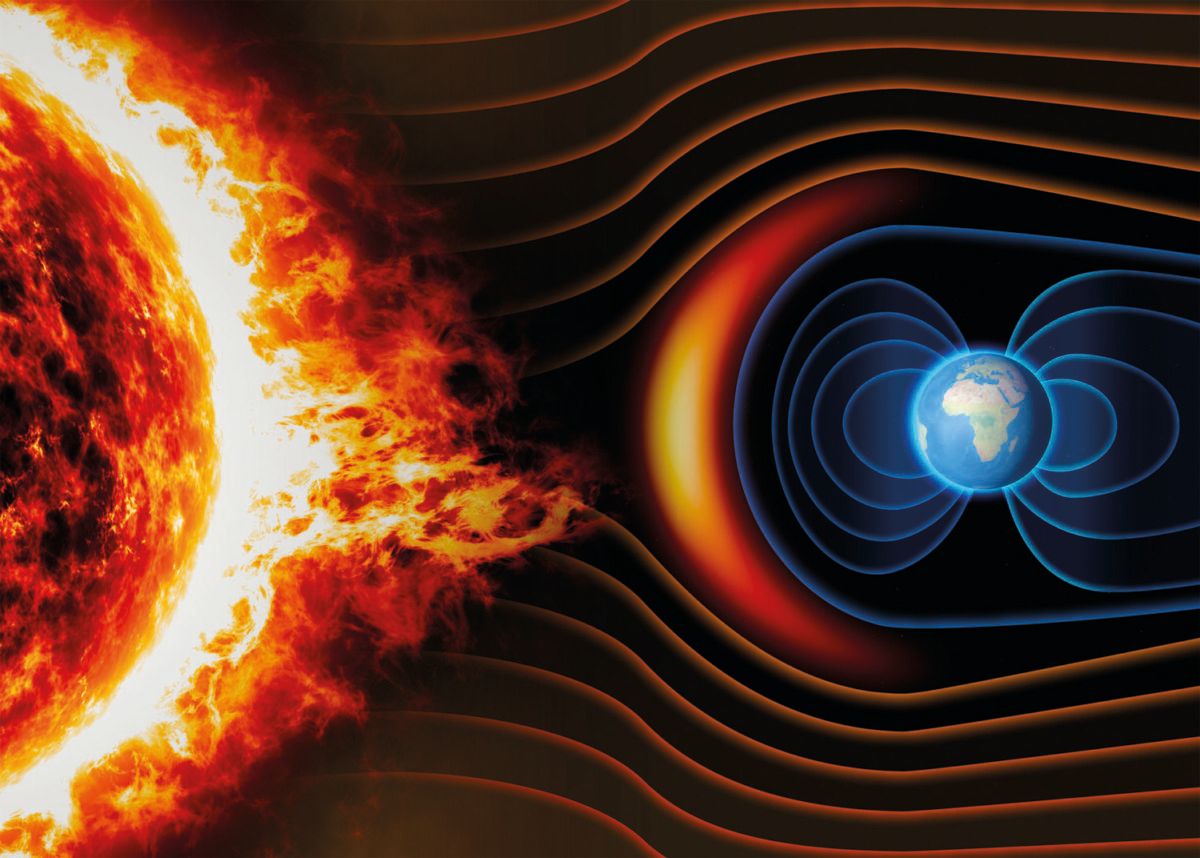
Earth also has a magnetic field that helps protect its atmosphere from being stripped away by the solar wind, a stream of charged particles flowing from the Sun.
Together, gravity and magnetic protection have allowed Earth to maintain a stable atmosphere for billions of years.
That atmosphere not only creates our blue sky but also supports weather, protects life from harmful radiation, and helps regulate the planet’s temperature.
The Moon lacks all of these advantages.
What Astronauts Saw During the Apollo Missions
When astronauts landed on the Moon between 1969 and 1972, they experienced this remarkable environment firsthand.
Photographs from the Apollo missions show astronauts standing beneath an inky black sky even though the landscape around them is brightly illuminated by the Sun.
Many people have wondered why these photographs rarely show stars.
The reason is mainly photographic.
The cameras were set to capture the brightly lit lunar surface and astronauts. Those camera settings made the much fainter stars too dim to appear in the images, just as stars often disappear in photographs taken on Earth during the daytime.
The black sky seen in the Apollo photographs is exactly what physics predicts.
What Would It Feel Like to Stand Under a Black Daytime Sky?
Standing on the Moon would be unlike any experience on Earth.
Above you would be an endless black sky stretching into space.
The Sun would shine with incredible brightness.
Shadows would appear unusually dark because there is almost no scattered light to soften them.
The landscape would have sharp contrasts between bright and dark regions.
Looking upward, you would see no blue dome, no drifting clouds, and no colorful horizon.
Instead, you would feel as though you were standing directly in space.
It would be both beautiful and deeply unfamiliar.
Why Doesn’t Mars Have the Same Sky as the Moon?
Mars helps illustrate how important an atmosphere really is.
Mars has a much thinner atmosphere than Earth, but it still has enough gas and dust to scatter sunlight.
Because of the fine dust suspended in the Martian atmosphere, the daytime sky often appears butterscotch, tan, or reddish rather than blue.
The Moon, by contrast, has almost no atmosphere at all.
Its sky remains black because there is essentially nothing available to scatter sunlight.
This comparison shows that even a relatively thin atmosphere can dramatically change the appearance of a planet’s sky.
Could Humans Create a Blue Sky on the Moon?
Some people dream about transforming the Moon into a place where humans could live permanently.
To create a blue sky, the Moon would need an atmosphere thick enough to scatter sunlight.
That would require enormous amounts of gases such as nitrogen and oxygen.
Even if such an atmosphere could somehow be produced, keeping it there would be an enormous challenge. The Moon’s weak gravity would allow gases to escape into space over time, meaning the atmosphere would gradually disappear unless it were continually replenished.
For this reason, giving the Moon a permanent blue sky is far beyond current technological capabilities.
A Black Sky That Tells a Scientific Story
The Moon’s black daytime sky is much more than a curious sight. It is a powerful reminder of how deeply an atmosphere shapes a planet’s appearance and environment.
Earth’s blue sky is not simply a beautiful backdrop. It is the visible signature of an atmosphere that protects life, moderates climate, and scatters sunlight in every direction. Without that blanket of air, our world would look startlingly different.
The Moon teaches us this lesson every time we see photographs of astronauts standing beneath a pitch-black sky while brilliant sunlight floods the ground around them.
The next time you look up at Earth’s blue sky, it is worth remembering that this familiar color is actually quite rare. It exists because billions of tiny molecules in our atmosphere are constantly scattering sunlight, painting the heavens blue from dawn until dusk. On the Moon, where those molecules are almost entirely absent, sunlight travels silently through empty space, leaving the sky forever black despite the brilliance of the Sun.