Every day, thousands of people around the world wait for a phone call that could change—or save—their lives. They are waiting for a donor organ. Some need a new heart to keep beating. Others need a healthy liver, kidney, or lungs because their own organs can no longer do their jobs. Unfortunately, there are far fewer donated organs than there are patients who need them. Many people wait for months or even years, and some never receive the transplant they desperately need.
This global shortage has inspired one of the most remarkable fields in modern medicine: the science of growing artificial organs. Instead of relying solely on donated organs, scientists are working toward a future where replacement organs can be created in laboratories using living cells, advanced biomaterials, and cutting-edge engineering. While this goal is still being pursued, tremendous progress has already been made, bringing regenerative medicine closer to changing healthcare forever.
Growing an artificial organ is one of the most complex scientific challenges humanity has ever attempted. An organ is not simply a collection of cells. It is a highly organized living structure containing millions or even billions of specialized cells working together. Scientists must recreate not only the organ’s shape but also its intricate internal architecture, blood vessels, nerves, and biological functions.
The journey is difficult, but every breakthrough brings new hope for millions of people living with organ failure.
Why Artificial Organs Are Needed
Modern medicine has become remarkably successful at treating diseases, repairing injuries, and extending human life. However, when an organ fails completely, replacing it often becomes the only effective treatment.
Today, organ transplantation saves countless lives. Kidneys, hearts, livers, lungs, pancreases, and intestines can all be transplanted. Yet transplantation depends on finding a compatible donor, which is one of the greatest limitations of current medicine.
Even when a donor organ becomes available, another challenge remains. The recipient’s immune system naturally recognizes foreign tissue and may attack the transplanted organ. To prevent this, transplant recipients usually need lifelong immunosuppressive medications, which reduce immune activity but can increase the risk of infections and other complications.
Artificial organs grown from a patient’s own cells could solve many of these problems. Because the cells originate from the patient, the immune system would be much less likely to reject the new organ.
What Is an Artificial Organ?
The term “artificial organ” can describe several different technologies.
Some artificial organs are mechanical devices. Artificial hearts, ventricular assist devices, and dialysis machines perform certain functions of natural organs but are made from metal, plastic, and electronic components.
Scientists are now pursuing something even more ambitious: growing living biological organs that closely resemble natural human organs.
These laboratory-grown organs are made from living cells rather than mechanical parts. They are designed to repair, replace, or restore damaged tissue while functioning like the organs they are intended to replace.
This field combines biology, engineering, chemistry, materials science, medicine, and computer technology into a rapidly advancing area known as tissue engineering and regenerative medicine.
Understanding Human Cells
Every organ begins with cells.
The human body contains trillions of cells, each carrying essentially the same DNA. Despite sharing the same genetic instructions, cells become highly specialized. Some become heart muscle cells that contract continuously throughout life. Others become liver cells that process nutrients and remove toxins. Kidney cells filter blood, while nerve cells transmit electrical signals.
Scientists grow artificial organs by guiding cells to develop into these specialized forms.
This process requires recreating many of the biological signals that naturally occur during human development before birth.
The Remarkable Power of Stem Cells
One of the greatest discoveries enabling artificial organ research is the understanding of stem cells.
Unlike ordinary cells, stem cells have two extraordinary abilities. They can divide repeatedly to produce more stem cells, and they can develop into many different specialized cell types.
Some stem cells naturally exist in the human body, helping repair tissues throughout life. Other stem cells can be produced in laboratories by reprogramming ordinary adult cells into induced pluripotent stem cells, often called iPS cells. These cells behave similarly to embryonic stem cells and can potentially develop into nearly any cell type in the body.
Scientists can collect a small sample of skin or blood cells from a patient, reprogram them into stem cells, and then encourage them to become heart cells, liver cells, kidney cells, nerve cells, or many other specialized tissues.
This remarkable technology has transformed regenerative medicine.
Building Organs Layer by Layer
Growing an organ is far more complicated than growing individual cells.
Cells need a place to attach, organize, and communicate with one another. In the body, this support comes from the extracellular matrix, a network of proteins and other molecules surrounding cells.
Scientists recreate this support using structures called scaffolds.
A scaffold acts like the framework of a building. It provides the shape and physical support that allows cells to grow into organized tissue.
Some scaffolds are made from biodegradable materials that slowly disappear as living tissue develops. Others are created from natural biological materials.
As cells multiply, they spread across the scaffold, forming increasingly complex tissue.
Decellularization: Using Nature’s Blueprint
One fascinating approach begins with a real organ.
Scientists can take an organ from an animal or donated human tissue and carefully remove nearly all living cells using specialized chemical solutions.
This process, called decellularization, leaves behind the organ’s natural structural framework, including its intricate network of blood vessels and supporting proteins.
The remaining scaffold retains the organ’s original architecture.
Researchers then introduce new human cells onto this scaffold. Over time, the cells grow, attach, and begin rebuilding living tissue inside the natural framework.
Because nature already created the perfect structure, decellularized organs offer an attractive starting point for regenerative medicine.
The Revolutionary World of Bioprinting
Perhaps one of the most exciting technologies in medicine is 3D bioprinting.
Traditional 3D printers build objects by depositing plastic or metal layer by layer.
Bioprinters work similarly, but instead of plastic, they use bioinks containing living cells mixed with carefully designed biological materials.
Computer-guided printers place these living materials with extraordinary precision.
Layer after layer, cells are positioned to resemble natural tissue.
Scientists can print skin, cartilage, blood vessel segments, and small tissue structures. Research continues toward printing increasingly complex organs containing multiple cell types arranged exactly where they belong.
Bioprinting allows researchers to customize organs based on medical images from individual patients, potentially creating replacement tissues that match their anatomy.
Growing Tiny Organs in the Laboratory
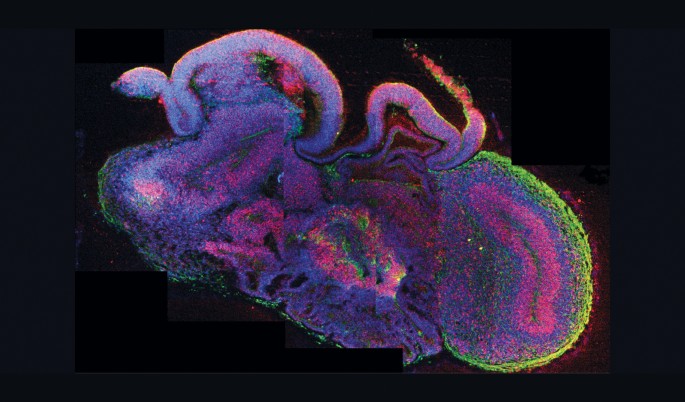
Scientists have achieved remarkable success growing miniature versions of organs known as organoids.
Organoids are tiny three-dimensional structures grown from stem cells that mimic certain characteristics of real organs.
Researchers have produced brain organoids, liver organoids, intestinal organoids, kidney organoids, retinal organoids, and lung organoids.
Although these miniature organs are much smaller and less complex than full-sized human organs, they provide valuable tools for studying disease.
Scientists use organoids to investigate infections, genetic disorders, cancer, and drug responses without directly experimenting on patients.
In many cases, organoids reproduce important biological features of real organs, allowing researchers to observe diseases developing in controlled laboratory conditions.
Growing Blood Vessels
One of the greatest challenges in creating large artificial organs is supplying oxygen and nutrients.
Every living cell requires a continuous supply of oxygen delivered through blood vessels.
Small tissues can survive by absorbing oxygen directly from surrounding fluids.
Larger organs cannot.
Without an extensive network of arteries, veins, and tiny capillaries, cells deep inside an organ quickly die.
Creating this vascular network remains one of the most difficult engineering challenges in regenerative medicine.
Scientists are developing methods to grow blood vessels naturally, print vascular structures, or encourage the body to form new blood vessels after transplantation.
Progress continues rapidly, but vascularization remains one of the major hurdles before fully functional laboratory-grown organs become routine.
The Challenge of Growing a Human Heart
The heart is among the most demanding organs to recreate.
Unlike many tissues, heart muscle contracts continuously throughout life.
Its cells must beat in perfect synchrony while receiving a constant blood supply.
The heart also contains specialized electrical pathways that coordinate every heartbeat.
Scientists have successfully grown patches of heart muscle and tiny beating cardiac tissues in laboratories.
These tissues are helping researchers study heart disease and evaluate new medicines.
Although growing an entire transplantable human heart remains an enormous challenge, steady advances continue bringing this goal closer.
Rebuilding the Liver
The liver possesses an extraordinary ability to regenerate naturally.
This natural regenerative capacity makes it an attractive target for tissue engineering.
Researchers have developed liver organoids capable of performing several important liver functions.
Scientists are also exploring ways to combine liver cells with biodegradable scaffolds and bioprinting techniques to create increasingly complex liver tissue.
Such advances may eventually help patients suffering from liver failure or inherited liver diseases.
Engineering Kidneys
Kidneys perform highly sophisticated tasks.
They continuously filter blood, remove waste products, balance body fluids, regulate electrolytes, and help control blood pressure.
Each kidney contains about one million microscopic filtering units called nephrons.
Recreating this intricate architecture is exceptionally difficult.
Scientists have successfully grown kidney organoids containing nephron-like structures.
Although these miniature kidneys cannot yet replace human kidneys, they are providing valuable insight into kidney development, disease, and potential future therapies.
Artificial Skin Is Already Saving Lives
Among all engineered tissues, artificial skin represents one of regenerative medicine’s greatest successes.
Laboratory-grown skin is already used to help treat severe burns and certain chronic wounds.
Scientists culture skin cells, encourage them to grow into layers resembling natural skin, and transplant them onto damaged areas.
Researchers continue improving artificial skin by adding blood vessels, hair follicles, sweat glands, pigmentation, and immune cells to better reproduce normal skin.
Growing Cartilage and Bone
Unlike many organs, cartilage contains relatively few blood vessels, making it easier to engineer.
Scientists have successfully grown cartilage for reconstructive surgery involving the nose, ears, and joints.
Bone tissue engineering has also made significant progress.
Researchers combine stem cells, biodegradable scaffolds, and growth factors to encourage new bone formation.
These techniques may eventually improve treatment for severe fractures, birth defects, and bone diseases.
How Bioreactors Help Organs Grow
Cells require carefully controlled conditions.
They need oxygen, nutrients, proper temperature, appropriate acidity, and mechanical stimulation.
Scientists use specialized machines called bioreactors to provide these ideal conditions.
Bioreactors continuously circulate nutrient-rich fluids through developing tissues.
Some even imitate natural movements.
Heart tissues may experience rhythmic stretching similar to beating.
Bone tissues may receive gentle mechanical pressure.
These physical signals encourage cells to mature more naturally.
Bioreactors essentially act as artificial environments where growing organs can develop under carefully monitored conditions.
Artificial Organs for Drug Testing
One of the most immediate benefits of laboratory-grown tissues is improving drug development.
Before new medicines reach patients, researchers must evaluate their safety and effectiveness.
Traditionally, this process has relied heavily on animal studies followed by clinical trials.
Human organoids now provide an additional research tool.
Scientists can expose miniature liver, kidney, or heart tissues to experimental drugs and observe their effects directly on human cells.
This approach may improve predictions of drug safety while helping researchers better understand diseases.
Gene Editing and Personalized Medicine
Modern regenerative medicine increasingly intersects with gene editing technologies.
Some inherited diseases result from mutations in a single gene.
Scientists are exploring whether these mutations can be corrected in patient-derived stem cells before growing replacement tissues.
In principle, a patient’s own cells could be genetically corrected, expanded into healthy tissue, and eventually transplanted back into the same individual.
Although this approach remains largely experimental, it represents an exciting direction for personalized medicine.
Ethical Considerations
Growing artificial organs raises important ethical questions.
Researchers must ensure that stem cell research follows strict ethical guidelines.
Patient safety remains the highest priority.
Every engineered tissue must undergo extensive laboratory testing and carefully designed clinical trials before becoming widely available.
Scientists must also consider fairness in access to these advanced therapies.
If artificial organs become successful, healthcare systems will face important questions about affordability and global availability.
Responsible scientific progress requires balancing innovation with ethical responsibility.
The Challenges That Remain
Despite remarkable advances, growing fully functional human organs remains one of medicine’s greatest scientific challenges.
Scientists must recreate not only the correct cell types but also their precise organization.
Blood vessels, nerves, immune cells, supporting tissues, and biochemical communication networks all need to function together.
Large organs must survive transplantation, integrate with the patient’s body, and continue working for many years.
Researchers continue addressing each of these challenges through advances in stem cell biology, biomaterials, imaging, computer modeling, and bioengineering.
Progress often comes step by step rather than through dramatic breakthroughs.
Yet each discovery builds upon previous achievements.
The Future of Artificial Organs
The future of artificial organ research is filled with extraordinary possibilities.
Scientists envision hospitals where patients receive personalized organs grown from their own cells, reducing the need for donor waiting lists and minimizing the risk of immune rejection.
Bioprinters may eventually produce increasingly complex tissues on demand. Advanced organoids could improve our understanding of diseases that have puzzled researchers for decades. Engineered tissues may transform drug discovery, allowing medicines to be tested more safely and efficiently before reaching patients.
Researchers are also exploring ways to combine artificial intelligence, robotics, advanced imaging, and regenerative medicine to improve organ design and manufacturing. As these technologies continue to mature, they may work together to create more reliable and effective replacement tissues.
Although many technical challenges remain, the pace of progress has accelerated dramatically over the past few decades.
A New Chapter in Medicine
The effort to grow artificial organs represents far more than a technological achievement. It reflects humanity’s determination to overcome one of medicine’s greatest limitations and offer hope to people facing life-threatening organ failure.
What once belonged only to science fiction is steadily becoming scientific reality. Laboratories around the world are growing tiny organs, engineering living tissues, printing biological structures, and discovering new ways to harness the remarkable regenerative abilities of human cells. Every experiment deepens our understanding of how the body builds itself and how those natural processes can be guided to heal disease.
Although fully transplantable laboratory-grown hearts, kidneys, livers, and lungs are not yet a routine part of medical care, the scientific foundation continues to grow stronger. Advances in stem cell biology, tissue engineering, biomaterials, bioprinting, and regenerative medicine are steadily bringing this vision closer.
The journey is far from over, but it is one of the most inspiring stories in modern science. Each new discovery carries the possibility that, one day, patients waiting for a life-saving organ may no longer depend solely on a donor. Instead, they may receive an organ carefully grown from their own cells—a living replacement created through decades of scientific curiosity, innovation, and compassion.