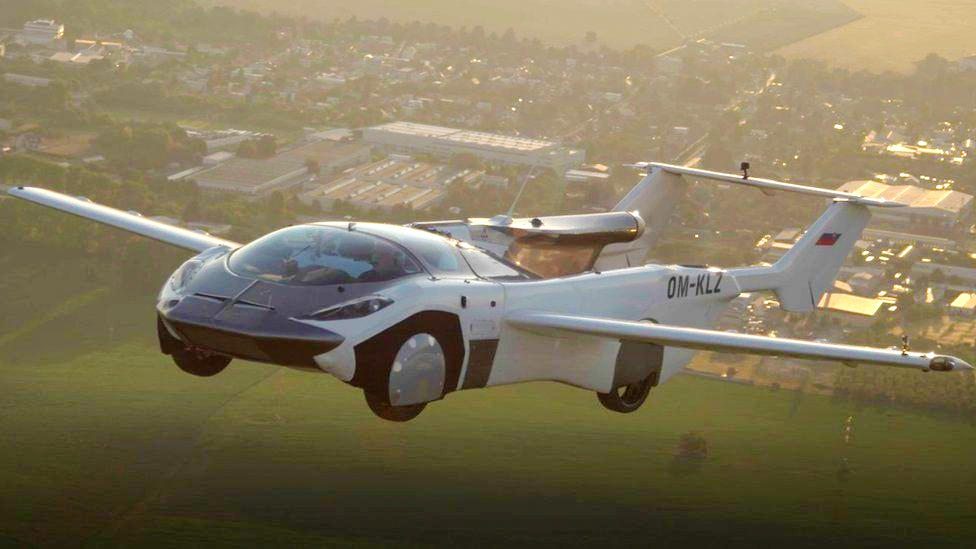
For more than a century, flying cars have captured the human imagination. They have soared through the pages of science fiction novels, raced across movie screens, and appeared in futuristic artwork promising a world where traffic jams disappear and every family can travel through the sky. The image is irresistible: instead of waiting at crowded intersections, you simply lift off from your driveway and glide effortlessly above the city.
But reality has always been more complicated than fiction.
While airplanes have connected continents for decades and helicopters can hover almost anywhere, creating a vehicle that combines the convenience of a car with the freedom of flight has proven to be one of engineering’s greatest challenges. The dream never disappeared, but it remained just beyond reach.
Today, however, something remarkable is happening. Advances in electric motors, lightweight materials, powerful batteries, artificial intelligence, and autonomous flight systems have brought the concept of flying cars closer than ever before. Around the world, dozens of companies are building aircraft that look like they belong in tomorrow rather than today.
The question is no longer whether flying cars are possible.
The real question is: When will they become part of everyday life?
What Is a Flying Car?
The phrase “flying car” often creates a misleading image. Many people imagine a normal automobile that unfolds wings, takes off from a road, flies like an airplane, lands, folds its wings, and continues driving.
Although engineers have built a few such vehicles, most modern “flying cars” are actually something different.
Today’s flying cars are more accurately described as electric vertical takeoff and landing aircraft, commonly known as eVTOLs. These aircraft resemble a combination of a helicopter, a drone, and a small airplane. Instead of one large rotor like a helicopter, they usually have several electric propellers that lift the aircraft vertically before it flies forward.
Many designs are intended to transport two to six passengers across cities or nearby regions rather than replace ordinary cars for daily driving.
In other words, the flying cars of the future may not drive on roads at all. They may become an entirely new form of urban transportation.
Why Flying Cars Were Impossible for So Long
People have imagined flying automobiles since the early twentieth century. Inventors built prototypes, governments funded experiments, and engineers repeatedly tried to merge automobiles with aircraft.
Most of these projects failed.
The problem was never a lack of imagination. It was a lack of suitable technology.
Flying requires enormous amounts of energy. Traditional gasoline engines were often too heavy or too inefficient to create practical personal aircraft. Helicopters required complex mechanical systems, demanded highly trained pilots, consumed large amounts of fuel, and generated significant noise.
Safety presented another challenge. A vehicle operating just a few meters above the ground leaves little room for error. Even small mechanical failures could have serious consequences.
As a result, flying cars remained fascinating prototypes rather than practical vehicles.
The Technologies Changing Everything
The situation began changing dramatically in the twenty-first century.
Electric motors became far more efficient.
Lithium-ion batteries improved their energy storage capabilities.
Computer-controlled flight systems grew increasingly reliable.
Artificial intelligence advanced rapidly.
Lightweight composite materials became stronger than ever before.
These breakthroughs transformed what engineers believed was possible.
Electric motors are particularly important because they contain fewer moving parts than traditional engines, require less maintenance, and can precisely control multiple propellers at the same time.
Instead of relying on one powerful engine, modern eVTOL aircraft often distribute lift across many smaller rotors. This design can improve stability and, in some cases, provide additional resilience because the aircraft is not dependent on a single propeller.
How Flying Cars Actually Fly
Unlike airplanes, many flying cars do not require long runways.
They lift straight upward using several rotating propellers.
Once airborne, many designs gradually tilt their propellers or wings, allowing the aircraft to transition into forward flight. Flying forward is generally more energy-efficient than hovering because wings can generate lift as air flows over them.
When approaching a destination, the aircraft slows down, returns to a vertical position, and lands gently.
This combination of vertical takeoff and efficient forward flight is one of the defining features of modern flying-car designs.
The Role of Electricity
Electric propulsion is at the heart of nearly every serious flying-car project.
Electric motors provide instant torque, respond quickly to computer controls, and produce no exhaust emissions during operation.
They are also much quieter than conventional helicopter engines, although the spinning propellers still generate noticeable sound.
However, batteries remain one of the biggest challenges.
Even today’s best rechargeable batteries store far less energy per kilogram than aviation fuels. This limits how far electric flying cars can travel before needing to recharge.
Researchers around the world are working to develop batteries with greater energy density, faster charging times, longer lifespans, and improved safety.
Future advances in battery technology could dramatically expand the capabilities of flying vehicles.
Can Flying Cars Already Fly?
Yes.
Several companies have successfully demonstrated aircraft capable of carrying passengers.
Some prototypes have completed hundreds of test flights.
Others have flown between airports or across cities under controlled conditions.
In some countries, regulators have begun evaluating these aircraft for commercial certification.
Although these vehicles are not yet common on city streets or neighborhood rooftops, they are no longer science fiction.
They are real aircraft undergoing extensive testing.
Why Flying Cars Are Not Everywhere Yet
If the technology exists, why aren’t flying cars already part of everyday life?
The answer involves much more than simply building an aircraft.
Every new flying vehicle must meet extremely high safety standards.
Governments require extensive testing before allowing aircraft to carry passengers.
Manufacturers must demonstrate that their vehicles remain safe under many different conditions, including equipment failures, changing weather, and emergency situations.
This certification process takes years because aviation safety leaves very little room for mistakes.
Even after approval, cities must build the infrastructure needed to support these aircraft.
The Need for New Infrastructure
Flying cars require places to take off and land.
These locations, often called vertiports, may be built on rooftops, parking structures, airports, or specially designed transportation hubs.
Each vertiport would need charging stations, maintenance facilities, passenger waiting areas, and sophisticated air traffic management systems.
Cities would also need new communication networks capable of coordinating thousands of aircraft safely.
Without this infrastructure, even the most advanced flying vehicle cannot operate efficiently.
Air Traffic in the Sky
Road traffic is already complicated.
Air traffic is even more challenging.
Commercial airplanes operate under carefully managed air traffic control systems.
If thousands of small flying vehicles begin operating over cities, managing them safely becomes a major engineering challenge.
Future systems will likely depend heavily on automation.
Artificial intelligence may continuously monitor aircraft positions, weather conditions, battery levels, flight paths, and possible hazards.
These systems could automatically adjust routes to avoid collisions while maintaining efficient travel.
Human oversight would still remain essential, but computers are expected to handle much of the routine coordination.
Safety Comes First
Whenever people discuss flying cars, one concern appears immediately.
What happens if something goes wrong?
Engineers take this question very seriously.
Many flying-car designs include multiple electric motors instead of relying on a single engine.
Advanced computers constantly monitor every component during flight.
Some aircraft are designed to continue flying even if one motor stops working, although the exact capability depends on the specific design and certification requirements.
Some prototypes also include emergency parachute systems intended to help protect occupants if certain severe failures occur.
Because flying cars operate above populated areas, safety standards are expected to remain among the strictest in transportation.
Will You Need to Fly One Yourself?
Perhaps not.
Many companies envision highly automated aircraft capable of performing much of the flight with minimal pilot input.
Eventually, some flying taxis may operate autonomously under regulatory approval, though widespread passenger service without an onboard pilot will depend on extensive testing, public confidence, and government certification.
Until then, many early services are expected to include trained pilots.
As automation improves, operating these vehicles may become increasingly simple from the passenger’s perspective.
Flying Taxis May Arrive Before Personal Flying Cars
One interesting possibility is that you may ride in a flying car long before you own one.
The first widespread use of this technology is expected to involve air taxi services.
Instead of purchasing an aircraft, passengers could book short flights through smartphone applications, much like current ride-sharing services.
This approach allows companies to manage maintenance, charging, pilot training, inspections, and safety procedures while making the technology available to many people.
It also reduces the need for every individual to own a flying vehicle.
How Fast Could Flying Cars Be?
Many proposed eVTOL aircraft are designed to cruise at speeds roughly between 150 and 300 kilometers per hour, although capabilities vary by model.
At these speeds, trips that currently require an hour in heavy traffic could potentially take only fifteen or twenty minutes if suitable routes and infrastructure exist.
The greatest advantage is not necessarily higher speed but avoiding congested roads altogether.
Will Flying Cars Replace Regular Cars?
Probably not.
Cars remain highly efficient for short local travel.
Road networks already connect homes, schools, workplaces, hospitals, and shopping centers.
Flying vehicles are unlikely to replace all ground transportation.
Instead, they may become another transportation option.
People might drive locally but choose air transportation for longer urban journeys, airport transfers, or trips across rivers, mountains, or heavily congested areas.
Just as airplanes did not eliminate trains, flying cars are unlikely to eliminate automobiles.
Environmental Impact
Many flying cars are powered entirely by electricity, which means they produce no exhaust emissions while operating.
However, their overall environmental impact depends on how the electricity used to charge them is generated.
Electric aircraft also consume significant energy during vertical takeoff and landing.
Compared with gasoline-powered helicopters, electric aircraft may reduce local air pollution and potentially lower noise levels, though they are not silent.
Their environmental benefits will likely increase as electricity production shifts toward renewable energy sources.
Challenges That Still Remain
Despite impressive progress, significant obstacles remain before flying cars become common.
Battery technology still limits flight range.
Aircraft certification requires years of careful evaluation.
Air traffic systems must evolve.
Cities need new infrastructure.
Manufacturing costs remain high.
Public acceptance will also play an important role. People must trust that flying vehicles are safe before they become part of everyday transportation.
Each of these challenges is solvable, but together they require time, investment, and international cooperation.
How Much Will Flying Cars Cost?
Early flying vehicles are expected to be expensive.
Advanced electric propulsion systems, lightweight materials, sophisticated computers, and aviation-grade safety requirements significantly increase manufacturing costs.
Initially, commercial air taxi services may be more practical than private ownership.
As production expands and technology matures, costs could gradually decrease, much as computers, smartphones, and electric vehicles became more affordable over time.
Whether personal flying cars eventually become common household purchases remains uncertain.
Could Flying Cars Change Cities?
If flying transportation becomes widespread, cities themselves may evolve.
Some office buildings could include rooftop landing facilities.
Airports might become more closely connected with urban centers through short aerial routes.
Emergency medical transportation could become faster in crowded regions.
Remote communities might gain improved access to healthcare and essential services.
Urban planners may eventually incorporate aerial transportation into future city designs alongside roads, railways, bicycle paths, and pedestrian networks.
What About Weather?
Weather remains one of aviation’s greatest challenges.
Heavy rain, thunderstorms, strong winds, dense fog, and icing conditions can affect flight safety.
Flying cars will likely operate under weather restrictions similar to other aircraft.
Advanced sensors and forecasting systems can improve safety, but they cannot eliminate the effects of severe weather.
This means flying cars will not always be available under every condition.
Could Flying Cars Reach Rural Areas?
Although much attention focuses on cities, flying vehicles could also benefit rural regions.
Remote communities sometimes face long travel times to hospitals, schools, or transportation hubs.
Short-distance electric aircraft could potentially provide faster connections where roads are limited.
Their usefulness, however, would still depend on infrastructure, maintenance facilities, and economic viability.
What Scientists Predict About the Future
Most experts agree that the transition will happen gradually rather than overnight.
The first stage is already underway through experimental aircraft and certification testing.
The next stage is expected to involve commercial air taxi services operating on carefully planned routes.
Only after years of successful operation, expanding infrastructure, falling costs, and increasing public confidence might privately owned flying vehicles become more common.
Exactly when this will happen remains uncertain because progress depends on technological advances, government regulations, economic factors, and public acceptance.
Rather than a sudden revolution, flying cars are likely to become reality through steady evolution.
The Human Dream of Flight
Throughout history, humanity has looked toward birds with admiration.
The invention of airplanes transformed that dream into reality.
Flying cars represent the next chapter in that centuries-long journey.
They combine engineering, physics, computer science, artificial intelligence, battery technology, and aviation into one ambitious vision.
Whether they ultimately become as common as automobiles or remain specialized transportation, they demonstrate humanity’s remarkable ability to imagine the impossible and gradually turn imagination into reality.
Conclusion
Flying cars are no longer confined to science fiction. Advances in electric propulsion, lightweight materials, computer-controlled flight, and automation have transformed them into genuine engineering projects, with several aircraft already completing successful test flights. Yet widespread adoption requires much more than technological innovation. Safe certification, reliable batteries, urban infrastructure, effective air traffic management, and public trust must all develop together before these vehicles can become part of everyday life.
For most people, the first experience with a flying car is likely to come through an air taxi service rather than private ownership. Over time, as technology improves and costs decline, these aircraft may become increasingly accessible. While no one can say exactly when flying cars will become an ordinary sight above our neighborhoods, one thing is clear: the dream is no longer about whether they can fly. It is about how soon society is ready to welcome them into the skies.