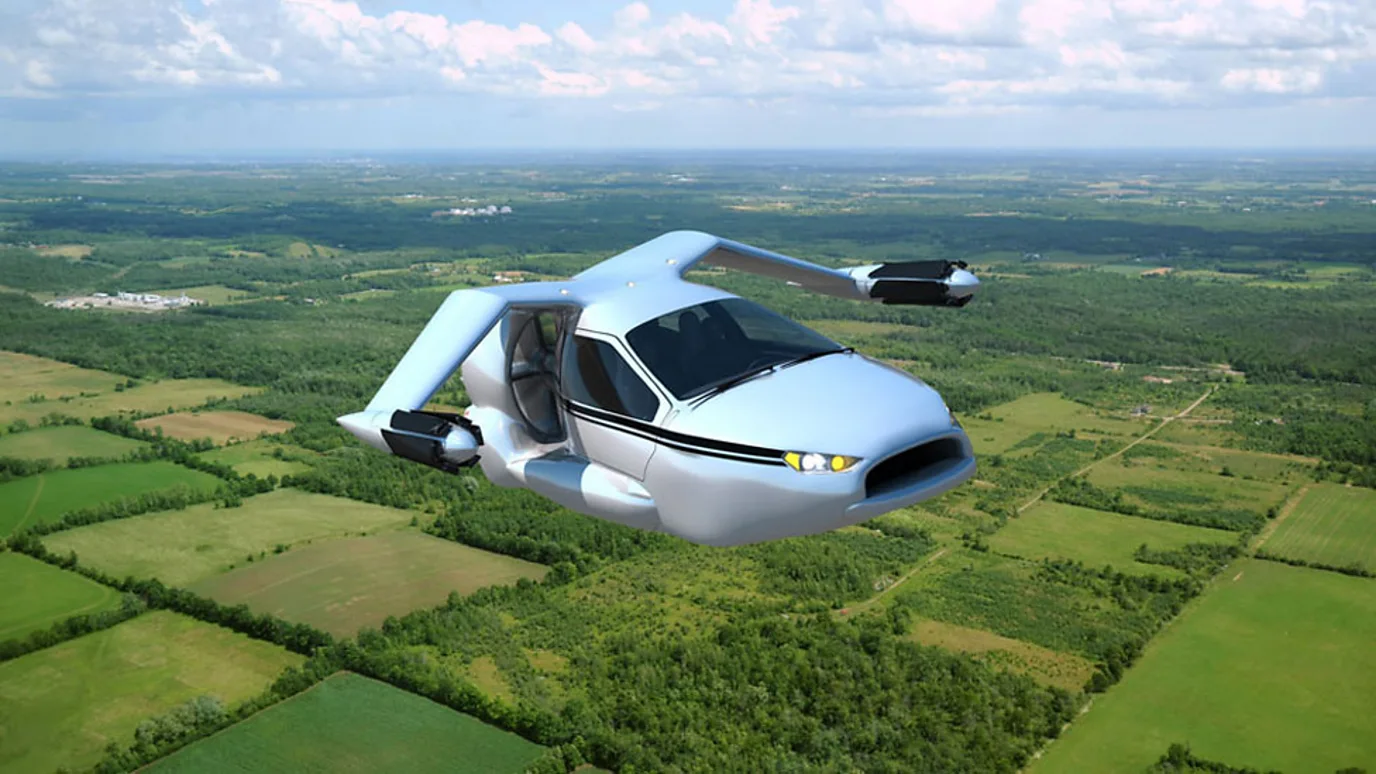
Imagine leaving your home during rush hour, climbing into your car, and instead of waiting in endless traffic, the vehicle quietly rises into the sky and flies over crowded roads. What once seemed possible only in science fiction movies is gradually becoming a real engineering challenge. Around the world, scientists, engineers, and technology companies are working to turn the dream of flying cars into a practical form of transportation.
Although fully operational flying cars are not yet part of everyday life, remarkable progress has been made. Several companies have successfully tested prototype vehicles capable of both driving and flying, while others are developing electric aircraft designed for short urban trips. These innovations suggest that the future of transportation may look very different from today’s roads.
But what exactly is a flying car? How can a vehicle leave the ground? What technologies make flight possible? And will flying cars truly become part of our daily lives?
Let’s explore the fascinating science behind one of humanity’s most ambitious transportation ideas.
What Is a Flying Car?
A flying car is a vehicle designed to travel both on the ground like a conventional automobile and through the air like an aircraft, or in some designs, to fly without needing traditional road-driving capabilities. The main goal is to combine the convenience of personal transportation with the speed and flexibility of flight.
Different companies use different approaches. Some flying cars can transform from a road vehicle into an aircraft by unfolding wings or extending rotors. Others are built primarily for air travel and are intended to take off and land vertically without operating as ordinary cars on public roads.
Regardless of the design, every flying car must safely generate enough lift to overcome gravity while remaining stable, controllable, and efficient.
Why Do We Need Flying Cars?
Modern cities are becoming increasingly crowded. As populations grow, traffic congestion wastes millions of hours each year. Long commutes also increase fuel consumption and air pollution.
Flying cars are being developed to reduce travel time by using the open space above roads. Instead of following winding streets and traffic signals, these vehicles could travel along carefully managed aerial routes.
A journey that takes an hour by car could potentially be completed in a fraction of that time by air, depending on distance and air traffic management.
Flying cars may also improve emergency transportation. Ambulances, rescue teams, and disaster response units could reach difficult locations much faster than ground vehicles.
The Science Behind Flying
To understand flying cars, we first need to understand how flight works.
Flying is possible because of four fundamental forces.
Gravity pulls every object toward Earth.
Lift pushes an aircraft upward.
Thrust moves it forward or upward, depending on the design.
Drag is the air resistance that slows movement.
For a flying car to leave the ground, the lift generated by its wings or rotors must exceed its weight. At the same time, the vehicle needs enough thrust to move efficiently while minimizing drag.
These principles are the same ones that allow airplanes, helicopters, and drones to fly.
How Does a Flying Car Generate Lift?
Different flying car designs produce lift in different ways.
Some resemble small airplanes. They use wings that create lift as air flows over them. These vehicles usually require a runway for takeoff and landing.
Others use rotating propellers or rotors similar to those on helicopters or large drones. As the rotors spin rapidly, they push air downward, creating an upward force that lifts the vehicle.
Many modern concepts belong to a category known as electric vertical takeoff and landing, often abbreviated as eVTOL. These aircraft use multiple electric propellers to rise vertically from the ground before moving forward through the air.
This technology eliminates the need for long runways and allows takeoff from relatively small landing areas.
Electric Motors Are Changing Aviation
Many flying cars use electric motors instead of traditional gasoline engines.
Electric motors offer several important advantages.
They produce fewer moving parts, making them simpler to maintain.
They operate much more quietly than conventional aircraft engines.
They produce no direct exhaust emissions during operation.
Electric motors also respond almost instantly when power is increased or decreased, allowing highly precise control during takeoff, flight, and landing.
However, batteries remain one of the biggest challenges because they store far less energy per kilogram than aviation fuel. Engineers are continuously working to improve battery technology so flying cars can travel farther without becoming too heavy.
Batteries: The Heart of Many Flying Cars
Just as smartphones rely on batteries for power, many flying cars depend on large rechargeable battery packs.
These batteries provide electricity to multiple motors that drive the propellers.
Battery performance determines several important factors.
It affects how far the vehicle can travel.
It influences how much weight it can safely carry.
It determines how long the aircraft can remain airborne.
Modern lithium-ion batteries provide significant amounts of energy, but researchers are exploring next-generation battery technologies that may offer greater energy density, faster charging, and improved safety.
Some Flying Cars Use Hybrid Systems
Not every flying car relies entirely on batteries.
Some prototypes combine gasoline engines with electric motors. These hybrid systems can extend flight range while reducing fuel consumption compared with conventional aircraft.
Future designs may also use hydrogen fuel cells or other advanced energy systems if they become practical for aviation.
Each approach has advantages and engineering challenges.
Vertical Takeoff and Landing
One of the most exciting features of many modern flying cars is vertical takeoff and landing.
Instead of accelerating along a runway like an airplane, these vehicles can rise almost straight upward.
Multiple computer-controlled propellers work together to balance the aircraft while lifting it into the air.
After reaching a safe altitude, some designs tilt their propellers forward to transition into forward flight.
When arriving at the destination, the process happens in reverse.
This capability allows flying cars to operate from rooftops, parking areas, or specially designed landing pads known as vertiports.
Computer Systems Keep Flying Cars Stable
Flying is much more complicated than driving.
A car usually balances on four wheels, while an aircraft constantly moves through changing air currents.
Modern flying cars rely heavily on advanced computers.
These onboard systems monitor speed, altitude, wind conditions, battery performance, motor output, and aircraft orientation many times every second.
Sophisticated software automatically adjusts individual motors and control surfaces to keep the vehicle stable.
Without these continuous calculations, flying many of today’s prototype vehicles would be extremely difficult.
Sensors Help the Vehicle Understand Its Surroundings
Flying cars use a wide range of sensors to gather information about the environment.
Global Navigation Satellite Systems help determine position.
Radar may detect nearby aircraft.
Cameras observe surrounding obstacles.
Laser-based sensors, such as LiDAR in some designs, can create detailed three-dimensional maps of the environment.
These systems work together to improve navigation and enhance safety during flight.
Artificial Intelligence in Flying Cars
Artificial intelligence is expected to play an important role in future flying cars.
AI systems may assist with navigation, route planning, obstacle detection, weather monitoring, and flight management.
Some future vehicles may become highly automated, reducing the workload on human operators. However, current prototypes generally still require trained pilots or specially qualified operators, depending on the regulations and design.
Even with increasing automation, human oversight remains an essential part of aviation safety.
Can Flying Cars Drive on Roads?
Some flying car designs can.
These vehicles often have foldable wings or retractable propellers. After landing, they transform into road vehicles and can be driven like ordinary cars.
Other designs are intended solely for air travel. Passengers would travel to designated landing facilities and continue their journey using ground transportation if necessary.
Both approaches are currently being explored by manufacturers around the world.
How Safe Are Flying Cars?
Safety is the highest priority in aviation.
Flying cars must be designed with multiple backup systems to reduce the risk of accidents.
Many concepts include several independent electric motors. If one motor stops working, the remaining motors may continue providing enough lift for a controlled landing, depending on the situation and vehicle design.
Engineers also design aircraft structures to withstand demanding operating conditions.
Before any flying car can carry passengers commercially, it must undergo extensive testing to demonstrate compliance with aviation safety standards established by national aviation authorities.
Weather Presents Major Challenges
Unlike road vehicles, flying cars must operate within the atmosphere.
Strong winds, thunderstorms, heavy rain, fog, and icing conditions can make flight difficult or unsafe.
Weather forecasting systems, onboard sensors, and air traffic management will be essential for determining when flying is safe.
Just as commercial airplanes sometimes delay flights because of weather, flying cars will also have operational limits.
Air Traffic Management
If thousands of flying cars eventually fill the skies, careful coordination will become essential.
Aircraft cannot simply fly anywhere they choose.
Future air mobility systems are expected to use digital traffic management to organize routes, maintain safe distances between vehicles, and prevent collisions.
These systems may communicate continuously with aircraft, weather services, navigation satellites, and ground control centers.
Managing low-altitude air traffic safely will be one of the greatest challenges before flying cars become widespread.
Noise and Environmental Impact
One reason many companies favor electric propulsion is its potential to reduce noise.
Electric propellers are generally quieter than conventional aircraft engines, although they are not silent.
Reducing noise is especially important if flying vehicles are to operate near residential neighborhoods.
Environmental impact also depends on how electricity is generated. When charged using renewable energy sources such as solar or wind power, electric flying cars could reduce greenhouse gas emissions compared with vehicles powered by fossil fuels. However, the overall environmental impact also includes battery manufacturing, electricity production, and the energy required to build and maintain the vehicles.
Engineering Challenges Still Remain
Creating a safe flying car is far more difficult than building either a car or an airplane alone.
Engineers must design a vehicle that is light enough to fly but strong enough to protect passengers.
It must carry batteries or fuel while maintaining aerodynamic efficiency.
The aircraft must remain stable in changing weather and operate reliably over many years.
Engineers must also reduce manufacturing costs so these vehicles become affordable for more people.
Solving all these challenges requires expertise in aerodynamics, materials science, electrical engineering, computer science, robotics, and aviation.
How Flying Cars Could Change Daily Life
If flying cars become widely available, they could reshape transportation in many ways.
Daily commutes could become significantly shorter.
People living farther from city centers might reach workplaces more quickly.
Remote communities could gain faster access to healthcare, education, and emergency services.
Businesses could transport specialists or urgent supplies more efficiently.
Tourism might also change, offering breathtaking aerial travel experiences over cities and natural landscapes.
However, these benefits will depend on careful planning, strong safety regulations, and infrastructure development.
Are Flying Cars Available Today?
The answer is both yes and no.
Several companies have successfully built and tested flying car prototypes and electric air taxis. Some have completed piloted test flights, while others have demonstrated autonomous or remotely supervised operations.
However, flying cars are not yet a common mode of personal transportation. Most projects are still undergoing testing, certification, and regulatory review before large-scale commercial use.
In the coming years, some cities may begin introducing limited commercial air taxi services before privately owned flying cars become widespread.
The Future of Flying Cars
The future of flying cars depends on advances in several scientific and engineering fields.
Battery technology must improve to provide longer flight times.
Artificial intelligence will likely become more capable of assisting pilots and managing air traffic.
Lightweight materials will continue to increase efficiency while maintaining safety.
Communication networks will allow vehicles to coordinate with one another in real time.
Governments and aviation authorities will also need to establish regulations that ensure these vehicles operate safely within shared airspace.
Although challenges remain, progress continues every year.
Conclusion
A flying car is much more than a futuristic dream. It is the result of decades of research in physics, aerodynamics, electrical engineering, computer science, materials science, and aviation. By combining the ability to travel on the ground with the freedom of flight—or by creating new forms of personal aircraft that can take off vertically—engineers are opening the door to a new era of transportation.
While flying cars are not yet an everyday reality, the science behind them is already transforming the future. Advances in electric propulsion, intelligent flight control, battery technology, and aircraft design are steadily bringing this once-impossible idea closer to practical use. Just as automobiles changed the world more than a century ago, flying cars may one day redefine how people move across cities and beyond, turning the sky into the next frontier of everyday travel.