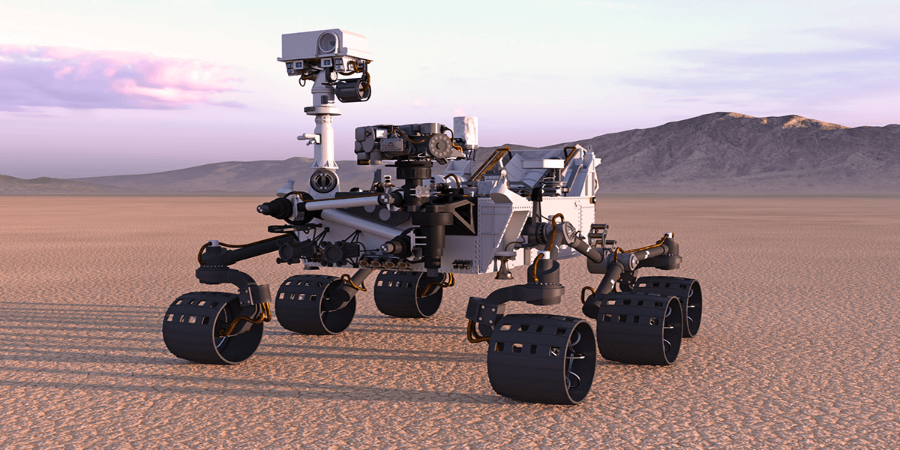
Imagine a robot quietly navigating a busy warehouse, picking up packages, avoiding people, and delivering goods without anyone controlling it. In another part of the world, a robotic rover carefully explores the dusty surface of Mars, making decisions about where to drive next. Meanwhile, inside a modern hospital, a small robot delivers medicines to different departments, choosing the safest path through crowded hallways on its own.
These machines are doing much more than following simple commands. They are observing their surroundings, making decisions, adapting to changing conditions, and carrying out tasks with little or no direct human control. This remarkable ability is what makes them autonomous robots.
Autonomous robots are becoming an increasingly important part of modern life. They are helping scientists explore distant planets, assisting doctors in hospitals, improving farming, supporting disaster response, and making factories and warehouses more efficient. Advances in artificial intelligence, sensors, computing power, and robotics have transformed these machines from simple automated tools into intelligent systems capable of interacting with the real world.
Although they are not capable of thinking or feeling like humans, autonomous robots can perform many complex tasks safely, efficiently, and consistently. As technology continues to advance, they are expected to play an even greater role in industries, research, healthcare, transportation, and everyday life.
Understanding Autonomous Robots
An autonomous robot is a machine that can perform tasks independently by sensing its environment, processing information, making decisions, and taking appropriate actions without continuous human guidance.
Unlike traditional robots that rely on fixed instructions or constant remote control, autonomous robots can adapt to changing situations. They gather information using sensors, analyze that information with computer software, determine what action to take, and then carry out that action using motors or other mechanical systems.
For example, if an autonomous robot is cleaning a room, it does not simply move in straight lines. Instead, it detects walls, furniture, people, pets, and other obstacles. It changes its path whenever necessary and continues cleaning until the task is complete.
Autonomy exists on a spectrum. Some robots require occasional human supervision, while others can perform entire missions independently. The degree of autonomy depends on the robot’s design, computing capabilities, sensors, and intended purpose.
What Makes a Robot Autonomous?
The defining feature of an autonomous robot is its ability to make decisions based on information gathered from its surroundings.
Instead of waiting for every instruction from a human operator, the robot constantly evaluates its environment and responds appropriately. This process involves four essential capabilities: sensing, processing, decision-making, and acting.
First, the robot collects information through various sensors. It then processes this information using computer algorithms, often supported by artificial intelligence. Based on its analysis, it decides what action is most appropriate. Finally, it performs the chosen action using motors, wheels, robotic arms, or other mechanical components.
This continuous cycle repeats many times every second, allowing the robot to respond rapidly to changes in its environment.
The Difference Between Autonomous and Automated Robots
People often confuse autonomous robots with automated robots, but they are not the same.
An automated robot follows a predefined sequence of instructions. It performs the same task repeatedly under predictable conditions. Industrial robotic arms assembling cars on production lines are classic examples. They work extremely efficiently but generally cannot adapt if something unexpected occurs.
An autonomous robot, however, can respond to changes in its environment. If an obstacle appears in its path, it detects the obstacle, calculates an alternative route, and continues working without human intervention.
In other words, automation follows fixed instructions, while autonomy involves decision-making based on real-world conditions.
The Building Blocks of an Autonomous Robot
Every autonomous robot combines several advanced technologies that work together seamlessly.
Sensors allow the robot to perceive the environment. Cameras capture images, laser scanners measure distances, ultrasonic sensors detect nearby objects, infrared sensors identify obstacles, microphones receive sound, and GPS receivers help determine location outdoors.
The robot’s computer acts as its processing system. It analyzes incoming sensor data, runs software algorithms, plans movements, and controls every part of the machine.
Artificial intelligence enables the robot to recognize patterns, identify objects, predict outcomes, and improve performance over time in some applications.
Actuators convert digital decisions into physical movement. Electric motors rotate wheels, robotic joints move arms, and specialized mechanisms allow gripping, lifting, flying, or swimming.
A reliable power source, usually rechargeable batteries or external power systems, provides the energy needed to operate all components.
Communication systems may allow robots to exchange information with humans, cloud computers, or other robots.
Together, these technologies enable autonomous behavior.
How Autonomous Robots Sense the World
Just as humans rely on sight, hearing, and touch, autonomous robots depend on sensors to understand their surroundings.
Cameras provide visual information similar to human eyes. Computer vision software analyzes these images to identify people, vehicles, buildings, objects, road signs, and countless other features.
LiDAR, which stands for Light Detection and Ranging, uses laser pulses to create detailed three-dimensional maps of the environment. Many autonomous vehicles rely on LiDAR to understand the shape and distance of nearby objects.
Radar uses radio waves to detect objects, especially in poor weather conditions such as rain or fog.
Ultrasonic sensors measure distance using sound waves. These sensors are common in robotic vacuum cleaners and parking assistance systems.
Inertial measurement units use accelerometers and gyroscopes to determine movement, orientation, and rotation.
GPS provides approximate outdoor positioning, although robots often combine GPS with other navigation systems for greater accuracy.
Each sensor has strengths and limitations, so autonomous robots usually combine information from multiple sensors. This process is called sensor fusion, allowing robots to build a more complete and reliable understanding of their environment.
Artificial Intelligence Gives Robots Decision-Making Abilities
Artificial intelligence plays a central role in many autonomous robots.
AI allows robots to recognize faces, identify obstacles, understand spoken commands, classify objects, predict movement, and make decisions based on available information.
Machine learning, a branch of artificial intelligence, enables some robots to improve their performance by learning from experience or analyzing large amounts of data.
For example, a warehouse robot may gradually become more efficient at selecting optimal routes. A medical robot may improve its ability to identify specific patterns in medical images after being trained on extensive datasets.
It is important to understand that today’s autonomous robots do not possess human consciousness, emotions, or general intelligence. Instead, they excel at performing specialized tasks using carefully designed algorithms.
How Autonomous Robots Navigate
Navigation is one of the greatest challenges in robotics.
A robot must know where it is, understand its surroundings, determine where it needs to go, and plan a safe path.
Many autonomous robots use a technique called Simultaneous Localization and Mapping (SLAM). SLAM allows a robot to create a map of an unfamiliar environment while simultaneously determining its own position within that map.
As the robot moves, it continuously updates its map using sensor data. If furniture is moved or obstacles appear, the robot adjusts its understanding of the environment and chooses a new route.
Advanced navigation systems also estimate future movements of nearby people or vehicles, helping robots avoid collisions.
Types of Autonomous Robots
Autonomous robots come in many forms because different environments require different designs.
Ground robots travel on wheels, tracks, or legs. They are commonly used in warehouses, agriculture, military applications, and research.
Aerial robots, often called drones, fly using propellers or fixed wings. They inspect infrastructure, monitor crops, capture aerial images, deliver supplies, and assist emergency responders.
Underwater robots explore oceans, inspect pipelines, study marine ecosystems, and assist offshore industries.
Space robots explore planets, moons, and asteroids where human exploration is difficult or impossible.
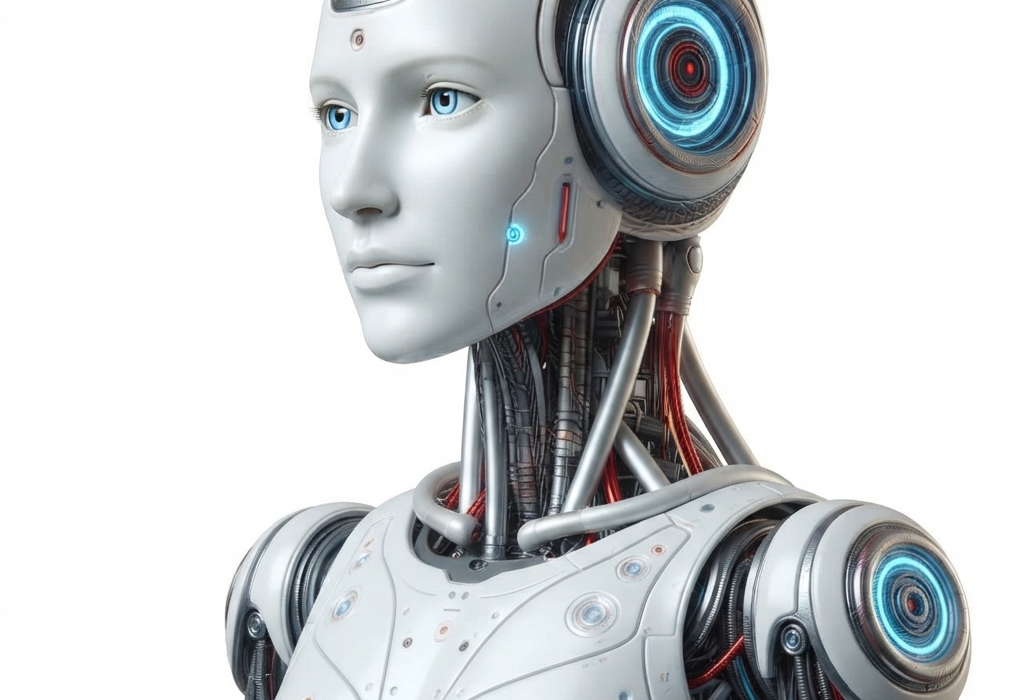
Humanoid robots resemble the human body and are designed to interact more naturally with environments built for people.
Each type of robot is optimized for specific tasks and operating conditions.
Autonomous Robots in Manufacturing
Factories have used robots for decades, but modern autonomous robots offer greater flexibility than traditional industrial machines.
Instead of remaining fixed in one location, autonomous mobile robots transport materials throughout factories, delivering components exactly where they are needed.
Some robots inspect products for manufacturing defects using high-resolution cameras and artificial intelligence.
Others collaborate safely with human workers by adjusting their movements based on nearby activity.
These systems increase efficiency while reducing repetitive manual work.
Autonomous Robots in Warehouses
Warehouses have become one of the most successful environments for autonomous robots.
Robots transport shelves, move packages, organize inventory, and deliver products to human workers.
Using sensors and navigation software, they travel efficiently through complex warehouse layouts while avoiding collisions.
Because these robots work continuously with high precision, businesses can process customer orders more quickly and accurately.
As online shopping continues to grow worldwide, warehouse automation has become increasingly important.
Autonomous Robots in Healthcare
Healthcare is another field where autonomous robots are making meaningful contributions.
Hospital robots transport medicines, laboratory samples, meals, and medical supplies between departments.
Disinfection robots use ultraviolet light to reduce harmful microorganisms in certain hospital areas.
Robotic rehabilitation systems help patients recover movement after injuries or strokes by guiding carefully controlled exercises.
Some autonomous surgical support systems assist medical teams with precision, although human surgeons remain responsible for making clinical decisions.
Researchers continue developing robots capable of supporting elderly individuals by providing mobility assistance, monitoring health conditions, and helping with daily activities.
Autonomous Robots in Agriculture
Modern agriculture increasingly depends on autonomous technologies.
Agricultural robots monitor crop health using cameras and sensors.
Some robots identify weeds and remove them without harming nearby crops.
Others plant seeds with remarkable precision or harvest fruits and vegetables at the optimal stage of ripeness.
Drones survey large farms from the air, detecting irrigation problems, nutrient deficiencies, and plant diseases.
These technologies help farmers increase productivity while reducing waste and conserving resources.
Autonomous Robots in Space Exploration
Space exploration presents one of the most demanding environments for autonomous robotics.
Because communication between Earth and distant spacecraft may take several minutes or even hours, robots cannot rely on immediate human instructions.
Planetary rovers analyze rocks, collect scientific data, avoid hazards, and choose safe driving paths using onboard computers.
These robotic explorers have dramatically expanded our understanding of Mars and other celestial bodies.
Future missions to the Moon, Mars, and beyond are expected to rely even more heavily on autonomous robotic systems.
Autonomous Robots Beneath the Ocean
The deep ocean remains one of Earth’s least explored environments.
Autonomous underwater vehicles investigate regions too dangerous or inaccessible for human divers.
These robots map the seafloor, study marine ecosystems, inspect underwater pipelines, monitor coral reefs, and collect valuable scientific data.
Operating under immense pressure and complete darkness requires highly reliable navigation and sensing systems.
Autonomous Robots in Disaster Response
Natural disasters often create environments that are hazardous for human rescuers.
Autonomous robots can enter collapsed buildings, unstable tunnels, flooded areas, or regions contaminated by hazardous materials.
Using cameras, thermal sensors, microphones, and mapping technology, they search for survivors and provide rescuers with critical information.
Some robots can deliver emergency supplies, assess structural damage, or assist firefighters in dangerous situations.
Although they cannot replace human rescue teams, they significantly improve safety and efficiency during emergency operations.
Self-Driving Vehicles and Autonomous Mobility
One of the most widely discussed applications of autonomous robotics is self-driving transportation.
Autonomous vehicles combine cameras, radar, LiDAR, GPS, artificial intelligence, and sophisticated control systems to navigate roads while responding to traffic conditions.
They continuously detect lanes, traffic signs, pedestrians, cyclists, and other vehicles.
While significant progress has been made, achieving fully autonomous driving in all weather conditions and complex urban environments remains a major scientific and engineering challenge.
Researchers continue improving safety, reliability, and decision-making capabilities.
Challenges Facing Autonomous Robots
Despite impressive advances, autonomous robots still face many limitations.
Understanding complex, unpredictable environments remains difficult. Humans effortlessly recognize subtle social cues, unexpected hazards, and changing situations that robots may struggle to interpret.
Poor lighting, heavy rain, snow, dust, fog, or cluttered environments can reduce sensor performance.
Reliable decision-making requires enormous amounts of accurate data and extensive testing.
Battery life limits operating time for many mobile robots.
Cybersecurity is another important concern because connected robots may become targets for unauthorized access.
Engineers also work to ensure that robots behave safely around people, particularly in public spaces.
These challenges continue to drive research in robotics, artificial intelligence, computer vision, and engineering.
Ethical Considerations
As autonomous robots become more common, society faces important ethical questions.
Who is responsible if an autonomous system makes a mistake?
How should robots make decisions in situations involving safety?
How can privacy be protected when robots collect images and other environmental data?
What jobs may change as robots perform more physical and repetitive tasks?
Researchers, governments, businesses, and ethicists are actively discussing these questions to ensure that robotic technologies are developed responsibly.
The goal is to create systems that benefit society while minimizing potential risks.
The Future of Autonomous Robots
The future of autonomous robotics is filled with exciting possibilities.
Advances in artificial intelligence, machine learning, sensor technology, computing hardware, and energy storage are making robots more capable each year.
Future autonomous robots may assist in caring for aging populations, construct buildings, explore deep oceans, monitor ecosystems, repair infrastructure, support scientific research, and help establish human settlements on the Moon or Mars.
Robots are also expected to become better at working alongside humans rather than replacing them. Instead of operating independently in isolation, many future systems will function as intelligent partners that complement human skills.
Scientists continue developing robots that can learn more efficiently, adapt to unfamiliar environments, communicate naturally with people, and perform increasingly complex tasks while maintaining high standards of safety and reliability.
Why Autonomous Robots Matter
Autonomous robots represent one of the most significant technological developments of the twenty-first century. They combine advances in physics, engineering, computer science, artificial intelligence, mathematics, and materials science to create machines capable of interacting with the physical world in increasingly sophisticated ways.
These robots are already improving manufacturing, healthcare, agriculture, transportation, scientific research, logistics, environmental monitoring, and disaster response. They allow humans to work more safely in hazardous environments, perform repetitive tasks with remarkable precision, and explore places that would otherwise remain beyond our reach.
Although autonomous robots continue to evolve, they are not substitutes for human creativity, empathy, judgment, or ethical reasoning. Instead, they are powerful tools designed to extend human capabilities. As research continues and technology advances, autonomous robots will likely become trusted partners in solving some of humanity’s greatest scientific, industrial, and environmental challenges, helping build a future where intelligent machines and people work together to achieve goals that neither could accomplish alone.