Imagine a robot carefully picking up a fragile glass without breaking it. Picture a self-driving car smoothly navigating a busy city street while recognizing pedestrians, cyclists, traffic lights, and unexpected obstacles. Think of a household robot that notices a child has dropped a toy, walks over, picks it up, and places it back on a shelf. These actions may seem ordinary to humans, but for a machine, they require an extraordinary combination of perception, reasoning, planning, and movement.
For decades, artificial intelligence has excelled in the digital world. AI systems have learned to answer questions, translate languages, recognize faces, generate images, write articles, and even help scientists discover new medicines. However, most of these systems exist entirely inside computers. They process information, but they do not physically interact with the world around them.
A new frontier is changing that reality. It is called Physical AI.
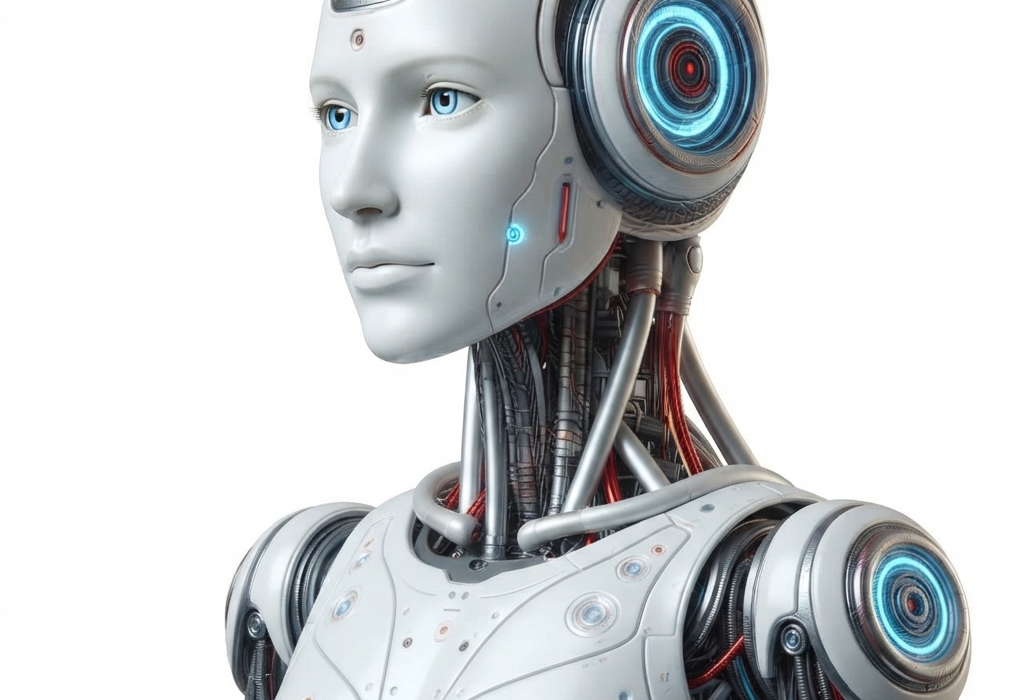
Physical AI combines artificial intelligence with robots and other physical machines, allowing them not only to think but also to perceive, move, and act safely in the real world. Instead of simply analyzing digital data, Physical AI enables machines to interact with objects, environments, and people.
This emerging field is transforming industries, scientific research, healthcare, transportation, manufacturing, agriculture, and even everyday life. It represents one of the most exciting developments in modern technology because it brings intelligence out of the computer screen and into the physical world.
Understanding Physical AI
Physical AI refers to artificial intelligence systems that are integrated into physical machines, enabling them to sense their surroundings, make decisions, and perform real-world actions.
Unlike traditional AI, which mainly processes digital information such as text, images, or numbers, Physical AI connects intelligence with movement and interaction.
A Physical AI system continuously receives information from sensors, interprets what it observes, decides what to do, and then controls motors, robotic arms, wheels, or other mechanisms to perform an action.
In simple terms, Physical AI allows machines to behave intelligently in the real world rather than only inside software.
For example, a chatbot can answer questions, but it cannot hand you a cup of coffee. A robot powered by Physical AI could recognize the cup, locate it, grasp it carefully, carry it across the room, and place it safely on a table.
That difference is what makes Physical AI unique.
The Difference Between Traditional AI and Physical AI
Traditional AI mainly works in digital environments.
It can analyze medical images, recommend movies, write computer code, generate artwork, summarize research papers, or answer questions.
Although these tasks require remarkable intelligence, they happen entirely inside computers.
Physical AI extends these capabilities into the physical world.
Instead of merely recognizing an object in an image, a Physical AI system must understand where the object is located, estimate its size and shape, determine how to grasp it, avoid collisions, and move it safely.
This requires combining artificial intelligence with robotics, sensors, engineering, physics, and real-time decision-making.
In other words, Physical AI must deal with reality, where conditions constantly change.
Why the Physical World Is So Challenging
Humans rarely think about how difficult everyday actions actually are.
Picking up a spoon, opening a door, climbing stairs, pouring water into a glass, or walking across uneven ground seems effortless.
Yet each of these activities involves an enormous amount of information processing.
Our brains constantly receive visual information from our eyes, balance information from our inner ears, touch information from our skin, and signals from muscles and joints. Without conscious effort, we combine all of this information to make smooth, coordinated movements.
A robot must accomplish similar tasks using cameras, sensors, artificial intelligence algorithms, and mechanical systems.
Unlike a controlled factory environment, the real world is unpredictable.
Objects move unexpectedly.
Lighting changes throughout the day.
Floors may be slippery.
People behave in unpredictable ways.
Animals may suddenly appear.
Weather conditions can rapidly change.
Physical AI must continuously adapt to these changing conditions while maintaining safe and reliable performance.
How Physical AI Works
A Physical AI system operates through several closely connected processes.
First, it observes its environment.
This usually happens through cameras, depth sensors, microphones, force sensors, radar, lidar, temperature sensors, GPS receivers, and many other devices.
These sensors collect information about the surrounding world.
Next, artificial intelligence analyzes the incoming data.
Computer vision identifies objects.
Speech recognition interprets spoken language.
Machine learning models recognize patterns.
Environmental mapping systems determine the machine’s location.
After understanding the situation, the AI decides what action should be taken.
Planning algorithms calculate safe movement paths.
Decision-making systems evaluate possible actions.
The machine then sends commands to motors, robotic joints, wheels, robotic arms, or other mechanical components.
Finally, sensors monitor the outcome of the action.
If something changes unexpectedly, the AI immediately adjusts its behavior.
This continuous cycle of sensing, thinking, acting, and learning allows Physical AI systems to operate in dynamic environments.
The Importance of Sensors
Sensors are often described as the “eyes,” “ears,” and “skin” of intelligent machines.
Without sensors, a robot would have no awareness of its surroundings.
Cameras allow robots to recognize objects, people, road signs, and obstacles.
Depth sensors estimate distances.
Force sensors measure how firmly an object is being held.
Touch sensors detect contact with surfaces.
Microphones receive spoken instructions and environmental sounds.
Temperature sensors monitor heat.
Accelerometers and gyroscopes help maintain balance and orientation.
These sensors provide the raw information that artificial intelligence uses to understand the world.
The quality of perception largely determines how effectively Physical AI can perform its tasks.
Computer Vision Gives Machines Sight
One of the most important technologies behind Physical AI is computer vision.
Computer vision enables machines to interpret images and videos captured by cameras.
Instead of simply recording pictures, AI identifies objects, measures distances, recognizes faces, detects movement, and estimates three-dimensional shapes.
For example, a warehouse robot can recognize packages of different sizes.
A self-driving vehicle can detect traffic lights, pedestrians, road markings, and nearby vehicles.
A home robot can locate furniture while avoiding collisions.
Advances in deep learning have dramatically improved computer vision over the past decade, making Physical AI far more capable than earlier generations of robots.
Machine Learning Helps Robots Improve
Many Physical AI systems rely on machine learning.
Rather than following only fixed instructions, machine learning enables robots to improve their performance by analyzing data and experience.
During training, an AI model may observe millions of examples or practice tasks repeatedly in virtual simulations.
Over time, it learns which actions produce successful outcomes.
Some robots also continue learning after deployment, adapting to new environments and changing conditions.
This flexibility allows Physical AI systems to handle situations that engineers may never have anticipated during development.
Simulation Plays a Major Role
Training robots entirely in the real world can be slow, expensive, and sometimes dangerous.
Instead, researchers often use realistic computer simulations.
In these virtual environments, robots practice walking, driving, flying, grasping objects, and solving complex problems thousands or even millions of times.
Because simulations can run much faster than real time, AI systems gain enormous amounts of experience before ever operating in the real world.
Once the virtual training is complete, the learned behavior is transferred to physical machines.
This approach reduces costs while improving safety and performance.
Robotics Forms the Physical Body
Artificial intelligence provides the brain.
Robotics provides the body.
Robots consist of mechanical structures that interact with the physical world.
Some robots have wheels.
Others walk on legs.
Some fly using propellers.
Others swim underwater.
Industrial robotic arms assemble products in factories.
Medical robots assist surgeons during delicate procedures.
Warehouse robots transport heavy goods.
Agricultural robots harvest crops.
Each robotic design is carefully engineered for specific tasks.
Physical AI supplies the intelligence that controls these machines.
Physical AI in Manufacturing
Modern factories increasingly rely on Physical AI.
Unlike traditional industrial robots that repeat identical motions in fixed locations, newer AI-powered robots can adapt to changing conditions.
They recognize different products.
They inspect parts for defects.
They work safely alongside human employees.
They automatically adjust to new production requirements.
This flexibility increases productivity while reducing waste.
Physical AI also helps manufacturers respond more quickly to changing customer demands.
Physical AI in Healthcare
Healthcare is becoming one of the most promising applications of Physical AI.
Surgical robots assist doctors during complex procedures by providing greater precision and stability.
Hospital delivery robots transport medicines and supplies between departments.
Rehabilitation robots help patients recover movement after injuries.
Some robotic systems assist elderly individuals with daily activities, helping them maintain independence.
Researchers are also developing intelligent robotic assistants capable of supporting healthcare professionals in hospitals and care facilities.
Importantly, these systems are designed to assist medical teams rather than replace human expertise.
Physical AI in Agriculture
Farmers face growing challenges from climate change, labor shortages, and increasing food demand.
Physical AI offers innovative solutions.
Autonomous tractors can prepare fields with remarkable precision.
Robotic harvesters identify ripe fruits without damaging plants.
AI-powered drones monitor crop health from the air.
Smart irrigation systems optimize water use by analyzing soil moisture and weather conditions.
These technologies help increase agricultural efficiency while reducing environmental impacts.
Physical AI in Transportation
Self-driving vehicles represent one of the most visible examples of Physical AI.
Autonomous cars constantly observe their surroundings using cameras, radar, lidar, GPS, and artificial intelligence.
They identify traffic signals, recognize pedestrians, monitor nearby vehicles, predict possible hazards, and make driving decisions in real time.
Similar technologies are being developed for trucks, delivery vehicles, ships, trains, and aircraft.
Although fully autonomous transportation continues to face technical and regulatory challenges, Physical AI has already improved driver assistance systems and vehicle safety.
Physical AI Inside Homes
Home robots are gradually becoming more capable.
Early robotic vacuum cleaners followed relatively simple movement patterns.
Today’s AI-powered household robots can create maps of rooms, avoid obstacles, recognize furniture, and optimize cleaning routes.
Future home assistants may perform a much wider range of tasks.
They could organize household items, prepare simple meals, assist elderly family members, monitor home safety, and respond intelligently to changing situations.
Although such advanced systems are still under development, progress continues rapidly.
Physical AI and Space Exploration
Space is one of the harshest environments humans have ever explored.
Robotic spacecraft and planetary rovers already perform many scientific missions where human presence is difficult or impossible.
Physical AI allows these machines to navigate unfamiliar terrain, avoid hazards, analyze rocks, collect samples, and make limited decisions without waiting for instructions from Earth.
As future missions travel farther into the Solar System, increasing levels of onboard intelligence will become even more important because communication delays grow longer with distance.
Physical AI in Disaster Response
Natural disasters often create environments that are dangerous for human rescuers.
Earthquakes, floods, industrial accidents, wildfires, and collapsed buildings may contain unstable structures or hazardous materials.
Physical AI robots can enter these environments to search for survivors, map damaged areas, detect dangerous gases, and deliver emergency supplies.
These capabilities may improve rescue operations while reducing risks to emergency personnel.
The Importance of Safety
One of the greatest challenges in Physical AI is ensuring safety.
Unlike digital AI systems, physical machines directly interact with people and objects.
A mistake could result in damaged equipment or injuries.
Engineers therefore design multiple layers of safety.
Robots continuously monitor their surroundings.
Emergency stop systems interrupt movement if necessary.
Collision avoidance algorithms reduce accident risks.
Force-limiting mechanisms prevent excessive pressure during human interaction.
Extensive testing is performed before deployment in real-world environments.
Safety remains one of the highest priorities in Physical AI research.
Ethical Considerations
As Physical AI becomes more widespread, important ethical questions arise.
How should autonomous machines make decisions during emergencies?
Who is responsible if an intelligent robot makes a mistake?
How can privacy be protected when robots use cameras and microphones?
How should workplaces adapt as automation increases?
These questions involve engineers, policymakers, ethicists, businesses, and the public.
Developing responsible Physical AI requires not only technological innovation but also thoughtful governance and careful consideration of societal impacts.
Can Physical AI Think Like Humans?
Physical AI can perform increasingly complex tasks, but it does not think in the same way humans do.
Modern AI systems recognize patterns, learn from data, and optimize decisions for specific goals.
However, they do not possess human consciousness, emotions, self-awareness, or personal experiences.
When a robot smiles or speaks naturally, it is generating programmed responses rather than experiencing feelings.
Researchers continue studying intelligence from both engineering and neuroscience perspectives, but creating machines with human-like consciousness remains a scientific question that has not been solved.
The Future of Physical AI
Physical AI is advancing rapidly.
Researchers are developing robots that move more naturally, manipulate delicate objects more skillfully, and collaborate more effectively with people.
Future systems may help construct buildings, maintain renewable energy infrastructure, explore deep oceans, assist scientific laboratories, support aging populations, and contribute to environmental conservation.
Advances in artificial intelligence, robotics, sensors, materials science, battery technology, and computing power are all accelerating this progress.
As these technologies mature, intelligent machines are expected to become more capable, adaptable, and useful across many areas of society.
Challenges That Still Remain
Despite impressive achievements, Physical AI still faces major challenges.
Real-world environments remain highly unpredictable.
Robots often struggle with tasks that humans consider simple, such as folding clothes, handling transparent objects, or navigating cluttered homes.
Battery life limits operating time.
Computing systems require significant processing power.
Reliable performance under every possible condition remains difficult to achieve.
Engineers continue working to improve perception, reasoning, dexterity, energy efficiency, and long-term reliability.
These challenges ensure that Physical AI will remain an active area of scientific and technological research for many years.
Why Physical AI Matters
Physical AI represents an important step in the evolution of artificial intelligence because it bridges the gap between digital intelligence and the physical world.
Instead of merely processing information, intelligent machines can now observe, understand, and interact with their surroundings. This ability opens new possibilities across healthcare, transportation, manufacturing, agriculture, scientific research, environmental monitoring, and everyday life.
Rather than replacing human intelligence, Physical AI is increasingly being developed to complement human abilities. It can perform repetitive, dangerous, or physically demanding tasks while allowing people to focus on creativity, critical thinking, communication, and complex decision-making.
The future of Physical AI is still unfolding. Every improvement in sensing, learning, robotics, and computing brings machines closer to interacting with the world with greater precision, adaptability, and safety. As scientists and engineers continue refining these technologies, Physical AI has the potential to reshape how humans live, work, explore, and solve some of the world’s most complex challenges.