Artificial intelligence, often called AI, is no longer a vision of the distant future. It has quietly become a part of everyday life, influencing the way we work, communicate, learn, travel, receive medical care, and even create art. Whether you ask a virtual assistant about the weather, receive movie recommendations from a streaming platform, unlock your smartphone with your face, or use an online translator, you are already interacting with AI.
Just a few decades ago, computers could only perform tasks by following strict instructions written by programmers. Today, many AI systems can recognize speech, understand language, identify objects in images, generate human-like text, analyze enormous amounts of data, and assist in solving complex scientific problems. These remarkable advances are transforming industries and reshaping society at an unprecedented pace.
AI is not replacing the laws of nature or human intelligence. Instead, it is a powerful technology built upon mathematics, computer science, statistics, and vast amounts of data. Its rapid growth raises exciting opportunities as well as important challenges. Understanding how AI is transforming the world helps us prepare for a future where humans and intelligent machines increasingly work together.
What Is Artificial Intelligence?
Artificial intelligence is a branch of computer science focused on creating systems that can perform tasks that normally require human intelligence. These tasks include learning from experience, recognizing patterns, understanding language, making predictions, solving problems, and making decisions based on available information.
Unlike traditional computer programs that simply follow fixed instructions, many modern AI systems improve their performance by learning from data. This approach, known as machine learning, allows computers to identify patterns that would be extremely difficult for humans to program manually.
Another important area of AI is deep learning, which uses networks inspired by the structure of the human brain to process complex information such as images, speech, and language. Although these systems are inspired by biology, they do not think or understand the world in the same way humans do. Instead, they recognize statistical patterns in data to generate useful outputs.
AI Has Become Part of Everyday Life
Many people use AI dozens or even hundreds of times each day without realizing it.
When a smartphone automatically corrects typing mistakes, AI is helping analyze language patterns. When an email service filters spam messages, AI identifies suspicious characteristics. Navigation apps estimate travel times by analyzing traffic conditions in real time. Music and video streaming platforms recommend songs and movies based on viewing habits. Online stores suggest products that customers may find interesting.
Voice assistants can recognize spoken language, answer questions, set reminders, and control smart home devices. Translation systems make communication easier between people who speak different languages. Search engines use AI to organize and rank billions of web pages so users can quickly find relevant information.
These technologies have become so familiar that many people no longer notice the sophisticated AI working behind the scenes.
Revolutionizing Healthcare
One of AI’s most promising applications is in healthcare.
Modern hospitals generate enormous amounts of medical data every day, including medical images, laboratory results, patient histories, and genetic information. AI can help healthcare professionals analyze this information more efficiently.
Medical imaging systems assisted by AI can help identify patterns in X-rays, CT scans, and MRI images that may indicate disease. These tools are designed to support doctors by highlighting areas that deserve closer examination, not to replace medical expertise.
AI is also accelerating medical research. Scientists use AI to analyze biological data, identify potential drug candidates, predict protein structures, and better understand complex diseases. These advances can help reduce the time needed to develop new treatments.
Personalized medicine is another growing field where AI analyzes patient information to help healthcare providers choose treatments that may be more effective for individual patients.
Although AI offers valuable assistance, medical decisions still rely on trained healthcare professionals who combine AI insights with clinical knowledge and patient care.
Transforming Education
Education is changing rapidly with the help of AI.
Students can now receive personalized learning experiences that adapt to their strengths and challenges. AI-powered educational platforms can recommend practice exercises, explain difficult concepts, and provide immediate feedback on assignments.
Language-learning applications use AI to improve pronunciation, grammar, and vocabulary. Digital tutors can answer questions at any time, making learning more accessible outside the classroom.
Teachers also benefit from AI. Administrative tasks such as grading certain assignments, organizing educational materials, and analyzing student progress can be automated, allowing educators to spend more time supporting students directly.
Rather than replacing teachers, AI has the potential to become a valuable educational assistant that enhances learning opportunities.
Changing the Workplace
The workplace has experienced significant transformation through AI.
Many repetitive tasks that once required hours of manual effort can now be completed much more quickly with intelligent software. Businesses use AI to organize data, analyze customer feedback, forecast demand, manage inventories, detect fraud, and improve customer service.
In manufacturing, AI-powered systems help monitor production lines, predict equipment maintenance needs, and improve product quality. In agriculture, AI analyzes satellite images, weather conditions, and soil information to help farmers make better decisions about planting and irrigation.
Financial institutions use AI to identify unusual transactions, estimate financial risks, and support investment analysis. Customer service teams increasingly rely on AI chatbots that answer common questions while allowing human representatives to focus on more complex situations.
Although some jobs are changing because of automation, AI is also creating new careers in software development, data science, robotics, AI safety, machine learning engineering, and digital ethics.
The future of work will likely involve close collaboration between humans and AI rather than complete replacement of human workers.
AI Is Accelerating Scientific Discovery
Science is advancing faster than ever with the help of artificial intelligence.
Researchers often work with enormous datasets that would take years for humans to analyze manually. AI can identify patterns hidden within these datasets, helping scientists make discoveries more efficiently.
Astronomers use AI to search for distant galaxies, classify stars, and analyze observations from powerful telescopes. Climate scientists apply AI to improve weather forecasting and study long-term environmental changes. Biologists use AI to examine DNA sequences and understand the complexity of living organisms.
One particularly important achievement has been AI’s ability to predict the three-dimensional structures of many proteins, providing valuable insights for biological research and medicine.
In laboratories around the world, AI has become a powerful research tool that complements human creativity and scientific reasoning.
Improving Transportation
Transportation is becoming safer and more efficient through AI.
Modern vehicles increasingly include intelligent safety systems that can detect obstacles, recognize traffic signs, monitor driver attention, and assist with emergency braking.
Public transportation systems use AI to optimize routes, reduce delays, and improve scheduling. Airlines analyze AI-generated predictions to improve maintenance planning and enhance passenger safety.
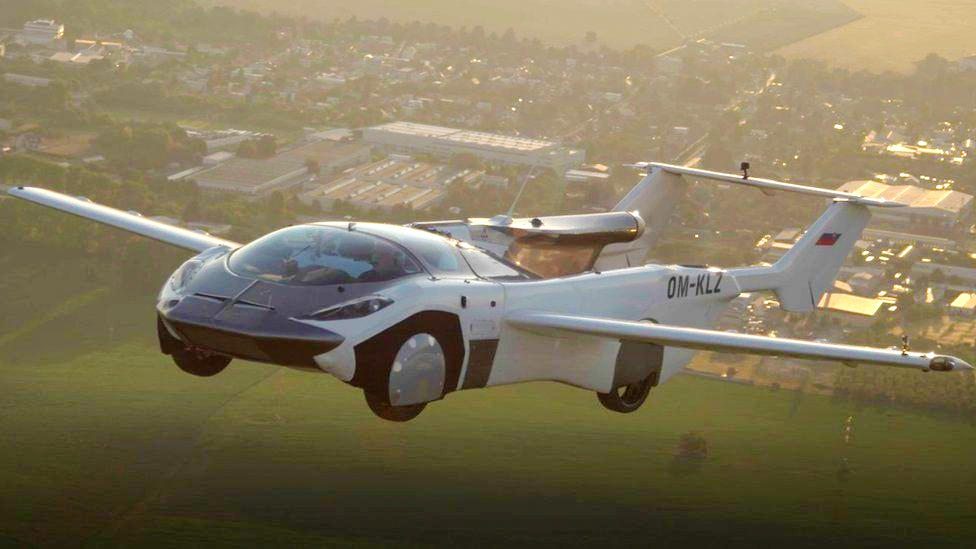
Researchers continue developing self-driving vehicle technology, which combines cameras, radar, lidar sensors, GPS, and AI algorithms to interpret road conditions. While significant progress has been made, fully autonomous driving remains an active area of research and development because ensuring safety under all driving conditions is extremely challenging.
Smarter Cities and Better Infrastructure
Cities are becoming more intelligent through AI-supported technologies.
Traffic management systems analyze vehicle movement to reduce congestion and improve traffic flow. Energy systems balance electricity demand and supply more efficiently. Smart buildings automatically adjust lighting, heating, and cooling based on occupancy and environmental conditions.
Waste collection services can optimize routes to reduce fuel consumption. Water management systems monitor leaks and improve resource efficiency. Emergency response agencies analyze incoming information to better coordinate disaster response efforts.
As urban populations continue growing, AI may help cities become more sustainable, efficient, and resilient.
AI and Environmental Protection
Artificial intelligence is also contributing to environmental conservation.
Scientists use AI to monitor forests, track wildlife populations, detect illegal deforestation, and study changes in ecosystems using satellite imagery.
Climate researchers analyze massive environmental datasets to improve climate models and better understand changing weather patterns.
Renewable energy systems benefit from AI by predicting electricity generation from solar panels and wind turbines based on weather forecasts. This helps energy providers balance supply and demand more effectively.
Agricultural AI technologies can optimize irrigation, reduce fertilizer use, and improve crop management, helping conserve valuable natural resources.
Although AI itself requires computing resources and electricity, researchers are working to improve the energy efficiency of AI systems while expanding their environmental benefits.
Creativity in the Age of AI
AI is changing creative fields in fascinating ways.
Modern AI systems can generate text, create images, compose music, assist with video editing, and support software development. These capabilities have opened new possibilities for artists, writers, designers, filmmakers, and musicians.
Rather than replacing human creativity, AI often serves as a creative partner. Artists may use AI to explore new visual styles. Writers may use AI to brainstorm ideas or improve drafts. Musicians may experiment with AI-generated melodies before refining them into original compositions.
Human creativity remains essential because people provide imagination, cultural understanding, emotional expression, ethical judgment, and purposeful storytelling—qualities that AI does not possess in the same way.
Transforming Communication
Communication across languages and cultures has become easier through AI.
Language translation systems now translate text, speech, and conversations with remarkable speed. Although translations are not always perfect, they continue improving as AI models learn from more diverse language data.
Speech recognition enables automatic transcription of meetings, lectures, and interviews. AI-generated captions make videos more accessible for people with hearing impairments.
People around the world can collaborate more easily than ever before because AI helps reduce language barriers and improve access to information.
AI in Space Exploration
Artificial intelligence is playing an increasingly important role in space science.
Spacecraft generate enormous amounts of scientific data that AI helps organize and analyze. Autonomous systems assist spacecraft in making limited decisions when communication delays make immediate human control impossible.
Astronomers use AI to search for planets orbiting distant stars, classify galaxies, identify unusual cosmic events, and analyze observations collected by advanced telescopes.
As future space missions become more ambitious, AI will likely become even more important for navigating distant environments and supporting scientific exploration.
The Challenges of Artificial Intelligence
Despite its remarkable capabilities, AI also presents significant challenges.
AI systems learn from data, and if that data contains biases or errors, AI may produce unfair or inaccurate results. Researchers work continuously to improve fairness, transparency, and reliability.
Privacy is another important concern. Many AI systems require large amounts of information to function effectively, making responsible data protection essential.
The spread of AI-generated misinformation, including realistic images, videos, and text, raises new questions about verifying information and maintaining public trust.
Cybersecurity is another growing area where AI can both strengthen digital defenses and potentially be misused by attackers.
These challenges highlight the importance of developing AI responsibly while maintaining appropriate human oversight.
Can AI Replace Human Intelligence?
One of the most common questions people ask is whether AI will eventually replace human intelligence.
Today’s AI systems are highly specialized. They excel at certain tasks such as recognizing images, analyzing data, generating text, or predicting patterns. However, they do not possess human consciousness, emotions, self-awareness, or genuine understanding of the world.
Humans remain uniquely capable of empathy, moral reasoning, creativity across diverse situations, social relationships, and adapting knowledge across many different contexts.
Most experts view AI as a tool that enhances human capabilities rather than replacing humanity itself. The greatest achievements are likely to come from collaboration between people and intelligent technologies.
The Importance of Responsible AI
As AI becomes more powerful, responsible development becomes increasingly important.
Scientists, engineers, governments, educators, businesses, and communities are working together to establish guidelines for safe and ethical AI.
Responsible AI involves building systems that are accurate, transparent, secure, fair, and respectful of human rights. It also means ensuring that people remain accountable for important decisions, particularly in areas such as healthcare, law, education, finance, and public safety.
Creating trustworthy AI requires not only technical expertise but also careful consideration of ethics, law, psychology, and society.
The Future of AI
Artificial intelligence continues evolving at an extraordinary pace.
Future AI systems may help scientists discover new medicines, improve renewable energy technologies, develop more efficient transportation systems, enhance disaster prediction, personalize education, and deepen our understanding of the universe.
Advances in robotics may allow AI to assist with dangerous tasks such as disaster response, deep-sea exploration, and space missions. More powerful scientific AI could accelerate research in biology, chemistry, physics, and climate science.
At the same time, society will continue facing important questions about privacy, employment, education, regulation, and the responsible use of increasingly capable technologies.
The future of AI will not be determined by technology alone. It will also depend on the choices people make about how these powerful tools are designed, governed, and used.
A New Chapter in Human Progress
Artificial intelligence represents one of the most significant technological developments in human history. Like electricity, the internet, or the printing press, AI is transforming the way people live, work, communicate, and discover new knowledge.
Its influence extends far beyond computers and smartphones. AI is helping doctors diagnose diseases, supporting teachers in classrooms, assisting scientists in making discoveries, improving transportation, protecting the environment, and expanding humanity’s ability to solve complex problems.
Yet the true power of AI lies not in replacing people, but in amplifying human potential. Curiosity, imagination, compassion, and ethical judgment remain uniquely human strengths that technology cannot fully replicate.
As AI continues to evolve, its greatest promise will come from a partnership between human intelligence and machine intelligence. When developed responsibly and guided by scientific understanding and ethical principles, artificial intelligence has the potential to improve lives, accelerate discovery, and help build a future where technology serves humanity in meaningful and lasting ways.