Artificial intelligence is no longer a technology of the distant future. It has become part of everyday life. Whether you ask a virtual assistant for the weather, receive movie recommendations on a streaming platform, unlock your phone using facial recognition, or use an AI-powered writing tool, artificial intelligence is quietly working behind the scenes.
Its rapid growth has brought remarkable opportunities. AI can help doctors detect diseases, assist scientists in discovering new medicines, improve transportation, support education, and solve problems that once seemed impossible. Around the world, researchers and engineers continue to find new ways to use AI for the benefit of society.
But every powerful technology carries risks as well as rewards.
History shows that technologies capable of transforming society—from electricity and automobiles to nuclear energy and the internet—have always created new challenges alongside new opportunities. Artificial intelligence is no different. While AI has enormous potential, it also raises important questions about safety, fairness, privacy, employment, security, and the future relationship between humans and intelligent machines.
Understanding these risks does not mean fearing artificial intelligence. Instead, it helps society develop AI responsibly so that its benefits can be enjoyed while minimizing potential harms.
Understanding Artificial Intelligence
Artificial intelligence, often called AI, refers to computer systems designed to perform tasks that typically require human intelligence. These tasks include recognizing images, understanding language, making predictions, solving problems, generating text, translating languages, and even creating music or artwork.
Modern AI systems are usually trained using enormous amounts of data. Instead of following only fixed instructions written by programmers, many AI models learn patterns from examples. This ability allows them to perform complex tasks that were once considered uniquely human.
However, learning from data also introduces new kinds of risks.
An AI system is only as reliable as the information it learns from and the way it is designed.
AI Can Make Mistakes That Look Convincing
One of the greatest challenges with modern AI is that it can produce answers that sound confident even when they are incorrect.
Unlike humans, AI systems do not truly understand the world. Instead, they identify statistical patterns in the data used during training. As a result, they may generate inaccurate information, misunderstand questions, or invent details that are not true.
These mistakes become especially dangerous when people trust AI without verifying its responses.
For example, inaccurate medical advice, legal information, financial guidance, or scientific explanations could lead to poor decisions if users rely entirely on AI instead of consulting qualified experts.
Researchers continue working to reduce these errors, but no AI system is completely free from mistakes.
Bias in Artificial Intelligence
Artificial intelligence learns from data created by humans.
If the training data contains unfair patterns, historical inequalities, or social biases, AI systems may unintentionally reproduce those biases.
For example, an AI used for hiring employees might favor certain groups if past hiring records reflected discrimination. A facial recognition system might perform better for some populations than others if the training data lacked sufficient diversity.
Importantly, bias is usually not the result of AI intentionally discriminating. Instead, it reflects patterns present in the information used during training.
Scientists and engineers are developing methods to identify, measure, and reduce bias, but ensuring fairness remains one of the biggest challenges in AI development.
Privacy Concerns
Artificial intelligence often depends on large amounts of data.
This data may include photographs, written documents, voice recordings, internet searches, shopping habits, location information, or other digital activities.
When organizations collect and analyze personal information, concerns naturally arise about privacy.
People may worry about who has access to their data, how it is stored, how long it is kept, and whether it could be used for purposes they never intended.
Strong privacy protections, secure data storage, and transparent policies are essential for maintaining public trust in AI technologies.
Many countries are also developing laws to regulate how personal data may be collected and used.
AI and Cybersecurity Threats
Artificial intelligence can strengthen cybersecurity by detecting unusual computer activity, identifying malware, and responding to attacks more quickly than humans alone.
However, the same technology can also be misused.
Cybercriminals may use AI to create more convincing phishing emails, automate hacking attempts, generate realistic fake voices, or identify software vulnerabilities more efficiently.
This creates an ongoing competition between defenders who use AI to improve security and attackers who attempt to exploit it.
As AI becomes more advanced, cybersecurity will remain one of the most important areas for responsible development.
Deepfakes and Misinformation
One of the most visible risks of modern AI is its ability to create highly realistic fake content.
AI can generate convincing images, videos, voices, and written material that may appear authentic even when entirely fabricated.
These creations, often called deepfakes, have legitimate uses in entertainment, filmmaking, and education. However, they can also be misused to spread false information, impersonate individuals, damage reputations, or manipulate public opinion.
As AI-generated media improves, distinguishing genuine content from fabricated material becomes increasingly difficult.
Researchers are developing technologies to detect AI-generated content, while journalists and educators emphasize the importance of verifying information before sharing it.
The Spread of False Information
Artificial intelligence can produce enormous amounts of content within seconds.
While this ability increases productivity, it also makes it easier to spread inaccurate or misleading information on a large scale.
False news articles, misleading social media posts, fabricated scientific claims, and fake reviews can be generated much faster than before.
If such information spreads widely, it may confuse the public, influence important decisions, or reduce trust in reliable sources.
Critical thinking, media literacy, and fact-checking have become increasingly important in the age of AI.
Job Displacement and Economic Change
Artificial intelligence is changing the nature of work.
Many repetitive or predictable tasks can now be automated using AI-powered systems.
Some occupations may experience significant changes as machines perform certain duties more efficiently.
This does not necessarily mean that all jobs will disappear.
Throughout history, technological advances have eliminated some occupations while creating entirely new industries and professions.
However, transitions can be difficult.
Workers may need new skills, additional education, or career changes as AI transforms the labor market.
Governments, businesses, and educational institutions are increasingly discussing how to prepare workers for this changing economy.
Overdependence on Artificial Intelligence
As AI becomes more capable, people may begin relying on it for an increasing number of decisions.
While AI can assist with complex tasks, excessive dependence may reduce opportunities for independent thinking, creativity, and critical judgment.
Students might rely too heavily on AI instead of developing their own understanding.
Professionals could become less familiar with tasks that AI performs automatically.
Even everyday decision-making may gradually shift toward automated systems.
AI works best when it supports human intelligence rather than replacing thoughtful human involvement.
AI in Healthcare
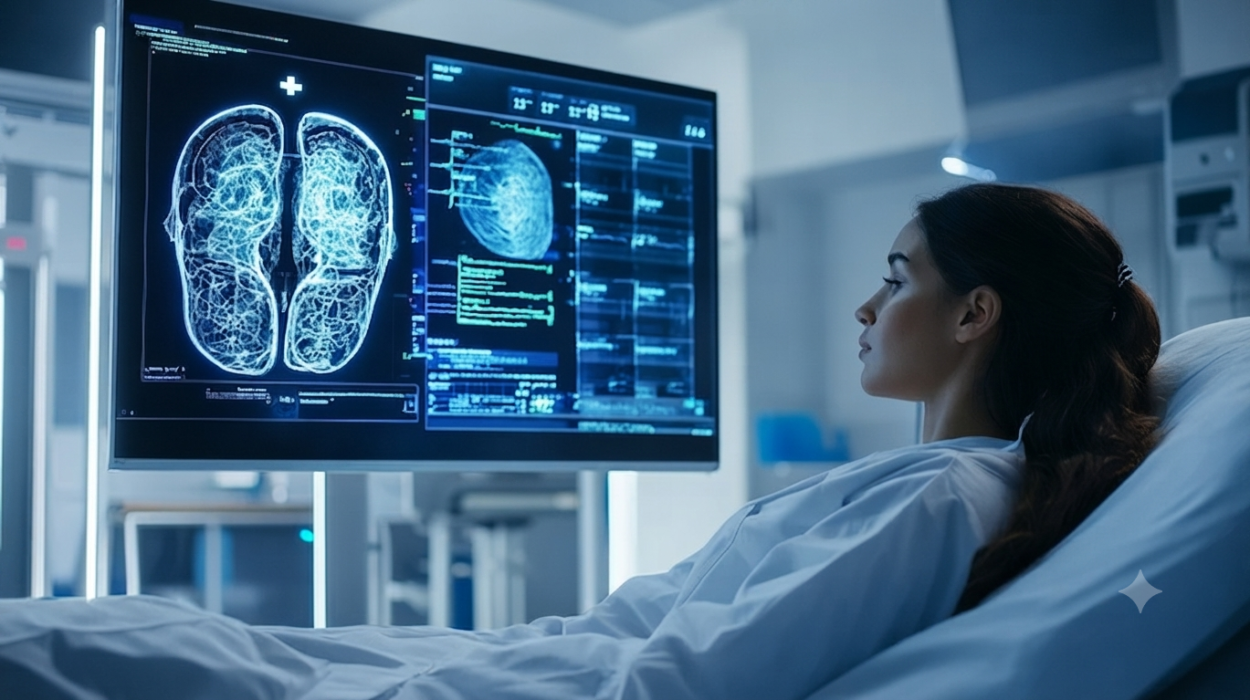
Artificial intelligence has tremendous potential to improve healthcare.
It can analyze medical images, identify patterns in patient data, predict disease risks, and assist doctors in making diagnoses.
However, healthcare decisions involve uncertainty, ethics, and individual patient circumstances.
An AI system may occasionally produce incorrect recommendations or fail to recognize unusual medical conditions.
Because of these limitations, medical experts emphasize that AI should support healthcare professionals rather than replace their clinical judgment.
Human oversight remains essential for patient safety.
Autonomous Vehicles
Self-driving vehicles represent one of the most exciting applications of AI.
These systems use cameras, sensors, radar, and advanced algorithms to navigate roads and avoid obstacles.
Although autonomous driving technology has made significant progress, unexpected situations remain challenging.
Road construction, unusual weather conditions, unpredictable human behavior, and rare traffic events can test even sophisticated AI systems.
Engineers continue improving safety, but ensuring reliable performance under every possible condition remains an active area of research.
AI and Human Decision-Making
Artificial intelligence increasingly assists decisions involving finance, education, healthcare, transportation, and criminal justice.
While AI can analyze vast amounts of information quickly, important decisions often involve values, ethics, empathy, and context that cannot always be captured through data alone.
Human judgment remains essential, especially when decisions significantly affect people’s lives.
Experts often recommend that AI support—not replace—human decision-makers in sensitive situations.
Environmental Costs
Training and operating large AI models can require significant computing power.
Powerful computers consume electricity and generate heat, especially during the training of advanced machine learning systems.
The environmental impact depends on many factors, including the size of the model, the efficiency of computer hardware, and the source of electricity used.
Researchers are actively developing more energy-efficient AI systems and exploring sustainable computing technologies.
Reducing energy consumption has become an important goal in AI research.
Security Risks in Critical Infrastructure
Artificial intelligence is increasingly used in systems that manage electricity, transportation, communication networks, financial services, and industrial operations.
If these systems malfunction, are poorly designed, or become targets of cyberattacks, the consequences could affect many people.
For this reason, critical infrastructure requires rigorous testing, continuous monitoring, and strong cybersecurity protections before AI systems are widely deployed.
Reliability is especially important in systems where human safety is involved.
The Challenge of Transparency
Many advanced AI systems are extremely complex.
Even the researchers who build them may not always fully understand why a model produces a particular result.
This challenge is sometimes called the “black box” problem.
When AI influences important decisions, people often want clear explanations.
Understanding how an AI reached its conclusion helps improve trust, identify mistakes, and ensure accountability.
Scientists are actively researching explainable AI, which aims to make AI systems easier for humans to understand.
Ethical Questions
Artificial intelligence raises many ethical questions that extend beyond technology itself.
Who should be responsible when an AI system causes harm?
How should personal data be protected?
Who decides which values AI systems should follow?
How can society ensure that AI benefits everyone rather than only a small number of organizations?
These questions involve computer science, philosophy, law, economics, psychology, and public policy.
Addressing them requires collaboration among governments, researchers, businesses, and the public.
AI in Warfare
Some governments are exploring military applications of artificial intelligence.
AI may assist with surveillance, logistics, intelligence analysis, and defensive systems.
At the same time, experts have expressed concern about increasingly autonomous weapons that could make certain decisions without direct human control.
Many researchers and international organizations continue discussing appropriate rules and oversight for military uses of AI.
These discussions focus on reducing risks while maintaining international security.
Artificial General Intelligence
Most AI systems today are designed for specific tasks.
An AI that translates languages cannot automatically perform scientific research or drive a car without additional training.
Some researchers are investigating the possibility of Artificial General Intelligence (AGI)—a hypothetical form of AI capable of performing a wide variety of intellectual tasks at or above human levels.
Whether AGI will eventually be achieved remains uncertain.
If it were developed, it could create extraordinary opportunities while also introducing entirely new scientific, ethical, and societal challenges.
Because of this possibility, many researchers advocate careful research, international cooperation, and strong safety measures.
Can Artificial Intelligence Become Dangerous?
Artificial intelligence itself is not inherently good or bad.
Like electricity, the internet, or biotechnology, its impact depends largely on how humans choose to design, regulate, and use it.
A carefully tested AI system operating under human supervision can improve healthcare, education, transportation, and scientific discovery.
A poorly designed or intentionally misused AI system, however, may contribute to misinformation, privacy violations, discrimination, cybercrime, or other forms of harm.
The greatest risks often arise not from AI acting independently, but from human decisions about how AI is developed and deployed.
How Scientists Are Reducing AI Risks
Researchers around the world are working to make artificial intelligence safer and more reliable.
They are improving methods for detecting bias, increasing transparency, strengthening cybersecurity, reducing harmful outputs, protecting personal privacy, and developing techniques to align AI behavior with human goals.
Governments are introducing new regulations, technology companies are publishing safety guidelines, universities are conducting independent research, and international organizations are encouraging global cooperation.
These efforts recognize that responsible AI development requires both technological innovation and thoughtful governance.
Using AI Responsibly
Individuals also play an important role in reducing AI-related risks.
Understanding AI’s capabilities and limitations helps people make informed decisions.
Verifying important information, protecting personal data, thinking critically about AI-generated content, and recognizing that AI can make mistakes are all essential habits.
Rather than replacing human intelligence, AI is most valuable when it serves as a tool that enhances learning, creativity, productivity, and problem-solving.
Responsible use depends on combining advanced technology with human judgment.
Looking Toward the Future
Artificial intelligence is one of the most transformative technologies ever created. Its influence will likely continue expanding across science, medicine, education, transportation, business, and everyday life.
At the same time, its growing capabilities require careful attention to safety, ethics, fairness, transparency, and accountability.
The future of AI will not be determined by technology alone. It will be shaped by the choices made by researchers, governments, businesses, educators, and ordinary citizens around the world.
Understanding the risks of artificial intelligence is not about rejecting innovation. It is about ensuring that one of humanity’s most powerful inventions develops in ways that protect human rights, promote fairness, strengthen public trust, and improve lives.
When guided by scientific evidence, ethical principles, and responsible oversight, artificial intelligence has the potential to become one of the greatest tools humanity has ever created—while keeping its risks carefully managed for generations to come.