Artificial intelligence has quickly become one of the most talked-about technologies in the world. It writes essays, answers questions, creates images, translates languages, recommends movies, helps doctors diagnose diseases, and even assists scientists in making new discoveries. Every day, millions of people interact with AI without even realizing it. From voice assistants on smartphones to personalized recommendations on streaming platforms, artificial intelligence has quietly become part of everyday life.
Yet alongside this excitement comes an important question that many people ask: Is artificial intelligence dangerous?
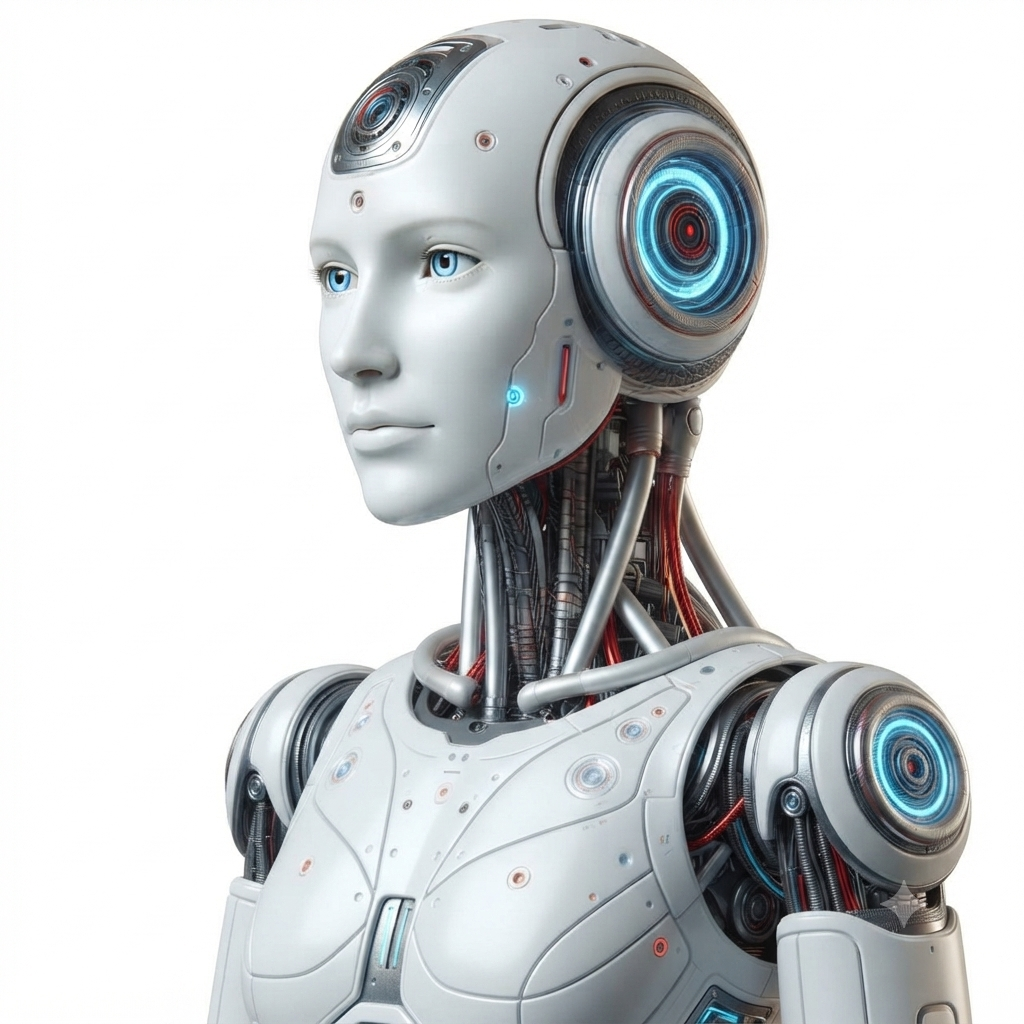
Movies often portray AI as intelligent robots that turn against humanity, take over the world, or replace humans entirely. These stories are entertaining, but they are fiction. The real conversation about AI is much more complex and much more important. The actual risks of artificial intelligence are not usually about evil robots. Instead, they involve how humans design, use, and manage these powerful systems.
The truth is that artificial intelligence is neither inherently good nor inherently bad. Like electricity, the internet, or nuclear technology, AI is a tool. Its impact depends largely on how people choose to develop and use it.
Understanding both the benefits and the risks of AI is essential if society wants to use this technology responsibly.
What Is Artificial Intelligence?
Artificial intelligence, often called AI, is a branch of computer science that focuses on creating systems capable of performing tasks that normally require human intelligence. These tasks include recognizing speech, understanding language, identifying images, solving problems, making predictions, and learning from data.
Unlike traditional computer programs that simply follow fixed instructions, many modern AI systems improve their performance by analyzing large amounts of information. This process is known as machine learning, one of the most important areas of AI.
Some advanced systems also use deep learning, a technique inspired by the structure of the human brain. These systems analyze enormous datasets to recognize complex patterns that would be difficult for humans to detect.
Although AI can appear remarkably intelligent, today’s systems do not possess human consciousness, emotions, self-awareness, or genuine understanding. They process information using mathematical models and statistical patterns rather than human-like thought.
Why AI Feels So Powerful
Artificial intelligence can perform certain tasks much faster than humans.
A computer can analyze millions of medical images, process enormous financial datasets, or search vast scientific databases within seconds. It never becomes tired, bored, or distracted.
This speed and efficiency make AI incredibly valuable in many fields.
Doctors use AI to assist in detecting diseases from medical images.
Scientists use AI to analyze genetic data and discover potential new medicines.
Farmers use AI to monitor crop health.
Engineers use AI to design more efficient machines.
Astronomers use AI to identify distant galaxies.
Students use AI as a learning assistant.
Businesses use AI to improve customer service.
The growing capabilities of AI explain why it has become one of the fastest-developing technologies in history.
Why Some People Worry About AI
Despite its many benefits, AI also raises legitimate concerns.
One reason is that AI systems are becoming increasingly capable. They can perform tasks that were once considered uniquely human, such as writing articles, creating realistic artwork, composing music, generating computer code, and holding natural conversations.
As AI becomes more powerful, people naturally ask how it might affect jobs, privacy, security, education, and society.
These concerns are not based solely on science fiction. Many researchers, governments, and technology companies actively study AI safety because they recognize that powerful technologies require careful management.
The goal is not to stop AI development but to ensure that it benefits humanity while minimizing potential harm.
AI Can Make Mistakes
One of the biggest misunderstandings about artificial intelligence is the belief that it is always correct.
In reality, AI systems can make mistakes.
An AI model may misunderstand a question, produce incorrect information, misidentify objects in images, or generate inaccurate conclusions if its training data are incomplete or biased.
Unlike humans, AI does not truly know when it is wrong. It generates responses based on patterns learned from data rather than genuine understanding.
Because of this, experts emphasize that AI should often assist human decision-making rather than completely replace it, especially in important areas such as healthcare, law, finance, and public safety.
Human oversight remains essential.
The Challenge of Bias
Artificial intelligence learns from data created by humans.
If that data contain biases, errors, or historical inequalities, AI systems may unintentionally reproduce those problems.
For example, an AI system trained using incomplete hiring records could make unfair employment recommendations. A facial recognition system trained with unbalanced datasets might perform better for some populations than others.
Researchers actively work to reduce these biases by improving training methods, increasing data diversity, and carefully testing AI systems before deployment.
Building fair AI remains one of the most important challenges in modern computer science.
Privacy Concerns
Many AI systems rely on large amounts of data.
These data may include photos, text, voice recordings, location information, browsing activity, or purchasing habits.
Although data can help AI become more useful, collecting and using personal information raises important privacy questions.
People increasingly want to know how their information is collected, stored, protected, and shared.
Governments around the world continue developing privacy regulations to protect individuals while allowing technological innovation.
Responsible AI development requires respecting people’s privacy and maintaining strong data security.
AI and Jobs
One of the most widely discussed concerns is whether AI will replace human workers.
History shows that new technologies often change the job market.
During the Industrial Revolution, machines automated many forms of manual labor while also creating entirely new industries and professions.
Similarly, AI is expected to automate certain repetitive or predictable tasks. Some administrative work, data analysis, routine customer service, and document processing may increasingly be handled by AI systems.
However, many jobs involve creativity, emotional understanding, ethical judgment, leadership, and complex decision-making—areas where humans continue to play essential roles.
Rather than eliminating all jobs, AI is more likely to transform many occupations, changing the skills people need and creating new opportunities that do not yet exist.
Education and lifelong learning will play an important role in helping workers adapt to these changes.
AI Can Be Misused
Like many powerful technologies, artificial intelligence can be used for harmful purposes.
Criminals may attempt to use AI to create convincing scams, spread misinformation, automate cyberattacks, or generate deceptive content.
Deepfake technology, which uses AI to create realistic but fabricated images, videos, or audio recordings, has become a growing concern. While deepfakes can be used for entertainment and filmmaking, they may also be misused to spread false information or impersonate individuals.
These risks highlight the importance of digital literacy, cybersecurity, and responsible regulation.
The danger often comes not from AI itself but from people who choose to misuse it.
The Problem of Misinformation
Artificial intelligence can generate articles, videos, voices, and images that appear highly realistic.
This capability offers many creative opportunities, but it also makes misinformation easier to produce.
False news, manipulated videos, and fabricated social media posts can spread rapidly online.
Because of this, experts encourage people to verify important information using reliable sources rather than trusting every piece of AI-generated content they encounter.
Critical thinking has become more valuable than ever in the age of artificial intelligence.
AI in Healthcare
Healthcare demonstrates both the promise and the challenges of AI.
AI systems can analyze medical images, identify potential diseases, predict health risks, and assist doctors in making diagnoses.
These technologies may improve efficiency and help detect certain conditions earlier.
However, AI should not replace medical professionals.
Every patient is unique, and medical decisions often require clinical experience, ethical judgment, communication, and consideration of factors beyond computer algorithms.
The most effective approach is often collaboration between AI tools and trained healthcare providers.
AI in Scientific Research
Artificial intelligence has become an important tool for scientists.
Researchers use AI to study climate change, analyze astronomical observations, investigate protein structures, model disease outbreaks, and accelerate drug discovery.
Because AI can analyze enormous datasets quickly, it helps scientists identify patterns that might otherwise remain hidden.
Rather than replacing scientists, AI often serves as a powerful research assistant that expands human capabilities.
Many recent scientific advances have benefited from AI-supported analysis.
AI and Education
Artificial intelligence is changing how people learn.
Students can receive personalized explanations, practice languages, explore scientific concepts, and receive feedback more quickly than before.
Teachers can use AI to prepare educational materials and identify students who may need additional support.
However, education is much more than simply producing answers.
Learning requires curiosity, discussion, critical thinking, creativity, and independent problem-solving.
If students rely entirely on AI without understanding the underlying concepts, genuine learning may suffer.
Used wisely, AI can enhance education rather than replace it.
Could AI Become Smarter Than Humans?
Some researchers study the possibility of artificial general intelligence (AGI)—a hypothetical form of AI capable of performing nearly any intellectual task that humans can perform.
At present, no such system exists.
Today’s AI systems are highly specialized. One AI may excel at language, another at image recognition, and another at playing games, but they do not possess broad human-like intelligence.
Scientists continue to debate whether AGI will eventually become possible, when it might happen, and what safeguards would be necessary.
Because the future remains uncertain, researchers emphasize the importance of studying AI safety before increasingly powerful systems are developed.
The Importance of AI Safety
AI safety focuses on ensuring that artificial intelligence behaves as intended and benefits society.
Researchers work on improving system reliability, reducing harmful outputs, preventing misuse, increasing transparency, and ensuring that AI aligns with human values.
Governments, universities, international organizations, and technology companies all contribute to AI safety research.
Creating safe AI requires collaboration across computer science, ethics, psychology, law, economics, public policy, and many other fields.
The challenge is not purely technological—it is also social and ethical.
Can AI Replace Humans?
Artificial intelligence can perform many impressive tasks, but humans possess qualities that remain extraordinarily difficult to replicate.
People experience emotions.
They build relationships.
They understand cultural traditions.
They exercise moral judgment.
They show empathy.
They imagine entirely new ideas.
They appreciate art, humor, and beauty in deeply personal ways.
While AI can imitate aspects of conversation or creativity, it does not experience feelings, desires, consciousness, or genuine understanding.
Human intelligence is shaped not only by information processing but also by lived experience, social interaction, and emotional development.
These uniquely human qualities remain essential in countless areas of life.
How Society Can Reduce AI Risks
Managing AI responsibly requires thoughtful choices rather than fear.
Developers should thoroughly test AI systems before deployment.
Organizations should be transparent about how AI is used.
Governments can create regulations that encourage innovation while protecting public safety.
Researchers should continue studying fairness, security, reliability, and accountability.
Schools can teach digital literacy so people understand both the strengths and the limitations of AI.
Individuals also have an important role by using AI responsibly, verifying important information, protecting personal data, and thinking critically about AI-generated content.
Responsible use is a shared responsibility.
Looking Toward the Future
Artificial intelligence will almost certainly continue becoming more capable.
It may help develop cleaner energy technologies, improve healthcare, accelerate scientific discoveries, strengthen disaster prediction, enhance education, and solve problems that currently seem impossible.
At the same time, new challenges will emerge.
Society will need to address ethical questions, economic changes, privacy concerns, security risks, and the responsible governance of increasingly powerful AI systems.
History shows that humanity has successfully managed many transformative technologies through careful research, international cooperation, and thoughtful regulation.
Artificial intelligence will likely require the same balanced approach.
So, Is Artificial Intelligence Dangerous?
The answer is neither a simple yes nor a simple no.
Artificial intelligence itself is not inherently dangerous. It is a powerful technology created by humans to solve problems, analyze information, and perform useful tasks. Like any powerful tool, its impact depends on how it is designed, governed, and used.
AI can improve healthcare, expand scientific knowledge, increase productivity, support education, and help address some of humanity’s greatest challenges. At the same time, it can also introduce risks involving misinformation, privacy, bias, cybersecurity, and economic disruption if it is developed or used irresponsibly.
The greatest danger may not be artificial intelligence alone but the choices people make about it. Responsible innovation, strong ethical standards, transparent governance, and informed public understanding are essential to ensuring that AI serves humanity rather than harms it.
The future of artificial intelligence is still being written. Whether it becomes one of humanity’s greatest achievements or one of its greatest challenges will depend not only on advances in technology but also on wisdom, cooperation, and the values that guide its development.