Not long ago, writing meant sitting with a blank page, a notebook, or a keyboard and slowly turning thoughts into words. Every sentence reflected a person’s experiences, emotions, imagination, and understanding of the world. Today, that process has changed dramatically. With the rise of artificial intelligence, an article, email, poem, or story can be generated in seconds.
This remarkable technological shift has sparked an important question: if AI can write almost anything, what makes human writing special?
The answer is authenticity.
Artificial intelligence can organize information, imitate writing styles, and generate fluent text at incredible speed. Yet authentic writing is more than arranging words into grammatically correct sentences. It is about expressing genuine understanding, unique perspectives, personal experiences, and meaningful connections with readers.
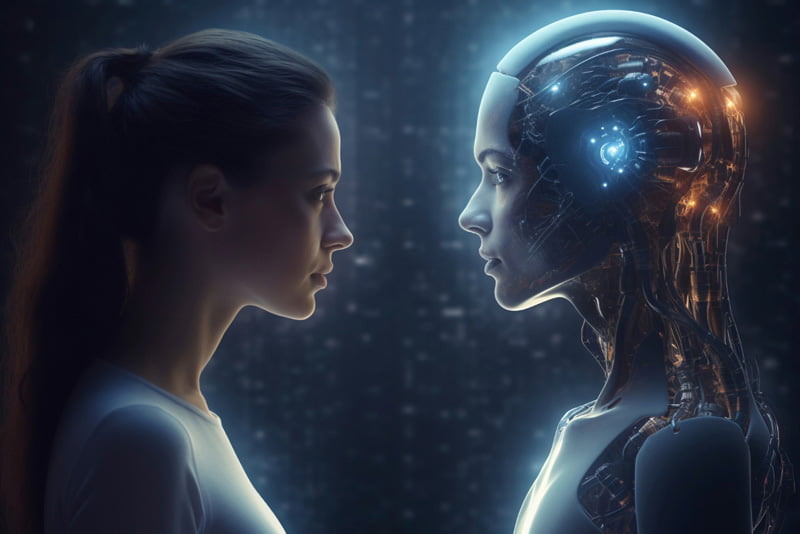
As AI becomes an increasingly common writing assistant, learning how to combine its strengths with human creativity has become one of the most valuable skills for writers, students, educators, businesses, and content creators. Rather than seeing AI and human creativity as competitors, many experts believe the future of writing lies in thoughtful collaboration between the two.
What Is AI Writing?
AI writing refers to text generated with the help of artificial intelligence systems, particularly large language models (LLMs). These systems are trained on enormous collections of books, articles, websites, and other publicly available text to recognize patterns in language.
Instead of understanding ideas in the same way humans do, AI predicts which words are most likely to come next based on the patterns it has learned during training. This allows it to generate essays, reports, summaries, emails, stories, advertisements, programming code, and many other forms of writing.
Modern AI writing tools have become remarkably capable. They can explain scientific concepts, suggest headlines, translate languages, rewrite paragraphs, and even adapt their tone for different audiences.
However, despite these impressive abilities, AI does not think, feel, remember personal experiences, or possess consciousness. It generates language through statistical prediction rather than lived understanding.
Recognizing this difference is essential for understanding both the strengths and limitations of AI-generated content.
What Makes Human Creativity Different?
Human creativity is deeply connected to experience.
People create ideas from memories, emotions, curiosity, imagination, relationships, cultural backgrounds, and personal beliefs. A novelist may draw inspiration from childhood memories. A scientist may develop new theories after years of research. A journalist may describe an event after witnessing it firsthand.
These experiences cannot simply be copied from data.
Human creativity also involves making unexpected connections between ideas. Artists combine influences from different cultures. Writers invent fictional worlds. Researchers propose original hypotheses. Entrepreneurs imagine products that do not yet exist.
Creativity often emerges from uncertainty, experimentation, mistakes, and emotional reflection.
Unlike AI, humans can intentionally break conventions, question assumptions, and assign personal meaning to their work.
This ability gives authentic writing its emotional depth.
Why AI Writing Has Become So Popular
AI writing tools have spread rapidly because they solve many practical problems.
Writing can be difficult, time-consuming, and mentally exhausting. Many people struggle with starting a blank page, organizing ideas, correcting grammar, or maintaining a consistent tone.
AI helps reduce these challenges.
It can generate outlines, summarize long documents, improve readability, suggest titles, simplify technical language, and provide alternative wording almost instantly.
Businesses use AI to draft marketing materials.
Students use it to understand difficult concepts.
Researchers use it to organize information.
Content creators use it to brainstorm ideas.
Customer support teams use it to prepare responses.
For many routine writing tasks, AI offers significant improvements in speed and efficiency.
These advantages explain why AI has become a valuable writing assistant rather than simply a technological curiosity.
The Strengths of AI Writing
One of AI’s greatest strengths is speed.
A task that might take hours for a human can often be completed in minutes with AI assistance.
AI also excels at organizing information.
It can identify common themes, summarize lengthy reports, compare concepts, and present information in a logical structure.
Another major advantage is consistency.
Unlike humans, AI does not become tired, distracted, or emotionally overwhelmed while writing. It can maintain a consistent style across thousands of words.
AI is also useful for overcoming writer’s block.
Many writers struggle to begin a project. AI can generate opening paragraphs, brainstorming ideas, or rough drafts that help overcome the fear of the empty page.
Language support is another important benefit.
AI can improve grammar, simplify complicated sentences, adjust tone, and assist people writing in languages that are not their first language.
For these reasons, AI has become a valuable productivity tool across many professions.
The Limitations of AI Writing
Despite its impressive abilities, AI has important limitations.
The most significant is the lack of genuine understanding.
Although AI produces convincing language, it does not possess awareness or comprehension in the human sense. It predicts words based on patterns rather than experiencing the ideas it describes.
AI also lacks personal experience.
It cannot describe the excitement of climbing a mountain, the grief of losing a loved one, or the nervousness before giving a speech from firsthand experience.
Its descriptions are generated from patterns found in training data rather than lived reality.
Another limitation involves originality.
AI often creates combinations of existing ideas rather than generating fundamentally new concepts.
It may also produce incorrect information, misunderstand context, or present inaccurate statements with confidence. Researchers sometimes call these errors hallucinations because the model generates information that sounds plausible but is not supported by reliable evidence.
Because of this, human review remains essential, especially in scientific, medical, legal, historical, and journalistic writing.
What Does Authenticity Really Mean?
Authenticity is one of the most valuable qualities in writing.
Authentic writing reflects genuine thought rather than imitation.
It communicates honestly.
It acknowledges uncertainty when appropriate.
It respects evidence.
It speaks in a voice that feels real instead of artificial.
Authenticity does not require dramatic life experiences or extraordinary storytelling.
Instead, it comes from clarity, sincerity, careful thinking, and honest communication.
Readers often recognize authentic writing because it feels natural.
The writer seems present rather than hidden behind generic language.
Authenticity creates trust.
In an age when AI-generated content is becoming increasingly common, trust may become one of the most important characteristics of successful communication.
Why Readers Value Authentic Voices
People connect with people.
Even when reading educational articles or scientific reports, readers appreciate writing that feels thoughtful and human.
Stories become memorable because they include emotion.
Opinions become persuasive because they reveal careful reasoning.
Educational content becomes engaging because the writer anticipates readers’ questions and explains difficult ideas with empathy.
Authentic voices build relationships over time.
Readers return not only for information but also because they trust the person behind the words.
This relationship cannot be fully automated.
AI can assist communication, but trust develops through consistent honesty and genuine expertise.
Can AI Be Creative?
This question has sparked ongoing scientific and philosophical debate.
AI can certainly generate content that appears creative.
It can produce poems, stories, artwork, music, and imaginative ideas.
Researchers have demonstrated that AI can combine concepts in surprising ways and create outputs that many people consider original.
However, AI creativity differs fundamentally from human creativity.
Humans create with intentions, goals, emotions, memories, and personal meaning.
AI generates outputs by identifying statistical relationships within training data.
Both can produce novel combinations, but the underlying processes are different.
Rather than replacing human creativity, AI expands the range of creative tools available to people.
The final meaning still comes from human judgment.
The Best Approach Is Collaboration
Many experts believe the future is not AI versus humans.
Instead, it is AI working alongside humans.
In this partnership, AI performs repetitive or time-consuming tasks.
Humans provide direction, judgment, originality, ethics, emotional understanding, and final decision-making.
For example, a science writer may ask AI to organize research findings into an outline.
The writer then verifies every fact, adds interviews, includes expert interpretation, improves the narrative flow, and ensures scientific accuracy.
The result benefits from both computational efficiency and human insight.
This collaborative approach often produces stronger writing than either humans or AI could achieve independently.
Keeping Your Unique Voice
One concern many writers have is losing their personal writing style.
This risk becomes real if AI-generated drafts are copied without thoughtful editing.
Every writer has a distinctive voice.
Some write with humor.
Others prefer elegance, simplicity, curiosity, or careful analysis.
These differences reflect personality and experience.
Maintaining authenticity means ensuring that your own perspective remains visible throughout your work.
Instead of asking AI to replace your voice, use it to support your thinking.
Revise AI-generated text until it genuinely sounds like something you would naturally write.
Your voice is one of your greatest creative strengths.
The Importance of Fact-Checking
AI-generated text should never be accepted without verification.
Although language models produce fluent writing, they may generate incorrect statistics, fictional references, or outdated information.
Scientific writing especially requires careful verification.
Reliable sources, peer-reviewed research, official reports, and expert consensus remain essential.
Human judgment is necessary to distinguish accurate information from convincing but incorrect statements.
Fact-checking protects both credibility and readers.
Accuracy remains one of the foundations of authentic communication.
Using Personal Experience Responsibly
One of the easiest ways to make writing authentic is by including genuine observations and experiences when appropriate.
Personal examples help readers understand ideas more clearly.
They demonstrate that the writer has actually engaged with the subject.
However, authenticity does not mean exaggerating experiences or inventing stories.
Readers value honesty more than dramatic storytelling.
Even simple observations from everyday life can make writing feel more relatable.
Real experiences create connections that AI cannot genuinely replicate.
Emotional Intelligence in Writing
Human communication involves more than facts.
Writers constantly consider readers’ emotions.
Should the tone be encouraging?
Should a difficult concept be explained gently?
Should uncertainty be acknowledged openly?
These decisions require emotional intelligence.
AI can imitate emotional language, but genuine empathy comes from understanding human experiences.
Writers who combine accurate information with thoughtful emotional awareness create content that feels both informative and compassionate.
This balance strengthens authenticity.
Ethics in the Age of AI Writing
The growing use of AI raises important ethical questions.
Readers deserve honesty about how content is created.
Educational institutions encourage responsible AI use rather than undisclosed dependence.
Journalists must verify information before publication.
Researchers should avoid presenting AI-generated material as original scientific work without proper oversight.
Businesses must ensure that AI-generated content does not spread misinformation or violate copyright.
Ethical writing prioritizes transparency, fairness, accuracy, and respect for readers.
Technology changes, but these principles remain constant.
Developing Creativity Alongside AI
Some people worry that relying too heavily on AI could reduce creative thinking.
Like any tool, AI influences how people work.
If used thoughtfully, it can stimulate new ideas.
If used passively, it may discourage independent thinking.
Maintaining creativity requires continuing to observe the world, ask questions, read widely, learn continuously, and reflect deeply.
Creativity grows through practice.
Writing regularly, experimenting with different styles, and engaging with diverse perspectives help strengthen original thinking.
AI should support this process rather than replace it.
The Future of Writing
Writing is entering one of the most significant periods of change since the invention of the printing press.
Artificial intelligence will almost certainly become a standard part of many writing workflows.
Students will use it for learning.
Scientists will use it for organizing research.
Businesses will use it for communication.
Authors will use it for brainstorming.
Editors will use it for revision.
Yet the increasing availability of AI may make authentic human perspectives even more valuable.
As readers encounter more automatically generated content, they may increasingly seek writing that reflects genuine expertise, careful thought, emotional honesty, and original insight.
Authenticity could become one of the defining qualities that separates memorable writing from ordinary text.
Human Creativity Remains Irreplaceable
Artificial intelligence represents one of the most remarkable technological achievements of our time. It can write quickly, organize information efficiently, and assist with an extraordinary range of communication tasks. Used responsibly, it can save time, improve productivity, and help writers focus on higher-level thinking.
But writing is not simply the production of words.
Writing is an expression of curiosity.
It is the sharing of knowledge.
It is the preservation of culture.
It is the communication of emotions, discoveries, dreams, and lived experiences.
These deeply human qualities cannot be reduced to algorithms alone.
The most powerful writing of the future will likely emerge not from choosing between AI and human creativity, but from combining the strengths of both. AI can handle repetition, structure, and language assistance. Humans contribute wisdom, ethics, imagination, empathy, and purpose.
Authenticity does not disappear in the age of artificial intelligence. Instead, it becomes more valuable than ever.
The future belongs not to those who simply use AI, but to those who use it thoughtfully while preserving the unique qualities that only human creativity can provide.