Imagine visiting a doctor who can instantly compare your symptoms with millions of medical records, examine a medical image in seconds, recognize tiny abnormalities that are almost impossible for the human eye to notice, and suggest possible diagnoses based on the latest scientific research. While this may sound like science fiction, much of it is already becoming reality through artificial intelligence (AI).
Healthcare has always depended on human expertise, compassion, and careful decision-making. Doctors, nurses, pharmacists, and researchers dedicate years of their lives to understanding diseases and helping people recover. Today, AI is becoming an important partner in that mission. Rather than replacing healthcare professionals, AI is helping them work faster, make more informed decisions, and provide better care for patients.
Artificial intelligence is transforming nearly every part of modern medicine. From diagnosing diseases and discovering new medicines to assisting during surgery and monitoring patients remotely, AI is changing how healthcare is delivered across the world. Although challenges remain, the technology has already begun reshaping medicine in remarkable ways.
What Is Artificial Intelligence in Healthcare?
Artificial intelligence refers to computer systems designed to perform tasks that normally require human intelligence. These tasks include recognizing patterns, understanding language, analyzing images, making predictions, and learning from experience.
In healthcare, AI systems are trained using enormous amounts of medical data. This data may include medical images, laboratory test results, electronic health records, genetic information, scientific publications, and even data collected from wearable devices.
By analyzing these data, AI can identify patterns that may be difficult or time-consuming for humans to detect. Importantly, AI does not “think” like a human doctor. Instead, it uses mathematical models and algorithms to recognize relationships within data and generate predictions or recommendations.
Healthcare professionals remain responsible for interpreting AI-generated information and making final clinical decisions.
Why Healthcare Needs AI
Modern medicine generates an extraordinary amount of information every day.
Hospitals produce thousands of medical images, laboratory reports, prescriptions, patient records, and research papers. At the same time, scientists publish thousands of new medical studies every week. No individual doctor can read and remember all of this information.
AI helps organize, analyze, and summarize these vast amounts of data.
Instead of replacing medical expertise, AI acts as a powerful assistant that helps healthcare professionals process information more efficiently. This allows doctors to spend more time focusing on patient care while using AI to support complex analytical tasks.
As populations grow older and chronic diseases become more common, healthcare systems face increasing pressure. AI offers tools that may improve efficiency, reduce delays, and support better patient outcomes.
AI Helps Doctors Diagnose Diseases Earlier
One of AI’s most valuable contributions to healthcare is assisting with disease diagnosis.
Early diagnosis often makes treatment more effective. However, detecting disease at its earliest stages can be challenging because symptoms may be subtle or resemble other conditions.
AI systems can analyze large amounts of medical information to identify patterns associated with specific diseases.
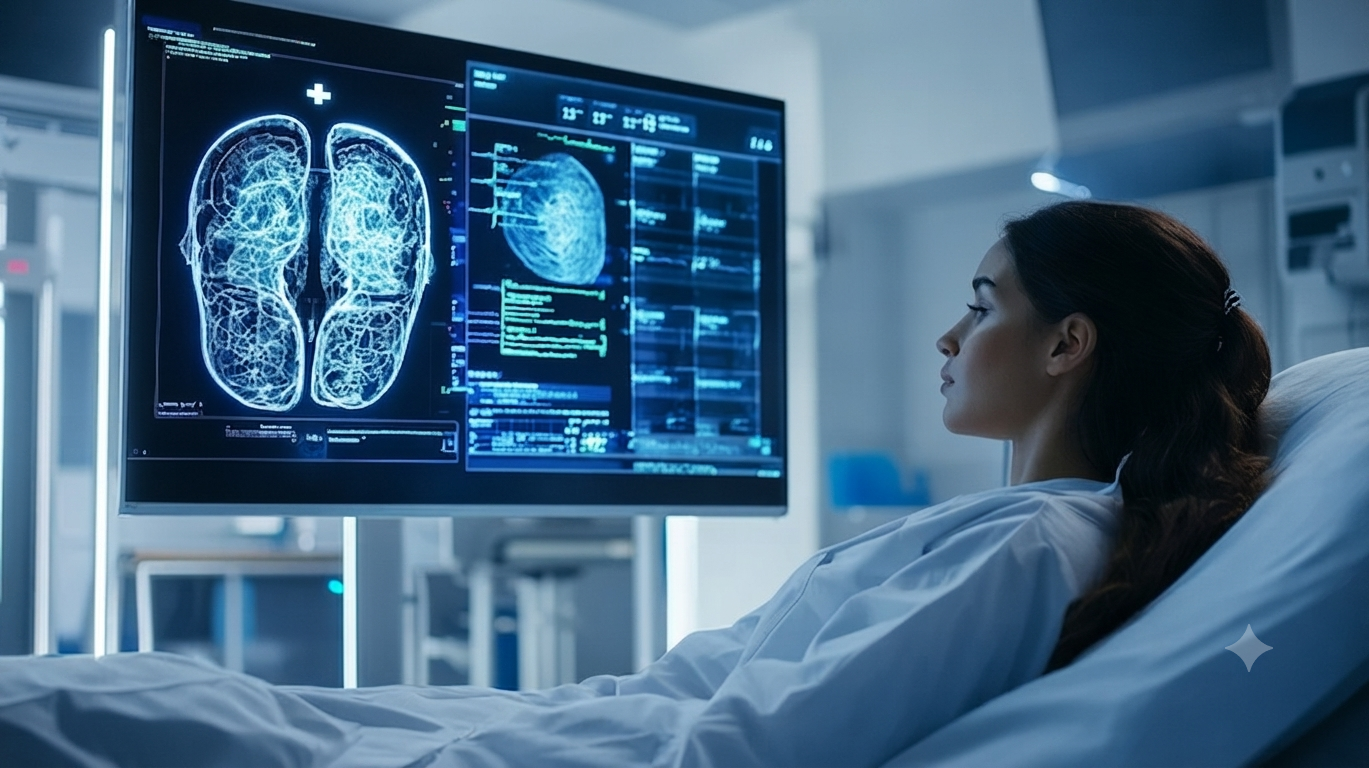
For example, AI can examine chest X-rays, CT scans, MRI scans, mammograms, retinal photographs, skin images, and pathology slides. In many situations, these systems can highlight suspicious areas that deserve closer examination by medical specialists.
Researchers have demonstrated that AI can accurately identify certain features associated with diseases such as diabetic eye disease, some forms of cancer, lung disease, fractures, and neurological disorders. However, AI results must still be reviewed and confirmed by qualified healthcare professionals.
Rather than replacing radiologists or pathologists, AI serves as an additional layer of support that may reduce missed findings and improve efficiency.
Medical Imaging Is Becoming Smarter
Medical imaging has become one of the most successful applications of AI.
Every day, hospitals generate enormous numbers of X-rays, CT scans, MRI images, ultrasound scans, and other medical images. Reviewing each image carefully requires considerable expertise and time.
AI systems excel at recognizing visual patterns.
By comparing medical images with millions of previously analyzed examples, AI can identify abnormalities such as tumors, bleeding, pneumonia, bone fractures, or organ damage.
Some AI systems can prioritize urgent cases by alerting radiologists when potentially life-threatening findings are detected. This may help patients receive faster attention during emergencies.
Even when AI identifies an abnormality, the final interpretation remains the responsibility of trained physicians.
AI Supports Cancer Detection and Treatment
Cancer is one of the leading causes of illness and death worldwide, and early detection greatly improves the chances of successful treatment.
AI is helping physicians detect cancer earlier by analyzing medical images, pathology slides, and laboratory data.
Digital pathology is one important example. Traditionally, pathologists examine tissue samples under microscopes. AI can analyze digital versions of these slides and identify subtle cellular changes associated with cancer.
AI is also helping doctors predict how certain tumors may respond to different treatments by analyzing genetic information and clinical data.
This supports the growing field of personalized medicine, where treatment plans are tailored to the unique characteristics of each patient and their disease.
Helping Detect Heart Disease
Cardiovascular diseases remain among the world’s leading causes of death.
AI is being used to analyze electrocardiograms (ECGs), echocardiograms, heart imaging studies, blood test results, and wearable sensor data.
By recognizing patterns that may indicate abnormal heart rhythms or heart disease, AI can assist doctors in identifying patients who may require further testing or treatment.
Some wearable devices also use AI to detect irregular heart rhythms, potentially encouraging people to seek medical attention earlier.
Although these systems can provide useful alerts, they are not substitutes for professional medical evaluation.
AI and Brain Health
Diseases affecting the brain often require rapid diagnosis and careful interpretation of complex medical information.
AI is helping neurologists analyze brain scans to identify signs of stroke, brain tumors, Alzheimer’s disease, multiple sclerosis, and other neurological conditions.
In stroke care, every minute matters because delayed treatment can lead to permanent brain damage.
Some AI systems can rapidly review brain scans and notify specialists when findings suggest a stroke, allowing treatment decisions to begin more quickly.
Researchers are also exploring how AI may help identify very early changes associated with neurodegenerative diseases before symptoms become severe.
AI Is Accelerating Drug Discovery
Developing a new medicine is an extraordinarily long and expensive process.
Researchers may spend more than a decade studying thousands of chemical compounds before identifying one that eventually becomes an approved medicine.
AI is helping speed up several stages of drug discovery.
Machine learning models can analyze enormous chemical databases, predict how molecules might behave, identify promising drug candidates, and estimate potential side effects before laboratory testing begins.
AI also helps researchers understand how diseases affect cells and proteins, allowing scientists to discover new therapeutic targets.
Although laboratory experiments and clinical trials remain essential, AI can reduce the amount of time needed to identify promising candidates for further research.
Personalized Medicine
Every patient is unique.
Two people with the same disease may respond differently to identical treatments because of differences in genetics, age, lifestyle, immune function, and many other biological factors.
Personalized medicine aims to tailor healthcare to individual patients rather than relying on one standard treatment for everyone.
AI plays an important role by analyzing multiple types of medical information simultaneously, including genetic data, laboratory results, imaging studies, and medical history.
This helps physicians estimate which treatments may be most effective or which patients may be at greater risk of developing complications.
As genetic sequencing becomes more accessible, AI is expected to play an increasingly important role in individualized healthcare.
AI in Robotic Surgery
Modern surgical robots do not operate independently.
Instead, they are controlled by highly trained surgeons who use robotic instruments to perform delicate procedures.
AI can assist these systems by improving image guidance, stabilizing instrument movements, recognizing anatomical structures, and providing useful information during surgery.
Robotic-assisted surgery may allow greater precision during certain procedures while potentially reducing tissue damage, blood loss, and recovery time for some patients.
However, human surgeons remain in complete control throughout these operations.
Virtual Health Assistants
Many healthcare organizations now use AI-powered virtual assistants to support patients.
These systems can answer common health-related questions, schedule appointments, provide medication reminders, explain preparation instructions before medical procedures, and help patients navigate healthcare services.
Some virtual assistants can also collect symptom information before appointments, allowing doctors to review patient concerns more efficiently.
While these systems improve convenience, they are designed to complement—not replace—professional medical advice.
Monitoring Patients at Home
Healthcare is increasingly moving beyond hospitals.
Wearable devices such as smartwatches and fitness trackers continuously collect information about heart rate, physical activity, sleep, blood oxygen levels, and other health indicators.
AI analyzes these data streams to identify unusual patterns that might indicate emerging health problems.
For patients with chronic diseases such as diabetes, heart failure, or respiratory illnesses, remote monitoring allows healthcare providers to detect changes earlier and intervene before conditions become severe.
This approach may reduce hospital admissions while helping patients remain safely at home.
AI and Electronic Health Records
Electronic health records contain valuable medical information but are often extremely large and complex.
Doctors may need to review years of medical history during a single patient visit.
AI can organize these records, summarize important information, identify potential medication interactions, highlight abnormal laboratory results, and suggest relevant clinical guidelines.
By reducing administrative workload, AI allows healthcare professionals to devote more attention to patient care.
Helping Doctors Make Better Decisions
Clinical decision-making often involves balancing many different pieces of information.
Symptoms, laboratory tests, imaging studies, medical history, medications, allergies, and family history all contribute to diagnosis and treatment planning.
AI systems can analyze these data together and suggest possible diagnoses or treatment options supported by available evidence.
Importantly, AI does not make medical decisions independently.
Healthcare professionals evaluate AI recommendations alongside their own clinical expertise, patient preferences, physical examinations, and additional diagnostic information.
The physician remains responsible for the final decision.
AI in Medical Research
Scientific research produces enormous quantities of information every year.
Researchers must review thousands of scientific papers while analyzing increasingly complex datasets.
AI can rapidly search medical literature, summarize research findings, identify hidden relationships within biological data, and assist in designing new studies.
Machine learning is also helping researchers analyze genomic data, understand disease mechanisms, and discover potential biomarkers associated with illness.
These advances are accelerating scientific discovery across many areas of medicine.
AI During Disease Outbreaks
Artificial intelligence has also been used to support public health.
Researchers use AI to analyze disease surveillance data, monitor infection trends, study population movement, and estimate how infectious diseases may spread.
AI can also help identify groups at higher risk of severe illness and assist healthcare systems in planning resources during outbreaks.
While predictions are never perfect, AI provides valuable tools that complement traditional epidemiology and public health expertise.
Improving Hospital Operations
Hospitals are incredibly complex organizations.
Beds, staff schedules, operating rooms, emergency departments, laboratory services, and medical equipment must all function together efficiently.
AI can help hospitals predict patient admissions, optimize staff scheduling, reduce waiting times, manage inventories, and improve resource allocation.
Although these improvements may not be directly visible to patients, they can contribute to smoother healthcare delivery.
The Importance of High-Quality Data
AI systems are only as reliable as the data used to train them.
If training data are incomplete, inaccurate, or unrepresentative of different populations, AI may produce biased or unreliable results.
Researchers therefore work carefully to develop diverse, high-quality datasets that reflect real-world patient populations.
Continuous testing and validation are essential before AI systems are used in clinical settings.
Healthcare organizations must regularly monitor AI performance to ensure safety and fairness.
Ethical Challenges
As AI becomes more common in healthcare, important ethical questions arise.
Patient privacy is one major concern because medical information is highly sensitive.
Healthcare organizations must protect patient data using strong security measures and comply with privacy regulations.
Another challenge involves transparency.
Some AI systems generate accurate predictions but do not clearly explain how they reached their conclusions. Researchers are developing more interpretable AI models so healthcare professionals can better understand and trust AI recommendations.
Bias is another concern. If AI systems perform better for some populations than others, health inequalities could increase.
Ensuring fairness, accountability, and careful human oversight remains essential.
Can AI Replace Doctors?
This question often appears in discussions about artificial intelligence.
The simple answer is no.
AI can analyze enormous amounts of information at remarkable speed, recognize complex patterns, and support medical decision-making.
However, medicine involves much more than data analysis.
Doctors communicate with patients, understand emotions, perform physical examinations, consider cultural and personal values, explain difficult diagnoses, discuss treatment options, provide reassurance, and make complex judgments that require human experience and ethical reasoning.
Compassion, empathy, trust, and shared decision-making remain central to healthcare.
AI is best understood as a powerful tool that enhances the abilities of healthcare professionals rather than replacing them.
The strongest healthcare systems of the future are likely to combine advanced AI technologies with skilled, compassionate human care.
The Future of AI in Healthcare
Artificial intelligence continues to evolve rapidly.
Researchers are developing AI systems capable of integrating medical imaging, laboratory results, genetic information, wearable sensor data, and electronic health records into comprehensive decision-support tools.
Future AI may help detect diseases even earlier, identify individuals at increased risk before symptoms appear, support highly personalized treatments, improve hospital efficiency, accelerate medical research, and expand access to healthcare in underserved regions.
Advances in robotics, natural language processing, and predictive analytics will likely create even more opportunities for improving patient care.
At the same time, ensuring patient safety, protecting privacy, reducing bias, maintaining transparency, and preserving the essential role of healthcare professionals will remain priorities.
A New Era of Medicine
Healthcare has always advanced through innovation. From the invention of the stethoscope and the discovery of antibiotics to modern imaging technologies and organ transplantation, each breakthrough has expanded humanity’s ability to prevent, diagnose, and treat disease.
Artificial intelligence represents another important step in this continuing journey. It is helping researchers uncover new medical knowledge, assisting doctors with increasingly complex decisions, improving the interpretation of medical data, and supporting more personalized care for millions of people.
Yet the heart of medicine remains unchanged. Every diagnosis, every treatment, and every recovery ultimately centers on human lives. AI can process vast amounts of information with extraordinary speed, but kindness, empathy, ethical judgment, and the doctor-patient relationship remain uniquely human qualities.
As artificial intelligence continues to mature, its greatest strength will not be replacing healthcare professionals, but empowering them. Working together, human expertise and intelligent technology have the potential to create a future where healthcare is more accurate, more efficient, more accessible, and ultimately more capable of improving lives around the world.