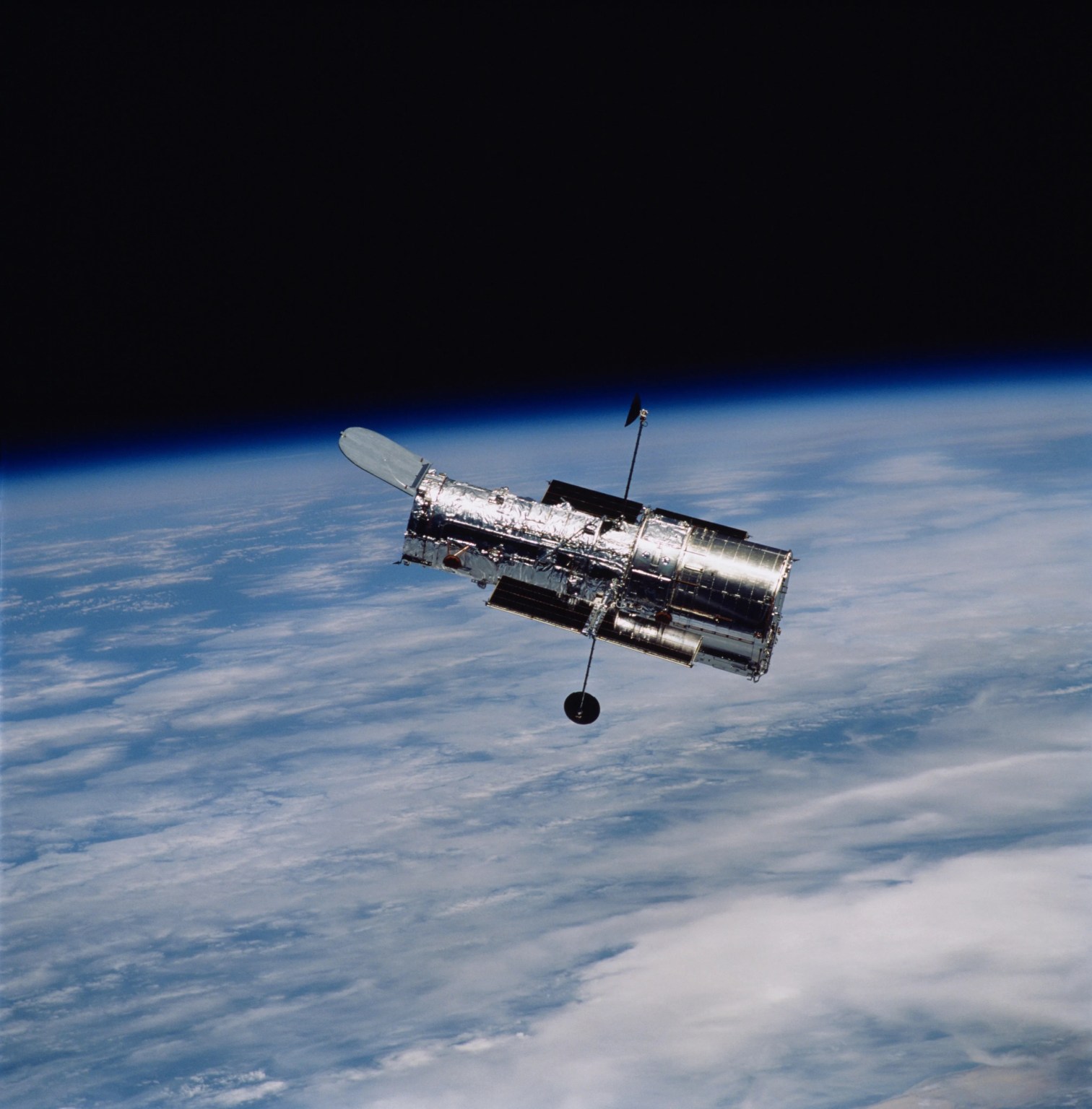
The Hubble Space Telescope is one of the greatest scientific instruments ever built. Orbiting high above Earth’s atmosphere, it has transformed our understanding of the universe by capturing breathtaking images of distant galaxies, colorful nebulae, newborn stars, dying suns, and mysterious black holes. For more than three decades, Hubble has allowed humanity to look farther into space and further back in time than ever before, revealing a universe that is more vast, dynamic, and beautiful than scientists once imagined.
When people think of modern astronomy, many of the unforgettable images that come to mind—towering clouds of gas, sparkling star clusters, or galaxies colliding in deep space—were captured by Hubble. These images are not only visually stunning but also scientifically valuable, helping researchers answer some of the biggest questions about the cosmos.
The Hubble Space Telescope is much more than a camera in space. It is a powerful scientific observatory that has changed astronomy forever.
What Is the Hubble Space Telescope?
The Hubble Space Telescope, often simply called Hubble, is a large space-based observatory that studies the universe using visible light, ultraviolet light, and near-infrared light. Unlike ground-based telescopes, Hubble operates above Earth’s atmosphere, giving it an exceptionally clear and unobstructed view of the cosmos.
Earth’s atmosphere is essential for life, but it also distorts and absorbs much of the light coming from space. This causes stars to appear as if they are twinkling and limits the sharpness of images taken from the ground. By orbiting hundreds of kilometers above Earth, Hubble avoids these atmospheric effects and can capture images with remarkable clarity.
The telescope circles Earth approximately every 95 minutes while traveling at a speed of about 28,000 kilometers (17,500 miles) per hour. From its position in low Earth orbit, Hubble continuously observes the universe, day and night.
Why Is It Called the Hubble Space Telescope?
The telescope is named after American astronomer Edwin Hubble, whose discoveries changed our understanding of the universe during the early twentieth century.
Before Edwin Hubble’s work, many astronomers believed that the Milky Way contained the entire universe. However, Hubble demonstrated that many fuzzy objects seen through telescopes were actually separate galaxies located far beyond our own.
He also discovered that the universe is expanding. By observing distant galaxies, he found that they are moving away from us, and the farther away a galaxy is, the faster it appears to recede. This groundbreaking discovery provided some of the strongest evidence supporting the idea that the universe began with the Big Bang.
Naming the telescope after Edwin Hubble honors his extraordinary contributions to astronomy.
Why Was the Hubble Space Telescope Built?
Astronomers have always wanted clearer views of space.
Although large telescopes on Earth became increasingly powerful, they still faced a major obstacle: Earth’s atmosphere.
Air currents constantly bend incoming light, causing images to blur. In addition, the atmosphere blocks much of the ultraviolet light and some infrared light that astronomers need to study celestial objects.
Scientists realized that placing a telescope in space would eliminate these problems. Without atmospheric interference, a space telescope could observe the universe with much greater detail and sensitivity.
The idea of a space telescope had been discussed for decades, but advances in rocket technology eventually made it possible.
When Was Hubble Launched?
The Hubble Space Telescope was launched on April 24, 1990, aboard the Space Shuttle Discovery during NASA’s STS-31 mission.
After reaching orbit, astronauts carefully deployed the telescope into space.
The mission represented years of international cooperation between NASA and the European Space Agency (ESA), which jointly developed and continue to support the observatory.
Scientists hoped Hubble would revolutionize astronomy, but its first days in space brought an unexpected challenge.
Hubble’s Early Problem
Shortly after launch, astronomers discovered that Hubble’s primary mirror had an extremely small manufacturing flaw.
Although the error measured only a tiny fraction of a millimeter, it prevented the telescope from focusing light properly. Images that were expected to be razor sharp appeared blurry.
The problem was disappointing because Hubble had been one of the most expensive scientific instruments ever built.
Fortunately, engineers designed an innovative solution.
In 1993, astronauts aboard the Space Shuttle Endeavour carried out one of the most complex repair missions in space history. They installed corrective optics that functioned much like eyeglasses for the telescope, compensating for the mirror’s flaw.
The repair was an extraordinary success.
Once corrected, Hubble immediately began producing some of the sharpest astronomical images ever captured.
How Does the Hubble Space Telescope Work?
Hubble works much like a giant eye pointed toward the universe.
Its large primary mirror collects light from distant objects and reflects it toward highly sensitive scientific instruments. These instruments analyze different wavelengths of light, allowing astronomers to study the physical properties of stars, planets, galaxies, nebulae, and many other cosmic objects.
Because light takes time to travel through space, observing distant objects also means looking back in time.
For example, light from the Moon reaches Earth in about 1.3 seconds.
Light from the Sun takes about eight minutes.
Light from nearby stars may require years to arrive.
Light from distant galaxies can travel for billions of years before reaching Hubble.
As a result, the telescope allows astronomers to observe the universe as it existed long before Earth even formed.
Where Is the Hubble Space Telescope?
Hubble orbits Earth at an altitude of approximately 540 kilometers (about 335 miles).
This location places it above nearly all of Earth’s atmosphere while remaining close enough for communication with scientists on the ground.
Unlike telescopes that stay fixed on mountaintops, Hubble continuously circles the planet. During each orbit, it observes carefully selected targets according to schedules prepared by astronomers around the world.
The telescope can point with astonishing precision, allowing it to observe extremely faint objects located billions of light-years away.
What Can Hubble Observe?
The Hubble Space Telescope studies an enormous variety of astronomical objects.
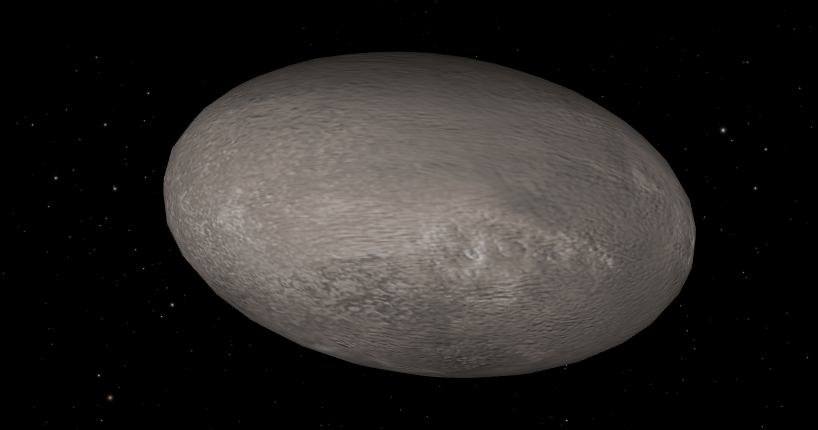
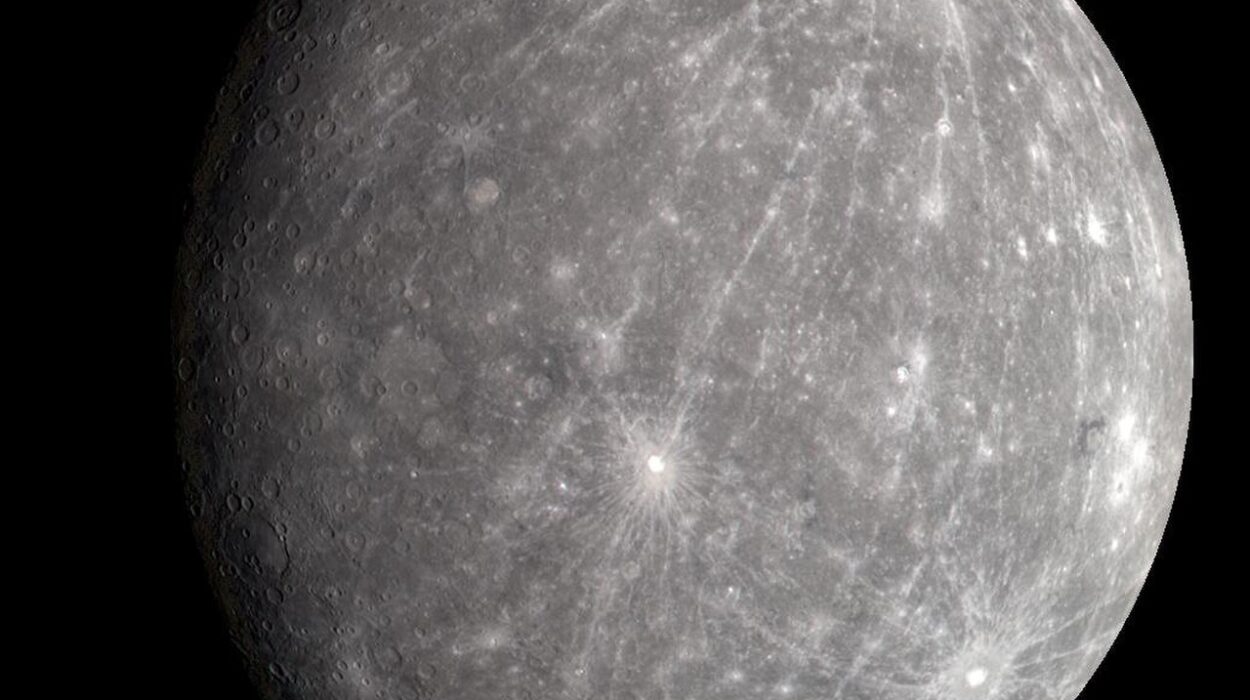
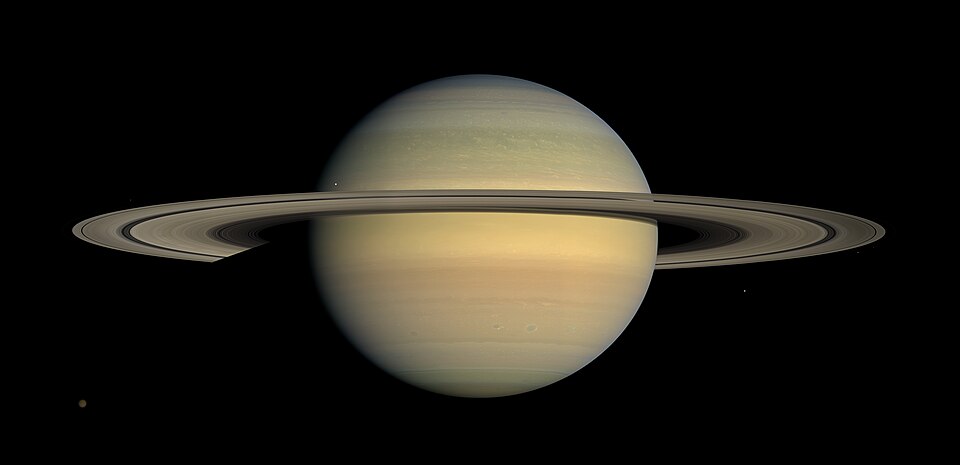
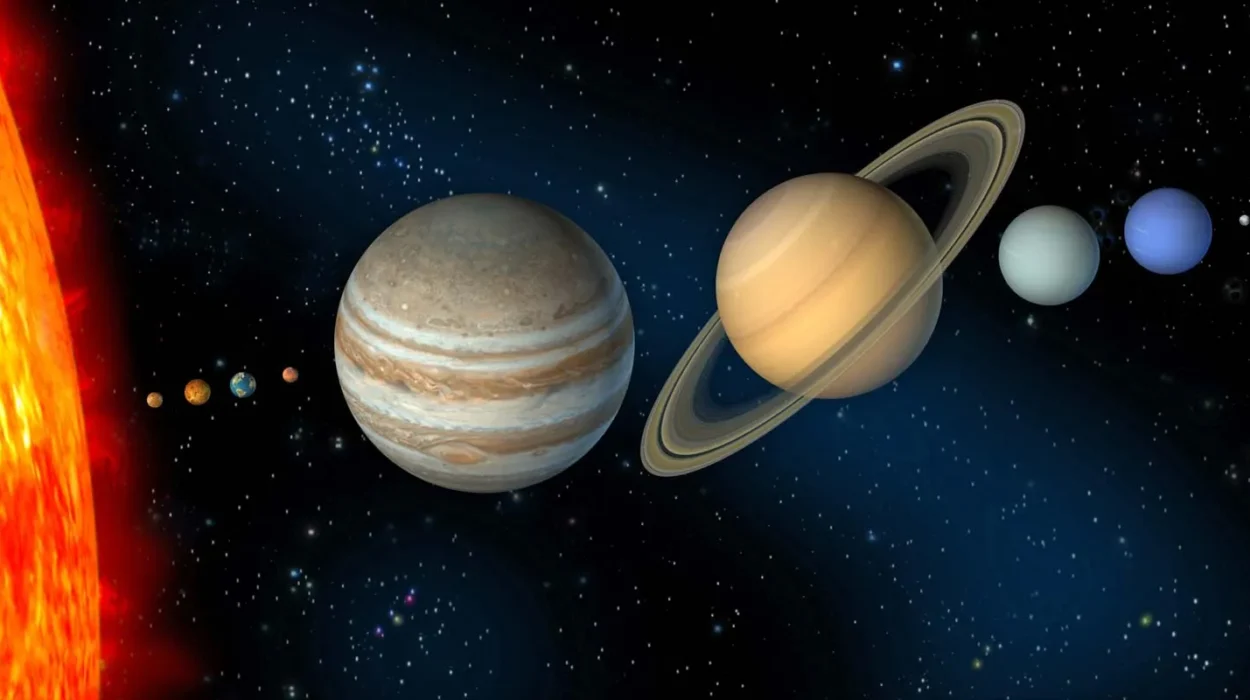
It observes planets within our own Solar System, including Jupiter, Saturn, Mars, Uranus, and Neptune. It has monitored storms on giant planets, changing seasons on Mars, and the behavior of distant icy worlds.
Hubble also studies stars throughout every stage of their lives.
It has observed giant clouds where stars are born, young stars surrounded by disks of gas and dust, mature stars like our Sun, and massive stars that explode as supernovae.
The telescope has revealed spectacular nebulae created by dying stars, allowing astronomers to better understand stellar evolution.
Perhaps most famously, Hubble has observed galaxies across nearly the entire observable universe. Some are elegant spiral galaxies similar to the Milky Way, while others are giant elliptical galaxies or irregular systems distorted by collisions and gravitational interactions.
Looking Back Through Time
One of Hubble’s most remarkable achievements is its ability to look into the distant past.
Because light travels at a finite speed, every astronomical observation is also a historical observation.
When Hubble photographs a galaxy located one billion light-years away, it sees that galaxy as it existed one billion years ago.
Some of Hubble’s deepest observations reveal galaxies whose light began its journey more than 13 billion years ago, when the universe was still very young.
These observations help astronomers study how the earliest galaxies formed and evolved after the Big Bang.
The Famous Hubble Deep Field
In 1995, astronomers pointed Hubble toward what appeared to be an almost empty patch of sky.
Instead of taking a quick photograph, the telescope observed the region continuously for several days.
The resulting image, known as the Hubble Deep Field, stunned the scientific community.
What looked empty from Earth turned out to contain thousands of distant galaxies.
Some had formed only a few hundred million years after the Big Bang.
The image demonstrated that the universe contains an astonishing number of galaxies and that even seemingly empty regions of space are filled with distant cosmic structures.
Later projects, including the Hubble Ultra Deep Field and the Hubble eXtreme Deep Field, pushed these observations even further.
Discoveries That Changed Astronomy
Over the years, Hubble has made countless scientific discoveries.
It has helped measure the age of the universe with much greater accuracy.
It has improved measurements of the universe’s expansion rate.
It has revealed evidence for supermassive black holes at the centers of many galaxies.
It has helped scientists study dark matter through gravitational lensing.
It has observed planets orbiting distant stars and analyzed some of their atmospheres.
Hubble has also monitored exploding stars, measured the growth of galaxies, investigated mysterious gamma-ray bursts, and tracked changes in planets throughout the Solar System.
Its observations have led to well over a million scientific observations and tens of thousands of peer-reviewed research papers, making it one of the most scientifically productive instruments ever created.
Hubble’s Most Iconic Images
Many of Hubble’s images have become symbols of modern astronomy.
The towering columns of gas in the Eagle Nebula, famously called the Pillars of Creation, revealed enormous regions where new stars are forming.
The colorful clouds of the Carina Nebula exposed violent stellar nurseries filled with massive young stars.
The breathtaking images of the Whirlpool Galaxy, the Sombrero Galaxy, and the Andromeda Galaxy showed galaxies with extraordinary detail.
Hubble has also captured stunning photographs of Jupiter’s Great Red Spot, Saturn’s rings, planetary nebulae, globular star clusters, and interacting galaxies colliding across millions of light-years.
These images inspire millions of people while providing valuable scientific information.
Servicing Missions Extended Hubble’s Life
One unique feature of Hubble is that astronauts were able to visit and repair it.
Between 1993 and 2009, five Space Shuttle servicing missions upgraded the telescope with improved instruments, replaced worn components, repaired damaged equipment, and installed new technologies.
Each servicing mission significantly increased Hubble’s scientific capabilities.
Without these repairs, the telescope would likely have stopped functioning many years earlier.
These missions remain among the most technically challenging achievements in human spaceflight.
Hubble and the James Webb Space Telescope
The launch of the James Webb Space Telescope in 2021 marked a new era in astronomy, but it did not replace Hubble.
Instead, the two telescopes complement each other.
Hubble primarily observes visible, ultraviolet, and near-infrared light, making it especially useful for studying nearby galaxies, stars, planets, and many other astronomical objects.
The James Webb Space Telescope specializes in infrared observations, allowing it to peer through dust clouds and observe some of the earliest galaxies in the universe.
Together, the two observatories provide a more complete understanding of the cosmos than either could achieve alone.
Hubble’s Legacy
Few scientific instruments have influenced human knowledge as profoundly as the Hubble Space Telescope.
It has fundamentally changed astronomy, inspired generations of scientists, and brought the beauty of the universe into classrooms, museums, books, and homes around the world.
Its discoveries have helped answer longstanding questions while revealing entirely new mysteries.
Hubble has shown that galaxies are far more numerous than once believed, that black holes are common throughout the universe, that planets exist around many stars, and that the cosmos is constantly evolving.
Beyond its scientific achievements, Hubble has also transformed how people see the universe. Its extraordinary images remind us that our planet is only a tiny part of an unimaginably vast cosmos filled with countless stars, galaxies, and wonders waiting to be explored.
The Future of Hubble
Although Hubble has operated far longer than originally planned, it continues to make valuable scientific observations.
Its instruments remain highly capable, and astronomers continue to use the telescope to investigate everything from nearby planets to the most distant galaxies.
Eventually, orbital drag will cause Hubble’s orbit to slowly decay, and one day its remarkable mission will come to an end. Even so, the telescope’s scientific legacy will endure for generations. The enormous archive of observations it has collected will continue to support new discoveries as researchers develop better analytical techniques and answer questions that have not yet even been imagined.
Conclusion
The Hubble Space Telescope is one of humanity’s greatest achievements in science and engineering. By operating above Earth’s atmosphere, it has given astronomers an unprecedented view of the universe, producing discoveries that have reshaped our understanding of space, time, galaxies, stars, planets, and the history of the cosmos itself.
For more than three decades, Hubble has served as humanity’s window into the universe. It has revealed breathtaking beauty, uncovered profound scientific truths, and inspired millions of people to look toward the night sky with curiosity and wonder. As one of the most successful scientific observatories ever built, the Hubble Space Telescope continues to remind us that every new observation has the potential to change the way we understand our place in the universe.