The internet has become an essential part of everyday life. We use it to work, study, communicate, shop, watch videos, manage finances, and store personal information. Every time we connect to a website or an online service, data travels between our device and servers around the world. While this process happens in seconds, it also exposes information such as our IP address, location, and browsing activity to varying degrees.
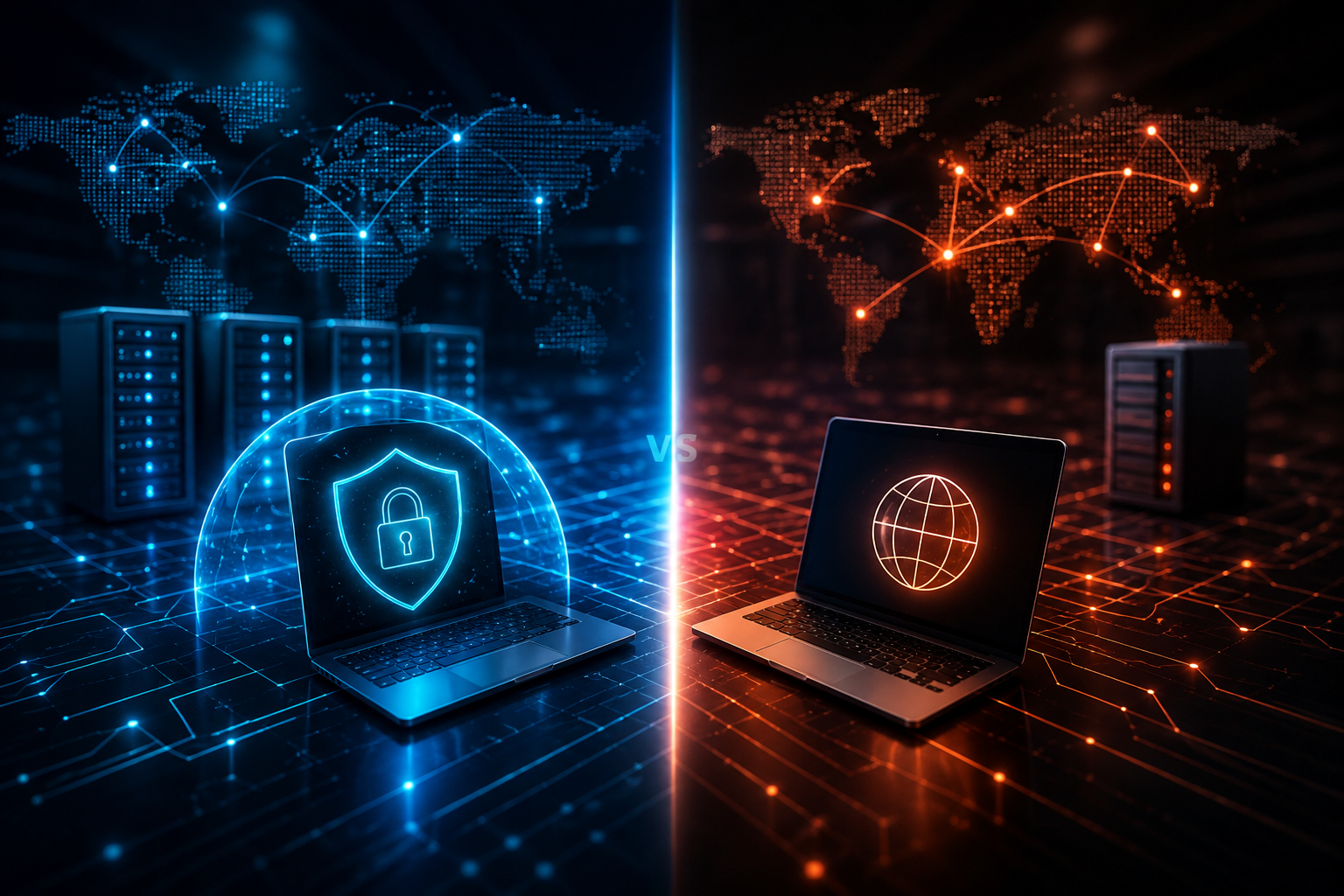
As concerns about online privacy, cybersecurity, and unrestricted internet access continue to grow, many people look for tools that offer greater control over their internet connection. Two of the most commonly discussed tools are Virtual Private Networks (VPNs) and proxy servers. At first glance, they may appear to do the same thing because both can hide your IP address and make it seem as though you’re connecting from somewhere else. However, beneath that similarity lies a significant difference in how they work, what they protect, and when they should be used.
Understanding these differences is important because choosing the wrong tool can leave your data less protected than you expect. A VPN and a proxy are not competitors in every situation—they are designed for different purposes. Knowing how each one works allows you to make informed decisions about your privacy and security online.
Understanding Your Internet Connection
Before comparing VPNs and proxies, it helps to understand what normally happens when you connect to the internet.
Every internet-connected device is assigned an Internet Protocol (IP) address, which acts like a digital mailing address. When you visit a website, your request includes this IP address so the website knows where to send its response.
Your internet service provider (ISP) carries your data between your device and the websites you visit. Unless additional protections are used, many parts of this communication can reveal information about your connection, including your approximate location and the destination websites you access. Modern websites typically use HTTPS, which encrypts the contents of your communication with the site, but it does not hide your IP address or all metadata about your connection.
Both VPNs and proxies sit between your device and the websites you visit. Instead of connecting directly, your internet traffic passes through another server first. This changes how websites see your connection, but the level of protection depends entirely on which technology you use.
What Is a VPN?
A Virtual Private Network, commonly called a VPN, creates an encrypted tunnel between your device and a VPN server operated by the VPN provider.
Instead of sending your internet traffic directly across the internet, your device first encrypts the data and sends it to the VPN server. The server then decrypts the traffic and forwards it to the destination website. When the website responds, the process happens in reverse.
Because of this setup, the website sees the VPN server’s IP address rather than your own. At the same time, the encrypted tunnel helps protect your data while it travels between your device and the VPN server, especially on networks you do not fully trust, such as public Wi-Fi.
Modern VPN services usually protect all internet traffic from your device, including web browsers, email applications, messaging apps, streaming services, and many other internet-connected programs.
What Is a Proxy Server?
A proxy server also acts as an intermediary between your device and the internet, but it generally works differently.
Instead of creating an encrypted tunnel for all of your internet traffic, a proxy simply forwards requests from a specific application—most commonly a web browser—to another server before reaching the destination website.
When using a proxy, the website typically sees the proxy server’s IP address instead of yours. However, many proxies do not encrypt your internet traffic. They mainly change the apparent origin of your connection rather than providing comprehensive security.
Different types of proxies exist. Some operate at the application level, while others handle particular internet protocols. Some offer encryption, but many traditional proxies focus primarily on routing traffic rather than protecting it.
The Biggest Difference Between VPNs and Proxies
The most important distinction between a VPN and a proxy is encryption.
A VPN encrypts internet traffic between your device and the VPN server. This encryption helps prevent others on the same network from reading your data while it is in transit.
Most standard proxies simply forward traffic without adding encryption. Although they may hide your IP address from the destination website, they often do not protect the data traveling between your device and the proxy server.
This difference makes VPNs much more suitable for protecting privacy on untrusted networks.
How VPN Encryption Works
Encryption transforms readable information into coded data that can only be understood by authorized systems possessing the appropriate cryptographic keys.
Imagine placing a letter inside a locked box before sending it through the mail. Anyone who intercepts the box can see that it exists, but without the key, they cannot read the contents.
VPNs apply this principle to internet traffic.
Modern VPN protocols use strong cryptographic methods that make intercepted data extremely difficult to decipher with current computing technology when implemented correctly.
It is important to understand that encryption protects the journey between your device and the VPN server. Once traffic leaves the VPN server and travels to the destination website, it should ideally also be protected by HTTPS encryption provided by the website itself.
How Proxy Servers Handle Data
Most traditional proxy servers do not encrypt traffic.
Instead, they receive requests from your application and send them to the destination server using their own IP address.
The website communicates with the proxy rather than directly with your device.
This process can successfully hide your IP address from the website, but it does not necessarily prevent others from observing your traffic while it travels across the network unless additional encryption, such as HTTPS, is used.
Device-Wide Protection Versus Application-Level Protection
Another major difference involves the amount of internet traffic each tool protects.
A VPN typically protects all internet-connected applications on your device after the VPN connection is established.
Whether you are browsing websites, downloading files, using video conferencing software, playing online games, or checking email, the traffic usually passes through the VPN tunnel unless configured otherwise.
Many proxy servers, on the other hand, work only within a single application.
If you configure a web browser to use a proxy, only that browser’s traffic goes through the proxy. Other applications continue connecting directly to the internet unless separately configured.
This makes VPNs more comprehensive for overall privacy.
Speed Differences
Both VPNs and proxies can affect internet speed.
A VPN encrypts and decrypts data continuously, which requires additional processing. It also routes traffic through another server, increasing the physical distance that data may travel.
These factors can reduce speed, although high-quality VPN providers often maintain fast performance by using efficient protocols and well-connected servers.
Proxy servers generally perform less processing because many do not encrypt traffic.
As a result, they may sometimes offer slightly faster connections for simple tasks.
However, speed depends on many factors, including server quality, congestion, internet routing, network conditions, and the distance to the chosen server.
Privacy Considerations
Privacy involves more than simply hiding your IP address.
A VPN reduces the amount of information directly exposed to websites by replacing your IP address with that of the VPN server. It also encrypts traffic between your device and the VPN server, making it more difficult for others on the local network to inspect your internet activity.
However, using a VPN requires trusting the VPN provider because your traffic passes through its servers. Different providers have different privacy policies, logging practices, and legal obligations.
A proxy also hides your IP address from the destination website, but if the proxy does not encrypt traffic, your activity may still be visible to others monitoring the connection between you and the proxy server.
Security Differences
Security is where VPNs generally provide much stronger protection.
On public Wi-Fi networks, cybercriminals sometimes attempt to intercept network traffic using various techniques. Encryption significantly reduces the usefulness of intercepted data.
VPNs help defend against this risk by encrypting traffic before it leaves your device.
Standard proxies generally do not provide the same level of protection because they often transmit data without additional encryption.
It is important to note that neither VPNs nor proxies protect against every cybersecurity threat. They do not automatically stop malware, phishing attacks, malicious downloads, or unsafe passwords.
Safe online behavior remains essential.
Can Websites Detect VPNs and Proxies?
In some cases, yes.
Many websites use sophisticated systems to identify traffic coming from known VPN or proxy servers.
Streaming platforms, financial institutions, and certain online services sometimes restrict access from VPN or proxy IP addresses for security, licensing, or fraud-prevention reasons.
Detection methods continue evolving as both websites and privacy tools adapt to one another.
VPNs and Streaming
Many people use VPNs while traveling to access online services through servers in different countries.
However, streaming platforms often enforce licensing agreements that determine where particular content may legally be available.
As a result, some streaming services actively detect and block certain VPN servers.
Whether a VPN works with a particular service can change over time as providers update their systems.
VPNs and Public Wi-Fi
Public Wi-Fi networks are convenient but deserve caution.
Airports, hotels, coffee shops, shopping centers, and libraries often provide free internet access.
Although many websites now use HTTPS encryption, public networks still present risks because they are shared environments.
Using a VPN on public Wi-Fi adds an extra layer of protection by encrypting traffic between your device and the VPN server.
This makes VPNs particularly valuable for travelers and remote workers.
Different Types of Proxy Servers
Proxy servers come in several forms.
An HTTP proxy handles web traffic for standard web browsing.
An HTTPS proxy supports encrypted web connections but still differs from a full VPN because it generally works only for web traffic.
A SOCKS proxy supports multiple kinds of internet traffic and is often used by applications requiring flexible network routing.
Organizations also use reverse proxies to manage incoming traffic to websites and improve performance, security, or load balancing. These serve a different purpose than consumer privacy proxies.
Business Uses
Businesses use both VPNs and proxies, but often for different reasons.
Companies commonly deploy VPNs so employees can securely access internal systems while working remotely.
Because VPNs encrypt communication, they help protect sensitive corporate data traveling across the public internet.
Businesses may use proxy servers for content filtering, internet access management, network performance optimization, caching, or controlling employee web access.
The underlying goals differ even though both technologies involve intermediary servers.
Can You Use Both Together?
Yes.
Some advanced network configurations combine VPNs and proxies.
For example, an organization may route traffic through a VPN for encryption while also using proxy servers for content filtering or traffic management.
For most everyday users, however, using both simultaneously is usually unnecessary.
A well-configured VPN alone provides sufficient protection for many personal privacy and security needs.
Common Misunderstandings
Many people assume that using a proxy makes them completely anonymous online.
This is not true.
Hiding an IP address does not eliminate all methods of identifying users. Websites may use browser fingerprinting, account logins, cookies, device characteristics, and other techniques that are independent of IP addresses.
Another common misconception is that VPNs make users invisible online.
VPNs enhance privacy, but they do not provide complete anonymity. Your online activities can still be associated with accounts you sign into, information you voluntarily share, or data collected by websites through other means.
Understanding these limitations helps users set realistic expectations.
Choosing Between a VPN and a Proxy
The right choice depends on what you need.
If your primary goal is comprehensive privacy, stronger security on public Wi-Fi, and protection for all applications on your device, a VPN is generally the better option because it encrypts internet traffic and secures your connection more broadly.
If you simply need to change your visible IP address for a specific application and do not require full-device encryption, a proxy may be sufficient in some situations.
Neither technology should be viewed as a complete cybersecurity solution. Good security also depends on keeping software updated, using strong and unique passwords, enabling multi-factor authentication, recognizing phishing attempts, and relying on secure websites that use HTTPS.
The Future of VPNs and Proxies
Internet privacy continues to evolve as technology advances.
New encryption standards, faster VPN protocols, improved network infrastructure, and growing awareness of digital privacy are making secure internet connections more accessible than ever before.
At the same time, websites, governments, and online services continue developing new methods to manage network traffic, detect automated systems, and improve cybersecurity.
VPNs and proxy servers will likely remain valuable networking tools, but their roles may continue to change alongside the internet itself.
Conclusion
Although VPNs and proxy servers may seem similar because both can hide your IP address, they are fundamentally different technologies designed for different purposes. A proxy primarily redirects internet traffic through another server, making it useful for changing the apparent source of a connection or routing traffic from specific applications. A VPN goes much further by creating an encrypted tunnel that protects internet traffic between your device and the VPN server while typically covering all applications on your device.
Understanding this distinction is essential for making informed decisions about online privacy and security. If your goal is simply to route traffic through another location, a proxy may meet your needs. If you want stronger protection for your data, especially when using public Wi-Fi or handling sensitive information, a VPN generally provides a more comprehensive solution. As our digital lives become increasingly connected, knowing how these technologies work empowers you to use the internet with greater confidence, awareness, and security.