Space has always inspired human imagination. For thousands of years, people looked up at the stars and dreamed of traveling beyond Earth’s atmosphere. For much of the Space Age, reaching space required enormous rockets that launched straight upward and then fell away piece by piece. These powerful machines made incredible achievements possible, from landing humans on the Moon to sending spacecraft to the edge of the Solar System.
But what if there were a vehicle that could take off like an airplane, travel into space, and then return to Earth to land on a runway? What if spaceflight could become more like air travel?
That remarkable idea is the foundation of the spaceplane.
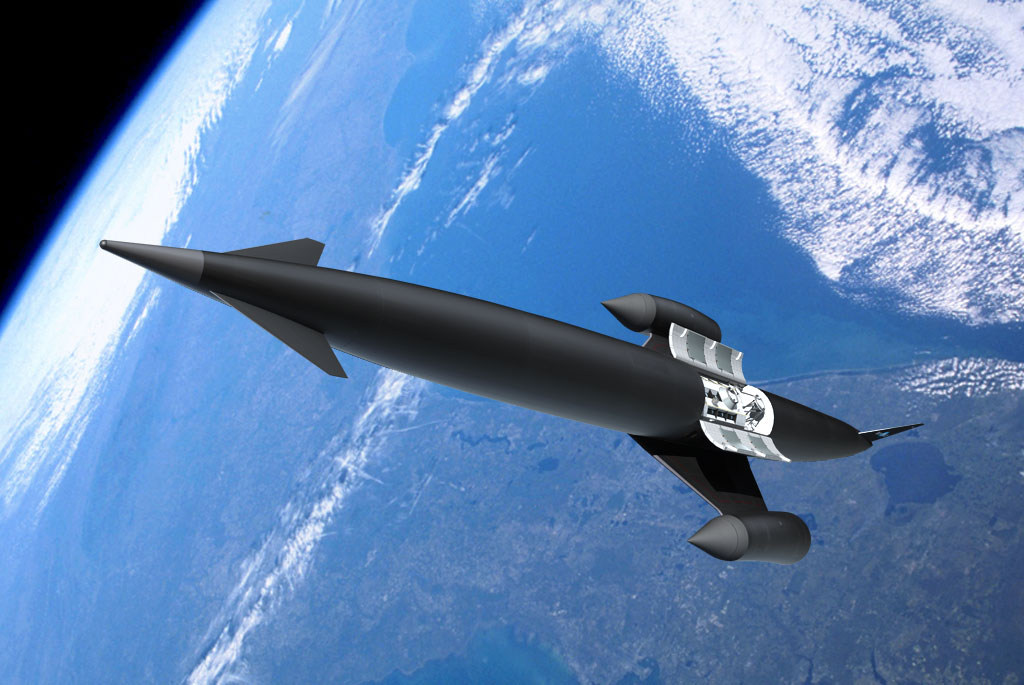
A spaceplane combines the characteristics of an aircraft and a spacecraft into a single vehicle. It is one of the most exciting concepts in modern aerospace engineering because it promises to make space travel more flexible, reusable, and potentially more affordable.
Although building a true spaceplane is one of the greatest engineering challenges ever attempted, scientists and engineers continue working toward making this vision a reality. Today, several experimental and operational spaceplanes have already demonstrated that flying like an airplane and reaching space is no longer just science fiction.
What Is a Spaceplane?
A spaceplane is a vehicle designed to operate both in Earth’s atmosphere and in outer space. Unlike conventional spacecraft that usually launch vertically on rockets and return by parachute or splashdown, a spaceplane is designed to behave much like an airplane during at least part of its journey.
Many spaceplanes take off using wings, glide through the atmosphere, and land on a runway after completing their missions. Others may still require rockets for launch but are built to return and land like aircraft.
In simple terms, a spaceplane is a hybrid between an airplane and a spacecraft.
This unique combination allows it to perform tasks that neither ordinary airplanes nor traditional spacecraft can accomplish alone.
How Is a Spaceplane Different from an Airplane?
At first glance, a spaceplane may look very similar to a modern airplane. It often has wings, a cockpit, landing gear, and aerodynamic control surfaces.
However, the similarities end there.
Airplanes depend on Earth’s atmosphere for flight. Their engines need oxygen from the air to burn fuel, and their wings generate lift by pushing against the atmosphere. Because the atmosphere becomes extremely thin with increasing altitude, airplanes cannot fly into space.
A spaceplane is different because it is designed to continue operating far beyond the atmosphere.
In space, there is almost no air.
There is no oxygen for jet engines.
There is no air flowing over wings to create lift.
Instead, a spaceplane must rely on rocket propulsion or other advanced propulsion systems while outside the atmosphere. Once it returns to lower altitudes, it can use its wings to glide or fly like an aircraft again.
How Is a Spaceplane Different from a Rocket?
Traditional rockets are designed primarily for one purpose: reaching space.
Most rockets launch vertically, burning enormous amounts of fuel during the first few minutes of flight. Many are made of multiple stages, with empty sections falling away as fuel is used.
After completing their mission, many rockets cannot be used again.
A spaceplane takes a different approach.
Rather than being discarded after a single flight, many spaceplane designs are intended to be reusable. After completing a mission, they return to Earth, undergo inspection and maintenance, and can potentially fly again.
This reusability is one of the biggest reasons scientists continue investing in spaceplane technology.
How Does a Spaceplane Work?
A spaceplane experiences several very different phases during a mission.
The journey usually begins in Earth’s atmosphere.
Depending on its design, the vehicle may take off from a runway using conventional engines or be carried into the air by another aircraft. Some spaceplanes are launched vertically on top of rockets before separating at high altitude.
As the vehicle climbs higher, the atmosphere becomes thinner.
At lower altitudes, aerodynamic forces help control the vehicle.
As it approaches space, rocket engines provide the powerful thrust needed to continue climbing.
Once above most of Earth’s atmosphere, the spaceplane behaves much like any other spacecraft.
It can orbit Earth, conduct scientific research, deploy satellites, test new technologies, or carry astronauts.
Returning home is one of the most demanding parts of the mission.
As the spaceplane re-enters Earth’s atmosphere, it encounters intense friction with atmospheric gases. This process generates enormous heat, sometimes reaching temperatures of more than 1,500 degrees Celsius (2,700 degrees Fahrenheit) on parts of the vehicle.
Special heat-resistant materials protect the spacecraft from these extreme temperatures.
As the vehicle slows down in the thicker atmosphere, its wings begin producing lift again.
Finally, it glides to a smooth landing on a runway, much like an ordinary airplane.
Why Are Spaceplanes So Difficult to Build?
Creating a spaceplane is one of the greatest engineering challenges in aerospace history.
The vehicle must perform well under conditions that are completely different from each other.
Near Earth’s surface, it must fly efficiently through dense air.
In space, it must operate in a near vacuum.
During launch, it experiences enormous acceleration.
During re-entry, it faces tremendous heating.
Its structure must remain lightweight enough to reach space while also being strong enough to survive repeated flights.
Its engines must function across an extraordinary range of speeds and altitudes.
Balancing all of these requirements makes designing a successful spaceplane extremely difficult.
The Challenge of Heat
One of the biggest problems for any spaceplane is heat.
When a spacecraft returns from orbit, it is traveling at roughly 7.8 kilometers per second, or about 28,000 kilometers per hour (17,500 miles per hour).
At these speeds, the atmosphere cannot move out of the way quickly enough.
Instead, air in front of the spacecraft becomes compressed, creating tremendous heat.
Without protection, the spacecraft would quickly be destroyed.
To survive, engineers use advanced heat shields, ceramic tiles, reinforced carbon materials, and other specialized technologies.
These materials absorb or resist the intense temperatures generated during re-entry.
Wings in Space
Many people wonder why a spaceplane has wings if space contains almost no air.
The answer is simple.
The wings are not meant for flying in space.
Instead, they become useful once the vehicle re-enters Earth’s atmosphere.
During re-entry, the wings generate lift, allowing the spacecraft to glide over long distances.
This gives pilots or onboard computers more control over where the vehicle lands.
Instead of splashing into the ocean, a spaceplane can touch down on a prepared runway.
The Space Shuttle: The World’s Most Famous Spaceplane
Perhaps the best-known example of a spaceplane is NASA’s Space Shuttle.
Introduced in 1981, the Space Shuttle became the world’s first reusable crewed orbital spacecraft.
Although it launched vertically using powerful rockets and external fuel tanks, the shuttle itself returned to Earth as a glider.
After completing missions in orbit, it re-entered the atmosphere and landed on a runway without using powered engines.
For three decades, the Space Shuttle carried astronauts into orbit, launched satellites, repaired the Hubble Space Telescope, and helped build the International Space Station.
Its missions transformed human spaceflight and demonstrated many of the possibilities offered by reusable spacecraft.
However, the Shuttle system was also extremely complex and expensive to maintain, highlighting the engineering challenges of reusable space vehicles.
Modern Spaceplanes
Interest in spaceplanes has grown significantly in recent years.
Several organizations are developing new vehicles for scientific research, commercial spaceflight, military missions, and future transportation.
Some modern spaceplanes are designed for suborbital flights, reaching the edge of space before returning to Earth.
Others aim to reach full orbit around Earth.
Some experimental vehicles are also testing advanced propulsion systems that could one day make routine space travel more practical.
These projects represent important steps toward the next generation of reusable spacecraft.
Can Spaceplanes Take Off Like Ordinary Airplanes?
Many people imagine future spaceplanes simply rolling down a runway before flying directly into orbit.
While this is an exciting vision, achieving it remains extremely difficult.
The amount of energy required to reach orbit is enormous.
Even the fastest military aircraft cannot come close to orbital speed.
As a result, many current spaceplane designs still rely on rockets during part of the journey.
Some vehicles are carried into the sky by larger aircraft before igniting rocket engines.
Others launch vertically before returning horizontally.
Researchers continue exploring advanced engine technologies that may eventually allow true runway-to-orbit flights.
Spaceplanes and Reusability
One of the greatest advantages of spaceplanes is their potential for reuse.
Traditional rockets often require building entirely new vehicles for every mission.
A reusable spaceplane could dramatically reduce costs by flying many missions over its lifetime.
This idea is similar to commercial aviation.
Airliners are not discarded after a single flight.
Instead, they are inspected, maintained, refueled, and flown again.
If future spaceplanes achieve similar levels of reliability, access to space could become much more frequent and economical.
What Can Spaceplanes Do?
Spaceplanes are designed for many different kinds of missions.
They can carry astronauts into space.
They can transport scientific experiments.
They can deploy or retrieve satellites.
They can test new technologies under space conditions.
They can support military observation missions.
Some future designs may even transport passengers on ultra-fast journeys across Earth by briefly traveling through space before returning to another continent.
Although many of these concepts are still under development, they demonstrate the remarkable flexibility of spaceplanes.
Could Spaceplanes Make Space Tourism Common?
Space tourism has already begun, but it remains expensive and available to only a small number of people.
Reusable spaceplanes could eventually make these experiences more accessible.
Some commercial companies are already operating suborbital spaceplanes that allow passengers to experience several minutes of weightlessness while viewing Earth’s curved horizon against the darkness of space.
Although these flights do not enter orbit, they represent an important step toward more routine human access to space.
Future improvements in technology may expand these opportunities even further.
The Engines That Could Change Everything
One of the biggest areas of research involves propulsion.
Traditional jet engines cannot operate in space because they require oxygen from the atmosphere.
Rocket engines carry both fuel and oxidizer, allowing them to function in the vacuum of space.
Some engineers are developing advanced engines capable of operating efficiently at multiple stages of flight.
These include concepts such as combined-cycle engines that behave like jet engines at lower altitudes before switching to rocket mode at higher altitudes.
If perfected, these technologies could revolutionize space transportation.
Materials That Make Spaceplanes Possible
Modern spaceplanes depend on extraordinary materials.
Engineers use lightweight alloys, carbon composites, titanium, advanced ceramics, and specialized thermal protection systems.
These materials must withstand vibration during launch, extreme cold in space, intense heat during re-entry, and repeated cycles of expansion and contraction.
Material science continues advancing rapidly, allowing engineers to design stronger, lighter, and more heat-resistant spacecraft.
The Future of Spaceplanes
Many experts believe spaceplanes will play an increasingly important role in future space exploration.
Reusable vehicles could support lunar missions, deliver cargo to orbit more efficiently, and eventually transport crews to space stations or even Mars.
Researchers are also exploring autonomous spaceplanes capable of flying without onboard pilots.
Artificial intelligence may help future vehicles navigate, monitor systems, and perform complex missions with greater efficiency.
As technology advances, today’s experimental spaceplanes could become tomorrow’s routine spacecraft.
Challenges That Still Remain
Despite decades of progress, important challenges remain.
Building vehicles that are both lightweight and durable continues to be difficult.
Reducing maintenance costs after each flight remains a major engineering goal.
Designing engines capable of efficient operation across the entire journey is another challenge.
Safety is also essential.
Spaceflight involves tremendous speeds, temperatures, and mechanical forces, leaving little room for error.
Every improvement brings engineers closer to making spaceplanes more practical.
Why Spaceplanes Matter
Spaceplanes represent one of humanity’s most ambitious engineering achievements. They combine the flexibility of aircraft with the extraordinary capabilities of spacecraft, offering a glimpse of a future where traveling beyond Earth could become more routine than it is today.
Although many technical challenges remain, decades of research have already shown that reusable spaceflight is possible. Every successful test, every new material, and every innovative engine design moves us closer to a new era of exploration.
As scientists continue improving aerospace technology, spaceplanes may transform the way humans reach orbit, conduct research, explore other worlds, and perhaps one day travel regularly between Earth and space.
The dream of flying into space like boarding an airplane has inspired generations of engineers and explorers. While that dream is still evolving, each breakthrough brings it closer to reality. Spaceplanes remind us that the future of space travel is not only about reaching farther into the universe—it is also about making the journey smarter, safer, and more sustainable for generations to come.