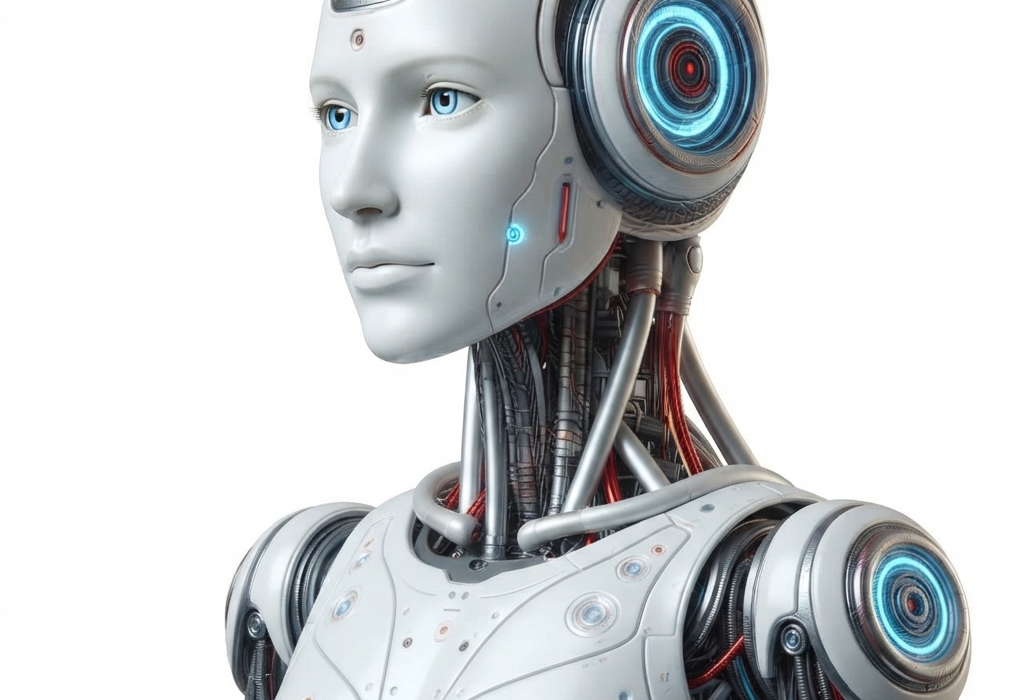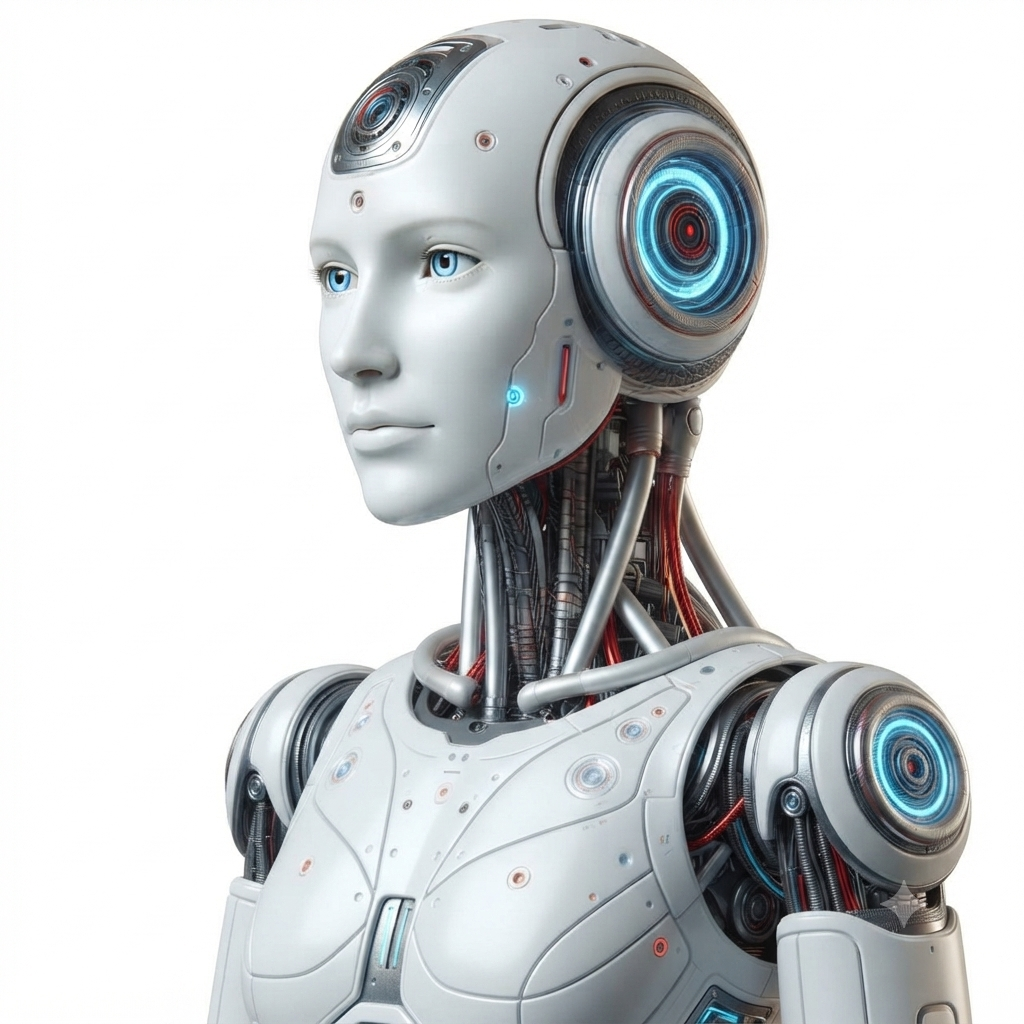
Imagine walking into your home after a long day, and a robot greets you by name. It notices that you seem tired, adjusts the room lighting, starts preparing dinner, and reminds you about tomorrow’s meeting. It isn’t simply following a pre-written script—it is making decisions based on what it sees, hears, and has learned from previous experiences.
Only a few decades ago, such a scene belonged almost entirely to science fiction. Today, it is steadily moving toward reality. Around the world, artificial intelligence is transforming robots from machines that merely follow instructions into systems that can learn, adapt, and solve problems. Although today’s robots are still far from matching the flexibility and intelligence of humans, they are becoming more capable every year.
From warehouses and hospitals to farms, factories, laboratories, and even space missions, AI-powered robots are taking on tasks that once required constant human guidance. Their growing intelligence is changing industries, advancing scientific research, and raising important questions about the future of work and society.
But what exactly makes an AI robot “smart”? How are these machines learning new skills? And how close are we to robots that can truly understand the world around them?
What Is an AI Robot?
A robot is a machine designed to perform physical tasks. Some robots have wheels, while others walk on legs, fly through the air, or operate underwater. Many industrial robots have robotic arms that can lift, weld, assemble, or paint objects with incredible precision.
Artificial intelligence, or AI, is a branch of computer science that develops systems capable of performing tasks that usually require human intelligence. These tasks include recognizing objects, understanding language, learning from experience, making decisions, and solving problems.
When AI is combined with robotics, the result is an AI robot.
Unlike traditional robots that simply repeat the same programmed actions over and over, AI robots can analyze information from their surroundings and adjust their behavior accordingly. This ability allows them to operate in environments that are far less predictable.
In simple terms, a traditional robot follows instructions, while an AI robot can learn how to improve those instructions.
From Fixed Machines to Learning Machines
Early robots were remarkable engineering achievements, but they had very limited flexibility.
A factory robot assembling cars, for example, could perform the same motion thousands of times with incredible speed and accuracy. However, if a part was slightly misplaced, the robot often could not adapt without human intervention.
Modern AI robots are becoming much more flexible.
Instead of relying only on fixed programming, they can use cameras, microphones, sensors, and advanced algorithms to interpret what is happening around them. They compare new situations with previous experiences and choose actions that are most likely to succeed.
This shift from rigid programming to adaptive learning represents one of the biggest changes in robotics.
The Role of Machine Learning
One of the main reasons robots are becoming smarter is machine learning.
Machine learning is a type of AI that allows computers to improve their performance by learning from data rather than relying entirely on manually written instructions.
Imagine teaching a child to recognize cats. Instead of describing every possible feature, you simply show thousands of pictures of cats. Over time, the child begins recognizing cats independently.
Machine learning works in a similar way.
Researchers train AI systems using enormous collections of examples. The AI gradually identifies patterns and becomes increasingly accurate at recognizing objects, understanding speech, predicting outcomes, or making decisions.
When this technology is integrated into robots, they become better at understanding the world around them.
Deep Learning Gives Robots Better Vision
Seeing is one of the most difficult challenges in robotics.
Humans recognize faces, objects, and obstacles almost effortlessly, even in changing lighting conditions. For robots, however, visual understanding has historically been extremely difficult.
Recent advances in deep learning, a specialized form of machine learning inspired by the structure of biological neural networks, have dramatically improved robotic vision.
Today’s AI robots can identify thousands of different objects, estimate distances, recognize people, detect obstacles, and even understand complex scenes.
A warehouse robot can distinguish between different products on shelves.
A farming robot can recognize ripe fruit.
A medical robot can assist surgeons by identifying important anatomical structures during certain procedures.
These improvements allow robots to interact with the physical world far more effectively than before.
Better Sensors Create Better Understanding
A robot cannot make intelligent decisions without information.
Modern AI robots rely on a wide variety of sensors that continuously gather data about their surroundings.
Cameras provide visual information.
Microphones detect sounds and speech.
Touch sensors measure pressure.
Temperature sensors detect heat.
Distance sensors estimate how far away objects are.
Laser-based systems can create highly detailed three-dimensional maps of environments.
Some robots also use radar, infrared sensors, satellite navigation, and advanced motion sensors.
AI combines information from these different sources, allowing robots to build a more complete understanding of the world.
This process, known as sensor fusion, helps robots operate more safely and accurately.
Learning Through Experience
One of the most exciting developments in robotics is the ability to learn through experience.
Instead of simply memorizing instructions, some AI robots improve by practicing tasks repeatedly.
This approach is known as reinforcement learning.
The basic idea is similar to how humans and many animals learn.
When a robot successfully completes a task, the AI receives positive feedback. When it makes mistakes, it receives negative feedback. Over many attempts, it gradually discovers which actions produce the best results.
Researchers have used reinforcement learning to teach robots how to walk, grasp unfamiliar objects, balance, navigate complex environments, and even cooperate with other robots.
Although training can require enormous amounts of computing power, the results can be remarkably impressive.
Robots Are Becoming Better at Understanding Language
Communication is another area where AI has advanced rapidly.
Modern language models allow some robots to understand spoken instructions much more naturally than earlier systems.
Instead of requiring carefully worded commands, newer robots can often interpret conversational language.
For example, someone might say, “Please bring me the blue book that’s on the table next to the window.”
To complete this task, the robot must understand grammar, identify objects, determine locations, and plan movements—all within seconds.
While today’s systems still make mistakes, natural language understanding has improved dramatically over recent years.
This progress is making robots easier for people to use.
Smarter Hands and Better Movement
Moving through the real world is much harder than it appears.
Humans perform thousands of tiny adjustments every second while walking, reaching, lifting, or holding objects.
Robots must perform similar calculations.
Advances in AI have greatly improved robotic movement.
Humanoid robots can now maintain balance while walking over uneven terrain.
Some robots can climb stairs.
Others can run, jump, or recover after being pushed.
Robotic hands have also become increasingly sophisticated.
Using AI, robots can adjust their grip based on an object’s size, weight, shape, and material.
This allows them to handle fragile objects like fruit or laboratory equipment without causing damage.
Robots Learn from Simulation
Training robots entirely in the real world can be expensive, slow, and sometimes dangerous.
To solve this problem, researchers increasingly use computer simulations.
Virtual environments allow robots to practice millions of different situations far faster than would be possible in reality.
A robot can repeatedly learn how to navigate buildings, sort packages, or manipulate objects without wearing out physical hardware.
After mastering these tasks in simulation, many of the learned skills can be transferred to real robots.
Simulation has become an important tool for accelerating robotic learning.
Cloud Computing Expands Robotic Intelligence
Not all robot intelligence must exist inside the robot itself.
Many AI robots connect to powerful cloud computing systems through the internet.
Complex calculations, data analysis, and large AI models can be processed remotely before useful information is sent back to the robot.
This approach allows relatively compact robots to access enormous computational resources.
As communication technologies continue improving, cloud robotics may become even more common.
Collaboration Between Humans and Robots
Modern robots are increasingly designed to work alongside people rather than replace them entirely.
These machines are often called collaborative robots, or “cobots.”
Unlike traditional industrial robots that usually operate behind protective barriers, collaborative robots are designed with advanced sensors and safety systems that allow them to work more closely with humans.
In manufacturing, robots may handle repetitive lifting while workers focus on quality control and complex decision-making.
In hospitals, robots can transport supplies, assist with logistics, and support medical professionals.
The goal is often cooperation rather than competition.
AI Robots in Healthcare
Healthcare has become one of the most promising areas for intelligent robotics.
Robots assist surgeons by providing highly precise instrument control during certain procedures.
Hospitals use robotic systems to transport medications, laboratory samples, and medical supplies.
Some rehabilitation robots help patients recover movement after injuries or neurological conditions by guiding carefully controlled exercises.
Researchers are also developing robots that support older adults by assisting with daily activities, monitoring health indicators, and providing reminders for medications.
These technologies are designed to complement healthcare professionals rather than replace them.
AI Robots in Agriculture
Agriculture faces growing challenges, including labor shortages, changing climates, and increasing food demand.
AI robots are helping farmers improve efficiency.
Some robots identify weeds and remove them with remarkable precision.
Others monitor crop health using cameras and sensors.
Autonomous tractors can perform certain farming tasks with limited human supervision.
Harvesting robots are also becoming more capable of identifying ripe fruits and vegetables.
These technologies may help increase agricultural productivity while reducing waste.
AI Robots in Space Exploration
Space is one of the harshest environments imaginable.
Extreme temperatures, radiation, and vast distances make human exploration difficult and expensive.
Robots play an essential role in exploring these environments.
AI enables space robots to navigate unfamiliar terrain, analyze rocks, avoid hazards, and make limited decisions without waiting for instructions from Earth.
Because communication delays can last several minutes or longer, especially for distant missions, increased autonomy allows robotic explorers to operate more efficiently.
Future missions to the Moon, Mars, and beyond will likely rely heavily on increasingly intelligent robotic systems.
Why Robots Still Are Not Human
Despite impressive progress, today’s AI robots remain fundamentally different from humans.
They do not possess human consciousness.
They do not experience emotions in the biological sense.
They lack genuine self-awareness.
Most AI systems excel only within specific tasks for which they have been designed or trained.
A robot that performs exceptionally well in a warehouse cannot automatically become a doctor, teacher, or scientist.
Humans remain far more flexible, creative, and capable of transferring knowledge across completely different situations.
Researchers continue working toward more general forms of artificial intelligence, but this remains an active area of scientific research rather than an accomplished reality.
The Challenges Ahead
Building smarter robots involves many scientific and engineering challenges.
Robots must become better at reasoning in unfamiliar situations.
They need safer decision-making systems when working around people.
Energy efficiency remains a major concern because many advanced robots consume significant power.
Engineers continue improving batteries, motors, materials, and computing hardware.
AI systems must also become more reliable, transparent, and resistant to unexpected errors.
As robots become increasingly capable, society will also face important questions about ethics, employment, privacy, accountability, and responsible AI development.
These issues require thoughtful collaboration among scientists, engineers, policymakers, businesses, and the public.
The Future of Intelligent Robots
The coming decades are likely to bring extraordinary advances in robotics.
AI systems will continue improving their ability to understand language, recognize objects, manipulate unfamiliar items, and adapt to changing environments.
Future robots may assist scientists in laboratories, inspect underwater ecosystems, support disaster response teams, construct buildings, explore distant planets, and help care for aging populations.
Rather than replacing every human job, many experts expect robots to increasingly handle tasks that are dangerous, repetitive, physically demanding, or require exceptional precision, while humans continue to provide creativity, judgment, empathy, and complex decision-making.
The relationship between humans and intelligent machines is likely to become one of collaboration rather than simple replacement.
A New Chapter in Human Innovation
The story of AI robots is still being written. Every year, researchers discover new ways to make machines perceive the world more accurately, learn more efficiently, and interact more naturally with people. What once seemed impossible is gradually becoming part of everyday life as advances in artificial intelligence, robotics, sensors, and computing continue to build upon one another.
Yet the greatest achievement of AI robotics is not that machines are becoming smarter. It is that human knowledge continues to expand. Every improvement in robotics reflects decades of scientific discovery, engineering innovation, and careful experimentation. Intelligent robots are ultimately tools created by human curiosity, designed to solve problems, extend our abilities, and help us explore environments that would otherwise be beyond our reach.
As technology continues to evolve, AI robots will almost certainly become more capable than they are today. Their growing intelligence will influence medicine, transportation, manufacturing, agriculture, education, environmental research, and countless other fields. The future promises remarkable opportunities, but it also calls for responsible development, thoughtful regulation, and a commitment to ensuring that increasingly intelligent machines continue to serve humanity in safe, beneficial, and ethical ways.