Imagine starting your day with dozens of emails waiting to be answered, meetings to prepare for, documents to read, and deadlines approaching faster than expected. You open your laptop, wondering where to begin. Instead of spending hours sorting through routine tasks, an AI assistant helps organize your schedule, summarizes lengthy reports, drafts emails, answers questions, and even helps you brainstorm ideas.
What once required hours may now take only minutes.
This is why AI assistants have become one of the fastest-growing technologies in modern workplaces, schools, and homes. They are changing the way people work—not by replacing human intelligence, but by helping people accomplish more in less time.
Whether someone is a student writing assignments, a teacher preparing lessons, a researcher analyzing information, a software developer writing code, or a business owner managing daily operations, AI assistants are becoming valuable partners for handling repetitive tasks and supporting creative thinking.
Their growing popularity raises an important question: How exactly do AI assistants improve productivity?
The answer lies in understanding what AI assistants are, how they work, and how they complement rather than replace human skills.
What Is an AI Assistant?
An AI assistant is a software system that uses artificial intelligence to help people perform tasks through conversation, written instructions, voice commands, or other forms of interaction.
Unlike traditional software that follows only fixed commands, modern AI assistants can understand natural language, interpret requests, generate text, summarize information, answer questions, analyze documents, create images, assist with programming, and support many other activities.
Most modern AI assistants rely heavily on large language models (LLMs), machine learning, and natural language processing. These technologies allow them to recognize patterns in language and generate responses that are relevant to a user’s request.
Although AI assistants can appear conversational, they do not think, understand, or experience the world in the same way humans do. Instead, they analyze patterns learned during training to produce useful outputs.
Productivity Is About More Than Working Faster
Many people think productivity simply means finishing tasks more quickly.
In reality, productivity is about using time, effort, and resources efficiently to achieve meaningful results.
Finishing work rapidly is helpful only if the quality remains high.
An effective AI assistant helps improve productivity by reducing time spent on repetitive work while allowing people to focus on activities that require judgment, creativity, communication, and decision-making.
Instead of replacing human thinking, AI assistants often remove unnecessary barriers that consume valuable time.
Saving Time on Routine Tasks
One of the greatest strengths of AI assistants is handling repetitive work.
Every day, millions of people perform similar activities.
They write emails.
They summarize meetings.
They organize notes.
They search for information.
They rewrite documents.
They prepare reports.
These tasks are important but often repetitive.
AI assistants can complete many of these activities within seconds, allowing users to spend more time on complex work.
For example, instead of manually reviewing dozens of pages of meeting notes, a user can ask an AI assistant to create a concise summary highlighting the main decisions and action items.
The human still reviews the summary, but the initial workload is greatly reduced.
Faster Access to Information
Searching for reliable information can consume a significant portion of the workday.
People often switch between websites, documents, spreadsheets, and emails while looking for specific details.
AI assistants simplify this process by helping organize and explain information.
Instead of reading an entire document to locate one important fact, users can ask targeted questions.
An AI assistant can identify relevant sections, explain technical concepts in simpler language, or summarize lengthy reports.
This allows people to spend less time searching and more time understanding.
Helping People Write Better
Writing is one of the most common activities in education and the workplace.
Emails, reports, proposals, articles, presentations, and research papers all require careful communication.
AI assistants can help draft text, improve grammar, suggest clearer wording, adjust tone, and reorganize ideas.
For non-native speakers, they can make writing more fluent while preserving the original meaning.
For experienced writers, AI can reduce the time spent on routine editing, allowing greater focus on content and accuracy.
However, human review remains essential.
AI-generated writing may contain factual errors, awkward phrasing, or unsupported claims if it is not carefully checked.
The most effective results come from collaboration between human expertise and AI assistance.
Supporting Students in Learning
Students often use AI assistants to understand challenging subjects.
An AI assistant can explain mathematical concepts, describe scientific principles, summarize historical events, or provide examples that make complex ideas easier to understand.
Rather than replacing textbooks or teachers, AI offers an additional source of explanation that is available at any time.
Students can ask follow-up questions until they fully understand a topic.
This interactive learning experience can improve comprehension and encourage curiosity.
At the same time, responsible use is important.
Students should use AI to support learning rather than simply generating answers without understanding the material.
True education comes from developing knowledge and critical thinking.
Helping Teachers Save Valuable Time
Teachers perform many responsibilities beyond classroom instruction.
They prepare lesson plans, create quizzes, design learning activities, provide feedback, and communicate with students and parents.
AI assistants can help generate lesson outlines, simplify complex topics for different age groups, suggest classroom activities, and organize educational materials.
By reducing administrative workload, teachers gain more time to focus on what matters most—teaching, mentoring, and supporting students.
Assisting Researchers
Researchers often work with enormous amounts of scientific literature.
Reading hundreds of research papers requires significant time.
AI assistants can summarize articles, compare findings, identify recurring themes, and organize references.
They can also assist with drafting reports, explaining technical terminology, and brainstorming research questions.
However, researchers must verify every important claim.
Scientific accuracy depends on careful evaluation of evidence, not solely on AI-generated summaries.
AI accelerates research but does not replace scientific expertise.
Improving Workplace Efficiency
Businesses increasingly use AI assistants to streamline daily operations.
Employees can automate repetitive communication, organize meeting notes, prepare presentations, analyze customer feedback, and generate first drafts of documents.
Managers can use AI to summarize reports and identify trends.
Customer service teams can respond more efficiently to common questions.
Marketing professionals can brainstorm campaign ideas.
Human resources departments can draft job descriptions and organize hiring information.
Across industries, AI helps reduce repetitive administrative work while allowing employees to concentrate on higher-value responsibilities.
Assisting Software Developers
Programming involves much more than writing code.
Developers spend considerable time reading documentation, debugging errors, explaining code, and testing solutions.
AI assistants can suggest code, explain programming concepts, identify possible mistakes, and generate documentation.
This speeds up many routine aspects of software development.
Nevertheless, experienced developers still review, test, and improve AI-generated code because correctness, security, and efficiency require careful human evaluation.
Supporting Creative Work
Many people assume AI only performs logical tasks.
In reality, AI assistants also support creativity.
Writers use them to brainstorm story ideas.
Designers generate visual concepts.
Musicians explore melodies.
Filmmakers organize scripts.
Content creators develop outlines and headlines.
Importantly, AI does not replace human creativity.
Instead, it provides inspiration, alternative perspectives, and rapid experimentation.
The original vision, emotional depth, and final decisions remain in human hands.
Helping with Decision-Making
Decision-making often requires analyzing large amounts of information.
AI assistants can organize data, identify patterns, compare options, and present summaries that support informed decisions.
For example, a business manager may ask AI to summarize customer feedback collected from thousands of survey responses.
Rather than reading every comment individually, the manager receives an overview of common themes.
The human still makes the final decision.
AI simply helps process information more efficiently.
Making Communication Easier
Modern workplaces frequently involve international collaboration.
People communicate across different languages, cultures, and time zones.
AI assistants can translate documents, improve grammar, simplify technical language, and adapt writing for different audiences.
Although professional translators remain essential for highly specialized or legally sensitive work, AI has greatly improved everyday multilingual communication.
This allows teams around the world to collaborate more effectively.
Organizing Daily Work
Many AI assistants help users stay organized.
They can prioritize tasks, schedule reminders, summarize calendars, manage to-do lists, and prepare meeting agendas.
By reducing mental overload, these tools help users focus on important priorities rather than constantly switching between unrelated activities.
Good organization often leads to higher productivity because less time is spent deciding what to do next.
Reducing Cognitive Load
Human attention is limited.
Every decision requires mental effort.
Psychologists sometimes describe this as cognitive load—the amount of mental processing required to complete a task.
AI assistants reduce cognitive load by handling repetitive information processing.
Instead of memorizing every detail, users can quickly retrieve summaries or explanations when needed.
This allows people to devote more mental energy to planning, reasoning, creativity, and problem-solving.
AI Works Best as a Partner
One of the most important scientific insights about AI assistants is that they perform best when working alongside humans.
People contribute qualities that AI does not possess.
Humans understand social context.
They recognize emotions.
They apply ethical reasoning.
They evaluate long-term consequences.
They use personal experience and common sense.
AI contributes speed, consistency, and the ability to process large volumes of information.
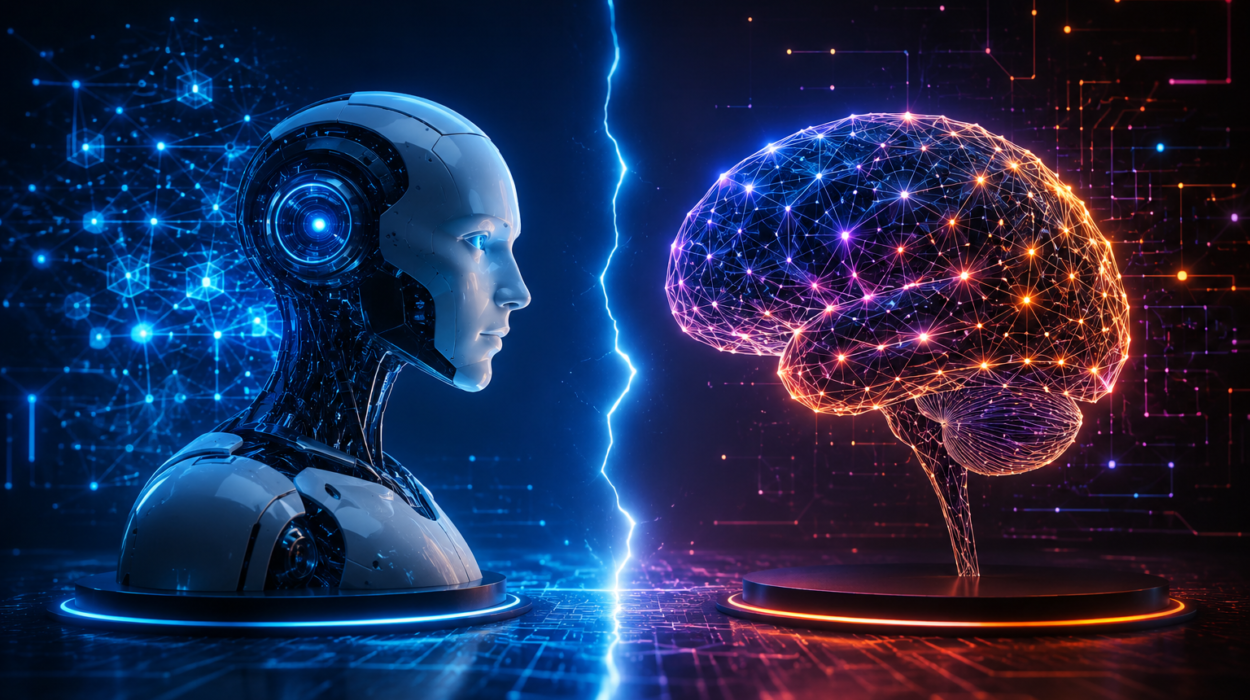
Together, these complementary strengths often produce better outcomes than either working alone.
The Importance of Human Verification
Although AI assistants are remarkably capable, they are not always correct.
They can misunderstand instructions.
They may generate inaccurate information.
They sometimes produce convincing but incorrect explanations.
For this reason, human oversight remains essential.
Important decisions involving medicine, law, finance, engineering, education, journalism, and scientific research require careful verification by qualified people.
AI improves productivity most effectively when users critically evaluate its outputs rather than accepting every response automatically.
Learning to Use AI Effectively
The productivity benefits of AI depend largely on how people use it.
Clear instructions often produce better results.
Breaking complex projects into smaller tasks can improve accuracy.
Providing context helps AI understand user goals.
Reviewing and editing generated content ensures quality.
As people gain experience working with AI assistants, they often discover more efficient ways to collaborate with them.
Using AI effectively is becoming an increasingly valuable digital skill.
Ethical Use of AI Assistants
Productivity should never come at the expense of ethics.
Users should respect privacy when sharing information with AI systems.
Sensitive personal or confidential business data should be handled carefully according to organizational policies and applicable laws.
Students should avoid presenting AI-generated work as entirely their own without following their school’s academic integrity guidelines.
Professionals should disclose AI assistance when appropriate and verify important information before sharing it with others.
Responsible use builds trust while maximizing the benefits of AI.
AI and the Future of Work
Artificial intelligence is transforming many professions.
Some routine tasks are becoming increasingly automated.
At the same time, entirely new careers are emerging in AI development, data science, prompt engineering, AI governance, and human-AI collaboration.
History shows that technological advances often change the nature of work rather than simply eliminating it.
As AI assistants become more capable, many jobs are likely to emphasize uniquely human strengths such as creativity, leadership, empathy, communication, strategic thinking, and ethical decision-making.
Learning how to collaborate effectively with AI may become as important as learning to use computers or the internet.
Why AI Assistants Matter
AI assistants represent one of the most significant advances in personal and professional productivity since the rise of the internet. They help people find information faster, organize ideas more efficiently, communicate more clearly, and reduce the time spent on repetitive tasks. Whether assisting a student with learning, helping a researcher analyze scientific literature, supporting a teacher in preparing lessons, or enabling a business professional to manage a busy schedule, AI assistants extend what people can accomplish in a given amount of time.
Yet their greatest value is not speed alone. It is the opportunity they create for people to focus on work that requires imagination, critical thinking, collaboration, and human judgment. While AI excels at processing information and recognizing patterns, humans bring curiosity, ethics, creativity, and lived experience—qualities that remain essential in every field.
The future of productivity is therefore unlikely to be a story of humans competing with AI. Instead, it is increasingly becoming a story of partnership. As AI assistants continue to improve, the most successful individuals and organizations will be those that learn to combine the efficiency of intelligent software with the insight, wisdom, and responsibility that only people can provide.